
One Year Later - Mortimer '93 on the Dismantling of USAID
In January 2025, Denise Mortimer ’93 was entering her 16th year working for the U.S. Agency for International Development (USAID), the face of American humanitarianism around the world for nearly 65 years. By summer, she and roughly 10,000 of her USAID colleagues had been dismissed—casualties of the Trump administration’s dismantling of the federal agency.
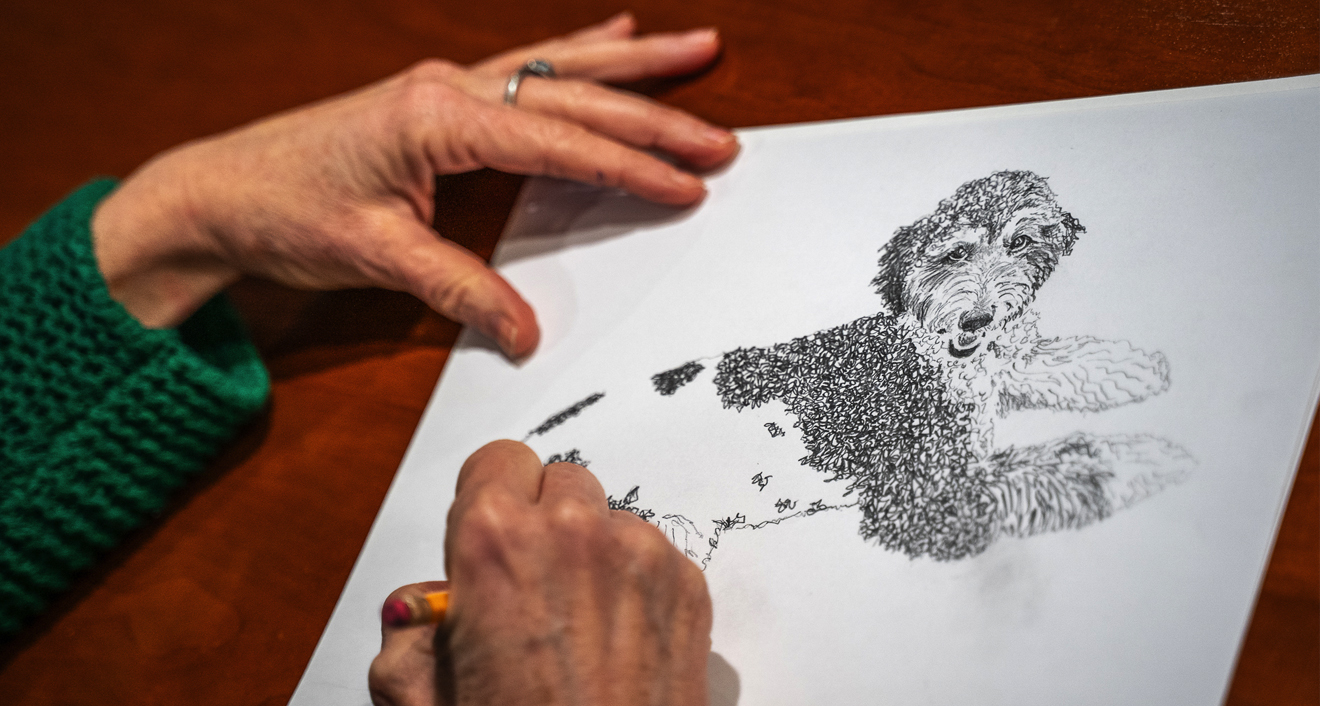
While navigating that disorienting, dispiriting aftermath, Mortimer found solace in an unlikely place: sketching pictures of RocketBear, her longhaired Weimaraner. Soon, she was connecting with fired employees across the federal workforce and drawing their pets too. Then, last summer, Mortimer launched the RocketBear Project, a social media page pairing her drawings with captions conveying the valuable work the pets’ companions carried out before being fired. A small sampling: a beagle named Bobby describing his companion’s work overseeing infrastructure development in Afghanistan for USAID, a cat named Daisy highlighting her owner’s work fighting misinformation with Voice of America, and a chicken named Pearl articulating her owner’s work with cancer patients at the National Institutes of Health.
Taken as a whole, Mortimer’s work is an unexpectedly heartfelt look inside the inner workings of USAID and other government agencies, their impacts around the world, and the lives both inside and outside of agencies impacted by the current administration’s policies. Mortimer spoke with Wesleyan University Magazine about her experience navigating the decimation of her field, why pets make for ideal explainers of complex issues, and the blessings of bringing a creative practice into one’s life.
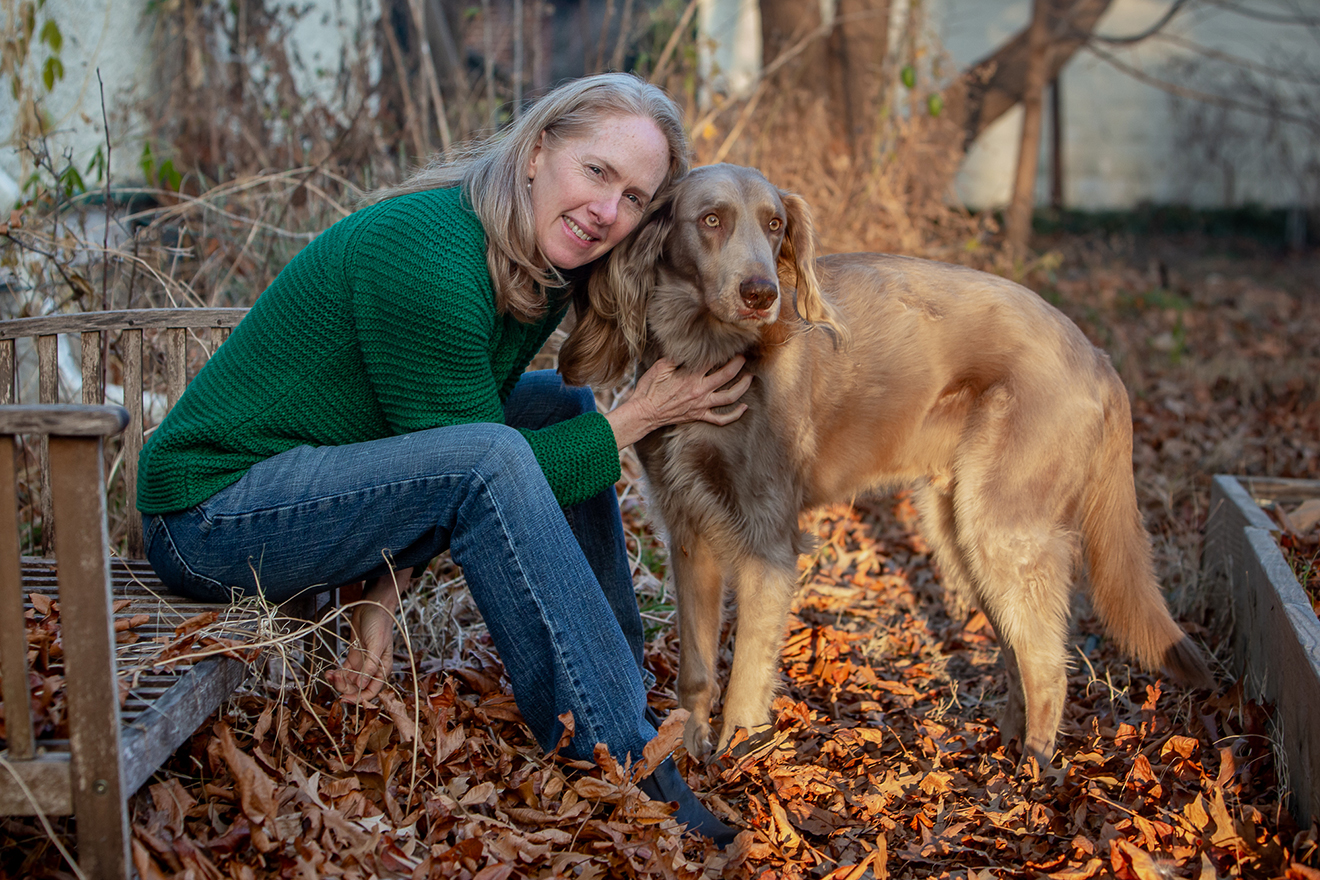
Denise Mortimer ’93: I clearly remember just how cold and depleted I felt when I came home from work on January 21, 2025. Trump had been sworn in the day before, and we had all marched into the office as ordered on the twenty-first. I had weathered past political transitions, including Trump 1.0, so I thought I knew more or less what I was in for, but I was not ready for what I was about to face.
When we arrived at the office, we were met with a barrage of executive orders. One in particular, Reevaluating and Realigning United States Foreign Aid, initiated a 90-day pause on our work. On day one we were told to freeze our programs, which made it immediately clear that massive changes were on the horizon.
I came home that day and curled up on the couch when RocketBear, our family dog, jumped up next to me, and he was just so comforting. It sounds stupid, but I looked at him, and I thought, “He has no idea what's going on. Look at his eyes. They’re so peaceful. They’re the same as they were yesterday.” I picked up my pencil and started doodling him and found a moment of peace on an otherwise really dark day.
The following days were not a lot better. The dismantling of USAID was swift and chaotic. I cannot remember the exact sequence of events since it was all so traumatic, but essentially within days we were told to issue stop-work orders and cancel all of our contracts, and within weeks we were all put on administrative leave. New administrations always bring new priorities, but they are typically rolled out in some semblance of an orderly fashion. This was not orderly; this was an abrupt canceling of all work, leaving millions of people without services, medicine, food—it was just awful. And then by February, our headquarters were closed.
Through it all, I kept drawing. My phone was pinging constantly, my emails were exploding, there was so much stress and confusion, and the only time that I was really calm was when I was drawing. First, I drew RocketBear, then I drew my colleagues’ dogs, and then I drew more and more people’s pets from all across the agency. I told my friends, and they told their friends and coworkers, and it just grew organically. Every time I drew, I was happy because it was fun but also because I felt like I was giving my friends and colleagues a little spark of joy in a dark time. Who doesn’t love a sketch of their puppy?
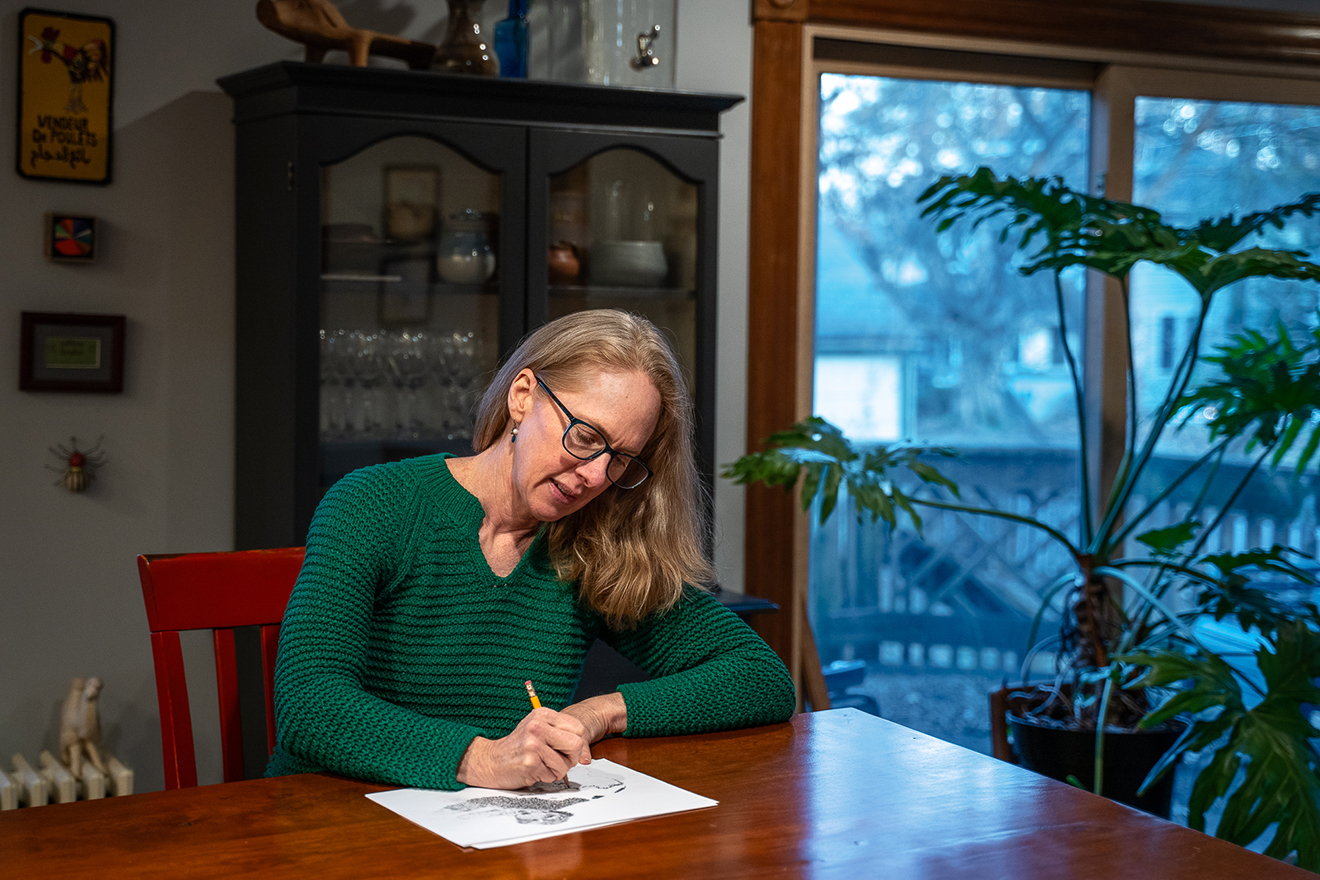
As my collection grew, I saw the potential to do something with them. Each dog or cat was cute, obviously, but as a collection, they were more than just pets. As a collective, all these cats and dogs had the power to tell a really important story. And so was born The RocketBear Project, an Instagram storytelling project aimed at sharing the diversity and impact of the work of former federal employees as told by our pets. Each post is a pencil sketch of a dog or a cat, or sometimes a bird or a goldfish, accompanied by a short caption describing what their human did for work.
I knew it was a weird idea, but I did it for a few reasons. In the early days of the dismantling of USAID, I was struck by how little people seemed to care or notice. Our jobs were taken from us, but more importantly, our programs were forced to stop. People all around the world were losing access to USAID’s lifesaving work. It is not an exaggeration to say that people were going to die as a result of our agency being demolished. And yet it seemed like no one cared.
I wondered, maybe if the messenger were different, maybe then the message would hit differently. People extend so much compassion towards pets, I thought that they might be the ambassadors we needed to tell our stories in a way to make people listen. Ironically, pets help humanize our stories.
You hear so much in our country right now about how divided we are and how there's no common ground. Pets are that common ground—everybody loves their pets.
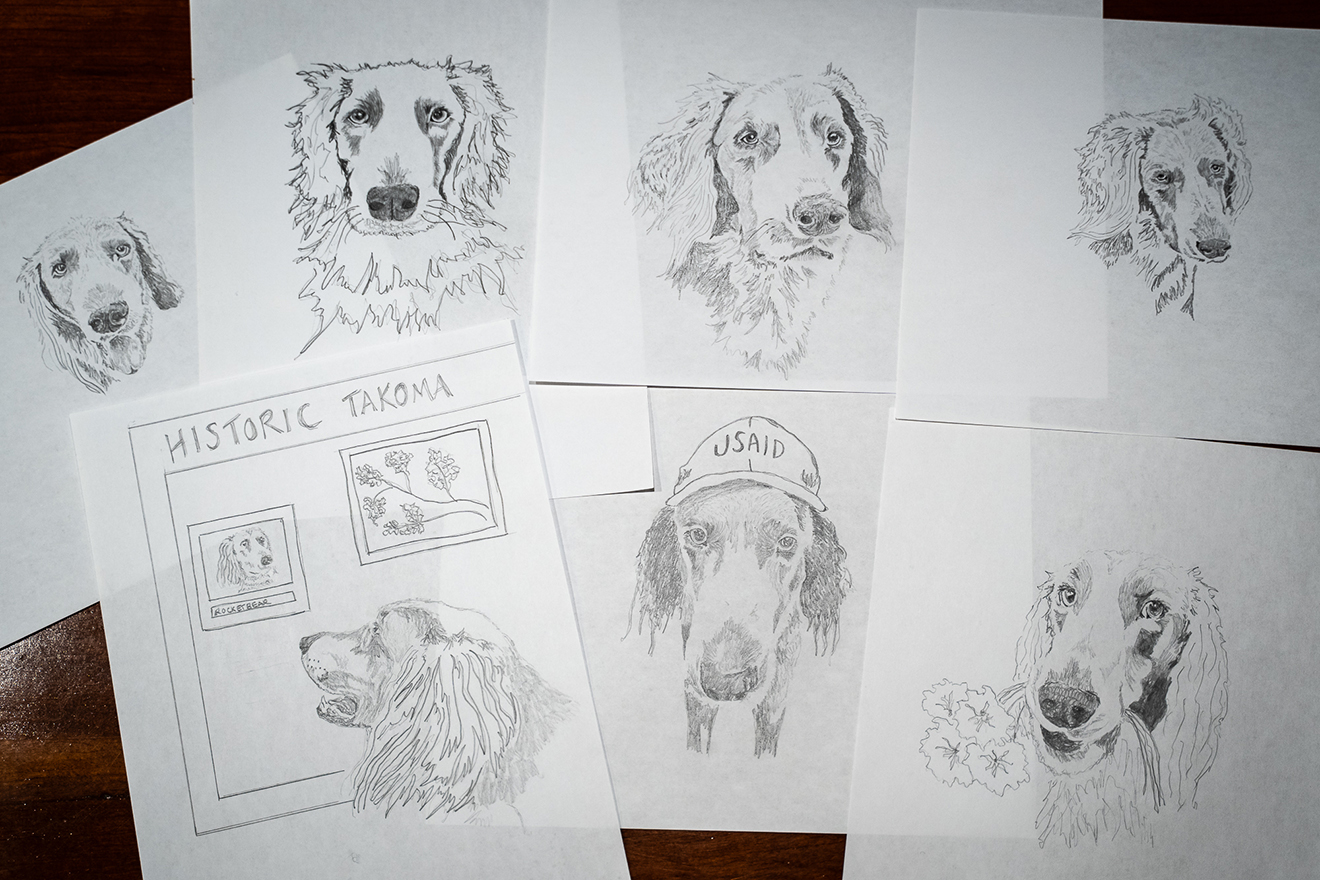
Everybody in D.C. speaks in jargon, making it virtually impossible for your average person to understand what we do. So, I thought if dogs told the story, it would be the simplest explanation of what we do: protect the environment, support education, improve health care, advance democracy and governance. It just does not have to be that complicated.
It would be the simplest explanation of what we do: protect the environment, support education, improve health care, advance democracy and governance. It just does not have to be that complicated.
To date, I have posted around 150 sketches representing 150 public servants. I have wanted to show the widest array of people who’ve been impacted: from USAID, the State Department, the National Institutes of Health, Health and Human Services, Office of Personnel Management, FEMA, US Forest Service, the National Oceanic and Atmospheric Administration, and more. I recently featured a dog from The Office of the Comptroller of the Currency; I did not even know that was a thing. I want to honor their work and share with people what we [in the federal workforce] were doing. The flipside of that, of course, is that I want to show all of what we’re losing.
The project has given me a reason to draw every day, which makes me happy. It has given me an opportunity to connect with so many inspiring people and hear their stories. I know that it has brought a little joy to people, which also makes me happy. And if I am able to educate others about the good work that people did, that is great too.