

Following the Rhythm: Tim Keiper '02
Twenty-five years ago, if you followed the infectious sound of a Brazilian pandeiro hand drum on Wesleyan’s campus, you’d probably find it emanating from the hands of Tim Keiper ’02. “People would follow him, and get in the flow of the rhythm, as if they had an excuse in between class to do something fun, to be a part of this walking rhythm machine,” said Pheeroan akLaff, Wesleyan drum instructor and one of Keiper’s mentors.
In the more than two decades since then, Keiper has been at new frontiers of what drums can do. The sounds pouring from his kit might include the insistent, slushy swing of a chain dragging across a snare, or a metallic ping from a piece of hardware commonly used in a kitchen. The rhythms themselves are as likely to be rooted in Brazilian, Indian, or West African traditions as the sonic idioms emerging around his home in New York City. Keiper’s genre-spanning sensibilities have led him to play with the likes of Vieux Farka Touré, Imogen Heap, Cyro Baptista, Matisyahu, John Zorn, and the Dirty Projectors. These days, he’s part of the touring company backing former Talking Heads frontman David Byrne—the latest chapter in a musical journey accelerated by listening, learning, and connecting.
“Music provides the opportunity to constantly create, improve your craft, and collaborate with others,” Keiper said. “It's thrilling that I can still be learning new things at this point in my life. But from my time working with David, I've come to realize that what matters most is the connection between people: the shared experience we have as musicians and the audience. This is what brings a true sense of joy and hope that reminds us that no matter how bad things may get out there, we can still create something better. In times like this, that mindset becomes essential, and those moments are invaluable.”
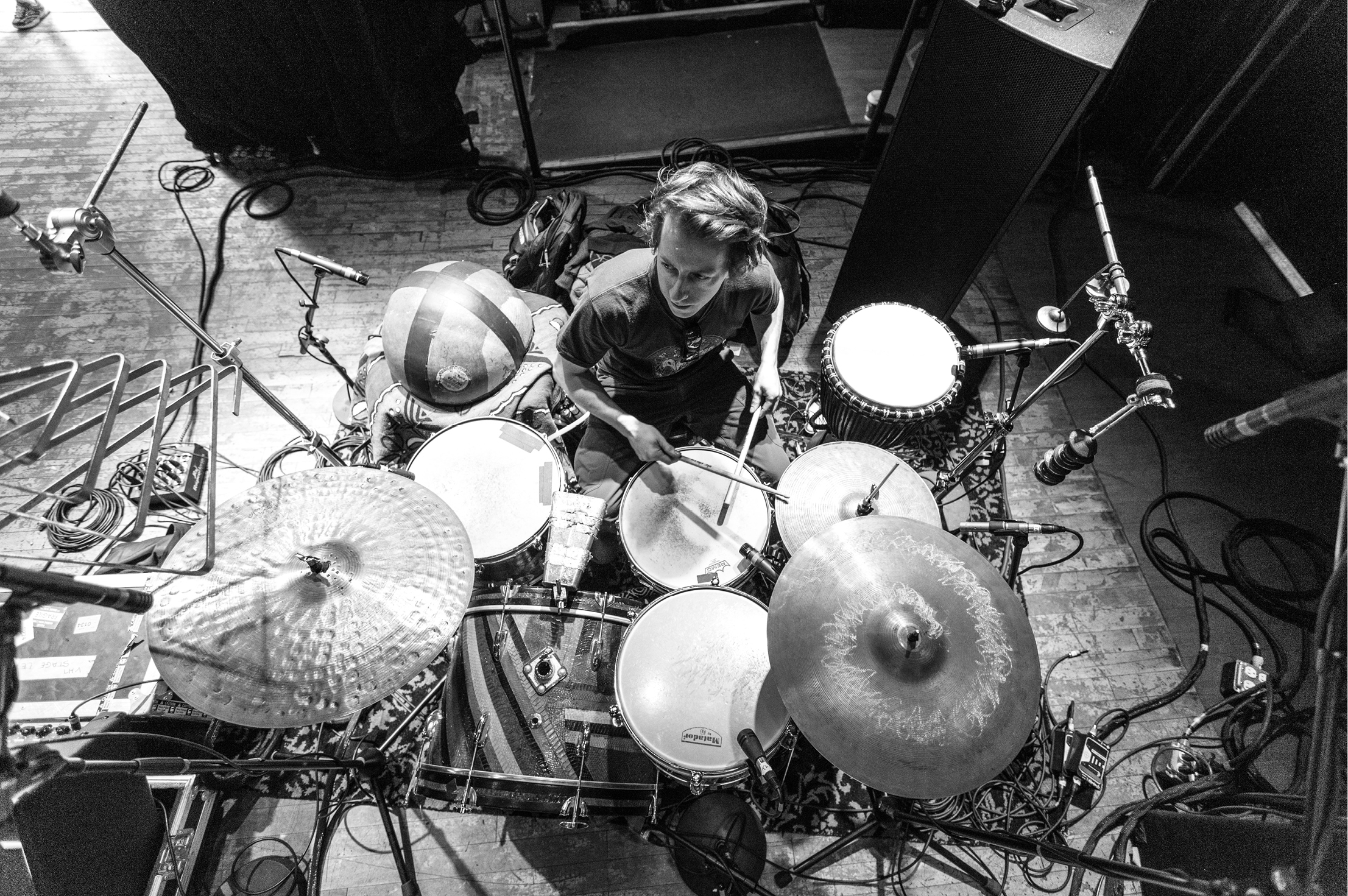
Born in Red Bank and raised in Little Silver, New Jersey, Keiper got his first drum set in middle school. When he began playing music with friends in high school, it evolved into more than a casual hobby. “I was hooked [on] that feeling of what it is to make music in the moment,” Keiper said. Keiper’s time at Wesleyan—with a year-long interlude at The New School’s jazz conservatory—was marked by a dedication to practice and a voracious appetite to explore multiple percussion traditions from across the world, and experiment at the edges.
“I gave him whatever the most complex and difficult, outreaching things were, because I knew that he could run with it,” akLaff recalled of Keiper. “He had a very wide appreciation for different types of music, how he could creatively use the skills he had built, not only in ways to be represented in recordings [but to enhance the] energy of live performance, what was created between him and his colleagues.” Keiper also learned from akLaff how important it was to find common cause with other musicians. “It’s a community,” Keiper recalled akLaff telling him. “All these people that you meet, you don’t know how and when they’re going to come back into your life.”
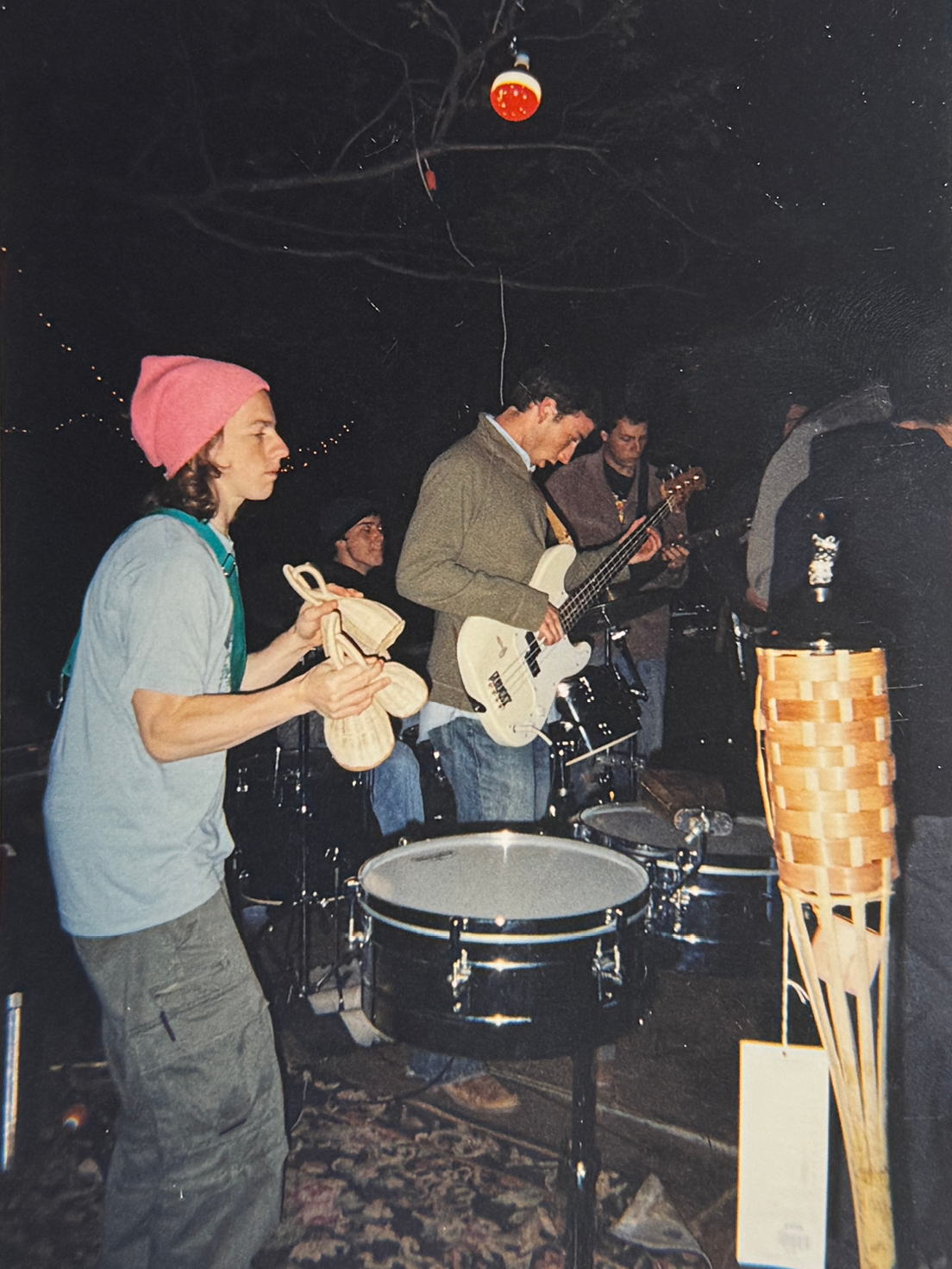
A few years after graduating, Keiper got a call from Eric Herman ’05 and Jesse Brenner ’05; Herman had gone to Mali for a semester abroad and met Vieux Farka Touré, son of the legendary Ali Farka Touré and a fearsome guitarist in his own right. Herman asked Keiper to add drums to recordings of Vieux Farka, an invitation that eventually brought him to Vieux Farka’s village of Niafunke in Mali. “Up until then, I had this idea that you could learn anything you want from the comfort of your own home,” Keiper said. “I didn't realize that you need to get out and go to the source. Traditional music doesn't exist in a vacuum, and you need to immerse yourself in the culture where it's from.”
Keiper ended up playing with Touré for more than ten years. His time in Mali, he said, “totally changed my outlook on the world. I thought there was a shared reality on the planet and realized there were all these other realities that exist . . . As a Westerner, you live for yourself. There, you live for everybody.”
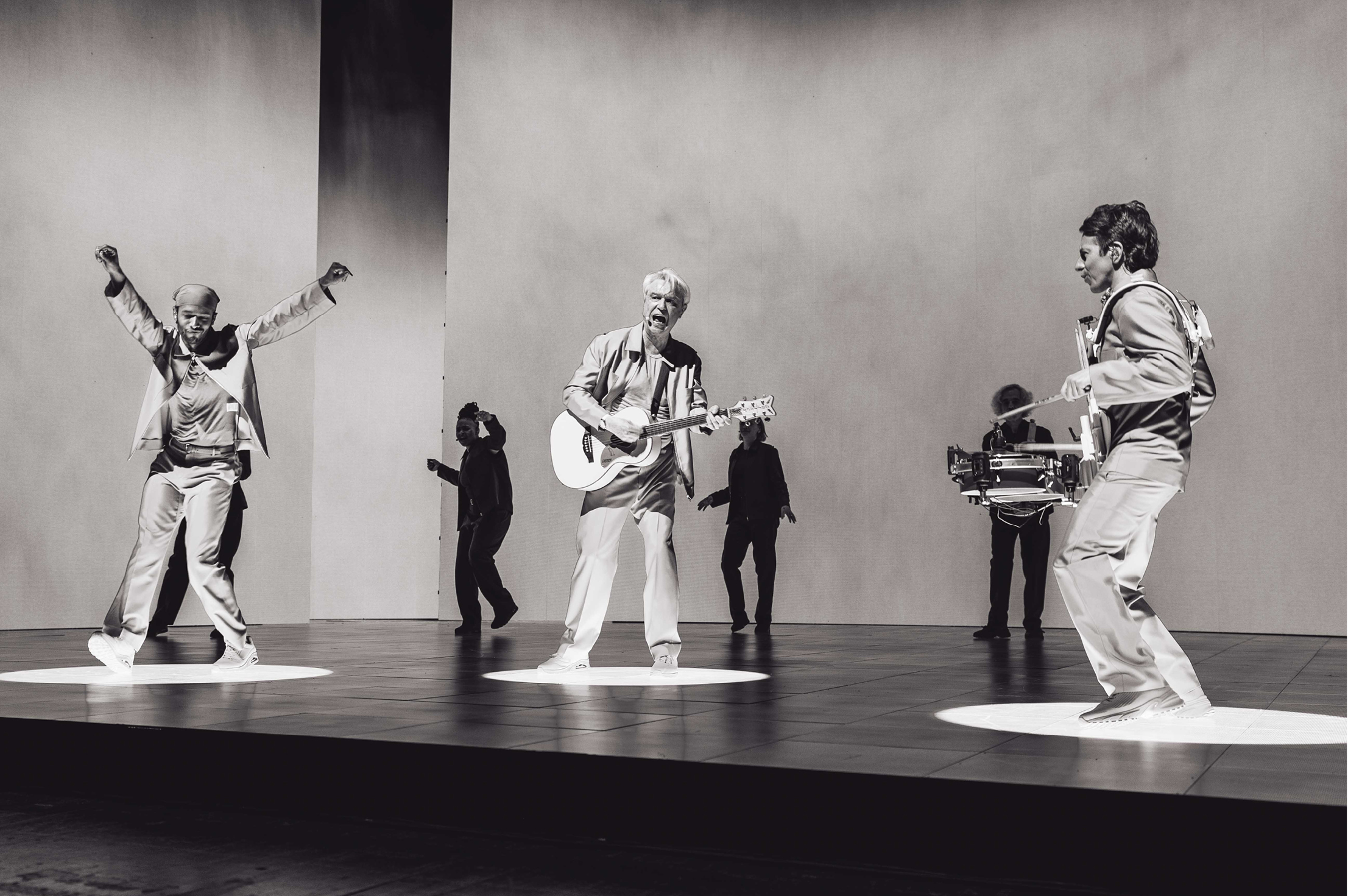
Soon after he finished touring with Touré, Keiper received a call from Brazilian percussionist Mauro Refosco. Refosco was assembling a percussion section for David Byrne’s next project: American Utopia, a stage performance blending theatrical choreography, minimalist design, and a mobile ensemble of musicians in matching suits who help the art-rock luminary reimagine songs from his body of work as well as perform new material. In American Utopia, which debuted in 2018 and became the subject of an eponymous concert film by Spike Lee, Keiper is part of a drum corps made up of half a dozen percussionists, playing simultaneously to produce a single, irresistible rhythm. Byrne, Keiper said, “let[s] everyone be who they are. When you let everyone be themselves in the ensemble, it’s really the ingredient to create something greater than the individual parts.”
With American Utopia in rear view, Keiper has continued to work with Byrne, most recently as part of the touring ensemble for Byrne’s new album Who Is the Sky? “[Byrne] is the most forward-looking, forward-thinking person I’ve ever met, always embracing the new,” Keiper said. In that approach, Keiper finds the joy that’s been with him ever since playing music first captivated him. “[It’s] that experience of what it was to make something that’s alive, and greater than your individual contribution.”
Photo at top: Tim Keiper '02 and David Byrne in Who Is the Sky? Photo by Abigail Lester