
New Course Offers Lessons in Civics and Practicing Democracy
The teaching of civics in schools has been on the decline for decades. A shift in focus to math and reading, coupled with a hesitance to wade into potentially divisive issues in the classroom, can account for this trend. Yet, if students don’t receive a civics education, they might miss out on fundamental knowledge they need to participate in our democracy: A 2024 study found that one in three Americans could not explain the functions of our three branches of government.
To help restore and expand civics learning, Wesleyan is offering a new course to high school students through its partnership with National Education Opportunity Network (NEON), a nonprofit that facilitates the teaching of college-level courses to low-income high school students nationwide. The course, called “Civics, Citizenship, and the American Imagination,” is taught by Khalilah Brown-Dean, the Rob Rosenthal Distinguished Professor of Civic Engagement, with the support of 15 Wesleyan student teaching fellows.
The first-time course poses the critical question, “What does it mean to be a citizen?” The answer goes beyond a dictionary definition. “Citizenship, as we use it, refers to connection and commitment,” said Brown-Dean, who is also executive director of the Allbritton Center for the Study of Public Life. “This may take many forms such as dialogue, creative expression, community organizing, public service, or acts of care. Citizenship is not limited to elections or government institutions. It is practiced wherever people make choices that affect the well-being of others. Citizenship is less about who is authorized by the state and more about how people choose to show up for one another.”
This broader focus aligns with the University’s goal of reinvigorating democratic culture. “The civics course will offer high school students from different backgrounds the opportunity to learn not only what it means to be a citizen, but to communicate with peers with diverse life experiences, and to imagine how they can contribute to strengthening our democracy,” said President Michael S. Roth ’78.
The course takes students through a history of what it means to be a citizen in the United States, tracing key civic debates from Reconstruction to the present. With a heavy emphasis on youth leadership, it also explores contemporary challenges such as voter engagement, media literacy, and political polarization.
In her recorded lectures, Brown-Dean often pauses to pose questions about such topics as how her students currently participate in civic life, what issues they see in their communities, and how young people are leading on those issues. “Too often we treat young people as if they are waiting to become citizens someday,” said Brown-Dean. “In reality, they are already shaping their communities every day. I want students to see that civic life is not limited to voting or holding office. It includes organizing, storytelling, problem solving, and caring about what happens to the people around them. When students recognize their own agency, they begin to understand that democracy grows stronger when their voices are part of the conversation.”
To instill that lesson, high school teachers in six states—including California, Kansas, Michigan, New Jersey, New York, and Virginia—are partnering with Brown-Dean and NEON to provide in-class instruction to complement her lectures and lesson plans. In addition to assigned reading and reflections, the students are asked to explore a civic issue from different perspectives and practice respectful debate.
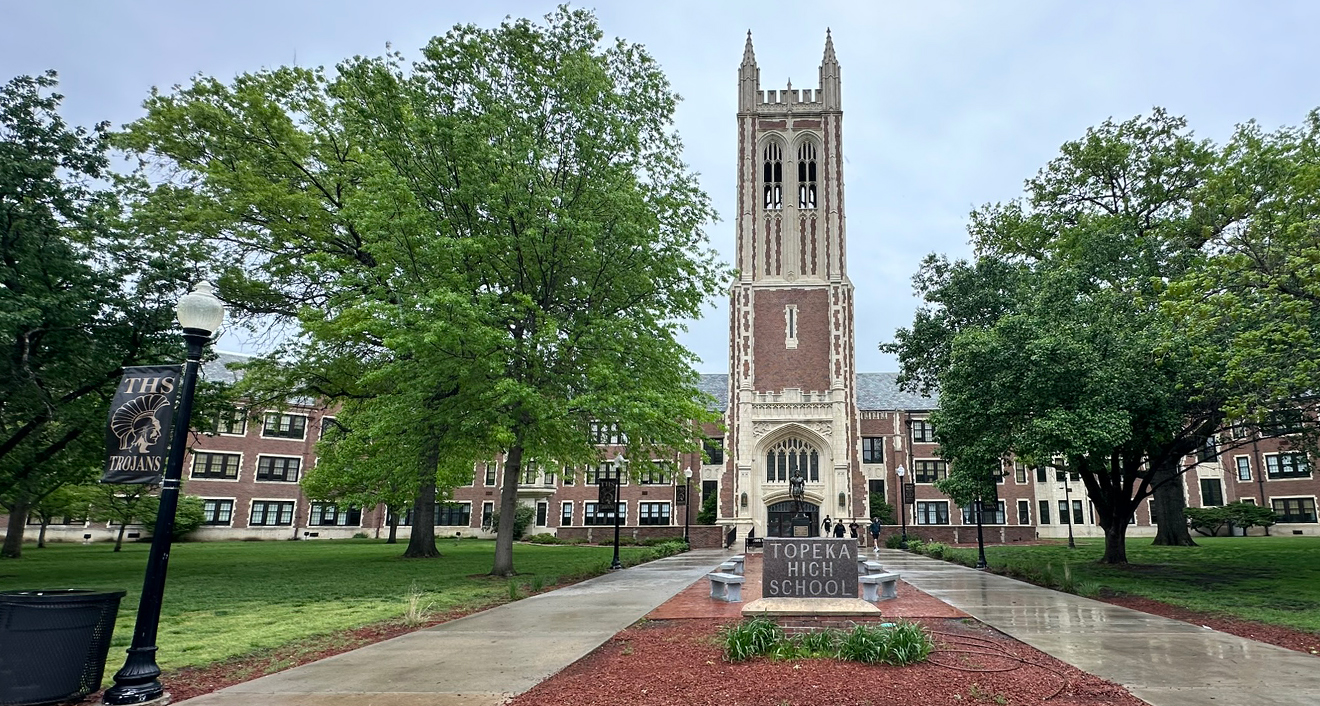
Sara Schafer, a high school teacher in Topeka, Kansas, said the course represents the first time her institution has offered a civics class that goes beyond a U.S. government course offered only to seniors. “One of the things that I really appreciate about the course is that the goal is dialogue and the goal is figuring out ways to solve problems without tearing each other down,” she said.
To lay the foundation for civil dialogue in her class, Schafer polled her students early on about their beliefs and backgrounds. She found that the students not only came from different racial and ethnic backgrounds but held a richly diverse range of political and religious beliefs—from a self-proclaimed Marxist to a proponent of theocracy. After the polling, Schafer asked her students to offer presentations about their personal perspectives. “We learned that there are a lot more political parties than Republican and Democrat,” she said. “The big takeaway was there's all kinds of other ways to identify and that people are complex.”
The purpose of that groundwork was to help students figure out how to change classroom culture. “There's so much polarization, it's been really hard for people to see that, historically, there have been times in our past where we've figured out how to compromise, how to solve problems,” she said.
An example of a hot topic that the Topeka students discussed was immigration and citizenship, said Teaching Fellow Sasha Meier ’28, who prepares lessons and meets with students weekly. “It's the main thing that we've talked about in terms of, what does it mean to be a citizen? Is that a legality or is it how much you feel like you belong in a given community?” she recalled. Some of the students in the class believe citizenship is strictly tied to legal status, while others think it’s more about how much one engages in civic life and contributes to community.
A key objective of the course is to have students develop a civic vision and pitch—a final project that offers new ideas to address a challenge in their community or the broader society. The pitch could take the form of a policy proposal, campaign, artwork, digital platform, or local action.
“My hope is that students leave this course with more than information,” Brown-Dean said. “I want them to leave with a sense of responsibility and possibility. When young people identify a challenge in their community and develop a vision for addressing it, they begin to see themselves as architects of our democratic future. That shift from observer to builder is where civic education becomes truly transformative.”
This spring, Wesleyan is offering five NEON courses to 1,433 students in 16 states and the District of Columbia. In addition to civics, the courses include Introduction to Psychology, Live Like a Philosopher, English Composition: Screenwriting, and Earth and Planetary Science.