
Panel Explores Future of Democracy, Civic Engagement
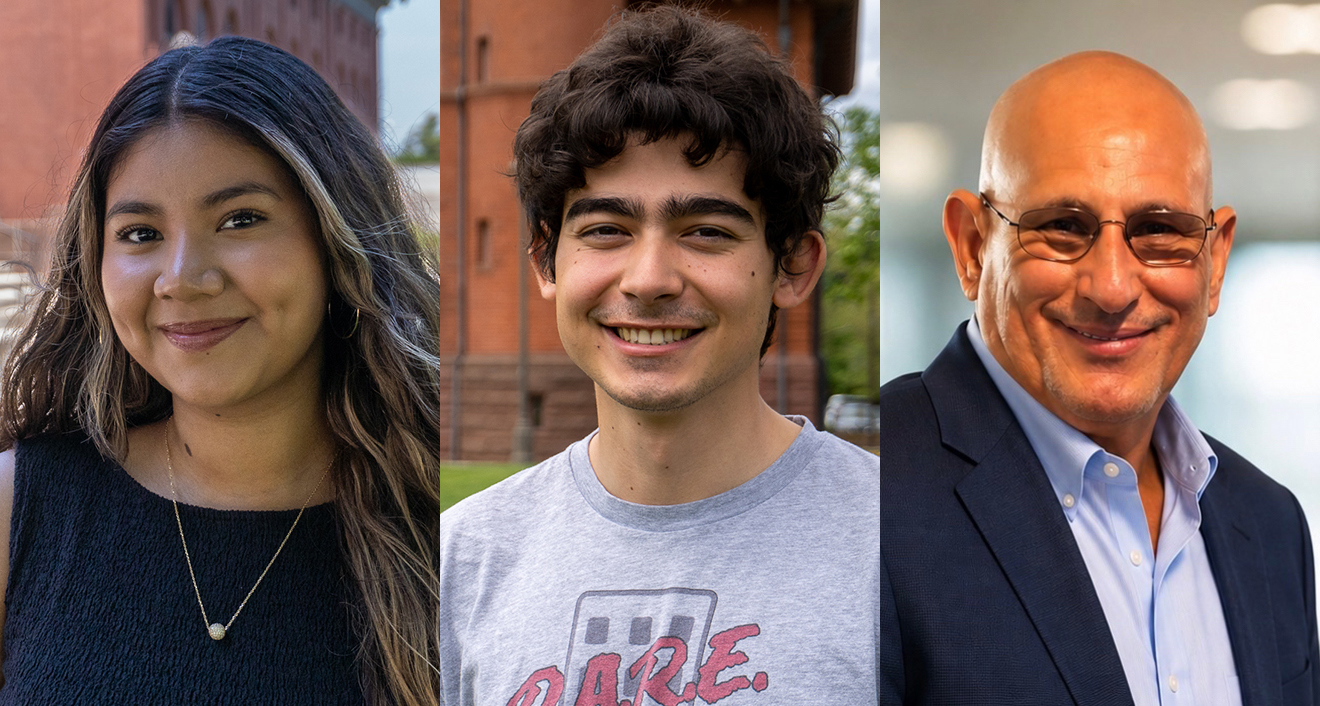
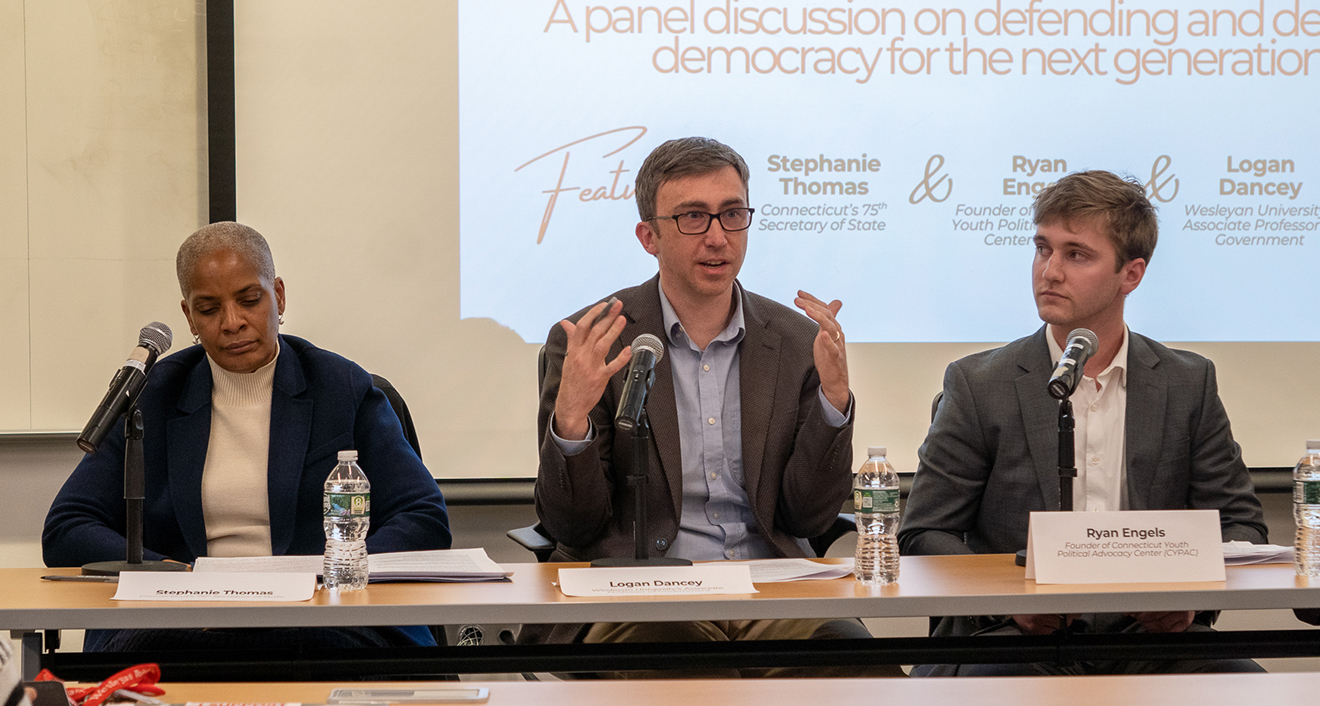
With the upcoming 250th anniversary of the Declaration of Independence around the corner, Wesleyan civic engagement student interns at the Allbritton Center for the Study of Public Life hosted an expert panel to reflect on the country’s past and future as a democracy. The “Future of US: 250 Years, A Panel Discussion on Defending & Defining Democracy for the Next Generation,” was held on April 6 in the Frank Center.
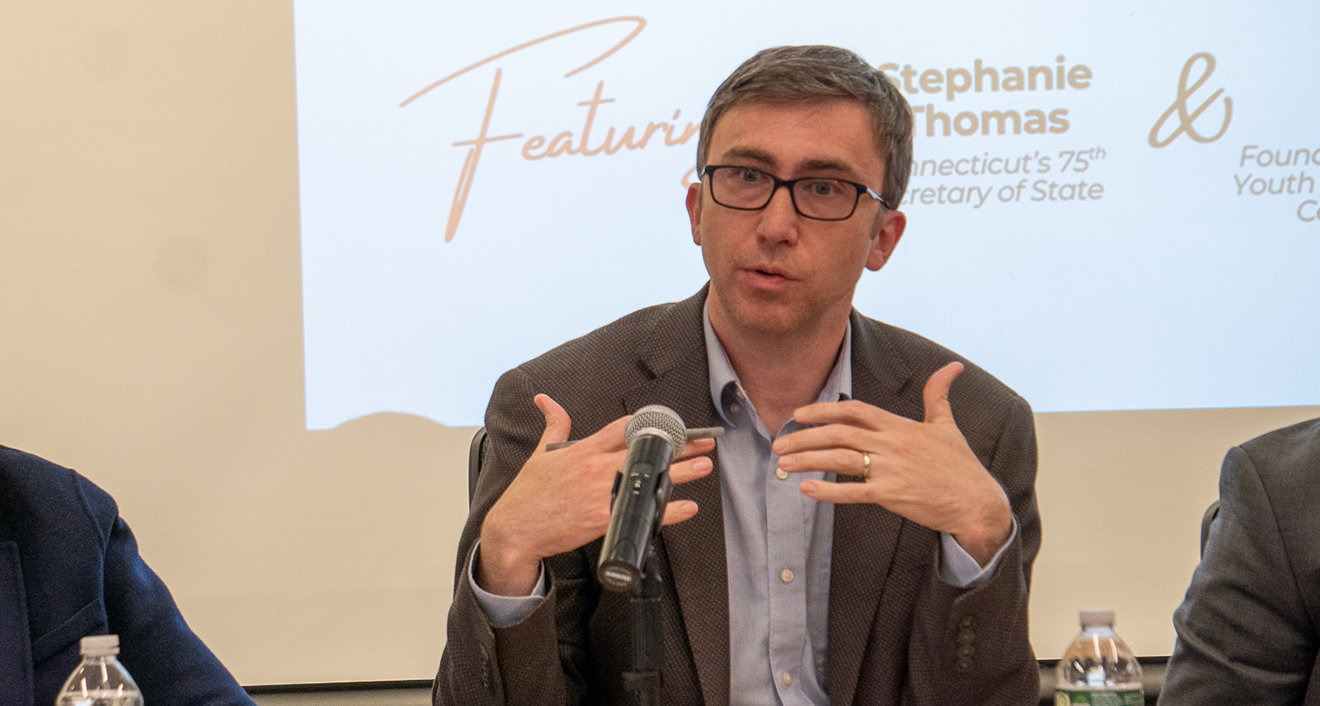
At the start of the event, Associate Professor of Government and Allbritton Faculty Fellow Logan Dancey noted that while the semiquincentennial is an occasion to celebrate, it’s also important to recognize that the United States has not always been a fully democratic and inclusive nation. “American democracy is a work in progress,” he said. “We need, at this moment, to think about where we've been, but also where we want to be as a country and recognize that it takes real effort on our part to get us there and have us stay there.”
Creating civic culture
One challenge to the effort to defend democracy and promote civic engagement is a lack of understanding, said panelist Connecticut Secretary of State Stephanie Thomas. “Somehow civics, government, and politics have all gotten conflated,” she said. People often say they won't testify on a bill or run for office, but those aren’t the only options. “They don't think of civics as simply having a conversation with your neighbor, that is a little difficult, about something you disagree with them on. Or maybe it's volunteering to do something good in your community,” she explained.
Dancey agreed: “Americans' orientation towards politics, I think, has become increasingly focused on national politics at the expense of state and local politics,” he said. “To some degree, that can make people feel like the political system is too vast and too hard to change when there are opportunities to be involved and make change that are much more immediate and concrete that would potentially, I think, foster more of a sense of involvement and connection together.”
Connecticut Youth Political Advocacy Center Founder Ryan Engels, who first got involved in civic life as a teenager, pointed to the lack of youth participation as a real issue to address. While interning for a law firm, he started to attend meetings about zoning and land-use. “I saw that the people that are making these very important decisions about affordability, about land use, about housing, were people that were two to three times my age,” he said. “I recognized that we needed youth voices in those spaces.”
Engaging youth in community
In college, Engels participated in Next Gen Elections, a grant-funded program to train college students in election work that is facilitated through Thomas’ office. To appeal to young people, she advocated for creating opportunities, like Next Gen, for them to learn in ways that are accessible and preferably free.
While young people might know about the three branches of government, she said, they don't necessarily know how to affect change in their town or state. “We have found that if we provide that information, people get more involved,” she noted. “Young people get a bad rap for being disengaged. I haven't found that at all. I find that when they have the knowledge, they step right into that chasm and try to get things done.”
Dancey added that civic education, while important, needs to extend beyond the classroom and campus. That is partly because a lot of people don’t go to college, and for those who do, higher education is only a short period in their lives. He asked, “If colleges and universities are really serious, they need to think about how do we make our kind of civic contributions visible to the broader community? How do we have the broader community have input into the civic contributions that we are making?”
To help young people gain trust in institutions, Engels emphasized local involvement. “If we can teach people to engage in their local communities and their local governments, that can lead to more responsive officials because local levels of government are typically more accountable to their citizens,” he said. “So hopefully people can see those tangible changes and associate that with their civic engagement and connect the dots and understand that their civic engagement is having an impact on their community.”
Getting started, staying activated
In response to a question about what students or the public can do to strengthen democracy now, the panelists had a range of recommendations. Besides getting involved in the Allbritton Center and exploring the Civic Engagement Minor, Dancey suggested playing to one's strengths. “Are you going to be the person that's out there leading the protest, or are you going to be the person that is out there running for office, or are you going to be the person who's out there volunteering at this different organization?” he said. “We should really think of all of these forms of engagement in political and civic life as important.”
Thomas suggested simply making time to do something. “If I have a few spare moments, I'll make two calls to help a candidate somewhere get elected. Or I'll write an op-ed, or I'll just read up on something so I'm more knowledgeable,” she said.
Engels agreed, adding further examples. “I'm a big fan of going out into the community and just talking to people,” he said. “I would say go to at least three community events this year. Whether that's a fundraiser for a candidate, a local town meeting, or even those fun little trivia nights that clubs put on, I think it's just good to get out there, meet people [who] have that similar interest as you.”
Of the event and the strategies, Harry Malcoun ‘28, one of the student civic engagement interns, said: “Bringing together a statewide official, a scholar, and a young organizer helped us see how policy, research, and on-the-ground work intersect. Hearing about their substantive work—from rethinking how elections are run to young people serving in local government—made the idea of ‘defending democracy’ feel less abstract and more like a set of specific actions students can take in their own communities.”
The panel was part of the Allbritton Center for the Study of Public Life’s Democracy 250: Speaker Series, a slate of events exploring the current and future state of the American democracy.