
New Venture Awards Spotlight Student Entrepreneurs
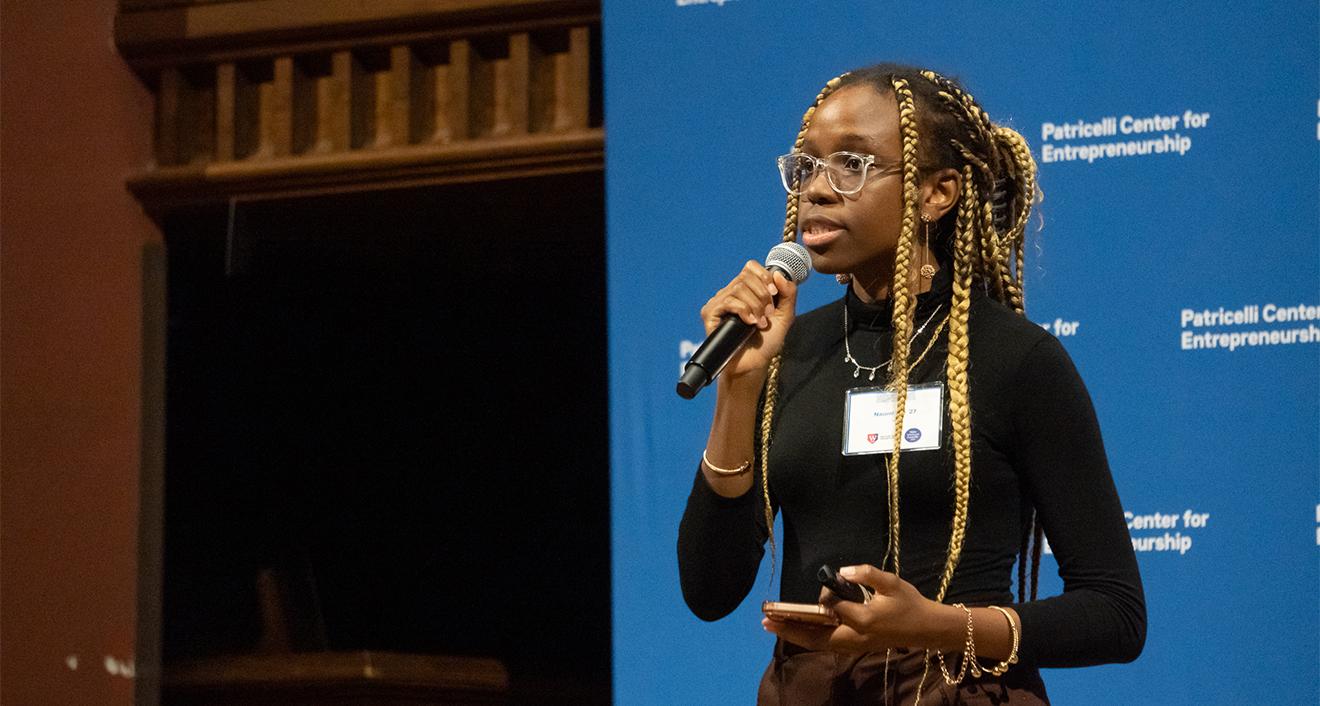
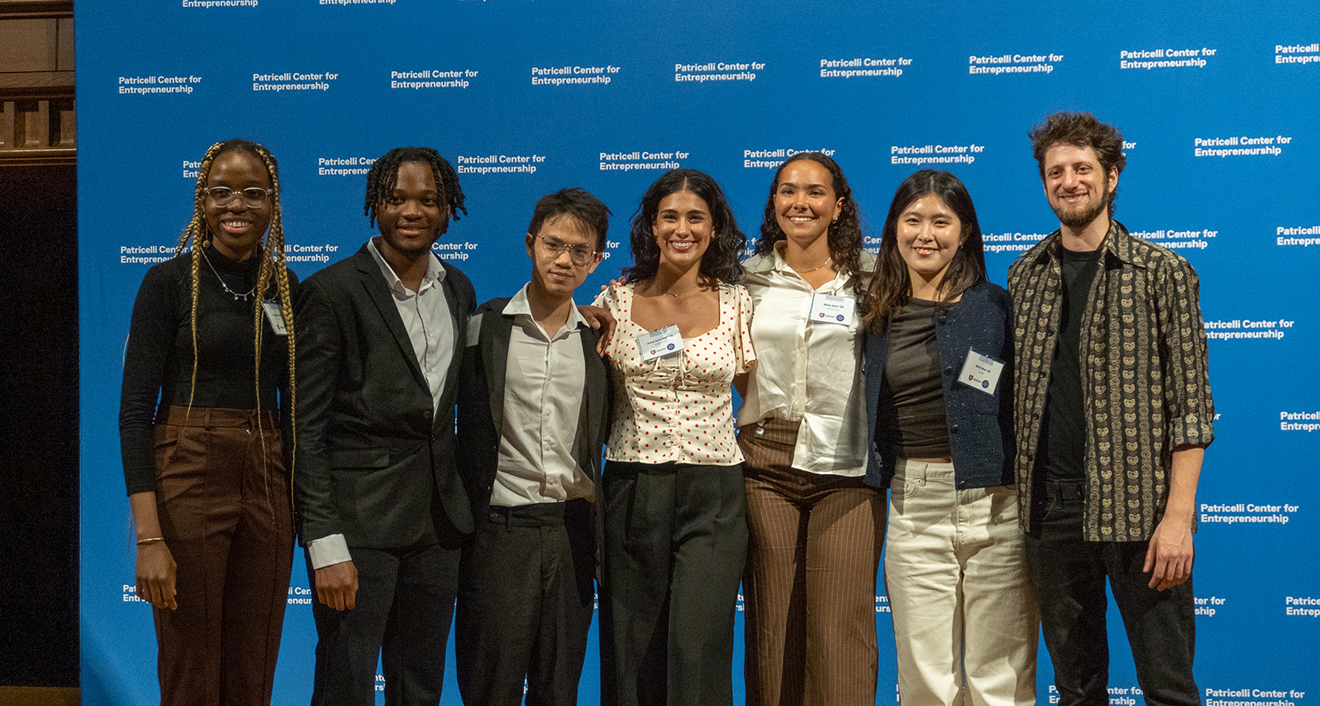
Seven students delivered five-minute pitches for a chance to win up to $8,000 in grant funding for their new projects, organizations, and companies. Sponsored by the Patricelli Center for Entrepreneurship, the New Venture Awards (NVA) recognize and support impactful projects with a total of $43,500 in grant funding.
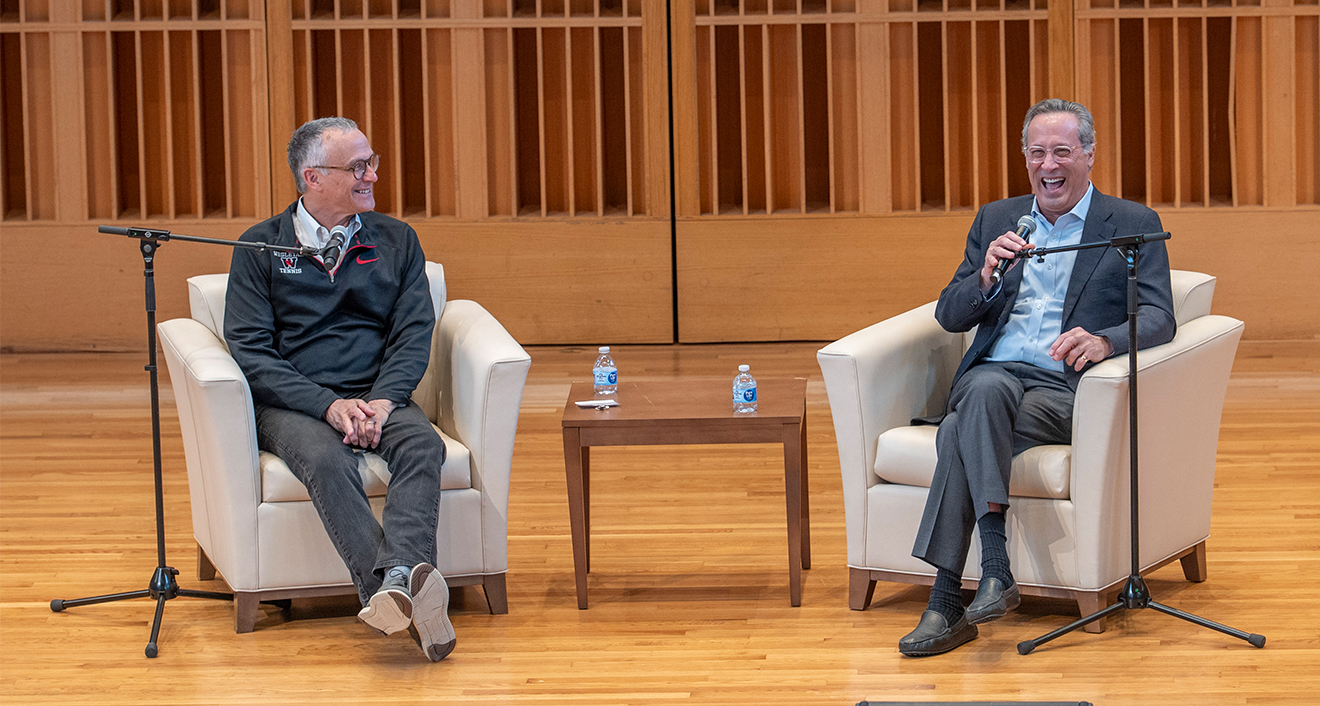
“We are really a space on campus for leadership, entrepreneurship, and social impact,” said Director of the Patricelli Center Ahmed Badr before introducing the finalists.
This year, the New Venture Awards received applications from 37 students seeking funding for their projects, which is a record for the program. The applications targeted a diverse set of geographic and economic areas, reaching across 12 countries and five continents; nine ventures focused on the African continent, while 24 ventures addressed problems across the United States.
The six finalists, participating in either the non-profit or for-profit tracks, passionately pitched their ventures, what problems they aimed to solve, and what they needed grant funding for, with hopes that the 11 judges would select their projects for funding.
The winners are Naomi Ivie '27 in the non-profit track and Aviva Schnitzer '28 and Malia Apor '28 in the for-profit track. Each of the two winning projects received $8,000 in grants. The remaining finalists who pitched their projects received $5,000 and five semi-finalists received $1,500 in grants.
Non-profit track
Ivie’s venture, Sabi, is a free AI tutor that teaches the 41 million children in Nigeria who are unable to attend school how to read and do math through five-minute daily phone calls on a mobile device, with no internet access required. Sabi costs $5 per student, making it 10 to 100 times cheaper than current alternatives. Ivie projects that use of Sabi could nearly double participants' lifetime incomes.
“There is a huge learning crisis in Nigeria. Over 70 percent of 10-year-olds cannot read or write,” said Ivie, also one of Wesleyan’s African Scholars. This costs Nigeria over $40 billion in lost productivity each year. Sabi aims to fill this educational gap.
For Ivie, the idea for the software stemmed from her upbringing in Nigeria, where she saw firsthand that many children in her community were unable to attend school while she could. Confronting that disparity, she began asking a simple but urgent question: “Why could I go to school and they couldn’t?” Sabi emerged as a solution.
This February, Sabi placed second in MIT’s Kuo Sharper Center for Prosperity and Entrepreneurship’s African Business Challenge and Ivie’s team also recently won first place at Morgan State University’s hackathon, Morgan Hacks 2026. “The solution does not lend itself to only out-of-school children, but has applications for illiterate adults, NGOs, and governments needing voice-AI delivery, as well as peer-tutoring for high schools,” said Ivie. By the end of the company’s fifth year, Ivie is hoping to reach over 700,000 children across the Nigeria with Sabi.
For-profit track
Schnitzer and Apor launched their venture, HerWay Recruiting, last year. The service provides a college athletics recruiting service for female athletes, run by female athletes, through one-on-one mentorship programs and workshops. These tools educate student-athletes on the recruitment process and offer holistic support throughout their journey.
The pair spent the last year interviewing female student athletes to identify and address the institutional barriers they faced in their own recruitment process before attending Wesleyan. “Disappointed, lost, overwhelmed, and alone. These are the words we’ve been hearing from female athletes reflecting on their recruitment experiences across the board,” Apor said.
Traditional recruitment services that dominate the market rely on automated, impersonal outreach that rarely leads to the promised results, the pair said in their pitch. They are often run by male former athletes, exacerbating the already existing gender gap, where funding for male athletes is three times higher than their female counterparts. HerWay Recruiting, on the other hand, is “successful and affordable, relying on empowerment over dependency,” explained Apor.
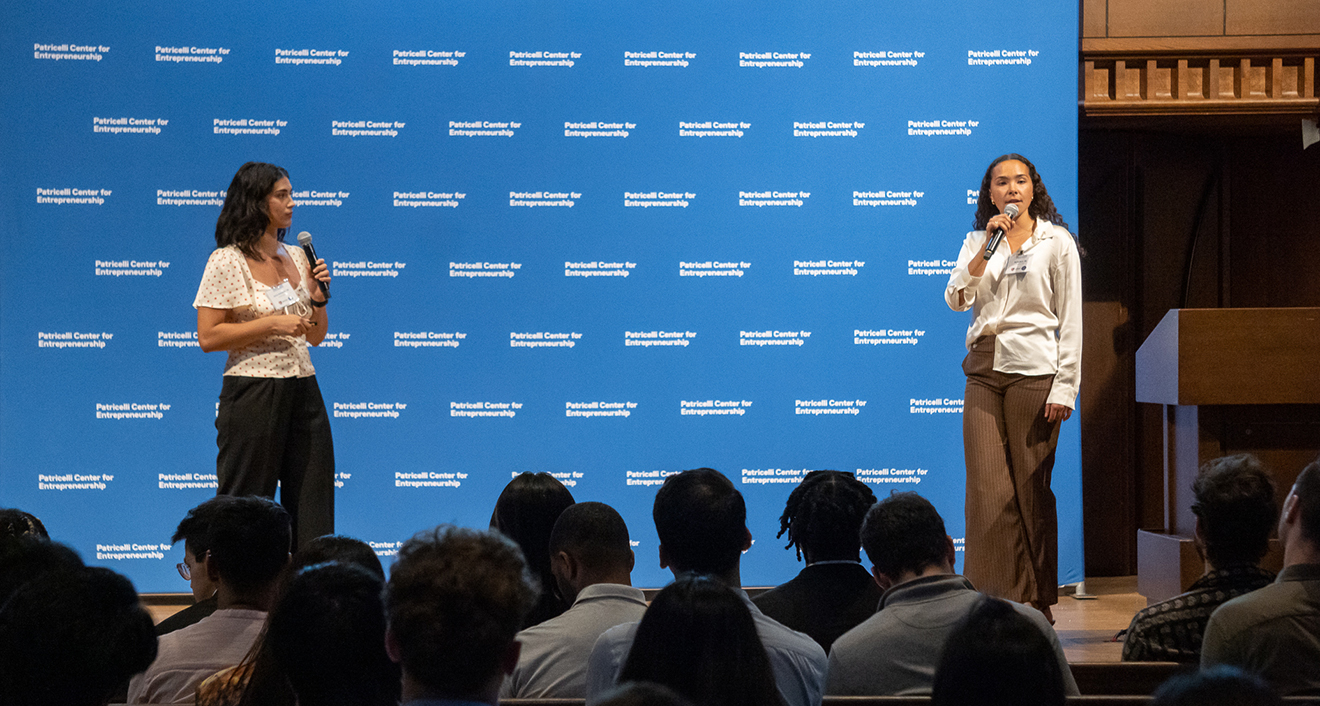
HerWay Recruiting addresses this structural disparity by matching female student athletes with colleges that are the right fit for them, both academically and athletically. Since their initial launch in 2025, HerWay Recruiting has reached over 75 athletes. Soon, Schnitzer and Apor will host six educational workshops and attend four elite recruitment tournaments with the goal of 25 student athletes signed up for their services by the end of the September 2026.
“We knew someone had to do something about the recruiting process, and who better than current college athletes that can inspire young female athletes, but also encourage the Wesleyan community to pursue their passions,” said Schnitzer.
The New Venture Awards are made possible through the generosity of the Robert ‘61 and Margaret Patricelli Family Foundation, Jon Turteltaub ‘85 and Amy Eldon, Stephen McCarthy ‘75, and Propel Capital.
Looking forward, the six NVA finalists will travel to Boston for a day of meetings with alumni entrepreneurs and engagements at MIT’s Legatum Center for Development and Entrepreneurship, Harvard University, and the Boston Museum of Fine Art.
The Patricelli Center will also host Wesleyan Shark Tank, on May 4 in New York City. With the support of the Wesleyan student-led forum, “The Art of the Pitch,” these entrepreneurs will pitch their startups to alumni investors in hopes of securing a $5,000 grant.