
Students Turn Grants into Real-World Public Service
Growing up in New York City, Maggie Handelman ’29 was familiar with Brad Lander, currently NYC comptroller and a candidate for the U.S. House of Representatives. “I grew up in his district,” she said, which is the 10th Congressional district in New York, covering parts of Brooklyn and lower Manhattan. “He's an example of a politician that has really established himself in a community.”
Handelman heard about the Political Engagement Fund grants offered by the Jewett Center for Community Partnerships from a friend and decided to apply. “It’s a really exciting time for city politics,” she said. “I felt like this was how I wanted to spend my summer, being politically engaged.”
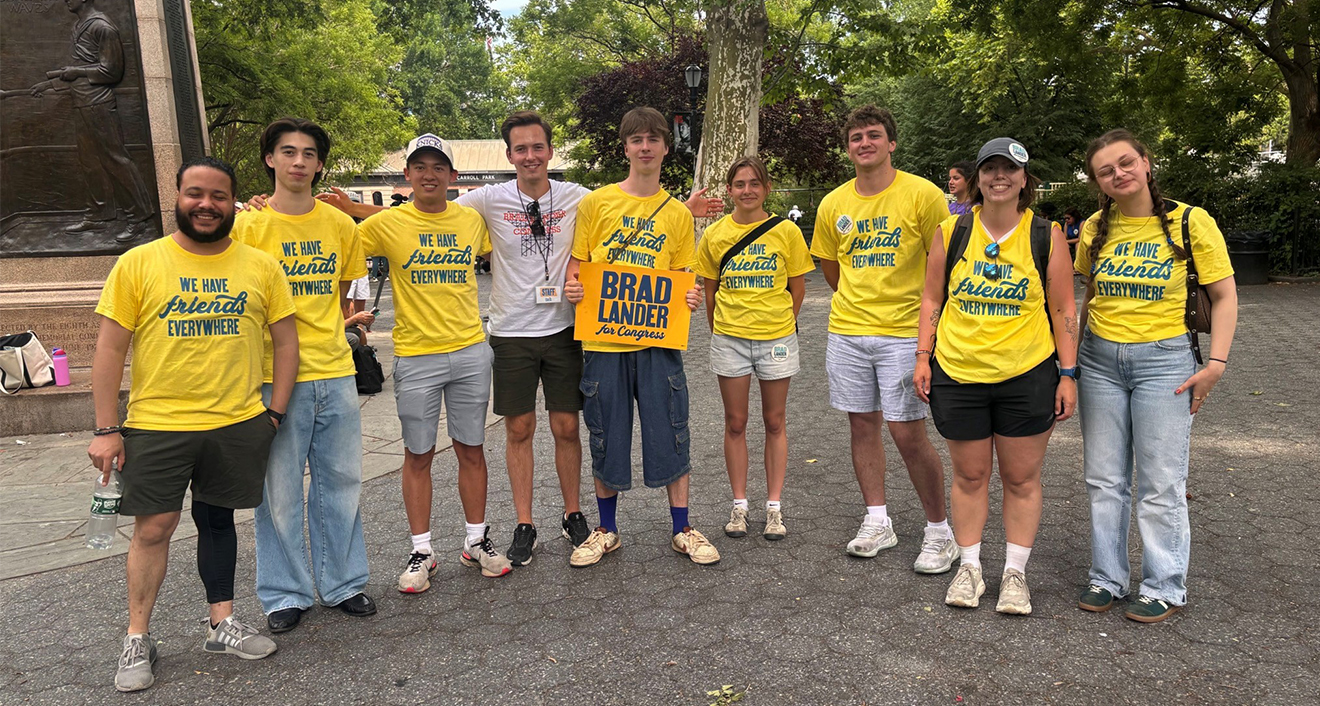
As a college fellow for the Lander campaign, Handelman received mentoring, participated in workshops, and learned about the career trajectories of campaign staff. On any given day, she would engage in different campaign activities, from making volunteer recruitment calls and drafting endorsement requests to assisting with events, including some with New York City Mayor Zohran Mamdani. “I'm getting like a little taste of the policy side, the communications side, [and] the field work,” she said.
The fellowship has exposed her to people with different points of view. While organizing volunteers near a poll site, Handelman talked to young people on her opposing candidate’s team. “It was nice,” she said. “Politics doesn't always have to be this kind of vicious thing. It can foster an open dialogue.”
Engaging in politics can also encourage democratic participation in others at a time when a lot of citizens feel a sense of helplessness and an urge to withdraw from public life, said Handelman. “A lot of what I've been doing has been encouraging people to get involved, whether that's volunteering or just going out and voting for whoever it may be,” she said. “I think it's restoring people's faith … that is what will uphold our democracy.”
(Note: In late June, Lander defeated his primary opponent, setting up a contest with a Republican candidate in November.)
Aaron Arthur Lim ’27 decided to explore his interest in promoting democracy halfway across the world, in the Philippines. As an intern at the Regional Trial Court Branch 30 in San Pablo City, Laguna, Lim spent several weeks this summer assisting in the development of educational materials, providing pre-trial guidance, and preparing summaries of cases to help individuals understand case outcomes and procedures.
“I chose to tackle a lack of access to legal education in the Regional Trial Court of the Philippines because it is an entry level court in the country, and receives an influx of defendants ill-informed of the punishments corresponding to their crimes,” he said. “Through legal education, it is my hope to understand how these two issues can be mitigated. As a spillover, families frequently visit the courts to talk to lawyers, so through my legal guide, I am able to inform families and the general public of an accessible account of the law.”
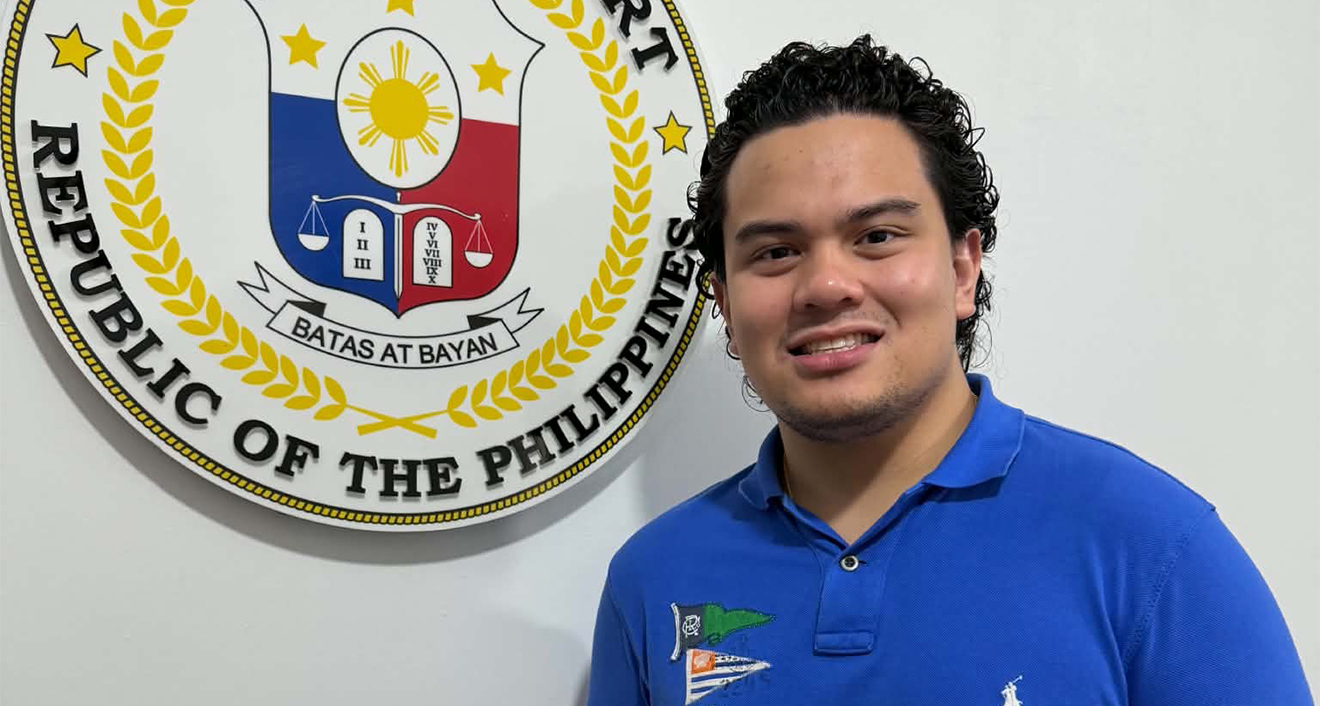
By extension, Lim aims to restore faith in institutions, which are the foundation of a functioning democracy. “As a person that believes in the strength of institutions, it is my hope to expand the reach of entities that can aid in the upliftment of the welfare of people,” he said. Lim also hopes to boost citizen faith and participation in democracy. “If institutions are strong, trustworthy, and effective, then the people are more trusting. I hope to contribute to the understanding of how a state, especially one in the Global South, can keep its citizenry informed on legal matters.”
As her first year drew at Wes to a close last spring, Evie Lee ‘29 turned her attention to national politics and the possibility of working on a campaign. Lee was particularly drawn to a labor-focused candidate as a member of the United Student Labor Action Coalition on campus. “One of my friends told me about this really exciting campaign that was happening in lower Manhattan,” she recalled. “The candidate I worked for got some really impressive endorsements from major labor unions.”
That candidate was Illapa Sairitupac, who is now the Democratic nominee for the 65th New York State Assembly District, a small yet densely populated district that includes some of the East Village, Chinatown, and the financial district. “It encompasses a very interesting group of neighborhoods that aren't necessarily always politically aligned,” Lee said.
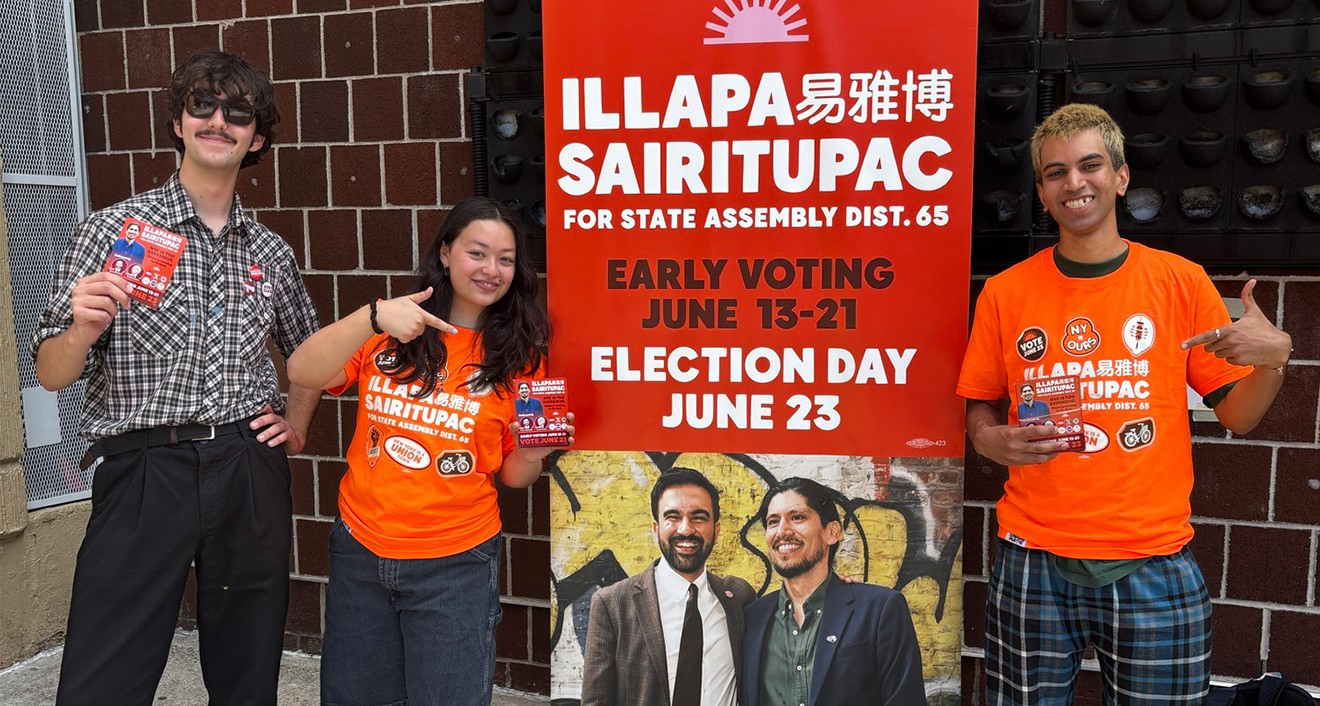
As a campaign intern in late spring through early summer, Lee experienced the full breadth of election work, including communications, logistics, door knocking, and text banking. She had the opportunity to draft social media messages, including key endorsements.
The most rewarding aspect for her, though, was talking to and listening to voters. As primary election day approached, voters would drop by campaign headquarters to learn about the candidates. Lee discovered that tenant rights, affordability, and climate change were concerns that seemed to unify residents. “Despite some issues that are a little more polarizing, we all agreed on these priorities,” she said.
Lee has not yet zeroed in on a possible major at Wes, but sees links to what she gleaned from a labor history class and her campaign work. “I was seeing some of what I learned in the classroom about the people who are doing labor advocacy work aren't typically those who are most affected by that advocacy's outcome,” she said. “The way that this campaign was designed, I felt was working towards a solution for that.”
With an interest in also doing museum work, Lee is contemplating how that passion might intersect with politics. “A lot of this race was about accessibility, affordability, and what does it mean to have public services that everyone can benefit from,” she said.
The Political Engagement Fund, administered by the Jewett Center for Community Partnerships, supports students’ civic engagement as well as liberal learning through engagement with the public sphere. Wesleyan undergraduate students can apply to the fund for project support in either voter registration, issues advocacy, or local or national campaigns. The grants are up to $1,000 for the Fall 2026 semester and $5,000 during the summer. Applications are open for the fall.