
What Democracy Looks Like from Capitol Hill
The following story is a first-person account of a student's experience.
“Good morning! You’ve reached the office of Senator Michael Bennet, this is Jade speaking. How can I help you?” is a sentence I said almost every day working on Capitol Hill this summer. What began as a simple greeting became my introduction to constituents from across Colorado. Hundreds of people called Senator Michael Bennet ’87, Hon. ’12, P’27 every week to leave messages about a policy being debated or issues affecting their communities, all with the goal of making their voices a part of the conversation.
As constituents' first point of contact with the office, it was my job to make sure that people left the call with more trust and understanding that the Senator cared about issues that were meaningful to them.
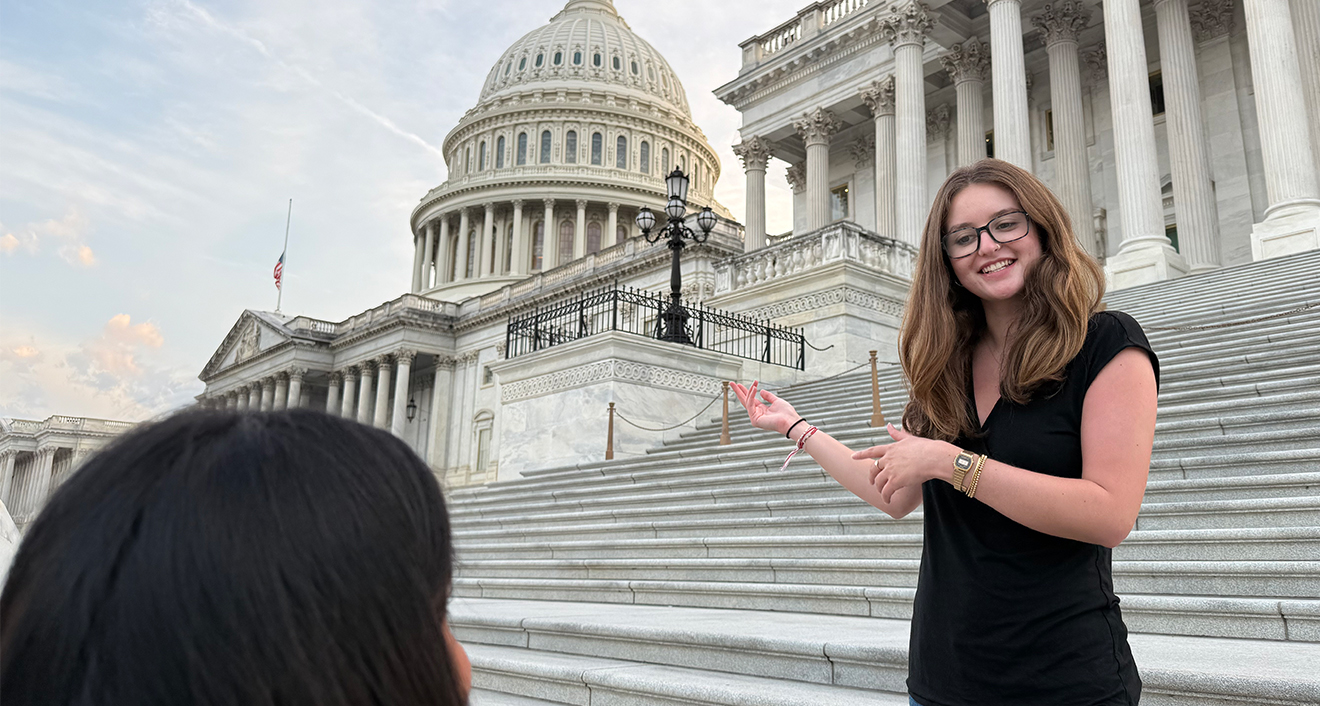
As a legislative intern in a Senate office, my days varied. The other interns and I learned a series of facts about American history and the Capitol Building and gave tours to constituents visiting Washington D.C. We helped make sure that the office ran smoothly through administrative tasks, supporting the staff assistants, and participating in projects collaborating with members of the legislative team.
I was paired with the economics and national security teams on legislative projects. Through these assignments, I attended briefings and hearings, drafted co-sponsor requests and nominee bios, and learned how to make economic data more accessible for Coloradans. But the most important conversations I had in the office were with the legislative staff, learning how they think about real-life problems and the best solutions for their constituents.
While working on housing policy, for example, I saw how a seemingly straightforward goal—like making housing more affordable—requires weighing the needs of renters, homeowners, developers, and local communities against the limitations of existing programs. Those conversations always left me with more questions than answers, for the better.
At Wesleyan, in the classroom, I have spent semester after semester learning about democracy as a system of elections, institutions, and laws. I have learned about the logistics of government through classes on everything from public policy to the judicial branch. In class, I have also been confronted with critical questions of governance, like what it means to live in a just society, or what happens when protecting national security requires difficult constitutional trade-offs?
I brought those lessons, questions and critical thinking skills with me to the Senate office in Washington, D.C.. I found myself applying those skills when researching legislation for staffers. For example, when considering a policy proposal, it is important to look beyond a proposal’s stated goal to consider who would be affected, what trade-offs it required, and what problems remained unresolved. The experience also gave me a different perspective on the work of government. I came to understand how much of congressional work happens outside of the moments that receive the most attention.
My internship also highlighted the importance of voter trust in democracy and access to their representation. People should always have a way to reach the people that represent them and representatives should be willing to answer constituent questions. I was lucky enough to be part of a team that took that responsibility seriously. Government can feel distant and abstract to many people, but it becomes personal when they have a problem they need to solve or a concern they want their representatives to hear. I saw firsthand how making constituents feel heard and supported could strengthen their trust in government.
Participating in public life does not always look like a major political moment. Sometimes it looks like answering a phone, researching a question, or sitting in a briefing and asking what could be done differently. These small parts of government may not make the news, but they are part of what keeps people connected to the institutions that represent them.
Jade Nowak ’27 is a senior at Wesleyan.