AI, Inflation, and War: The Issues Driving the 2026 Midterms
What drove the 2026 midterm election results, and what do they reveal about the direction of American politics? In a recent panel on campus, Wesleyan Government faculty reflected on the forces behind the election results and what they could mean for the next Congress, American civic life, and the future of democracy in America.
Four faculty members from the Government Department—Erika Franklin Fowler, professor of government; Logan Dancey, associate professor of government; Steven Moore, assistant professor of government; and Justin Peck, associate professor of government—each offered a different perspective on the election informed by their respective research and interest areas. The four professors discussed partisan polarization, the role of political advertising, high rates of voter turnout, race, concerns about the economy and Iran war, and the potential implications for the future of governance. The panel was co-sponsored by the Government Department and the Allbritton Center for the Study of Public Life.
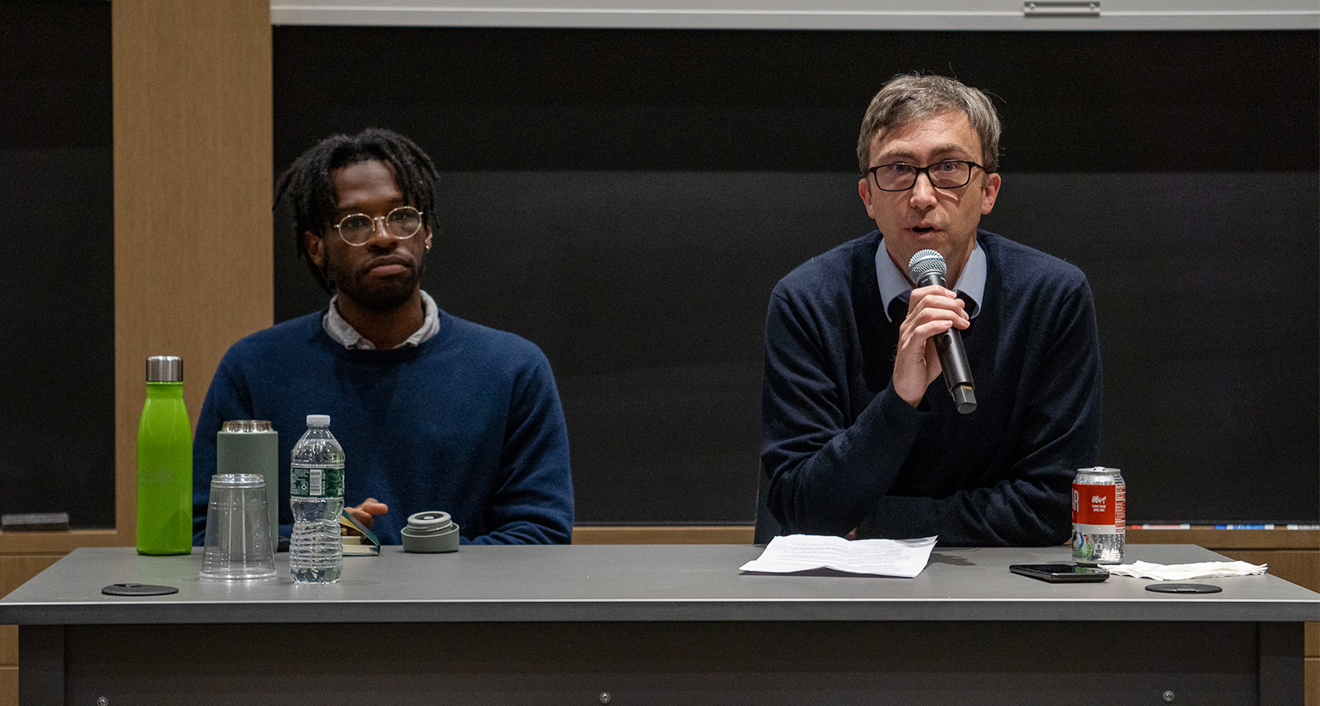
Dancey began the discussion by comparing the 2026 midterm elections to the broader American history of midterm voting patterns. While it’s typical for the sitting president’s party to lose seats in midterm elections, Dancey explained that this cycle produced an exceptional result that challenged recent trends of increasing political polarization.
“I do think that there were several things that surprised me certainly, and I think ran counter to some of the trends in American politics we’ve seen over the last couple of decades,” Dancey said. “In particular, the Democrats’ wins in some of these states ran counter to what we would expect in our more polarized, and what we might call calcified, electorate.”
In his view, one of the most significant developments in this midterm election was that Democrats won numerous seats in states that had previously been strongholds for President Donald Trump. “You really see, I think, these significant gains in these deeply Republican states that for the last decade or two have really felt unattainable for Democrats,” Dancey noted.
Building on this analysis, Franklin Fowler, who is also co-director of the Wesleyan Media Project, discussed the role of political advertising in the 2026 election. She noted that the policy concerns that dominated this election cycle were the cost of living and the overall economy, themes that were consistently present in political ads. Additionally, the scale of spending on ads was unprecedented, as campaigns and outside groups spent over $7 billion on federal and gubernatorial television ads.
“The scale of the spending, just to put some things into perspective, was roughly half a billion dollars a week after Labor Day alone, and that only escalated,” Fowler said. She added that 71 percent of the spending on televised political ads came from outside groups.
Franklin Fowler also described the 2026 midterms as the first “AI election,” emphasizing the growing use of artificial intelligence showing up in political ads. While some candidates used AI to curb the production costs of political ads, she said there were “also some ads that looked pretty hyper-realistic, and I think those are the ones where voters might actually be confused that a candidate didn't say the things that they're depicted saying.”
Moore shifted the conversation to the electoral patterns in the Deep South. Connecting to the Democrats’ gains in this region, he examined the role of race, education, economic concerns, and voter turnout. Moore discussed how the Democratic victories cannot be attributed to a singular demographic shift, as increased support among white voters was important to the wins, as well as strong turnout among Black and Brown voters in comparison to the lower participation seen among some of these groups in 2024.
Moore also pointed to the economic concerns of voters shaping their voting patterns and incentives; racial differences in income and material circumstances can shape how voters respond to issues such as the rising cost of living. “Given the way that race shapes material realities in this country, Black and Brown people are much less likely to be higher income, and are, as such, much more concerned about economic realities, the price of key necessities,” Moore said.
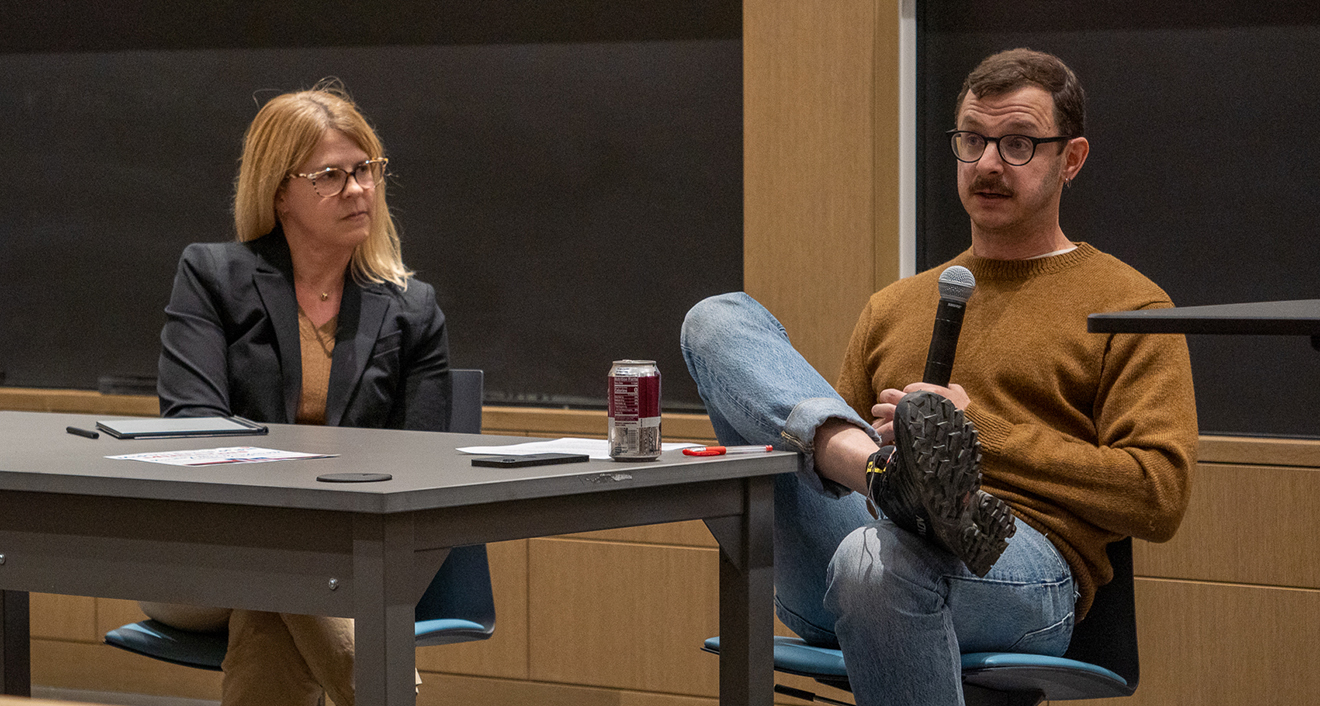
Turning toward voter motivations for the election results, Peck, a professor of government who studies war and foreign policy, reflected on what the results could mean for future governance. Peck argued that the election could be understood, in part, as a rejection of the country’s longstanding approach to foreign policy and military intervention. He highlighted the growing bipartisan dissatisfaction with the current administration’s involvement in Iran, which pushed some voters to vote against their normative parties.
“I think one clear way to interpret the result is a clear demand from the public that this war end immediately,” Peck said. “I think the result here is the strongest electoral signal in a generation that the public, in a bipartisan way, rejects a kind of elite-based foreign policy consensus that transcends both parties.”
Additionally, Peck said the midterm election may encourage Congress to reconsider its role in decisions about war. “Any outcome that's not simply the Democrats rolling over will involve a real interbranch conflict,” he said, arguing that a meaningful debate over war powers could manifest as Congress reconsiders how much authority the executive branch should have in decisions involving military action. “I think absent some type of meaningful change to the system and how it functions, we will be back in this conversation on this subject again in five years, 10 years, 20 years,” he said.
The panelists' analyses highlighted the complexity of interpreting the 2026 midterm elections and the challenges that remain for the country’s political institutions. They emphasized that the election’s significance extends beyond the results themselves, manifesting as shifting partisan coalitions, the growing influence of political advertising, economic concerns, voter turnout, and debates over executive power. As the next wave of new members of Congress prepares to govern, the panel raised broader questions surrounding how those electoral gains will translate into governance and lasting institutional change.