Turning Tough Conversations Into Community Solutions
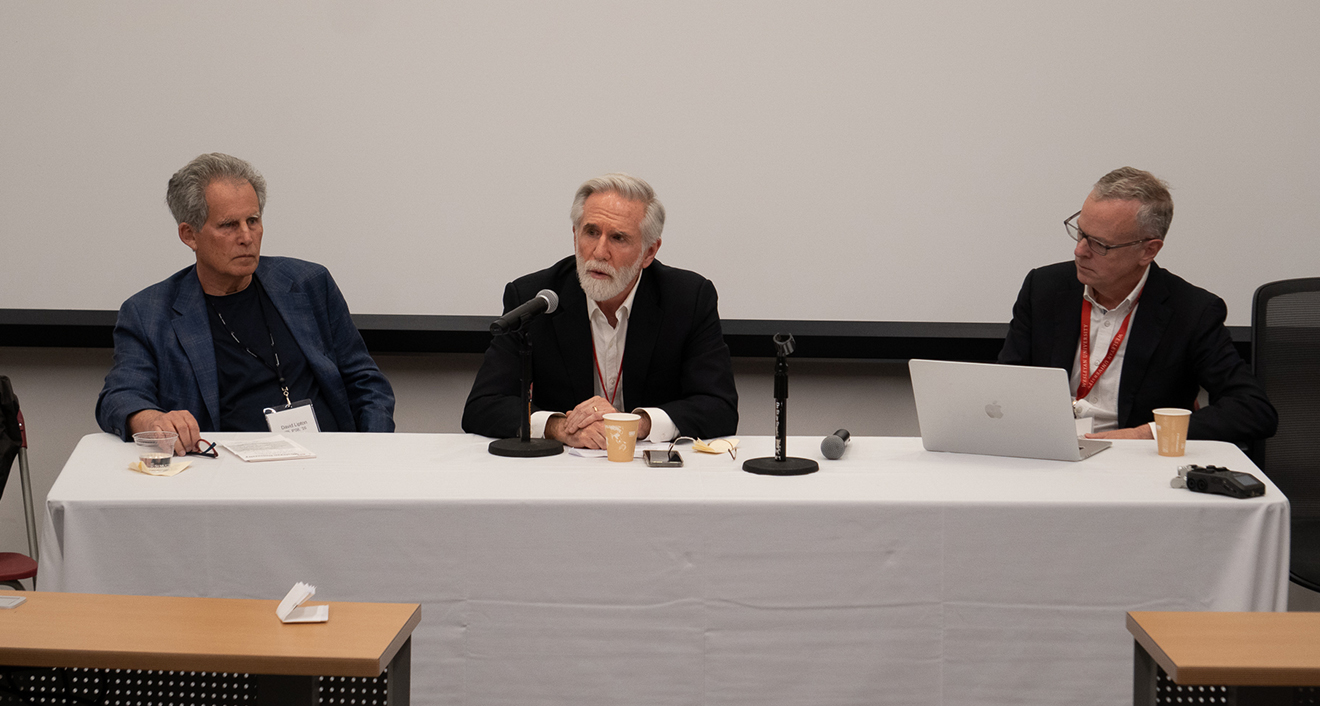
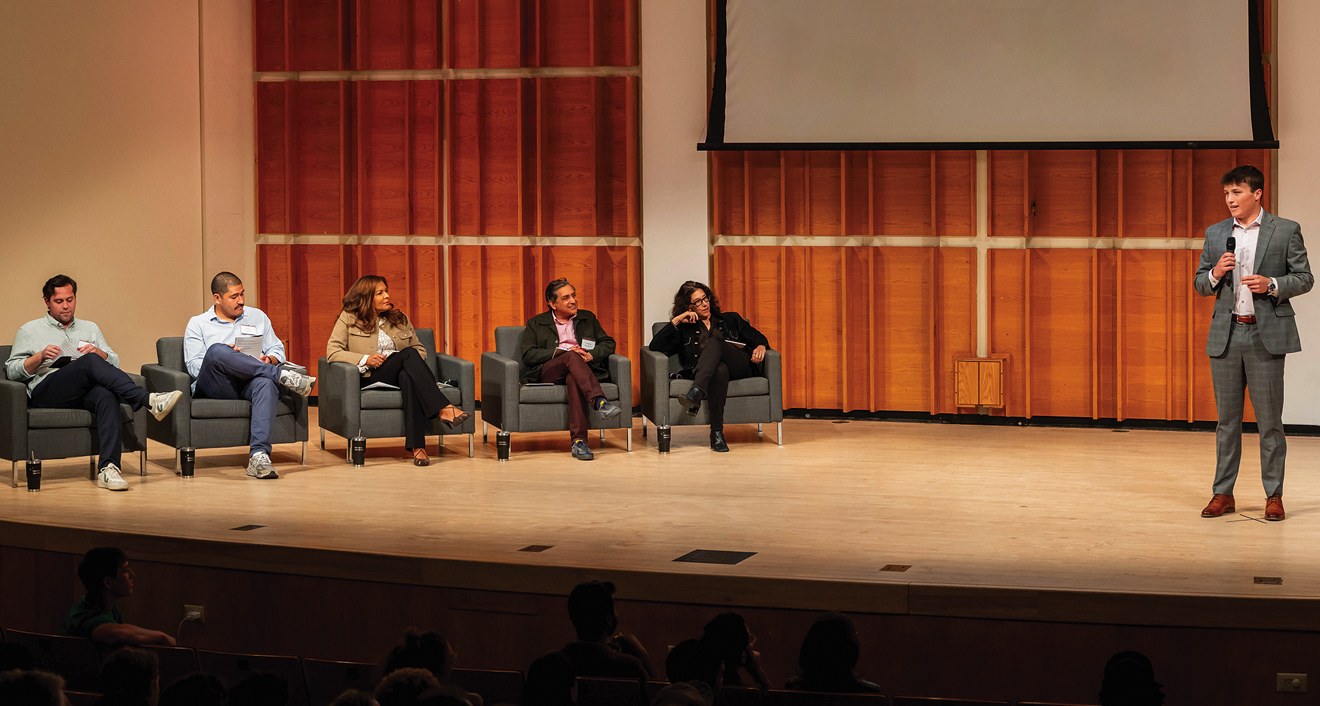
Self-censorship. Town-gown relations. Those were two topics that a group of 14 Wesleyan students and one staff member chose to address during a “Conversation to Action Workshop: Building Consensus on Strengthening Our Wesleyan Community” earlier this month. The workshop helped students experience and build the skills needed to move from dialogue to action as part of the University’s Renewing Democracy’s Promise initiative.
During the two-hour event, facilitated by Urban Rural Action, a national nonprofit that brings people together across divides to tackle urgent challenges, students broke up into two groups to first analyze then address the issues they had identified. They used Urban Rural Actions model of the “four Ds,” which include, diagnose, decide, develop, describe—pausing, taking notes, and debriefing as they went along. Toward the end, each group presented their learnings.
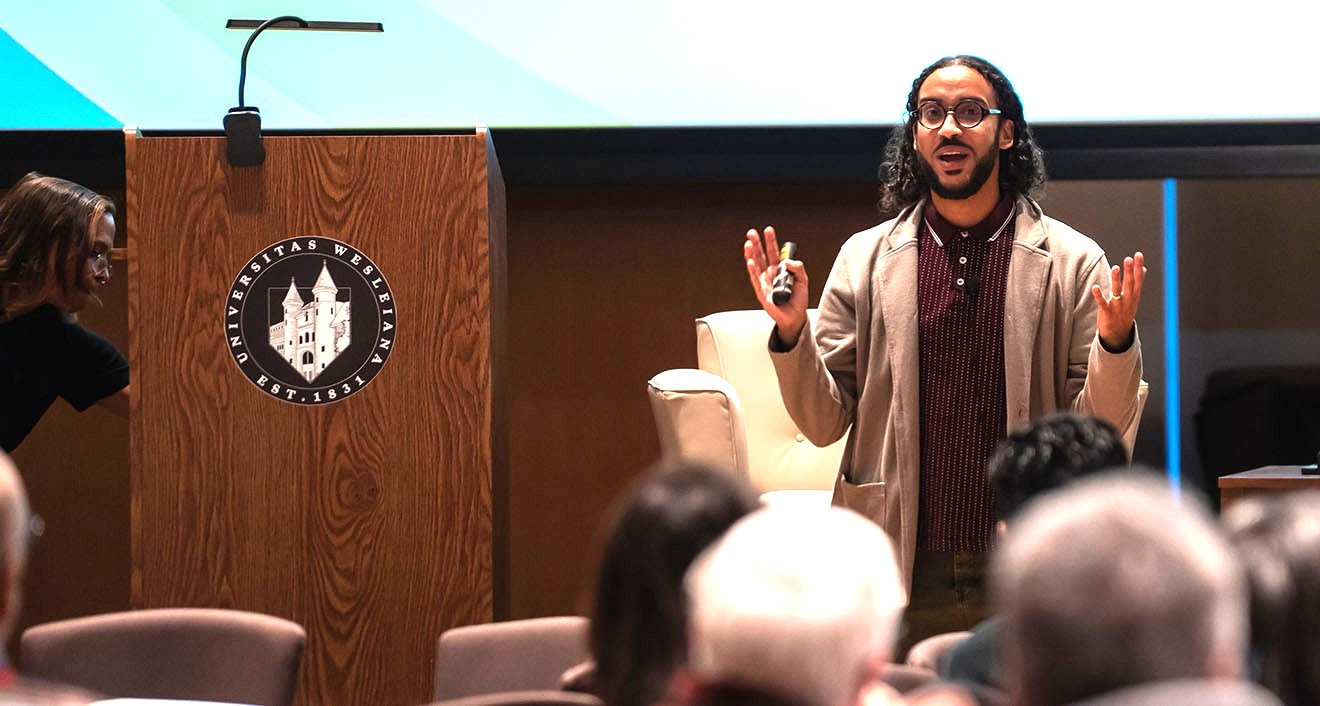
“The Urban Rural Action presentation was incredibly informative and grounding, offering a thoughtful framework for how we can find solutions by working across differences,” said Riley Blout ’27, a government and education double major. “It created a space where people with very different perspectives could engage constructively and walk away with practical tools for building common ground.”
That process is the model for the Conversation to Action Fellowship, a year-long opportunity for a cohort of students, faculty, staff, and community members to collaborate on a local issue. The goal of the fellowship is to help participants build skills in conversation and problem solving that will support work on a project in partnership with a Middletown community organization.
“At the workshop, students practiced transforming a broad local concern into a concrete plan that they could act on together,” said Joe Bubman, executive director of Urban Rural Action. “In the fellowship, we’ll take that a step further. Fellows will put those plans into action alongside a Middletown organization to generate a meaningful impact in the community.”
Through a curriculum developed collaboratively by staff at the Allbritton Center for the Study of Public Life, Urban Rural Action, and Provost and Senior Vice President for Academic Affairs Nicole Stanton, fellows will meet virtually and in person to build practical collaboration skills, then put those skills to work on a real-world, community-based project. Over the spring semester, they will work alongside Middletown community members across differences in politics, race, religion, age, and lived experience, among others.
“Wesleyan believes that colleges and universities have a key role to play in bringing communities together, strengthening our democratic culture, and preparing students to be engaged citizens,” said Stanton. “If part of our goal as educators is to prepare students to be active democratic citizens, then they must be able to have respectful, rigorous conversations with people whose backgrounds, experiences, and perspectives differ from their own. They must be able to identify and solve problems together.”
Fellows will work in teams with local organizations to analyze a community challenge, develop and carry out a response, and assess what they accomplished. Student fellows receive course credit, faculty receive research funds, and community members receive a modest stipend.
Examples of programs and outcomes facilitated by Urban Rural Action include a suicide prevention resource in Pennsylvania, developed by participants and implemented by a local mental health organization. In Wisconsin, the strategy led to a reconciliation project between local Democrats and Republicans.
The Wesleyan fellows will kick off the process in February and participate in gatherings in March. By the end of April, they will present their public projects, which may include a youth-focused effort. The projects will then be carried forward by a local community-based organization.
Fellows will also develop skills and engage in civic action and democratic culture building that goes beyond participating in elections. This experiential learning can also inform their future career development.
“Together, we aim to support the extraordinary civic engagement work our faculty and students are already doing, and to amplify it by bringing more and new voices into the conversation,” said Stanton.
The application is due Nov. 30, followed by interviews. Applicants will be notified of decisions by Dec. 11.