Speakers
-
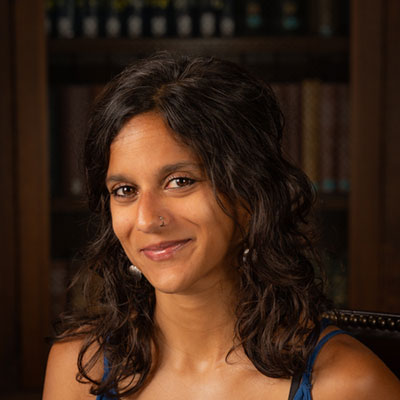
Aditi Sahasrabuddhe
Aditi Sahasrabuddhe is an assistant professor of political science at Brown University. She specializes in international political economy, with a focus on geopolitics and global governance, the politics of international finance, central banking, and economic history.
Learn MoreHer book, Bankers’ Trust: How Social Relations Avert Global Financial Collapse, was published by Cornell University Press in 2025. In addition to her academic research, her writing and commentary have appeared in the Financial Times, H-Diplo, The Washington Post’s Monkey Cage (now Good Authority), and the Phenomenal World blog. She received her PhD in government from Cornell University in 2021.
-
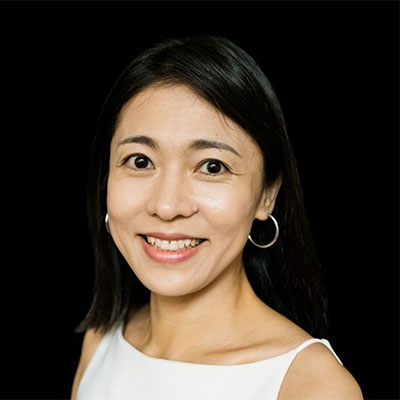
Angela Huyue Zhang
Angela Huyue Zhang is a professor of law at the University of Southern California, where she writes and teaches at the intersection of law, technology, and geopolitics. Her research examines the institutional dynamics of regulation and governance, with a current focus on the U.S.–China technology rivalry and the global regulation of artificial intelligence.
Learn MoreZhang is the author of two critically acclaimed books: Chinese Antitrust Exceptionalism: How the Rise of China Challenges Global Regulation (Oxford University Press, 2021) and High Wire: How China Regulates Big Tech and Governs Its Economy (Oxford University Press, 2024). Both works analyze how political and legal institutions shape regulatory enforcement in China.
Her scholarship has appeared in leading international law reviews and peer-reviewed journals such as Management Science and The China Quarterly. Prior to joining USC, Zhang taught at the University of Hong Kong, NYU School of Law, and King’s College London. Earlier in her career, she practiced law for six years in Asia, the United States, and Europe. Zhang received her LLB from Peking University and her LLM, JD, and JSD from the University of Chicago Law School.
-
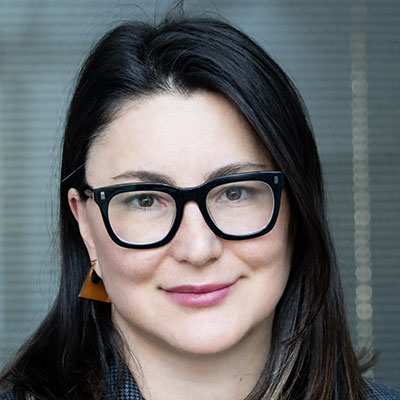
Basak Kus
Basak Kus is a professor of government at Wesleyan University, where she teaches courses on American and comparative capitalisms, the state, law, and public policy. She is the author of Disembedded: Regulation, Crisis, and Democracy in the Age of Finance (Oxford University Press, 2024) and numerous articles on neoliberalism, social policy, income and wealth inequality, redistributive politics, financialization, and, more recently, climate change and green energy transitions.
Learn MoreShe is also the editor or co-editor of three special issues: “Greening the Economy: Toward a New Political Economy” in Regulation & Governance, “Politics of Financialization” in Economic and Social Review, and “Credit, Consumption, and Debt” in the International Journal of Comparative Sociology.
Professor Kus grew up in Türkiye and completed her undergraduate studies at Boğaziçi University in Istanbul. She obtained her PhD from the University of California, Berkeley. Prior to joining Wesleyan, she completed postdoctoral fellowships at Yale and Princeton universities.
-
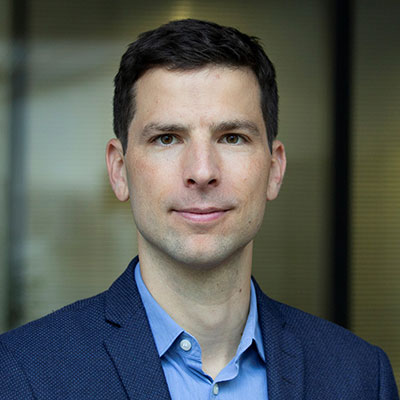
Benjamin Braun
Benjamin Braun is an assistant professor of political economy at the London School of Economics and Political Science. His research interests include the role of finance in capitalism, central banking, and green statecraft. He is a fellow at the Hertie School, an associate at LSE’s Centre for Economic Transition Expertise, and a policy fellow at Dezernat Zukunft.
Learn MoreBraun is the principal investigator of the DFG-funded research project “Central Banking in Hard Times,” located at the Hertie School, and co-principal investigator of the Hewlett-funded project “New Generators of Inequality: Asset Managers and Private Equity,” based at Brown University. He is currently a visiting professor at the School of Social Science at the Institute for Advanced Study in Princeton, where he leads the annual theme, “Emerging Forces in Global Political Economy.”
-

Benjamin H. Bradlow
Benjamin H. Bradlow is an assistant professor of sociology and international affairs at Princeton University, jointly appointed in the School of Public and International Affairs and the Department of Sociology. He is also a visiting researcher at the Southern Center for Inequality Studies at the University of Witwatersrand in Johannesburg, South Africa, and a fellow in the research program on Humanity’s Urban Future at the Canadian Institute for Advanced Research. During the 2026–27 academic year, he is a member of the School of Social Science at the Institute for Advanced Study.
Learn MoreBradlow’s research investigates connections between climate change, urbanization, technological change, and the political challenges for democracy that confront societies across the globe. He is the author of Urban Power: Democracy and Inequality in São Paulo and Johannesburg (Princeton University Press, 2024) and is currently writing his next book, The Climate Hinge: Green Industrial Transitions in the Global South.
His academic research has been published in leading journals in sociology, economics, environmental studies, urban studies, and public health. He is a regular public writer, most recently authoring essays in the Financial Times, Foreign Affairs, and Phenomenal World.
-
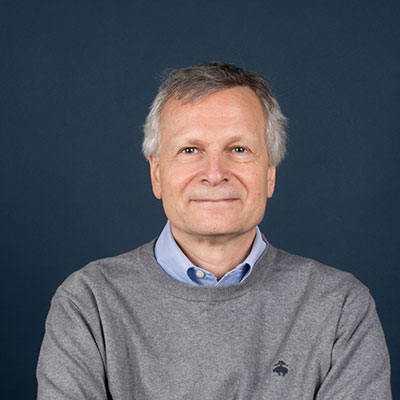
Dani Rodrik
Dani Rodrik is the Ford Foundation Professor of International Political Economy at the Harvard Kennedy School. He has published widely in the areas of economic development, international economics, and political economy. His current research focuses on inclusive economic growth in both developing and advanced economies. He is the recipient of numerous awards, including the inaugural Albert O. Hirschman Prize of the Social Science Research Council and the Princess of Asturias Award for Social Sciences.
Learn MoreProfessor Rodrik is co-director of the Reimagining the Economy Program at the Kennedy School and the Economics for Inclusive Prosperity network. He was president of the International Economic Association from 2021–23 and helped found the association’s Women in Leadership in Economics initiative.
His most recent book is Shared Prosperity in a Fractured World: A New Economics for the Middle Class, the Global Poor, and Our Climate (2025). His previous books include Straight Talk on Trade: Ideas for a Sane World Economy (2017), Economics Rules: The Rights and Wrongs of the Dismal Science (2015), The Globalization Paradox: Democracy and the Future of the World Economy (2011), and One Economics, Many Recipes: Globalization, Institutions, and Economic Growth (2007).
-
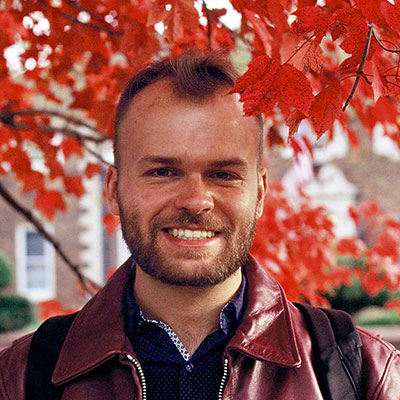
David Gray Widder
David Gray Widder studies how people build and resist AI systems—and the technical, geopolitical, and economic logics that shape their beliefs, practices, and power. He is an assistant professor at the School of Information at the University of Texas at Austin and a research affiliate of Data & Society.
Learn MorePreviously, Widder was a postdoctoral fellow at the Digital Life Initiative at Cornell Tech. He earned his PhD from the School of Computer Science at Carnegie Mellon University. He has also conducted research at Intel Labs, Microsoft Research, and NASA’s Jet Propulsion Laboratory.
His recent research has been accepted to ACM FAccT, Nature, ACM CSCW, and Big Data & Society. His scholarly work has appeared in Wired, the Associated Press, The New York Times, and on National Public Radio.
-
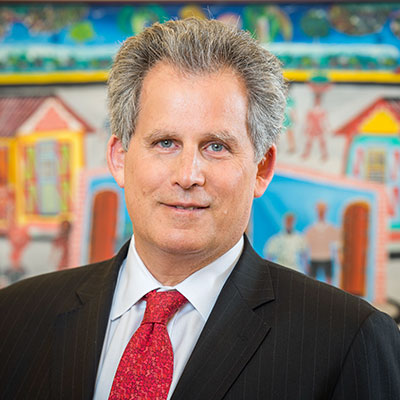
David Lipton
Mr. David Lipton served as counselor to Secretary Janet Yellen at the United States Treasury in 2021–22, focusing on international affairs. He was first deputy managing director, the number-two official at the International Monetary Fund, for eight years until March 2020. Before that, he served in the Obama administration as special assistant to the president, covering international economic affairs at the National Economic Council and National Security Council.
Learn MoreLipton spent five years in the Clinton Treasury Department, where he supervised work with the transition economies, rising to undersecretary for international affairs during the financial crisis in Asia. Before that, he and Jeffrey Sachs advised governments in Eastern Europe during their transition to market economies.
Lipton also has experience in the private financial sector, both at Citi and Moore Capital Management, a global hedge fund. He has a PhD in economics from Harvard University and a BA from Wesleyan University.
-
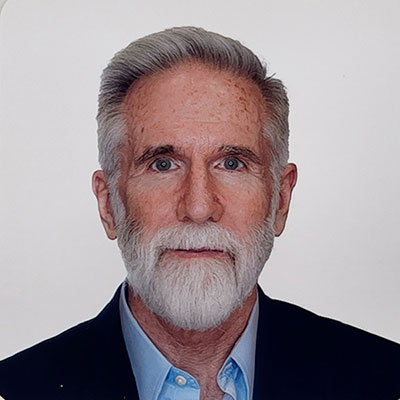
David J. Lynch
David J. Lynch is The Washington Post’s global economics correspondent. He previously wrote for the Financial Times, Bloomberg News, and USA Today, where he was the founding bureau chief in London and Beijing.
Learn MoreHe was the paper’s first recipient of a Nieman Fellowship at Harvard University and covered the wars in Kosovo and Iraq, the latter as an embedded reporter with the U.S. Marines. Lynch, who has reported from more than 60 countries, contributed to The Washington Post coverage that received the 2026 Pulitzer Prize for public service. He is the author of two books, most recently The World’s Worst Bet: How the Globalization Gamble Went Wrong (And What Would Make It Right).
-
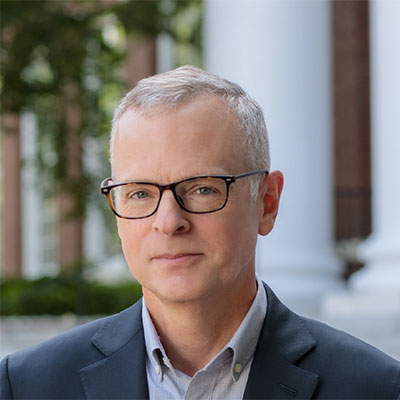
Gunnar Trumbull
Gunnar Trumbull is the Philip Caldwell Professor of Business Administration at Harvard Business School.
His current research and teaching focus on climate change. He has written a range of cases focused on climate entrepreneurs and the regulatory environment in which they operate. He also teaches about climate change and corporate climate leadership in Harvard Business School’s most senior executive education program, the Advanced Management Program.
Learn MoreProfessor Trumbull’s primary area of expertise is political economy, with a focus on regulatory politics, consumer politics, and climate politics. He is the author of A Concise Business Guide to Climate Change. His book Strength in Numbers explores how even weak groups in society are able to gain economic and political influence. Trumbull has also written books on French innovation policy (Silicon and the State), consumer credit markets (Consumer Lending), and European consumer politics (Consumer Capitalism).
Professor Trumbull earned his AB in history and literature at Harvard College. After college, he helped found the NGO Geohazards International. He earned his PhD in political science at MIT and joined Harvard Business School in 2001 as a member of the Business, Government, and the International Economy unit. Recent honors include the Williams Award for excellence in teaching and the Student Association’s Faculty Award for outstanding teaching.
-
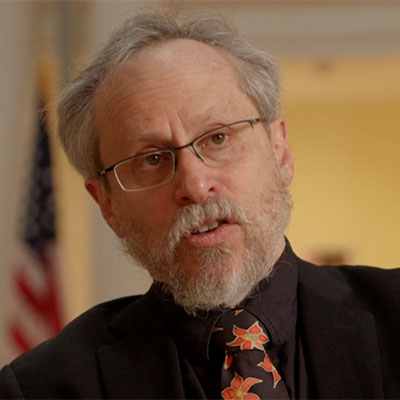
Herman Mark Schwartz
Herman Mark Schwartz is professor emeritus of politics and public policy at the University of Virginia. He is the author of In the Dominions of Debt, States vs. Markets, and Subprime Nation: American Power, Global Capital, and the Housing Bubble, as well as more than 100 other publications.
Learn MoreHe has taught in Britain, Canada, Denmark, Korea, and Norway. He has received fellowships from, among others, the American Academy Berlin, the American Council of Learned Societies, the European University Institute, Fulbright, the Max Planck Institute for the Study of Societies, and the Mellon Foundation.
-
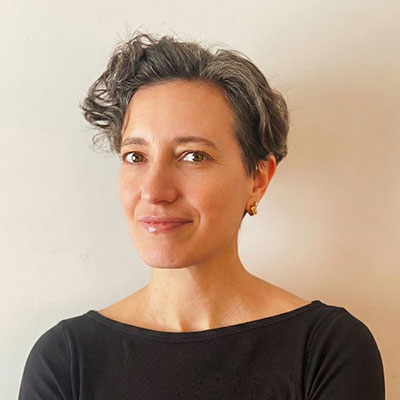
Holly Jean Buck
Holly Jean Buck is an associate professor of environment and sustainability at the University at Buffalo. She is an environmental social scientist whose research focuses on public engagement with emerging technologies, with an emphasis on deindustrialization and energy systems.
Learn MoreHer research on decarbonization and climate technologies has appeared in journals including Nature Climate Change, Climatic Change, Nature Sustainability, and Environmental Research Letters. She is currently a coordinating lead author of the IPCC’s seventh assessment report, Working Group III on the mitigation of climate change. She teaches courses in AI and social structures, the use of generative AI, and environmental justice. She holds a PhD in development sociology from Cornell University and an MSc in human ecology from Lund University.
-

Isabel Estevez
Isabel Estevez is an institutional and development economist focusing on the dynamics of economic transformations, nature-economy relationships, and green transitions. She has advised policymakers in the U.S., Europe, and Latin America, as well as multilateral and civil society organizations, on the design of transformative industrial policies. She has published widely on strategic public investment, trade, procurement, and green industrial strategy.
Learn MoreEstevez served as deputy director of industrial policy and trade at the Roosevelt Institute’s Climate and Economic Transformation Program and senior policy advisor for green industrial policy at the Sierra Club. She has advised various governments, the G20, and the World Bank, among others. She holds a PhD from the University of Cambridge, where she specialized in the use of industrial policy for economic transformation. Estevez is a fellow at the Climate and Community Institute, a member of Common Wealth’s Green Planning Commission, and senior research advisor at Oxford University’s TIDE Center. She has taught at the University of Cambridge and Goldsmiths, University of London.
-
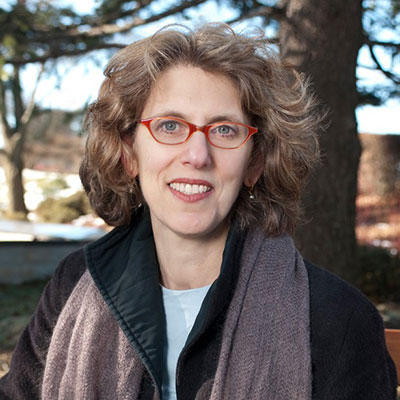
Juliet Schor
Juliet Schor is an economist and professor of sociology at Boston College. Before joining Boston College, she taught at Harvard University for 17 years in the Department of Economics and the Committee on Degrees in Women’s Studies.
Learn MoreSchor is the author of The Overworked American (Basic Books, 1992), which was a New York Times bestseller. In 2011, Schor began researching the platform economy, work included in After the Gig (University of California Press, 2020). In 2021, she became the lead researcher for trials of companies instituting income-preserving four-day, 32-hour workweeks. The findings are detailed in Four Days a Week (HarperBusiness, 2025).
Schor is an elected fellow of the AAAS and a 2024 honorary fellow of the Society for the Advancement of Socio-Economics. Her work has been supported by the National Science Foundation, the MacArthur Foundation, the Sloan Foundation, and the Russell Sage Foundation, among others. Schor’s TED Talk on “the case for the four-day week” has more than three million views.
-
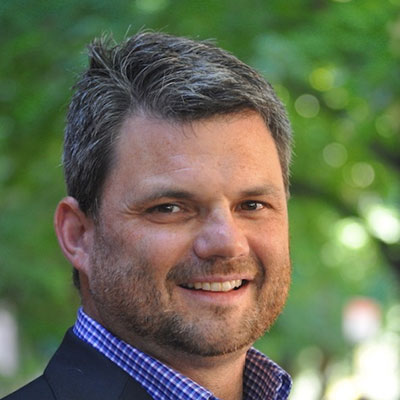
Dr. Kevin P. Gallagher
Dr. Kevin P. Gallagher is a professor of global development policy at Boston University, where he directs the Global Development Policy Center. Gallagher served as a lead expert to the Brazilian presidency of the G20 on multilateral development bank reform and led the Club de Madrid’s Working Group on reform of the international financial architecture in 2024 and 2025. He sits on the China Council for International Cooperation on Environment and Development.
Learn MoreGallagher recently served on the T20 Refueling Growth: Clean Energy and Green Transitions Task Force to the G20 India and on the Chair’s Council of the United States Export-Import Bank on China competition. He has also served on the T20 International Finance Task Force to the G20, the United Nations Committee for Development Policy, the U.S. Department of State’s Investment Subcommittee of the Advisory Committee on International Economic Policy, and the National Advisory Council on trade policy at the Environmental Protection Agency.
-
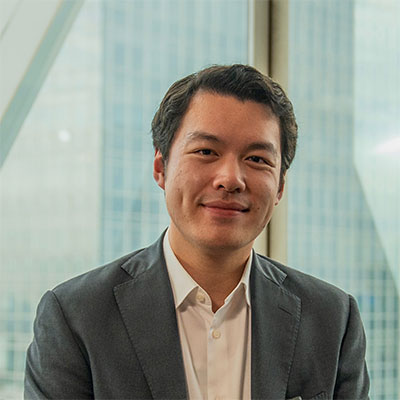
Kevin Zongzhe Li
Kevin Zongzhe Li is a fellow at the Asia Society Policy Institute’s Center for China Analysis, where he leads the center’s work on China-Southeast Asia relations. His research also examines the geopolitics of the energy transition, the role of middle powers amid great-power competition, and clean energy, critical mineral supply chains, and industrial policy.
Learn MoreHe holds a BS in environmental and sustainability sciences from Cornell University and a Master in Public Policy from the Harvard Kennedy School. Li contributes regularly to outlets including The Diplomat, Fulcrum, The Jakarta Post, East Asia Forum, China-US Focus, South China Morning Post, and the Asian Peace Programme.
-
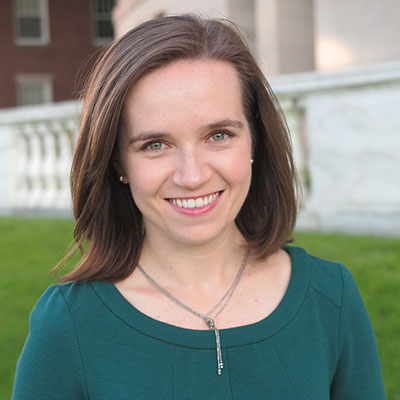
Lindsay Dolan
Lindsay Dolan is an associate professor of government at Wesleyan University. Dolan specializes in international organizations and international political economy, with a focus on developing countries.
Learn MoreShe has published widely in political science journals, particularly on the politics of foreign aid, the bureaucracy of the World Bank, and public opinion on trade. Before teaching at Wesleyan, she was a fellow at the Niehaus Center for Globalization and Governance at Princeton University. She holds a PhD from Columbia University and a BA from Swarthmore College.
-
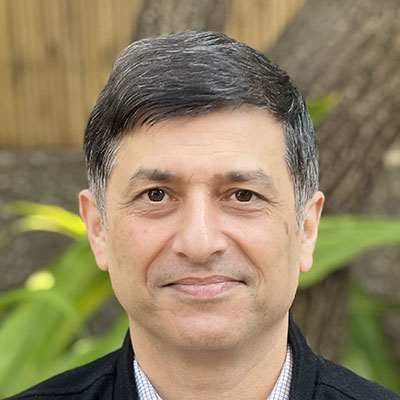
Navroz K. Dubash
Navroz K. Dubash is a professor of public and international affairs at the High Meadows Environmental Institute at Princeton University and a visiting senior fellow at the Sustainable Futures Collaborative in New Delhi, which he helped co-found. His work examines national and global climate governance, the political economy of energy transitions, and air quality.
Learn MoreDubash is co-editor-in-chief of Climate Policy Journal, a member of the steering group of the UNEP Emissions Gap Report, and has been part of the author group of the Intergovernmental Panel on Climate Change. He has also advised the Indian government on climate change, energy, and air and water policy over the last 15 years. Early in his career, Dubash helped establish the global Climate Action Network as its first international coordinator.
-
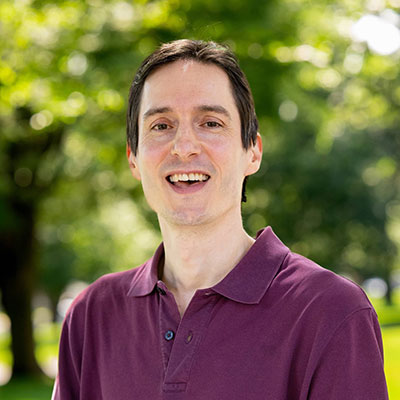
Sebastian Zimmeck
Sebastian Zimmeck is an associate professor of computer science at Wesleyan University, where he directs the privacy-tech-lab. His research focuses on the intersection of information privacy, security, and law, leveraging AI and program-analysis techniques to bridge the gap between system behavior and legal requirements.
Learn MoreA co-founder of Global Privacy Control, a web standard, Zimmeck leads technical-alignment efforts to ensure that software systems are structurally compliant with applicable laws. He holds a PhD and MS in computer science from Columbia University, as well as a JD and PhD in law from the University of Kiel, Germany. His perspective is informed by his background as a former attorney at Freshfields and a Google Research Fellow at the Berkeley Center for Law & Technology. Zimmeck advises governmental regulators and technology companies.
-

Thea Riofrancos
Thea Riofrancos is a professor of political science at Providence College, a strategic co-director of the Climate and Community Institute, and a fellow at the Transnational Institute. Her research focuses on resource extraction, climate change, the energy transition, the global lithium sector and electric-vehicle supply chains, green industrial policy, social movements, and the Latin American left.
Learn MoreRiofrancos is the author of Extraction: The Frontiers of Green Capitalism (W.W. Norton, 2025) and Resource Radicals: From Petro-Nationalism to Post-Extractivism in Ecuador (Duke University Press, 2020), and the coauthor of A Planet to Win: Why We Need a Green New Deal (Verso Books, 2019). Her publications have appeared in scholarly journals including Global Environmental Politics, World Politics, and Perspectives on Politics, as well as media outlets including The New York Times, Financial Times, Foreign Policy, Phenomenal World, n+1, and Dissent.
-
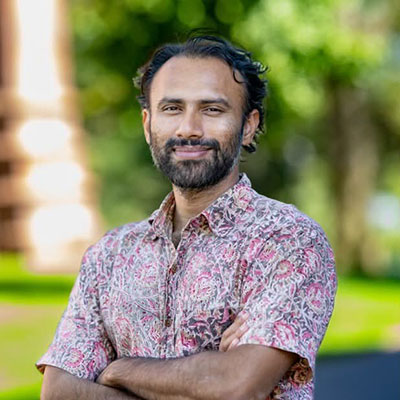
Tim Sahay
Tim Sahay is the co-director of the Net Zero Industrial Policy Lab at Johns Hopkins University. The lab he advises governments from Lula’s Brazil to Claudia Sheinbaums Mexico on finding their slice of jobs, profits and investments in the highly contested global green economy.
Learn MoreHe is also the co-editor of The Polycrisis, a publication at Phenomenal World that focuses on the political economy of climate with an emphasis on the Global South. Tim received his PhD in physics from the Massachusetts Institute of Technology. He hails from Mumbai and lives in New York City.