


Governing Board
The Governing Board consists of six members of Wesleyan’s Environmental Studies faculty who will work closely with the Chair and Director of the Bailey COE. This board will help with all planning and programming as well as ensure diverse input into the running and coordination of Bailey COE. Governing Board members serve a two-year term and cannot simultaneously be a member of the Think Tank.
-

Anthony Cummings
Philip 71 and Lynn Rauch Endowed Professor of Climate Change, Sustainability, and Environmental Management
Read more- Professor of Earth and Environmental Sciences
- Professor, Bailey College of the Environment
- Philip 71 and Lynn Rauch Endowed Professor of Climate Change, Sustainability, and Environmental Management
- MPHIL University of Cambridge
- PHD Syracuse University
-
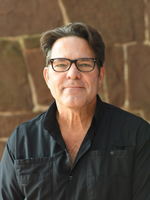
Marc Eisner
Henry Merrit Wriston Chair of Public Policy and Professor of Government
Read MoreMarc Eisner is the Henry Merrit Wriston Chair of Public Policy and Professor of Government at Wesleyan University. Eisner’s research addresses US political economy and public policy, with a focus on the dynamics of regulatory change. He is author or coauthor of nine books on topics ranging from the evolution of antitrust policy to environmental governance to the impact of war on state-building in the United States. His most recent book explores how regulatory design decisions and polarization combined to create problems of regulatory drift and a growing reliance on public-private partnerships and voluntary programs, with a focus on environmental protection and occupational safety and health. His current research is on the political economy of the national debt. -
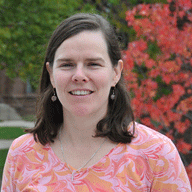
Mary Alice Haddad
Chair, College of East Asian Studies, Associate Professor East Asian Studies and Professor of Government
Read MoreMary Alice Haddad is a Professor of Government at Wesleyan University. Her publications include Building Democracy in Japan (Cambridge 2012), Politics and Volunteering in Japan: A Global Perspective (Cambridge 2007), co-edited with Carol Hager, NIMBY is Beautiful: Local Activism and Environmental Innovation in Germany and Beyond (Berghahn Books, forthcoming), and articles in journals such as Comparative Political Studies, Democratization, Journal of Asian Studies, and Nonprofit and Voluntary Sector Quarterly. She has received numerous grants and fellowships from organizations such as the Institute of International Education (Fulbright), the Harvard Academy for International and Area Studies, the Japan Foundation, National Endowment for the Humanities, Mellon Foundation, Maureen and Mike Mansfield Foundation, and the East Asian Institute. She is currently working on a project about environmental politics in East Asia.
-

Katia Kolcio
Chair, Dance
More info- Associate Professor of Dance
- Affiliated Member Associate Professor, Environmental Studies
- Associate Professor, Russian, East European, and Eurasian Studies
Katja Kolcio is Associate Professor of Dance specializing in Somatics, Environmental Studies, Education Studies and Russian East European Eurasian Studies at Wesleyan University.
Kolcio's research focuses attention on the role of the body in social change, resilience, social connectedness, and psycho-social wellness, with a regional focus on Ukraine. Her current research, Vitality Project Donbas in collaboration with Ukrainian NGOs Development Foundation/Community Self Help, was funded by the United Nations Recovery and Peacebuilding Programme to develop and assess impact of somatic methods for generating resilience, agency and promoting peace during crisis, social changes and war.Working since 2015 in collaboration with the Ukrainian NGO Development Foundation/Community Self Help Kolcio has lead workshops in somatic resilience for war relief workers in Ukraine. They were commissioned in 2018 to develop a program in somatic resiliency for soldiers, working closely with the National Guard, Ukrainian Armed Forces, and veterans. This program has been further developed into a field manual and a book, The Force of Breath: skills for psychological recovery, was published in Ukrainian language by Volyn National University, Rivne, Ukraine (Fall 2022). An English language book, Somatic Interventions in Times of Crisis: The Body Remembers Freedom (Jenny Stanford Publishing) is forthcoming, Fall 2026.
-

Danny Krizanc
Professor of Computer Science
Read more- Co-Coordinator, Informatics and Modeling
- Professor of Computer Science
- Edward Burr Van Vleck Professor of Computer Science
- Professor, Environmental Studies
- Professor, Integrative Sciences
Danny Krizanc received his BSc from University of Toronto in 1983 and his PhD from Harvard University in 1988, both degrees in Computer Science. He held positions at the Centruum voor Wiskunde en Informatica, Amsterdam, The Netherlands, the University of Rochester, Rochester, New York and Carleton University in Ottawa, Canada before joining the Department of Mathematics and Computer Science at Wesleyan University in 1999. His research focus is the design and analysis of algorithms, especially as applied to distributed computing, networking and computational biology.
-

Helen Poulos
Chair, Environmental Studies
Read more- Chair, Environmental Studies
- Distinguished Associate Professor of the Bailey College of the Environment and Earth and Environmental Science
- Distinguished Associate Professor of the College of the Environment and Environmental Studies
-

Justine Quijada
Professor of Earth and Environmental Sciences
Read more- Associate Professor of Religion
- Associate Professor, Russian, East European, and Eurasian Studies
- Associate Professor, Environmental Studies
Specializes in ritual studies, post-Soviet religious practices, nationality politics and comparative secularisms in Siberia and does fieldwork with urban shamans in Ulan-Ude, Buryatia.
- BA University of Chicago
- MA Columbia University
- PHD University of Chicago
-

Dana Royer
Professor of Earth and Environmental Sciences
Read MoreDana Royer is a Professor of Earth and Environmental Sciences at Wesleyan University. He is interested in the paleoclimate and paleoecology of terrestrial ecosystems that are millions of years old, and has published over 50 papers on these topics. He teaches courses on environmental studies, climate change, paleontology, and soils. He also serves on the Board of Control for the Connecticut Agricultural Experiment Station. Dana has degrees from the University of Pennsylvania (BA) and Yale University (PhD).
-
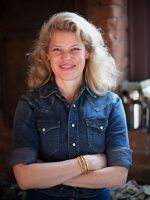
Tula Telfair
Professor of Art
Read MoreTula Telfair paints monumental landscapes and epic-scale vistas that are simultaneously awe-inspiring and intimate. She combines stillness with motion, solitude with universality and definition with suggestion in her bold and quiet works. An extension of the progression of landscape from the backdrops of the Renaissance through the travelogues of the nineteenth century and beyond, Telfair's paintings are fully contemporary in their inspiration and execution. They demonstrate the spirit and potency of the genre adapted to a new century. Each painting calls attention to the power and fragility of the environment. Her work has been described as a meditation on the field itself, fueled by memories of her experiences living on four continents. Telfair shares with us her private vision of the beauty and majesty of the natural world. More than a single moment in time, each scene is a continuum that develops a narrative of past, present and future, indicative of nature itself. (From the Exhibition A World of Dreams)
She is a Professor of Art in the Department of Art and Art History at Wesleyan University in Middletown, Connecticut. She lives and works in New York City and Lyme, Connecticut. Born in Bronxville, NY in 1961, she grew up in Africa, Asia and Europe before settling in the United States. She received her BFA as a W.W. Smith foundation Fellow from Moore College of Art in 1984, and earned an MFA in 1986 as a Graduate Fellow from Syracuse University. She has work in public collections around the world, and has shown extensively in one-person and group exhibitions in the United States and abroad. She is represented by Forum Gallery in New York City and Los Angeles.