
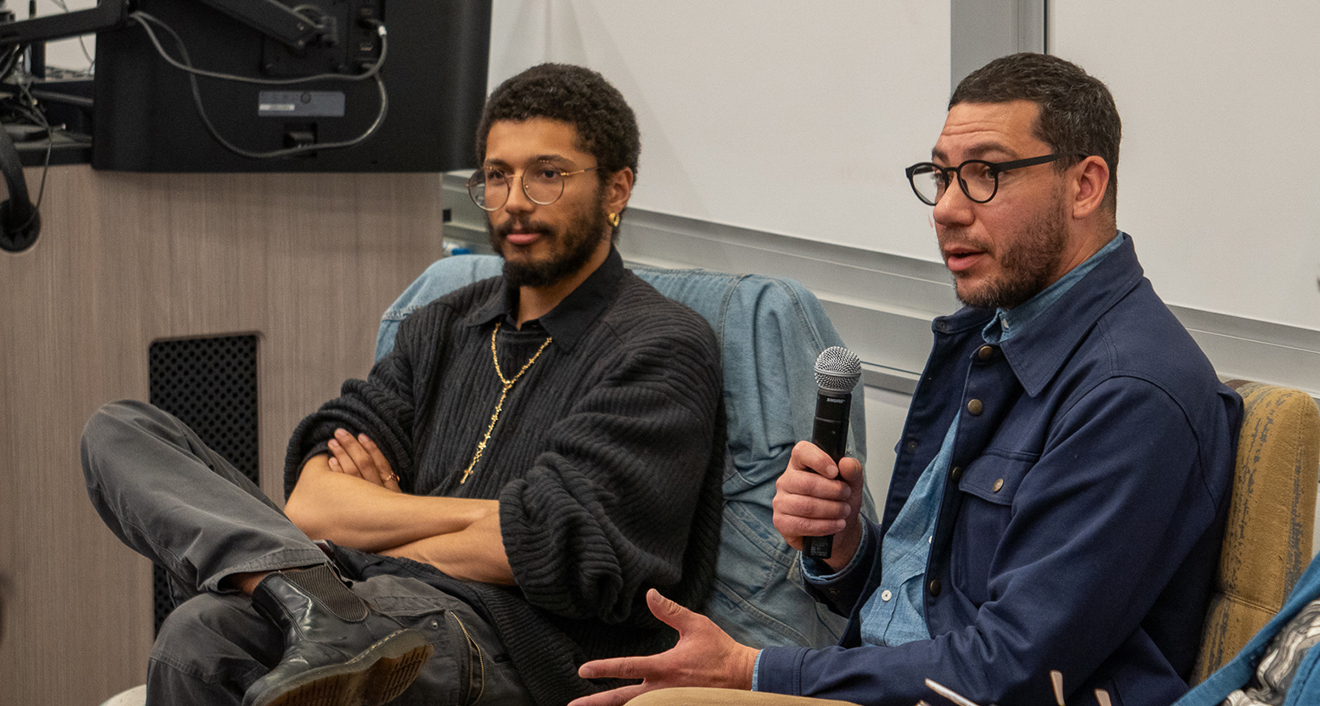
Panel Discusses National Identity and Citizenship
Ahead of the nation’s 250th anniversary of independence this summer, four Wesleyan faculty members joined President Michael S. Roth ’78 in a panel conversation on the role of the university in shaping the nation’s identity and developing citizens on April 1.
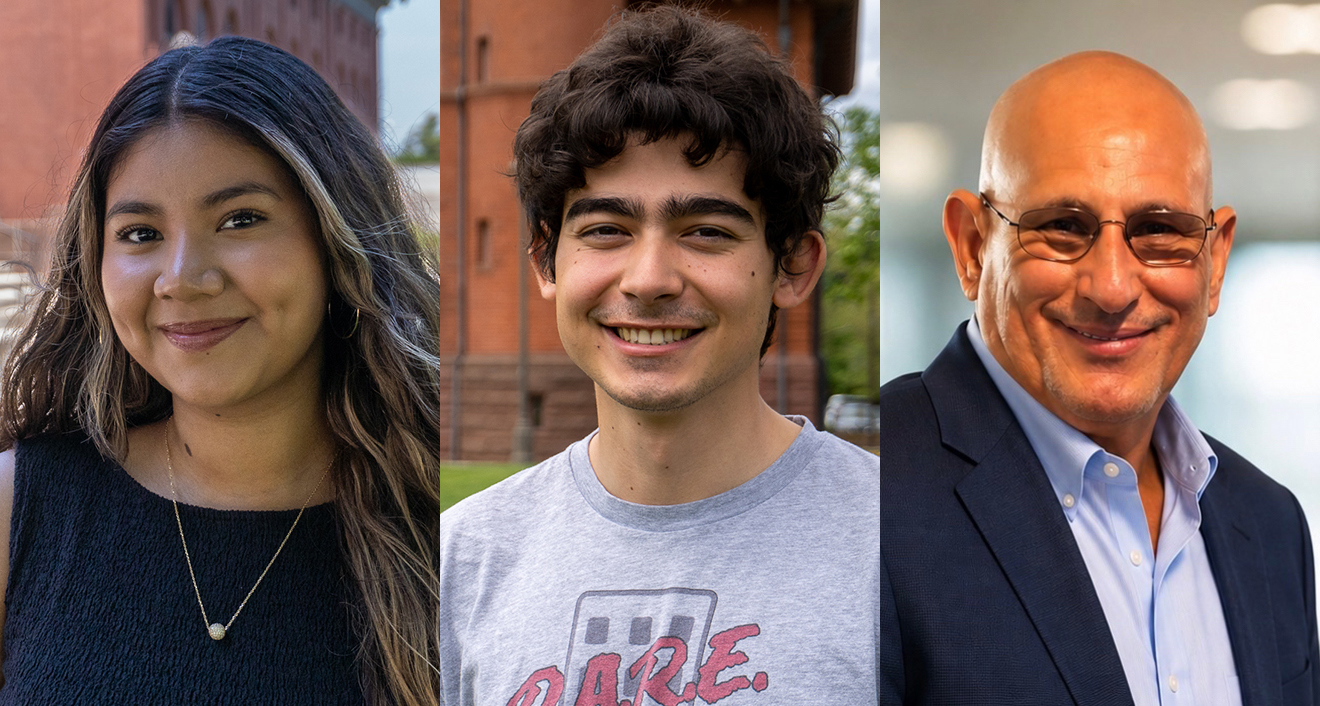
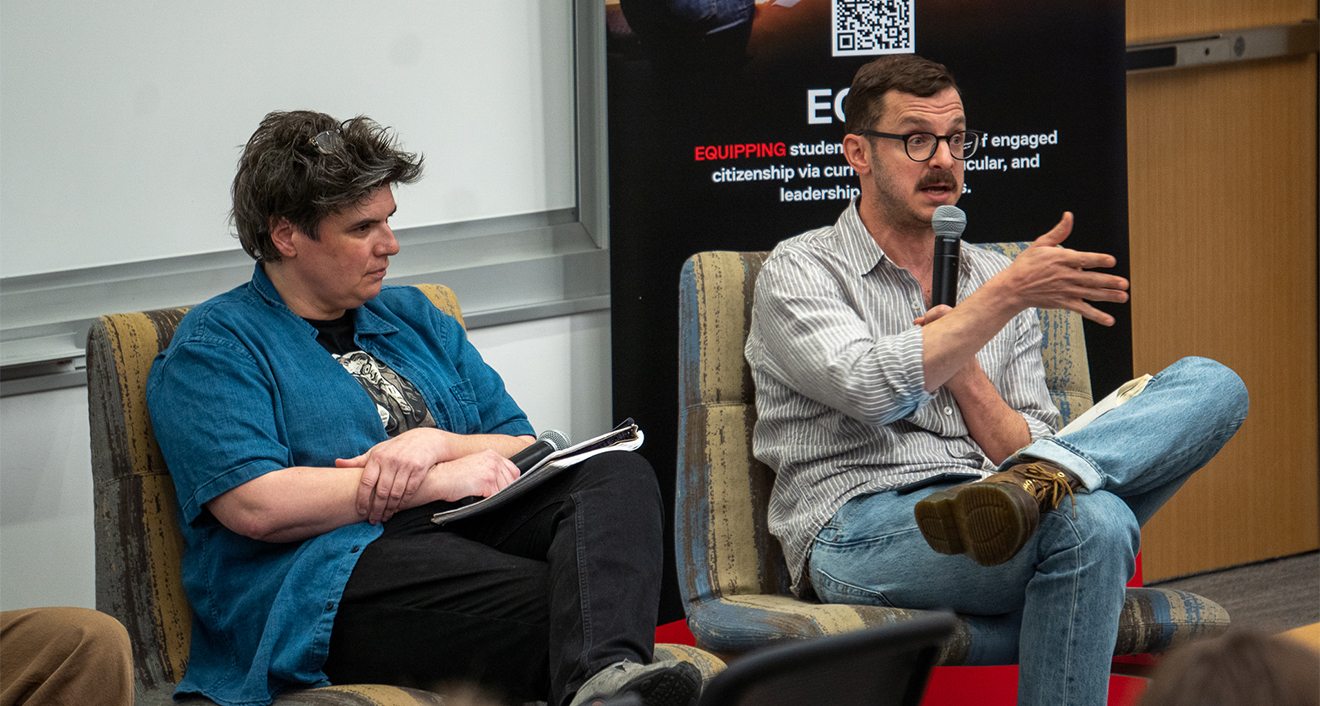
The panel was part of the Allbritton Center for the Study of Public Life’s Democracy 250: Speaker Series, a slate of events exploring the current and future state of the American democracy. Roth moderated the panel, including Associate Professor of American Studies Laura Grappo, Chair and Professor of African American Studies Khalil Johnson, Associate Professor of Government Justin Peck, and Assistant Professor of Philosophy Nicholas Whittaker.
Roth asked the panel if they thought of themselves as Americans, what they considered to be the American identity, how it has changed over time, and the role of higher education in shaping the national identity.
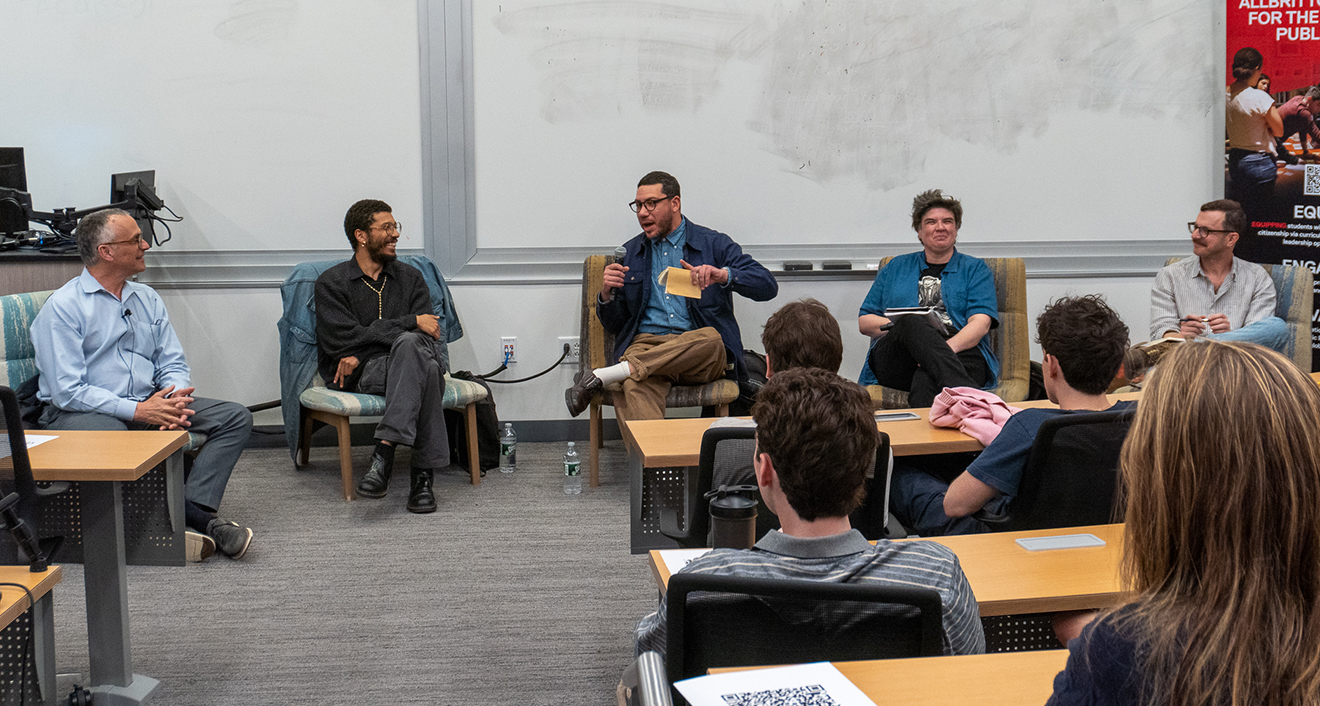
Peck kicked off the discussion by first looking at the history of national citizenship in the United States as a means for understanding national identity. He argued that the idea of citizenship did not totally take hold until the 14th Amendment was ratified in 1868—this amendment granted citizenship to all people born or naturalized in the United States, including former slaves. Until that point, people identified more with their state than with the nation. The application of this amendment is currently under scrutiny in the Supreme Court, who is considering a case that limits birthright citizenship.
“I think it's notable and important that the elites in the United States politically don't really begin to even consider national citizenship until slaves are made free,” Peck said. “Then we have to reckon with what do we do with all these people, who had up until that moment been conceived of as property, and are now thought to be having to be integrated into the United States.”
Along those same lines, Grappo said the idea of America has been and continues to be flawed in practice, but it’s a country with an identity based on principles like the freedom of speech and the right to assembly.
“This is a place where if you believe in certain edicts, certain ideas, certain principles, that is supposed to be what America is. I think it's easy to dismiss that and think it's not important,” Grappo said. “…we talk about its flaws extensively in this environment, but I do think that there's something to it. I think it's something worth preserving.”
Whittaker said he sees America as a conglomeration of localities—small towns and cities. On an individual level, he said his life has been impacted more by the social and community bonds forged in the Maryland swamp he grew up on than the country at large.
“National identity is something like an abstraction from a locality into something like a generalized image of that locality,” Whittaker said. “The locality is what actually produces who and what we are.”
After teasing out the panelists’ viewpoints on the makeup of the national identity, the discussion pivoted to the responsibility of universities in preparing students to be active and engaged citizens. While Peck said he views the responsibility of the university as teaching students to be truth seekers, Johnson said he thinks the university must work for the good of the larger public.
Johnson pointed to his own family history to explain: His grandmother went to Dillard University, a historically Black college founded with the purpose that their graduates would contribute to the public good. He also noted that many colleges in the United States were granted tax-free status because they work in the interest of the public. “The public good can be seen as synonymous with supporting and developing citizens,” Johnson said.
Back in March, Wesleyan launched a nationwide effort to engage college students in opportunities to participate in democracy ahead of the midterm election this fall. Roth encouraged students to get involved in these efforts during the discussion.
“We are trying to get students around the country to participate in the electoral system in the coming year to defend it. It's not a spectator sport,” Roth said. “The reason is we think that civic engagement, participating in the public sphere through the electoral system, is good for individual students, it's good for the institutions of which they are a part, and it's good for the country.”
The Allbritton Center will host more Speaker Series events this month, including a screening of a documentary on the challenges facing public libraries on April 9, and book talk and workshop on the fight for American democracy on college campuses on April 10.