
Educators Explore Civic Literacy, Culture, and Democracy
How do civics, education, and democracy intersect? At a recent panel hosted by the College of Education Studies, educators tackled this question, reimagining literacy as a tool for civic engagement, cultural expression, and democratic participation.
The three panelists investigated how to support young people through education, emphasizing the necessity of nurturing not only academic prowess but empathy, care, and community-mindedness within the classroom. The panel was co-sponsored by the Allbritton Center for the Study of Public Life.
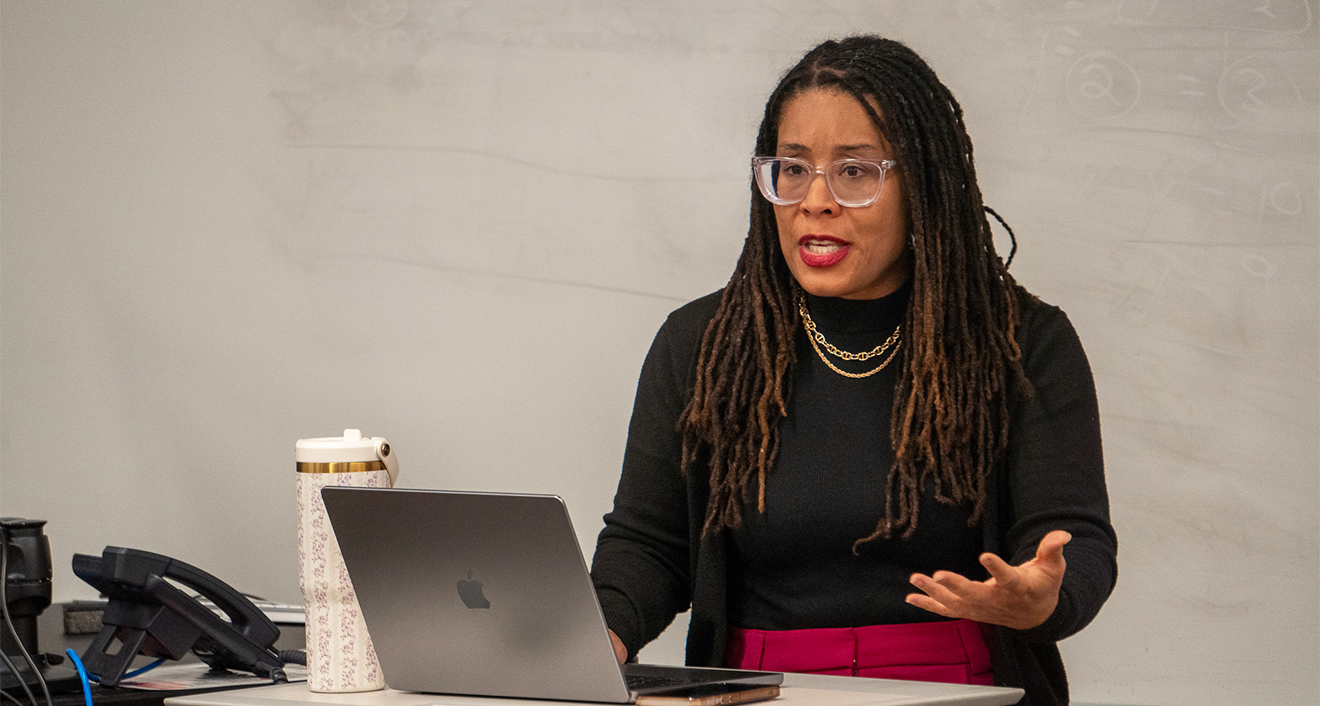
Beginning the discussion, Lauren Kelly, an associate professor of Urban Social Justice at Rutgers University, shared her expertise on critical hip-hop literacies, youth research, and activism in her presentation, “As We Enter.” Kelly explained that her own literary identity was developed through hip-hop and music. She has used this experience to inform her pedagogical approach and emphasize the transformative potential of culturally grounded literacy practices.
“My students entered the classroom with the idea that if you are a teacher, then you are an enemy already,” Kelly said. To combat student disengagement in her classroom in Queens, New York, Kelly began “leading with hip-hop identities, analyzing students' identities in the classroom, and talking about culture and genre that was tangible to them,” she said.
Kelly teaches hip-hop and musical media as a text for rigorous intellectual exploration through dialogue and critical analysis. She aims to foster student participation through an inclusive curriculum where students see themselves within the academic materials.
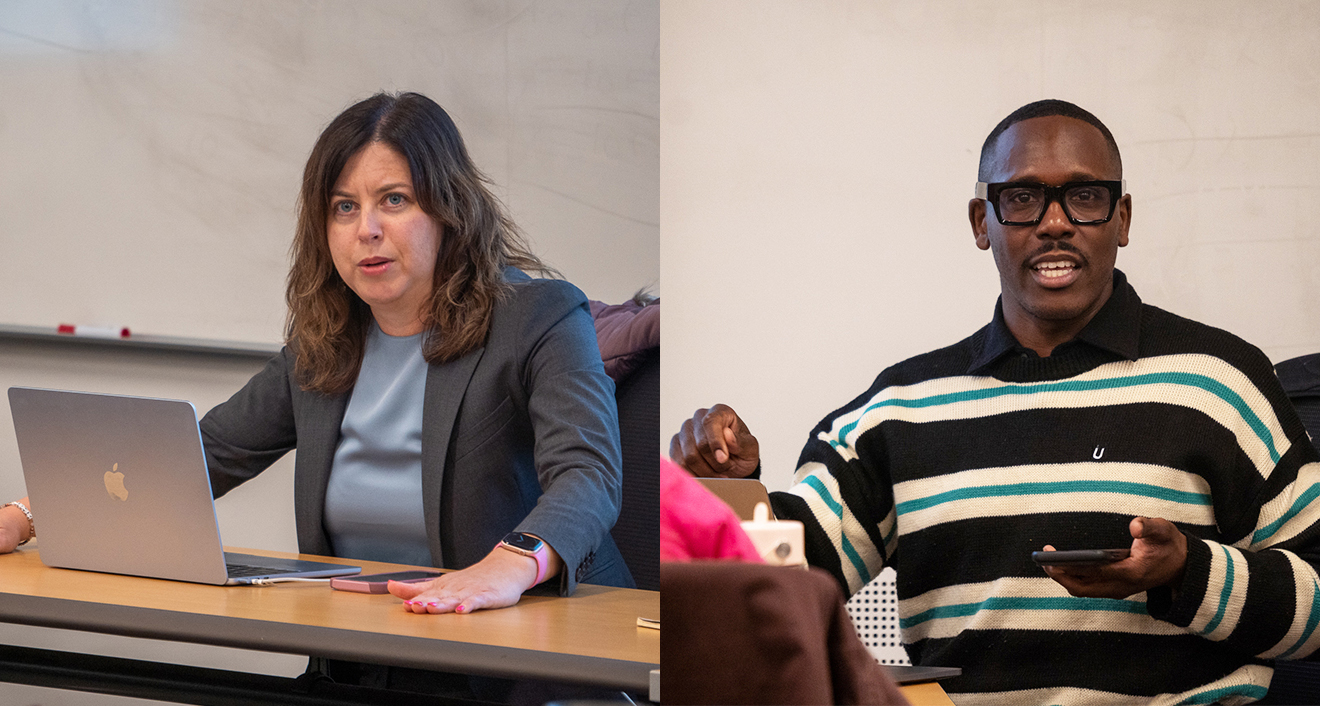
Building on Kelly’s framework of culturally grounded education, Nicole Mirra, an associate professor of education and faculty director of teacher education at the University of California, Los Angeles, presented “The Practice of Living.” She uses student political observations in the classroom to encourage students to participate in political systems. By emphasizing an approach to civic education that leads with student engagement, she encourages students to disrupt the infrastructures that reinforce polarization or oppression. “Our teaching must demand just futures, rather than submitting to the world as it is,” Mirra said.
During her time as a Brooklyn, New York public school teacher, Mirra observed an engagement cliff in her students, where their engagement in academia dwindled over time. She views all teaching as political and thinks all teachers are civics teachers. She argues that teachers carry an inherent responsibility to engage politically with issues of equity and inclusion through storytelling, inquiry, imagination, advocacy, and networking.
Extending this conversation further, Justin Coles, an associate professor of Social Justice Education at the University of Massachusetts, Amherst, developed his idea of “Civic Literacy as Perception” to explore the racialized lens surrounding civic literacy. His research centers on how Black young people create “worlds within worlds” and the function of Black aesthetics.
Coles reflected on the question of “how do we teach and learn in ways that see the humanity of Black children, that see the tenacity to remain in racially exhaustive spaces?” For Coles, this question marks the starting point of his work in civic literacy, which he developed into his presentation, the “Pedagogy of Black Youth Aesthetics.” His framework aims to approach civic literacy in the classroom by examining how young people understand themselves, how they move through oppressive social environments, and how they actively shape those worlds through aesthetic expression.
“Black youth are already whole, yet they grow up and are told they are incomplete,” he said. His solution to anti-Blackness is a simple one: Reparative love. “Love functions as the interruption to the anti-Black sensorium that we are all invited to participate in,” he said.
Ultimately, Coles presents love as the key to the reimagination of our society for those who are structurally and systematically misperceived. Collectively, the panelists called for an expanded vision of education that centers on cultural relevance, critical inquiry, and care. This repositioning posits that classrooms are spaces for empowerment, imagination, and democratic possibility.