
Annie Coombs '03: Returning. Listening. Building.
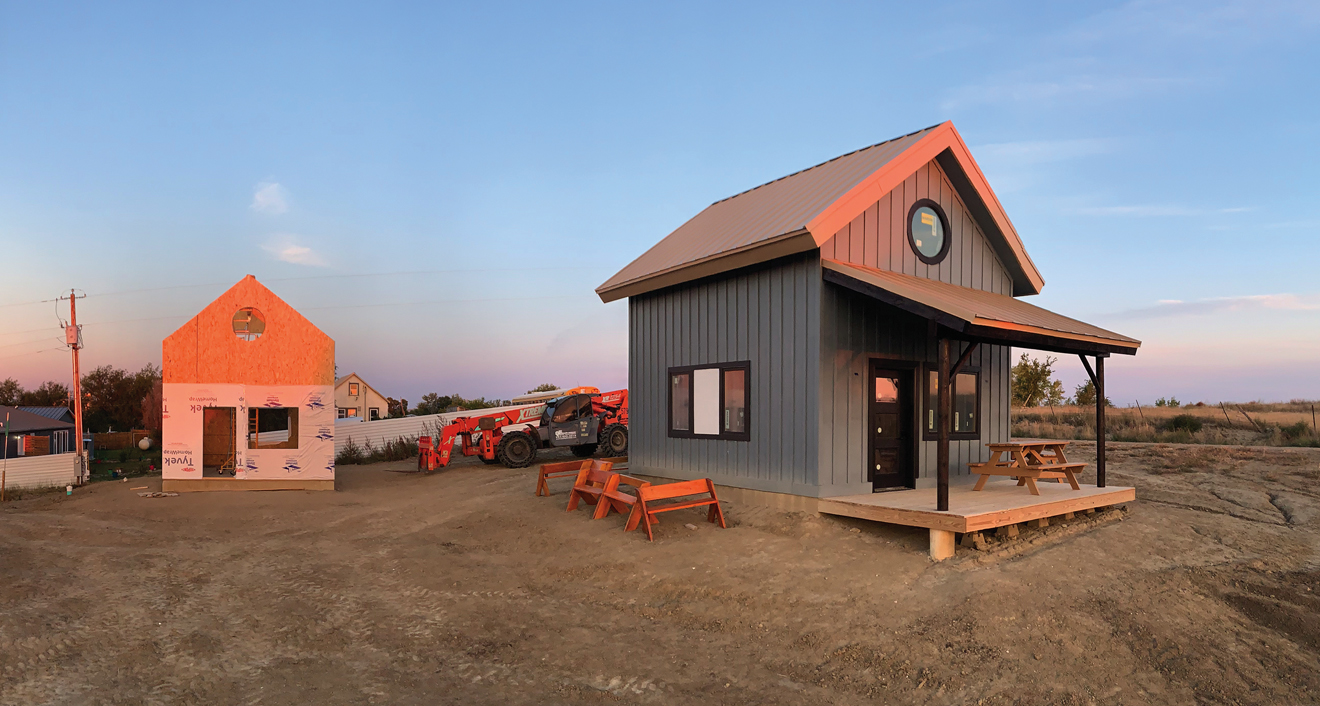
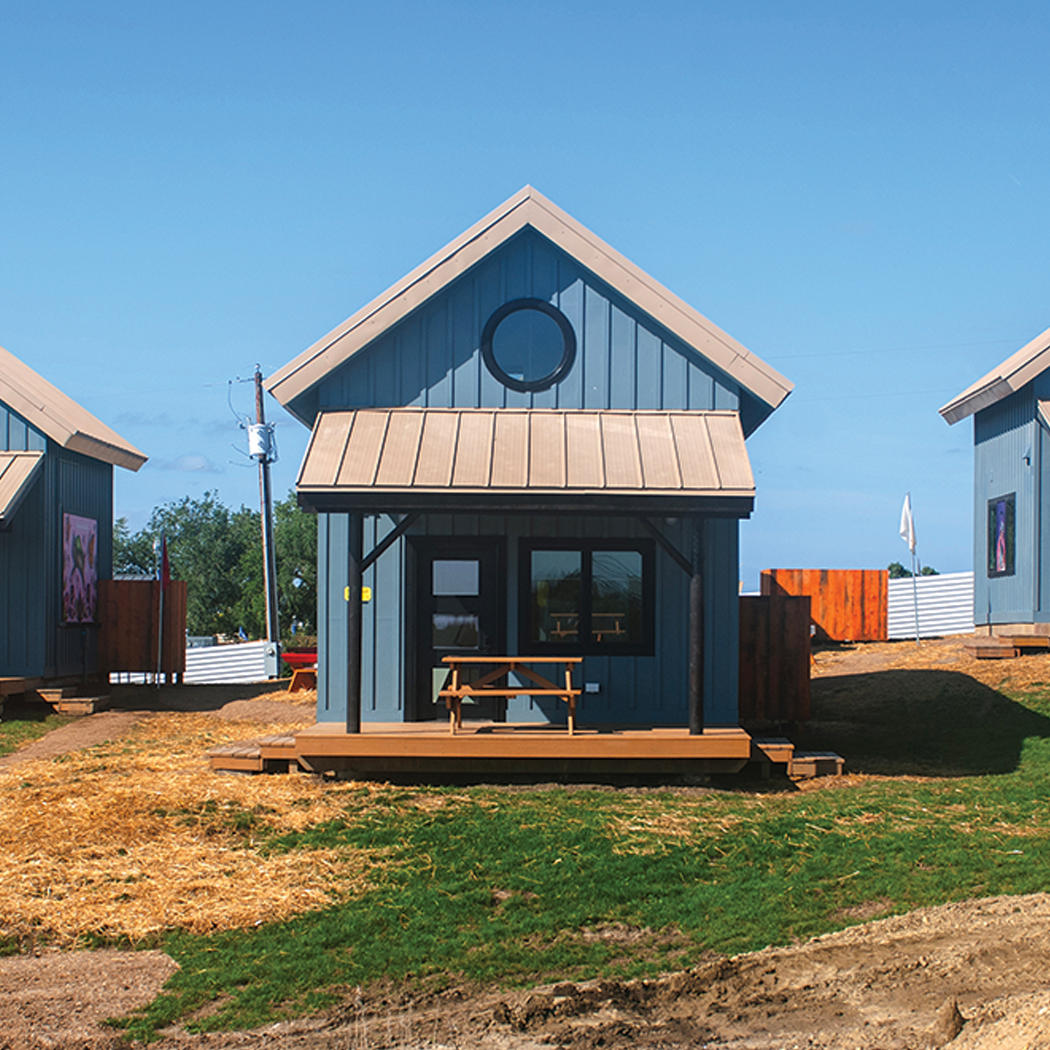
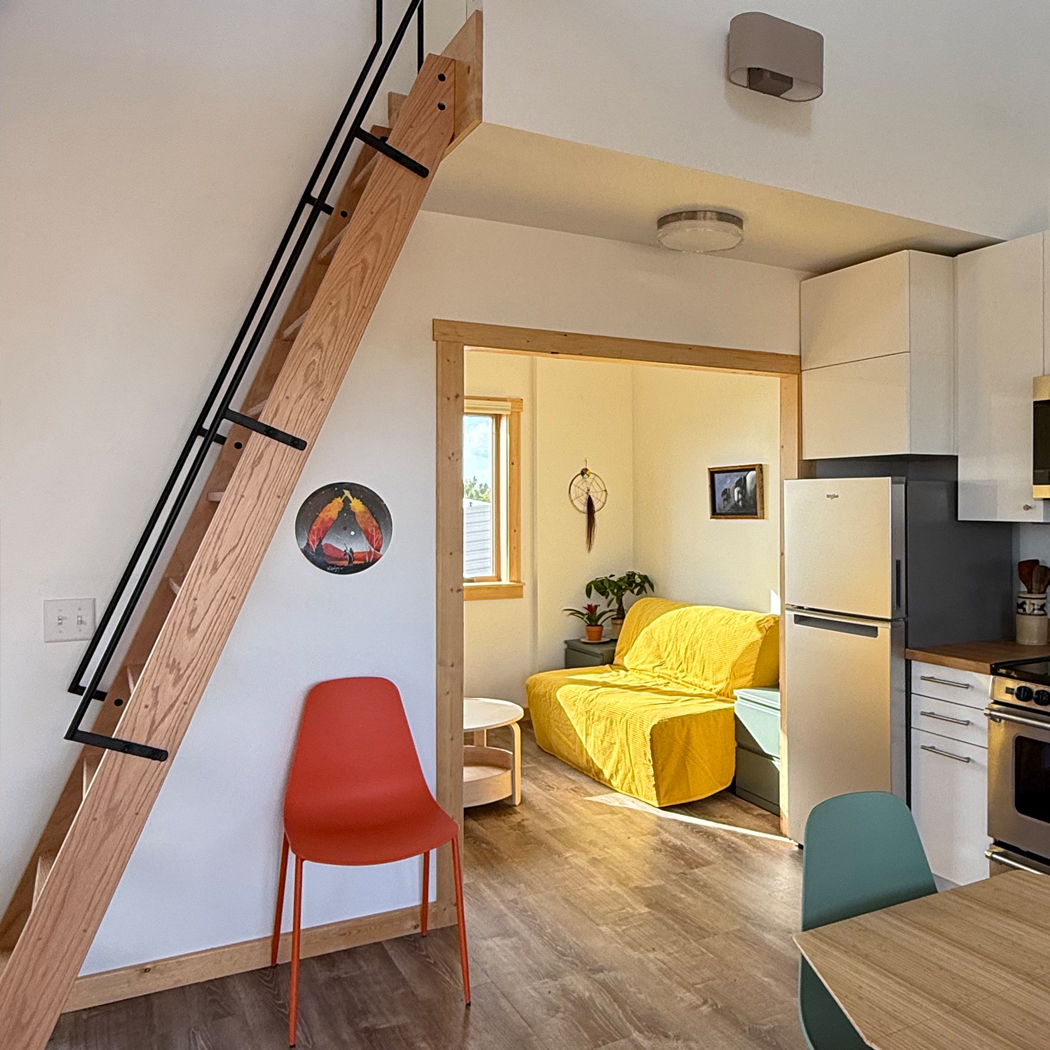
The quartet of homes that make up the Morning Star Community is, by definition, a modest addition to the Cheyenne River Reservation, a Connecticut-sized slice of South Dakota whose rolling prairie, rugged grasslands, and stark beauty stretch across some 4,300 square miles. Constructed last fall and adorned with metal roofs, board-and-batten siding, and bright, lofted, 460-square-foot interiors, at first glance, they look like something from a tiny-house lover’s Instagram feed.
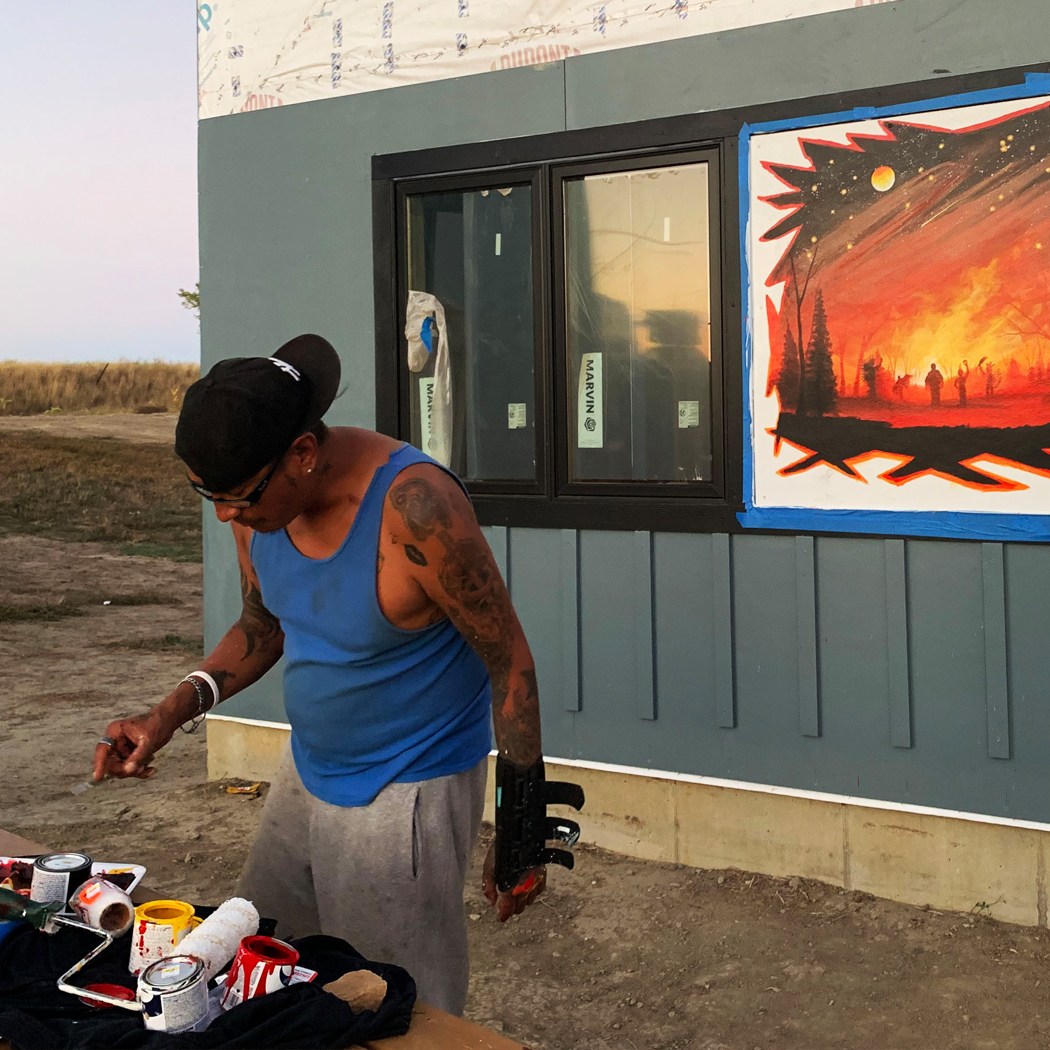
Look more closely, however, and you’ll find a purpose larger than the buildings’ footprint. The east-facing entryways, vibrant exterior murals, and circular site arrangement reflect the culture, traditions, and resilience of the Lakota people who call the region home. Leased for $200 a month and engineered to withstand the Great Plains’ weather extremes, the Morning Star Community represents a scalable, sustainable step toward addressing a generations-long housing deficit on the nation’s fourth-largest land-based reservation.
The four homes are the result of years of talks and planning led by the people of Cheyenne River and Annie Coombs ’03, a Brooklyn-based architect. But really, it’s the culmination of a relationship that has spanned more than 20 years and helped shape the values that Coombs brought into her architectural practice: centering others’ perspectives, recognizing her own blind spots, and trying to see the world through her clients’ eyes.
“You have to throw all your biases out the window,” says Coombs, principal at Siris Coombs Architecture. “You need to [reconsider] how you think of history, how you think of space, and just step back and decolonize your mindset.”
A Greater Good
In retrospect, Coombs first felt architecture’s weight and potential as an eight-year-old glimpsing the cliff dwellings in Colorado’s Mesa Verde National Park, where the Pueblo people harnessed the seasonal sun for climate control. (“It was such a low-tech, genius way to live,” she says.) Still, she balked at following in her architect parents’ footsteps. “It was just a knee-jerk reaction: I didn’t want to do it because my parents did it,” she says.
Majoring in women’s studies at Wesleyan was partly to avoid making definitive career decisions, she adds, but learning to deconstruct the world and re-examine conventional wisdom was a paradigm shift. “To be honest I’m learning and unlearning every day—it’s a continual journey to identify the biases I carry with me and try to unlearn them, reflect on them, and change them,” Coombs says. “I do think my education with women’s studies helped me keep my mind more open to different perspectives on the world and history, which ultimately translates into different ways we might move through space and experience buildings.”
An accomplished dancer, Coombs joined a contemporary dance company in New York after graduation, working part-time for her parents to secure health insurance. After injuring her knee and spending more time in the family business, a switch flipped: Architecture, she realized, was a way to help other people. She worked at the firm FX Fowle and contributed to projects that included the redevelopment of public spaces at Lincoln Center, before enrolling in Columbia University’s Master of Architecture program. By 2014, after four years with the firm Diller Scofidio + Renfro, she’d returned to the firm her parents established in the 1970s.
At Siris Coombs Architecture, Coombs has been behind a range of high-end projects, from reworking the interiors of a glassy high-rise apartment with 360-degree views to updating a penthouse once owned by William Randolph Hearst. At the same time, she’s expanded the firm’s social-impact work. One example: She worked with Sure We Can, a nonprofit that provides a safe place for marginalized Brooklynites who collect bottles and cans to sort and sell their recyclables, to upgrade its homebase in Bushwick. Coombs held a series of community workshops to learn about the canners’ livelihoods, and their feedback informed her plan for the reconfiguration of the site, incorporating a teaching garden and sustainability-focused measures.
That emphasis on human dignity extends across Coombs’s portfolio, regardless of where a client lands on the economic spectrum. “We all have spatial needs, and we all deserve to be listened to in [meeting] those needs,” she says. Meanwhile, her technical knowledge has continued to evolve: In Queens, she’s currently designing her first passive house, a tightly built, energy-efficient home that relies on high insulation, airtight construction, and minimal mechanical heating and cooling. “Every single project I’m doing right now has a green, sustainability element to it,” she says.
These days, Coombs is more selective in where she puts her own energy. “I can reject projects that don’t expand the knowledge of my practice, and take on explorations that help our world,” says Coombs, who is also a visiting assistant professor at Pratt School of Architecture in New York. “Whether it’s helping somebody do better by our society by using less energy or helping somebody who doesn’t have the means to build a house, they’re all explorations toward a greater good.”
Mindful Design
Building Trust
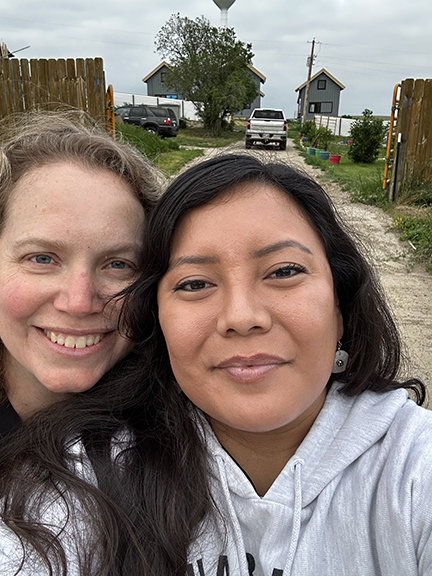
In 1997, a 16-year-old Coombs and her friend Zoë Malliaros visited Cheyenne River for the first time, spending a summer operating a daycare under the auspices of the YMCA. “Until that point in my life, I thought of extreme poverty as something that happens outside the United States,” Coombs says. The deprivation they encountered on the reservation, whose population is fewer than 10,000 people according to official figures, struck them deeply. So, however, did Lakota traditions and values—the intricate regalia on display at powwows and sun dances, a sense of deference and interconnection with the natural world, and their hosts’ reserves of hospitality.
Like other tribal reservations, Cheyenne River has seen legions of well-intentioned outsiders show up and mostly fail to return. But Coombs and Maillaros kept in touch, and when they both graduated from Columbia’s architecture program during the Great Recession 13 years later, their connections to the reservation only grew deeper. They secured a prestigious research fellowship to return to Cheyenne River (as well as Pine Ridge, a neighboring Lakota reservation) and examine the intersection of infrastructure, economy, and housing. They spent a summer with Ben Elk Eagle—the elder who’d hosted them in 1997—and, subsequently, two years traveling across the reservations, interviewing tribal residents, gathering GIS data, and gaining a firmer grasp on the historic threads connecting housing and infrastructure with employment, education, and economy. (One key finding from their research: Legal loopholes enabled private owners, who were largely non-native, to claim much of the most desirable land on Cheyenne River.)
In 2020, the Architectural League of New York commissioned the pair for a follow-up report as part of its American Roundtable project, in which they interviewed Cheyenne River residents to trace the ongoing impacts of broken treaties, forced separation from the natural world, so-called Indian boarding schools, and other colonial impositions, as well as the tribe’s resiliency and the community’s efforts to foster healing. That deepening engagement over time proved crucial to building trust.
“Especially working in a place where so many people come once and say, ‘Oh my gosh, it’s so bad, I want to help,’ and then never come back—that trauma gets relived,” Coombs says. “You have to keep going back.”
“This Is Nation-Building”
While the housing crisis in the United States spans one coast to the other, the version playing out on reservations like Cheyenne River is especially acute. Rooted in federal policies aimed at erasing the Lakota people and their culture since the 19th century, today it’s not uncommon for a dozen or more people to crowd under one roof. “There has been a housing deficit since day one of [us] being put on the reservation,” says Alli Moran, intergovernmental affairs officer for the Cheyenne River Sioux Tribe and a board member of Cheyenne River’s YMCA of the Seven Council Fires. The old, cheaply built US Department of Housing and Urban Development homes on Cheyenne River were designed for Arizona instead of the Great Plains, rendering them poorly equipped for winters that can see -40° F wind chill, Moran adds. Lack of paved roads and other infrastructure remains an obstacle to new development, and the reservation’s waiting list for affordable housing has hundreds of names on it.
In 2019, YMCA of the Seven Council Fires set out to create a model for high-quality transitional housing, an initiative aimed at easing the housing strain and helping tribal members—who can apply for five-acre sites to build their own house—make their first strides toward home ownership. “[Transitional housing] could help a young father or a young mother move out of a home that’s overly congested, where they’re not able to use the kitchen table to work on their goals after they get off their job,” says Moran, who was the group’s board chair when the project began. “It would give them that space to [pursue] what they’d like to achieve, not only with home ownership but with their lives as well.”
“You need to [reconsider] how you think of history, how you think of space, and just step back and decolonize your mindset.”
With funding from the YMCA Alumni National Service Project and plans to build in the reservation town of Dupree, the board approached Coombs for ideas. “She already had this grounded-ness in our community,” Moran says, “so there was already a sense of trust.” Beginning in 2020, Coombs organized meetings and workshops to find out what residents, young and old, wanted in homes they’d be proud to occupy.
Features of the design reflect cultural priorities: east-facing entrances to greet the spirit world that emerges with the rising sun, circular windows beneath the gable ends that conjure the Lakota circle of life, and exterior murals depicting scenes related to Lakota spirituality, painted by local Lakota artists. Some of the design feedback surprised Coombs, namely the board of directors’ insistence on building 460-square-foot tiny homes instead of larger single-family structures. But that choice was rooted in cultural values: arranging tiny homes in a circle mimicked the balance of private and communal space in traditional tipi camps.
“I really respect that she took the time to work on different concepts, and she was very mindful of our culture, our teachings, and our way of life,” Moran says.
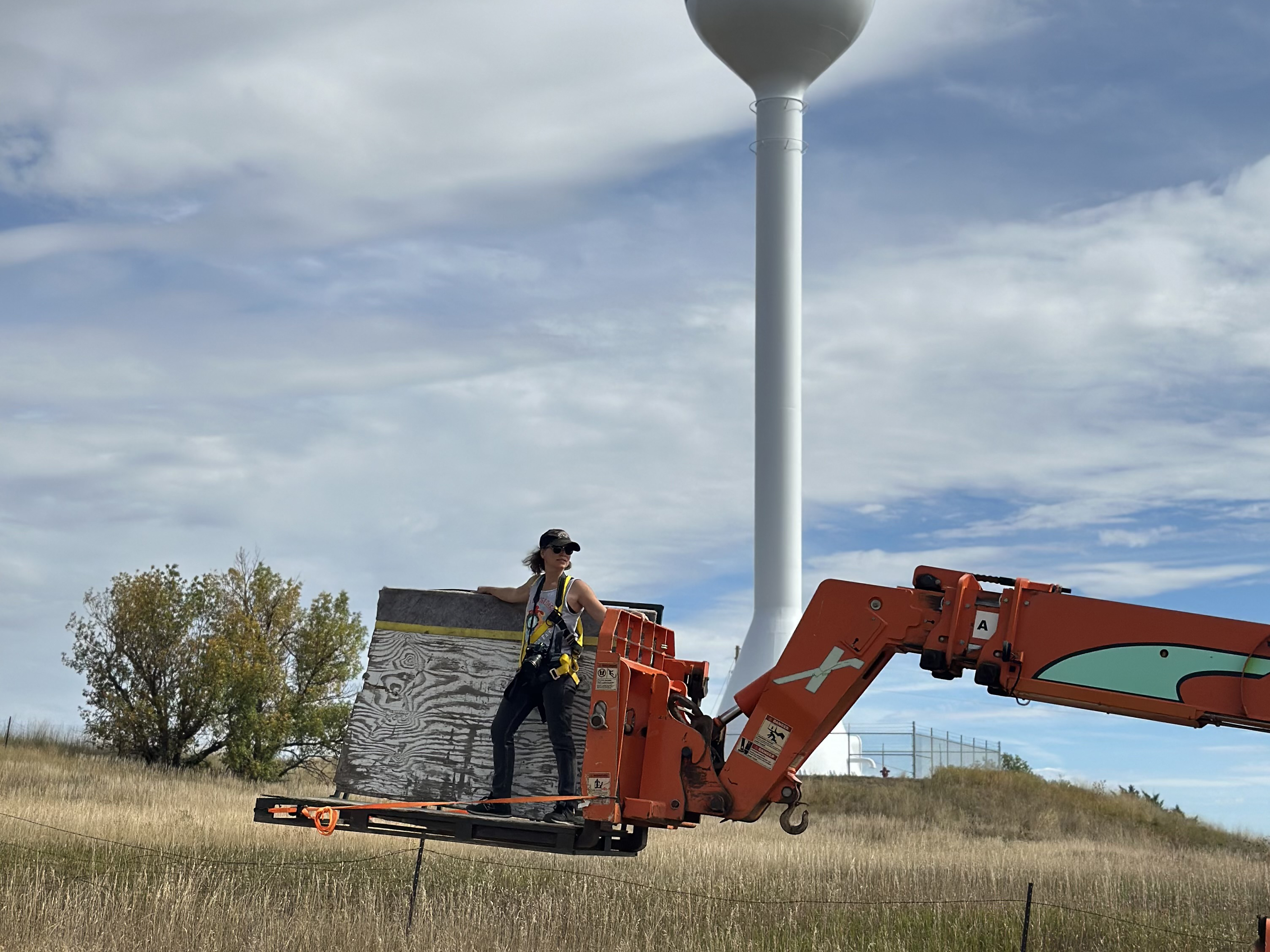
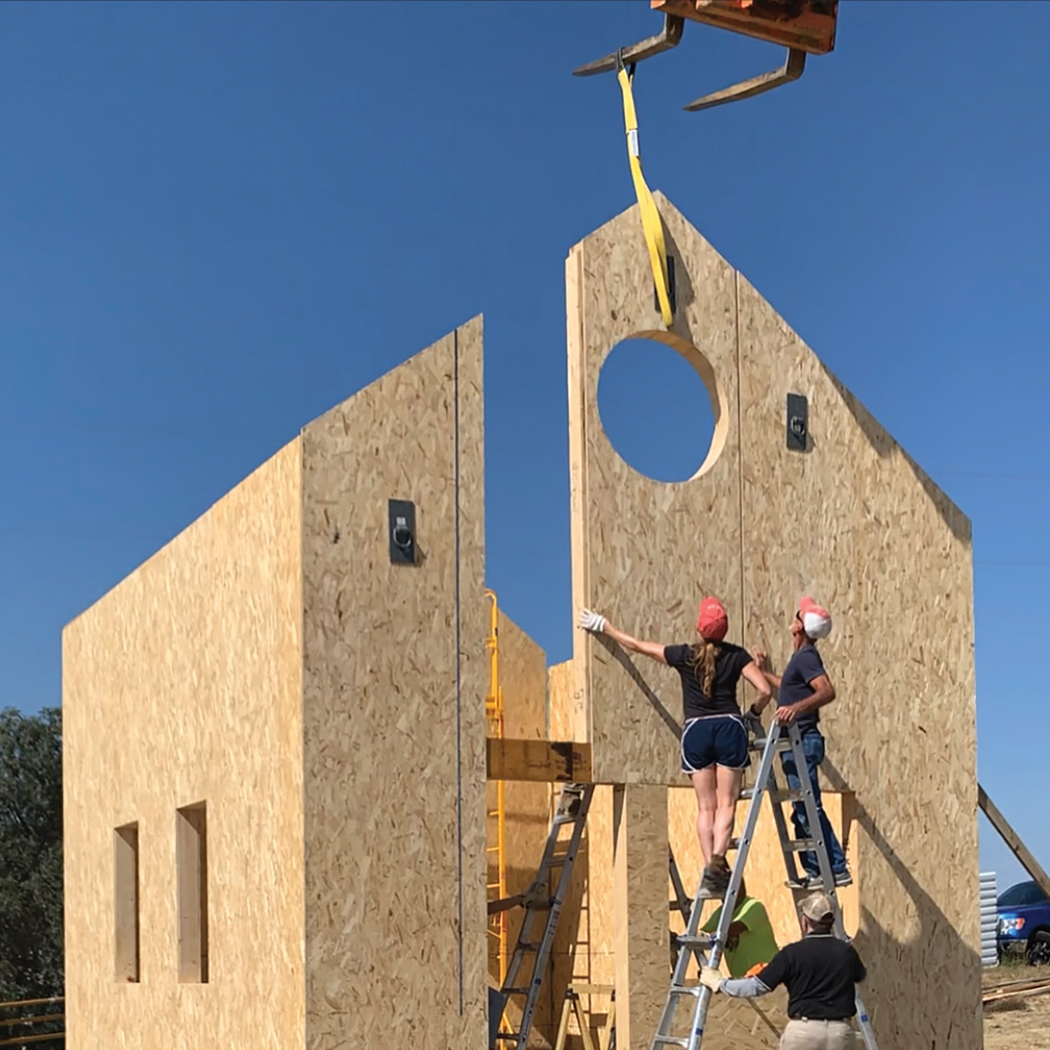
Last September, some 300 volunteers finished constructing the homes from structurally insulated panels—prefabricated materials that close the building envelope and reduce the homes’ energy demands against the Great Plains’ extreme weather. Each fully furnished home is adaptable or ADA accessible and accommodates up to four residents, and includes a living room, sleeping loft, kitchen, and various nooks and crannies. In late 2025, the homes welcomed their first tenants, each of whom pays $200 a month throughout their 18-month lease.
The Morning Star Community is inherently scalable: Each home can be built in weeks, Coombs says. “If you think about it like that, you could put up a community really fast.” In 2026, a private donor provided funding for a fifth tiny home, as well as solar panels and battery backup for each home.
This summer, Coombs says Cheyenne River’s YMCA will begin another project called YMCA Twigs—mini-branches equipped with solar panels to serve the reservation’s most remote communities. Designed by Coombs to meet passive house standards and built from the shipping containers that transported the tiny homes’ construction materials, the Twigs will deliver a range of services, from traditional art and cultural revitalization classes to serving as emergency shelters.
Together, the Morning Star Community and the YMCA Twigs suggest a model that goes beyond alleviating immediate need, tying housing, services, and cultural life into a long-term vision for vibrancy—and sovereignty. Reflecting on the design, construction, and potential of the tiny homes, Moran returns to the words she shared with Coombs. “To build tiny homes on the fourth-largest land-based reservation is to build for the sustainable future of a nation,” Moran says. “This is not a quick fix for a long-term problem: This is the beginning of strategic planning for a long-term solution. This is nation-building.”