
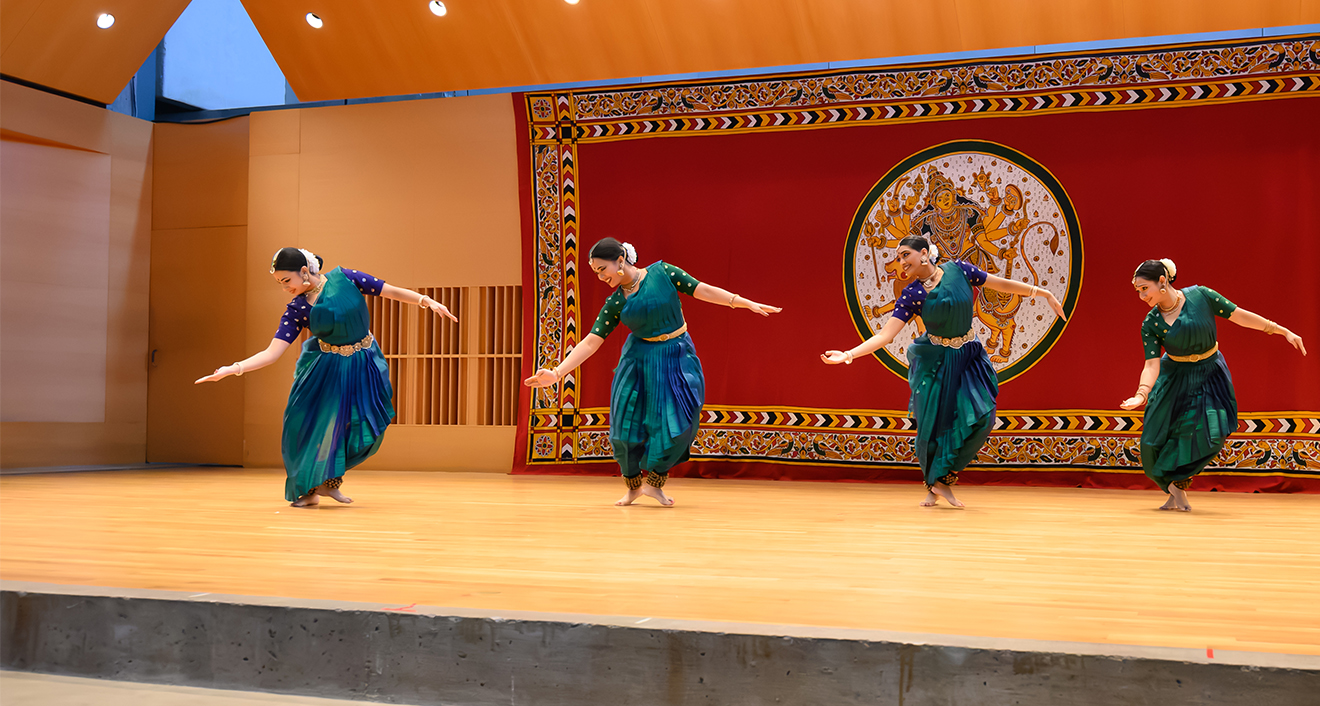
Landmark Milestone: 50 Years of Wesleyan’s Navaratri Festival
Founded in 1976 as part of the University’s longstanding commitment to the practice and teaching of South Indian music and dance, the festival uplifts the brilliance and diversity of global South Asian arts by featuring the powerful work of artists who preserve, adapt, and reimagine traditions and continue building community in the present.
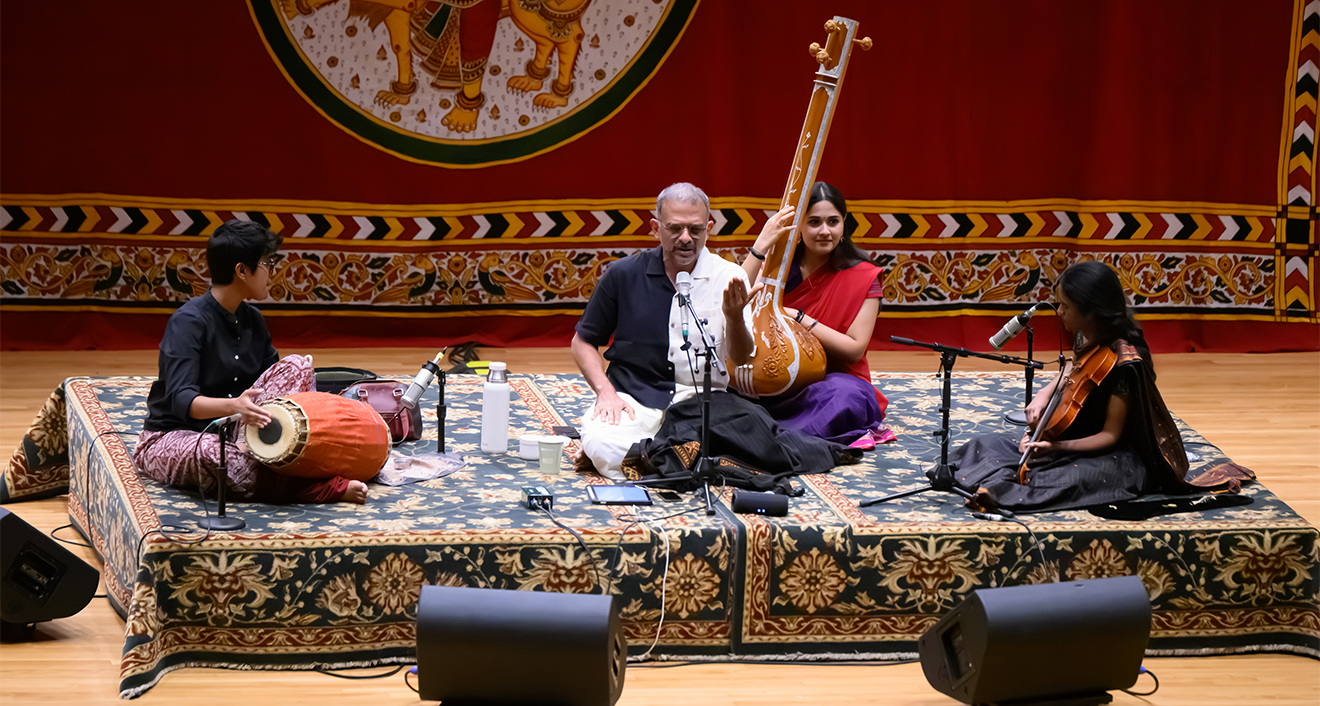
The festival began informally, when faculty members T. Ranganathan, T. Viswanathan PhD ’75, and Balasaraswati started presenting Indian music and dance alongside educational workshops open to students and the broader community.
“Over five decades, the festival has grown into one of the most esteemed opportunities for artists and scholars from South Asia, and working in South Asian cultural traditions, to present work programmed by a committee of faculty, students, staff, and community members that keep the original mission alive of assembling and celebrating community,” said Joshua Lubin-Levy ’06, director and chief curator of the Center for the Arts.
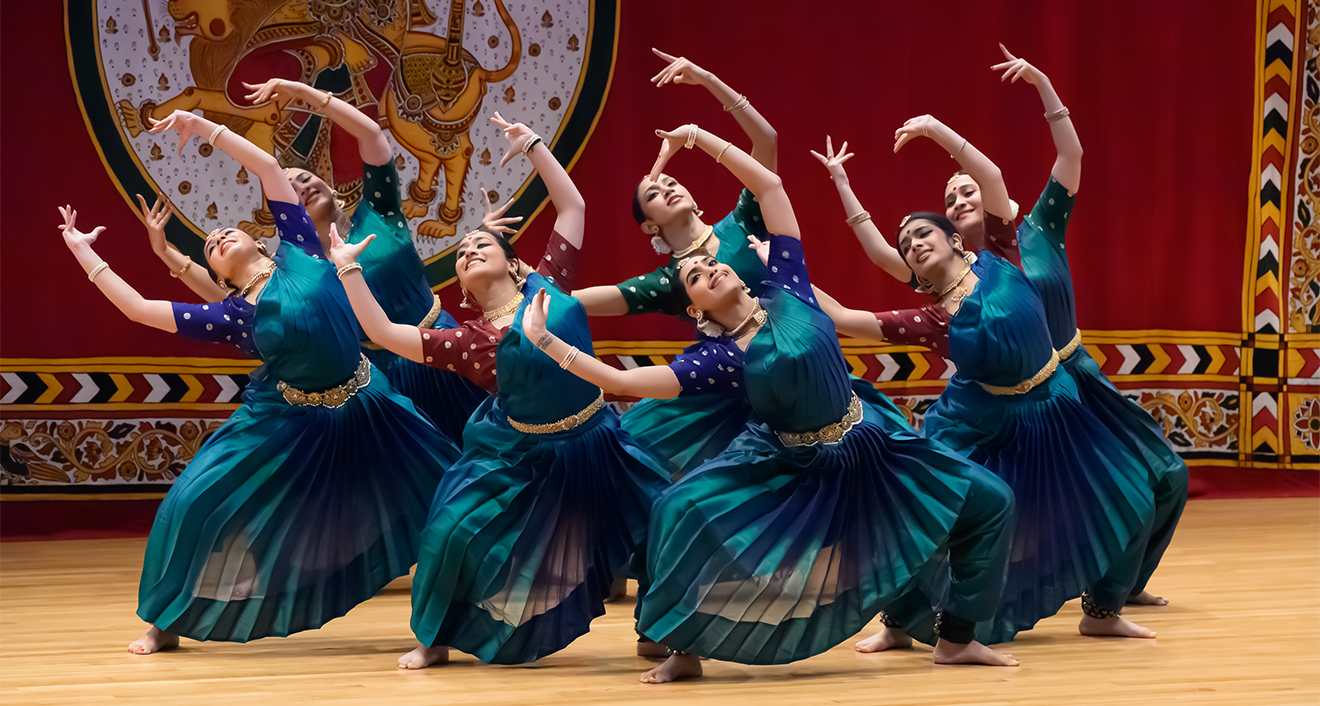
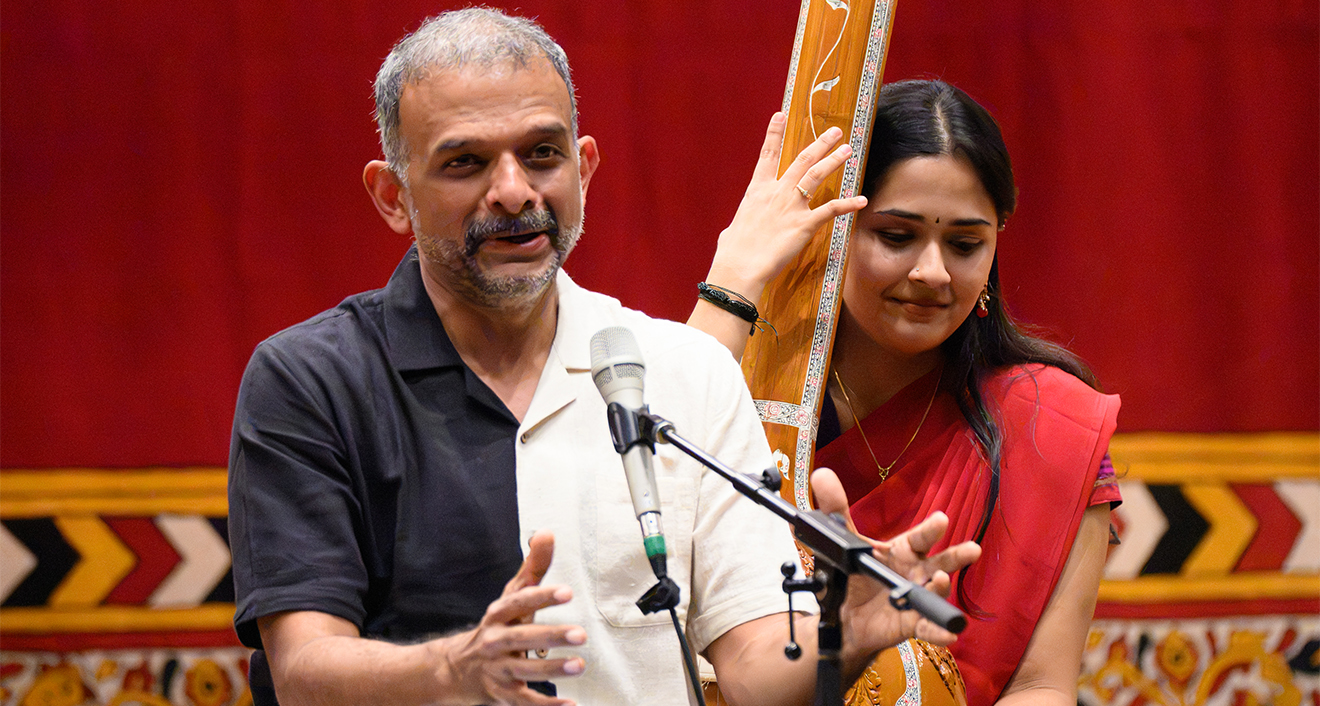
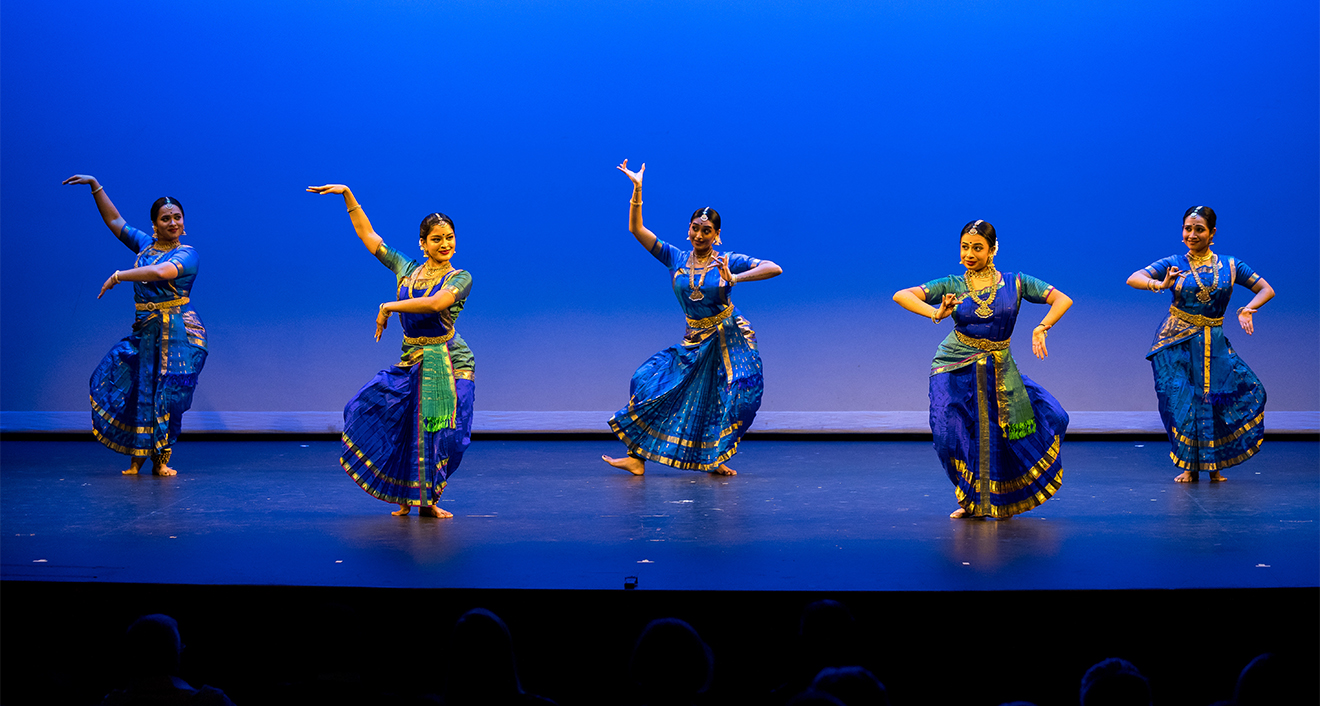
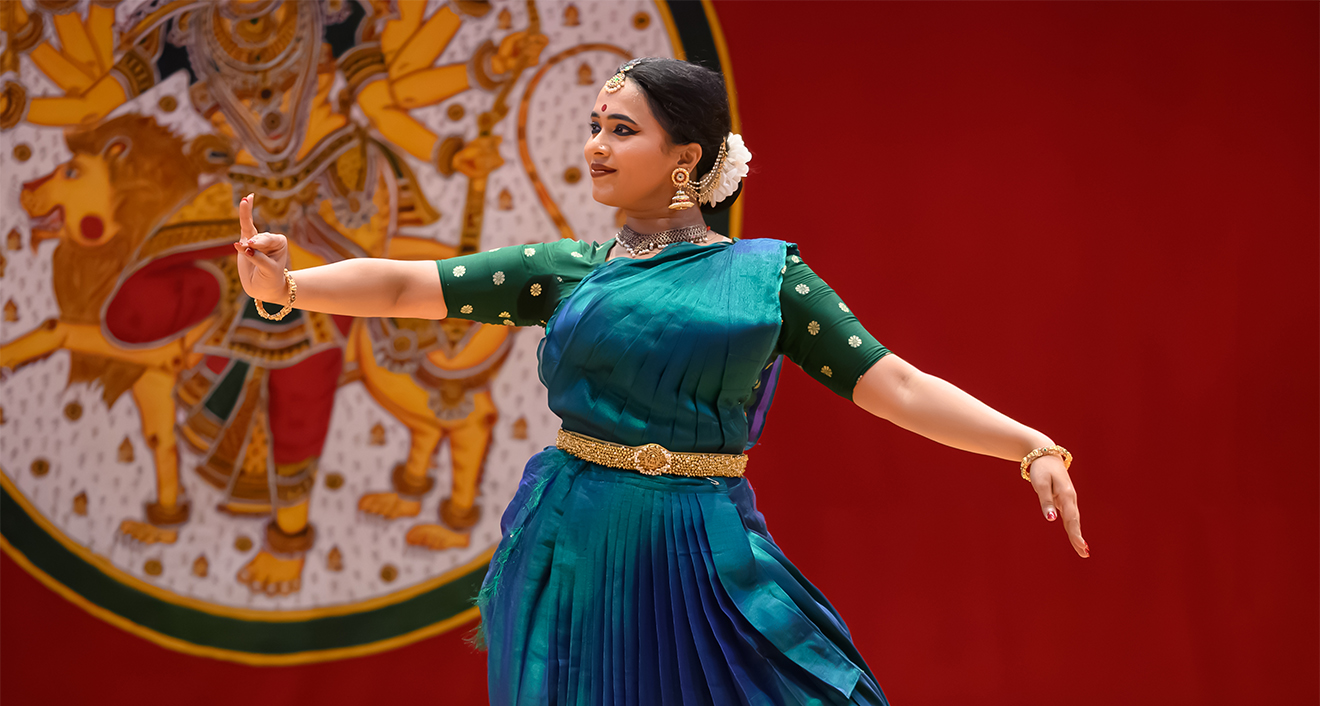
Highlights of the festival included master of Carnatic vocal music T.M. Krishna’s return to Wesleyan for the first time since 2011 on October 10, and the Maryland-based Kalanidhi Dance Company’s Connecticut debut, presenting the flowing, graceful, and theatrical Kuchipudi dance style on October 11.
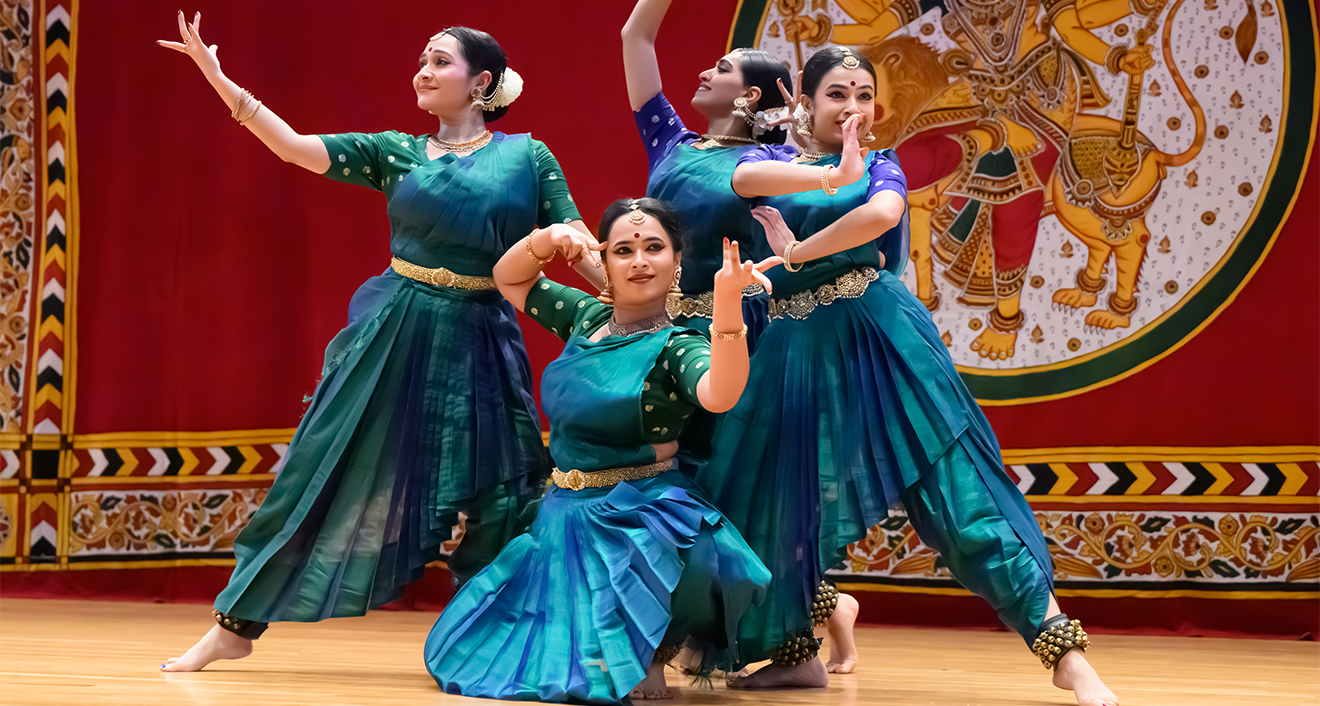
Professor of Dance and Feminist, Gender, and Sexuality Studies, and Co-Chair and Professor of Global South Asian Studies Hari Krishnan led discussions with both visiting artists to help demystify the classical art forms. “The festival is a powerful convergence of art and activism in beautiful, thoughtful, and provocative ways,” Krishnan said. “I am particularly drawn to the intersections between tradition and modernity, a critical perspective that shapes how Indian performing arts are taught and shared at Wesleyan: as dynamic, inclusive art forms relevant to all.”
To explore more about the history of the Navaratri Festival at Wesleyan, visit the library’s digital collection including newly digitized recordings.