Alan Saly ’79, P’09: Advocate for the Unsung Heroes of 9/11
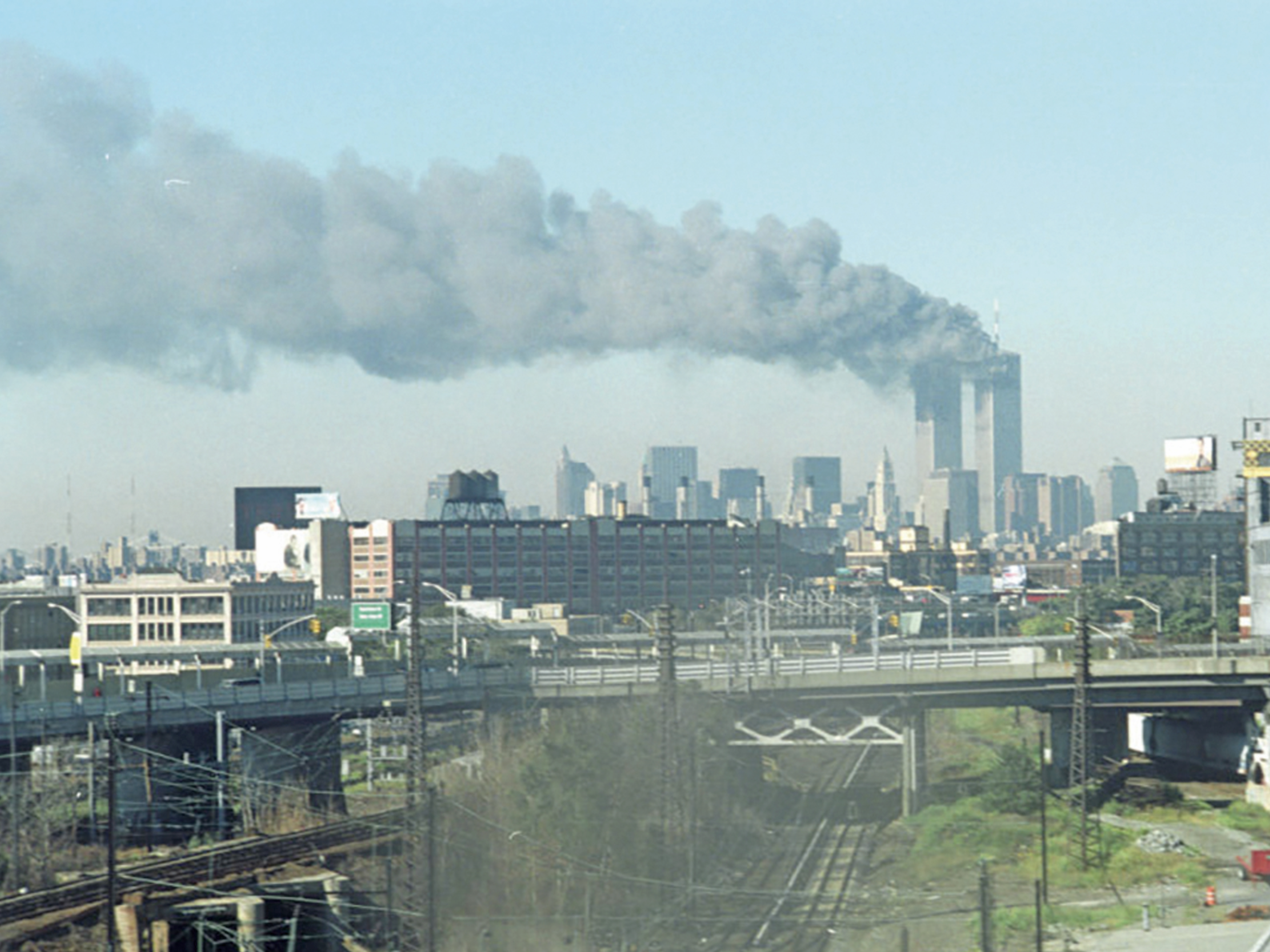
From the Number 7 train coming from Queens, Alan Saly ’79, P’09 could see smoke pouring out of one of the World Trade Center’s twin towers. It was Tuesday, September 11, 2001—primary day in New York—and that morning Saly, a communications staffer with the Transportation Workers Union (TWU) Local 100, had been campaigning for a candidate on behalf of the union. With word of a plane hitting a building, campaigning ceased. Saly hopped on the subway back to the city to find out what was going on.
Making his way on foot from Grand Central Station down Sixth Avenue, he witnessed the collapse of the first tower. Panicking people on the street began to realize the scale of the disaster. “I saw somebody kneeling on the sidewalk praying,” says Saly, “It was a surreal situation.”
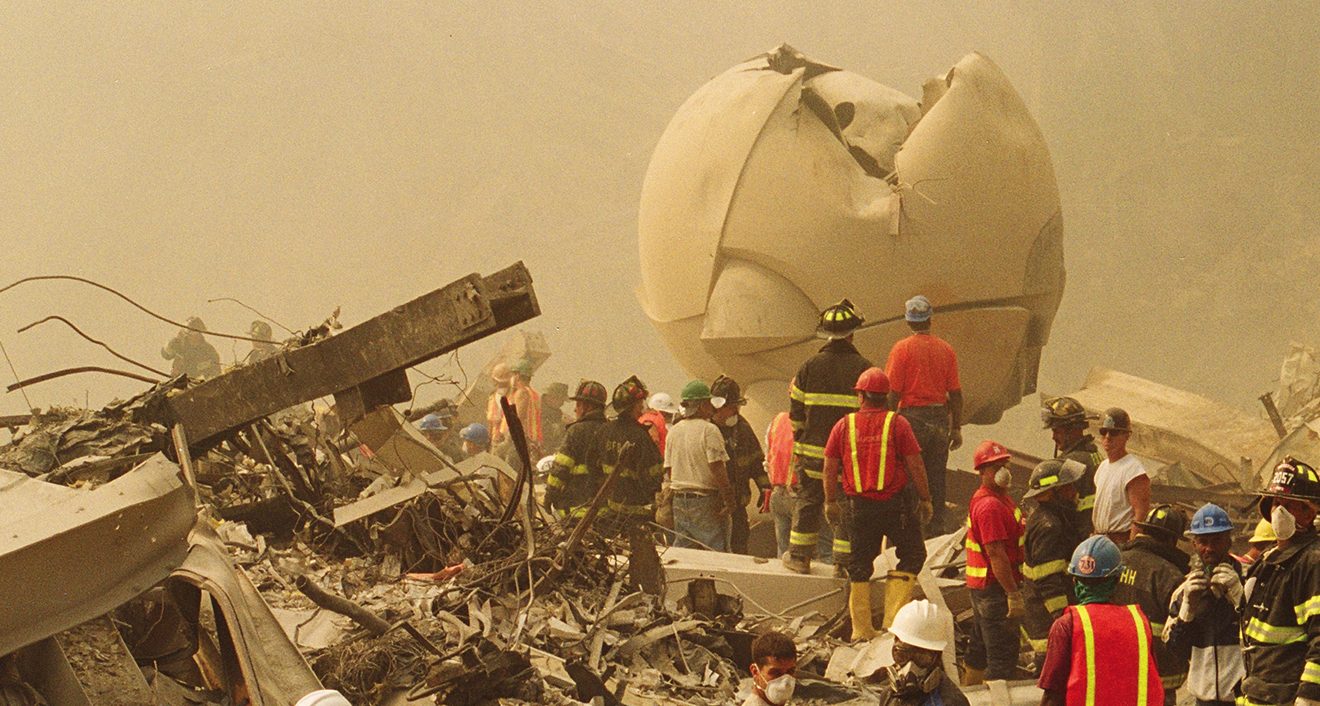
The next morning at the TWU Local 100’s Midtown Manhattan office, the union president instructed him to go to Ground Zero. He was to document the rescue and recovery work of transit workers there. Saly grabbed his camera and five rolls of Fujifilm 200 color negative film and, thanks to an escort from the union’s safety team, was able to access the restricted site. All morning Saly snapped photos of transit workers on “The Pile.” In the 15-acre debris field, the union members were easily identifiable by their distinctive orange vests with “New York City Transit” emblazoned on the back.
-
On the morning of 9/11, Alan Saly ’79, P’09 photographed smoke billowing out of the World Trade Center's twin towers from the No. 7 train coming from Queens. Making his way from Grand Central Station to Lower Manhattan on foot, he later witnessed the fall of the South Tower.
-
Saly was a communications staffer for the Transportation Workers Union Local 100 when he was sent to Ground Zero on September 12, 2001, to document the the transit workers who were contributing to rescue and recovery efforts. In the years since, Saly has helped hundreds of them who have been afflicted with 9/11-related illnesses to obtain restitution from the September 11 Victims Compensation Fund.
-
Firefighters, police, and other emergency personnel are the face of 9/11 in our nation's collective memory. The heroic labor at Ground Zero of thousands of transit workers, including track and infrastructure crews, bus operators, welders, and cleaners, is less well known.
-
Many transit workers spent months working in areas contaminated by hazardous materials, and most had only filter masks and Tyvek suits for protection. Those who have been subsequently diagnosed with 9/11-related illnesses must provide "proof of presence," among other documentation, to make a claim to the September 11 Victims Compensation Fund.
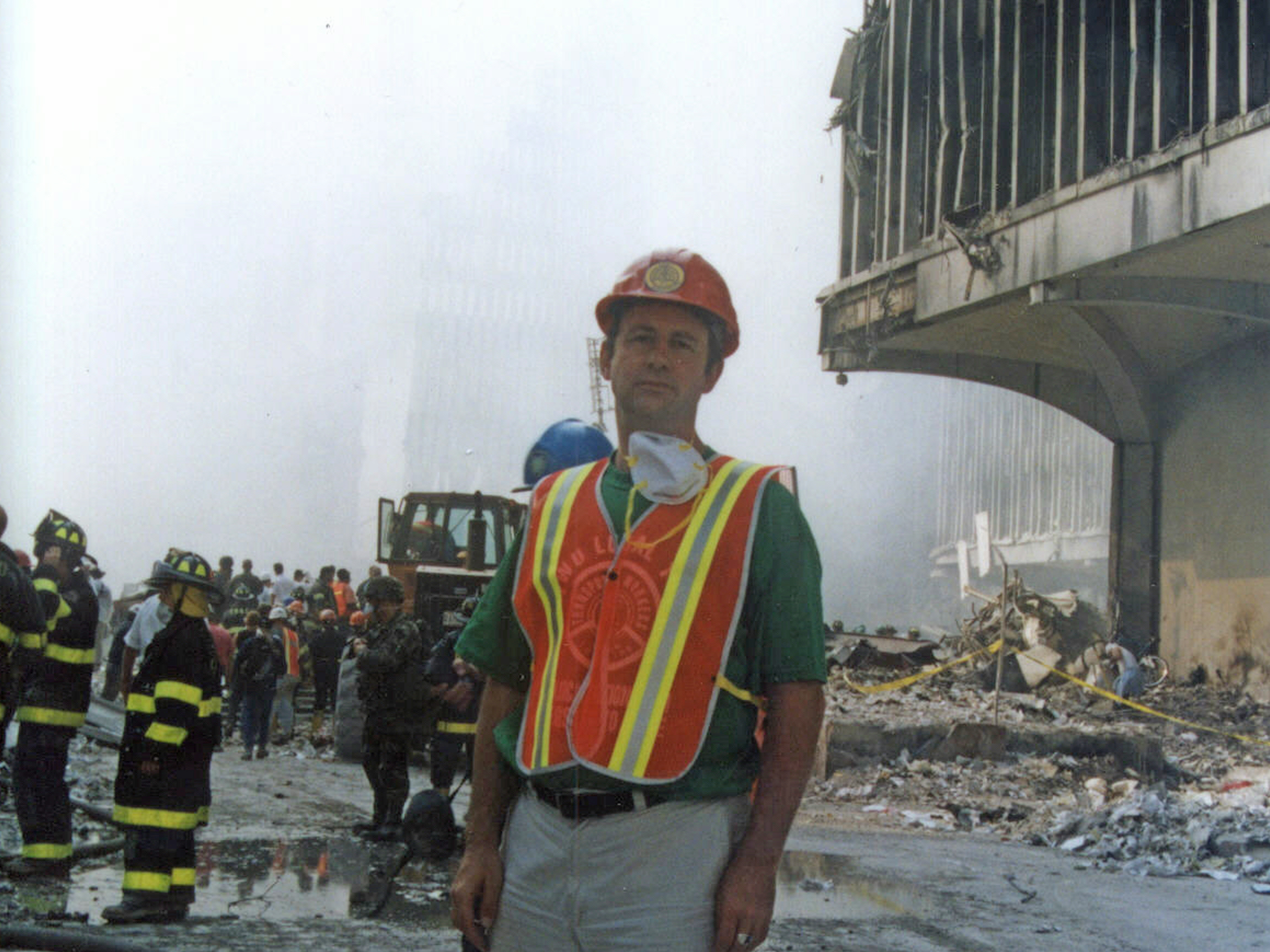
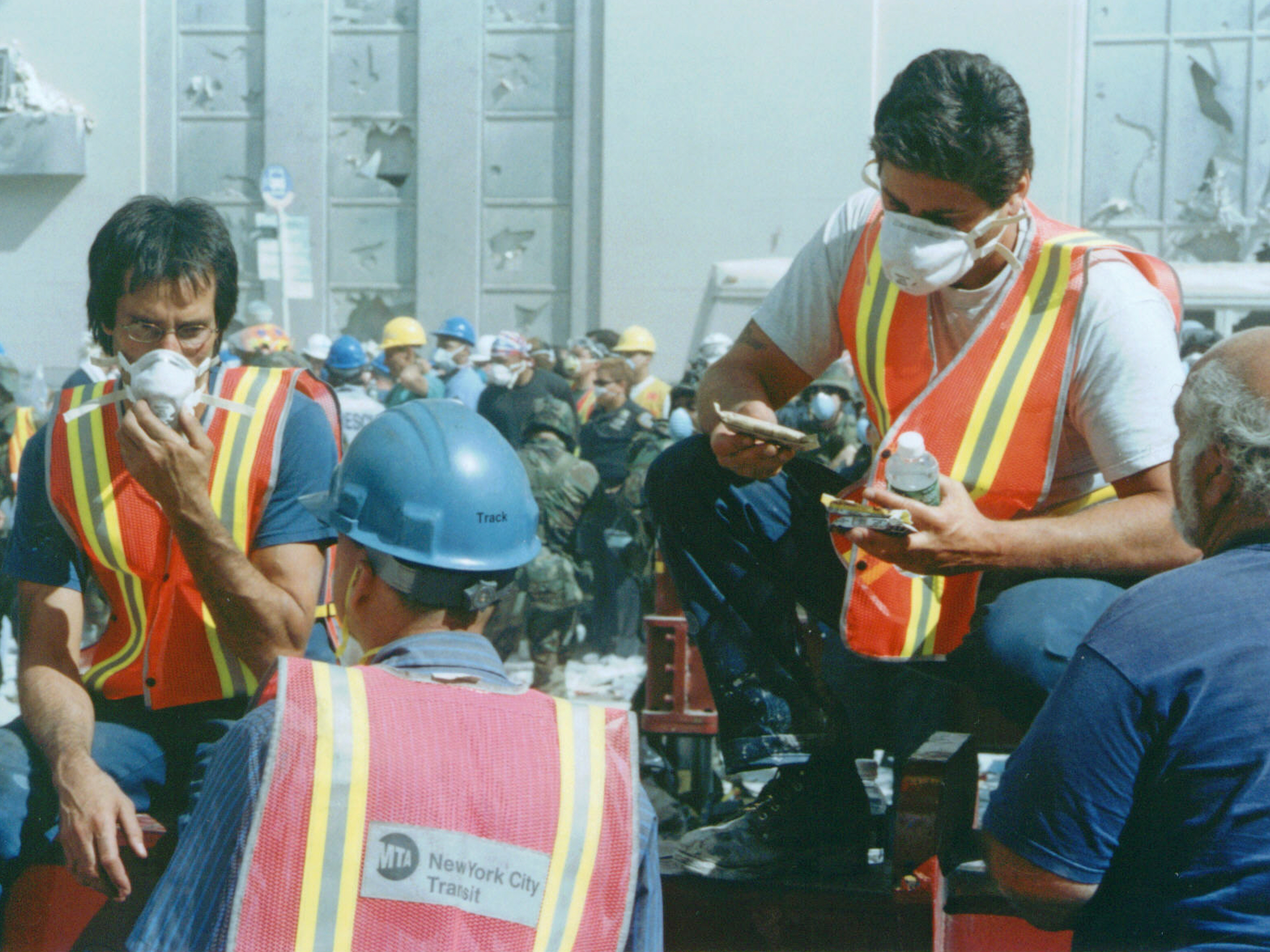
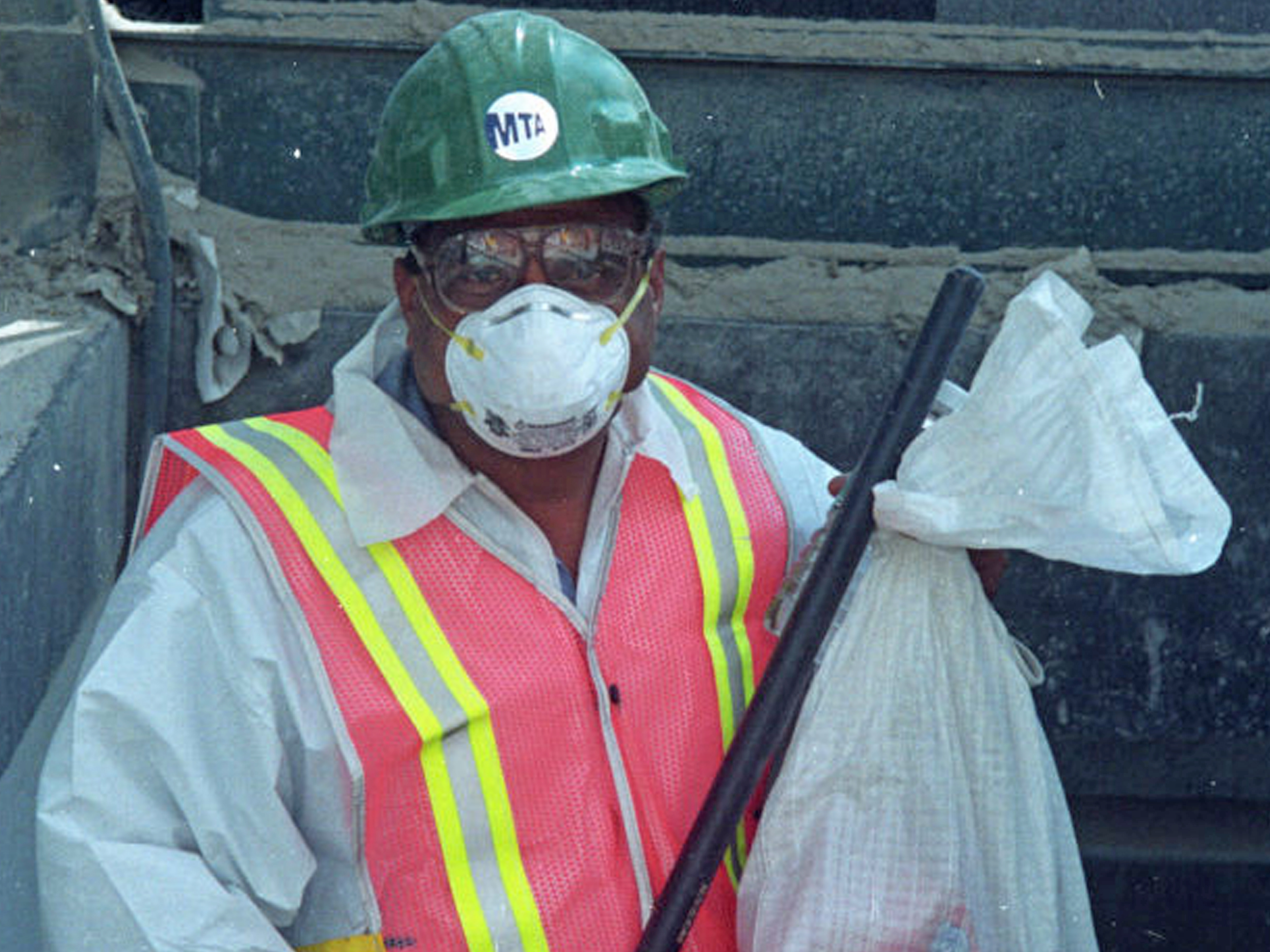
While not traditionally part of rescue efforts, more than 3,500 transit workers spent weeks and months at Ground Zero, exposed to the toxic dust, fumes, and waist-deep soot as ad hoc recovery workers.
“Immediately after the attack, the area was declared a crime scene,” says Saly. “They did not let any private companies or private contractors into the Ground Zero area. . . . New York City transit was the only entity that was approved and had the equipment that was required.”
The transit workforce included communications technicians trying to restore cell service for first responders; welders with torches cutting through mangled steel beams; track maintenance and infrastructure crews using their payloaders and cranes to help remove hundreds of smashed cars and over a million tons of debris; bus operators transporting police officers and other rescue workers to and from the site; and station cleaners responsible for Metropolitan Transit Authority property.
For the most part, the transit workers’ protective equipment was limited to filter masks and Tyvek suits. Most accepted the hazardous assignment without a second thought, only later finding out about toxic exposures at the site. Transit cleaners assigned to Ground Zero were almost all people of color.
Twenty-five years later, many of these transit workers have developed 9/11-related respiratory diseases and cancers. Saly would like to see them get the recognition and restitution they deserve. Since 2011, he’s been assisting union members seeking to make claims to the federally funded September 11th Victim Compensation Fund (VCF). Claimants with a respiratory illness can expect an award of $25,000. The amount is usually $250,000 for cancer. To date Saly, working with Mario Galvet, also a 9/11 responder, has helped more than 300 people secure some $15 to $20 million in restitution.
“It’s challenging,” he says. “You have to understand the complexity of this process of getting compensated.”
Saly also advises union members about their eligibility under the pension system for retirement and sick-pay benefits related to their 9/11-caused illness.
Writing and activism have been central themes throughout Saly’s life. At Wesleyan he had a couple of shows on WESU and was a cofounder and editor of Hermes, which was created to be “a kind of political, radical zine” that covered such issues as nuclear power, nuclear weapons, and the labor movement’s grape boycott.
His first jobs were in radio journalism, including with CBS News and the BBC, but he also did freelance writing for Firehouse magazine, the biggest magazine for firefighters. That led to an editorial position there, and later a job as the assistant to the head of New York City’s EMS Union. (In that capacity, Saly covered the first World Trade Center bombing in 1993.) Saly’s communications work at TWU Local 100 has included editing the union’s semiannual magazine.
He says, “I enjoy telling stories about working folks. You know, people who are getting their hands dirty. I think that it’s an opportunity to learn about people’s lives and also to talk about something that is good, righteous work.”
Although he has recently retired as the 40,000-member union’s publications chief, he is motivated to continue his advocacy efforts on behalf of people whose heroic work has gone largely unrecognized in the public’s memory of 9/11.
“The folks getting these checks are people that have typically worked their entire careers at New York City Transit,” says Saly. “I think that it’s good to see these people getting these checks and making life easier for their families.”
Lead image: First responders on the pile near the damaged Koenig Sphere, which graced the fountain between the World Trade Center's twin towers before they came down on 9/11. All photos by Alan Saly.