Integrated Design, Engineering, Arts, and Society Minor
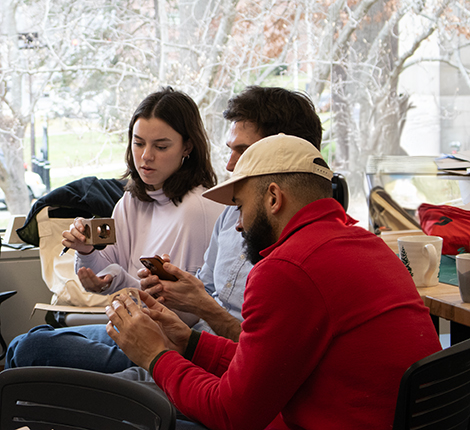
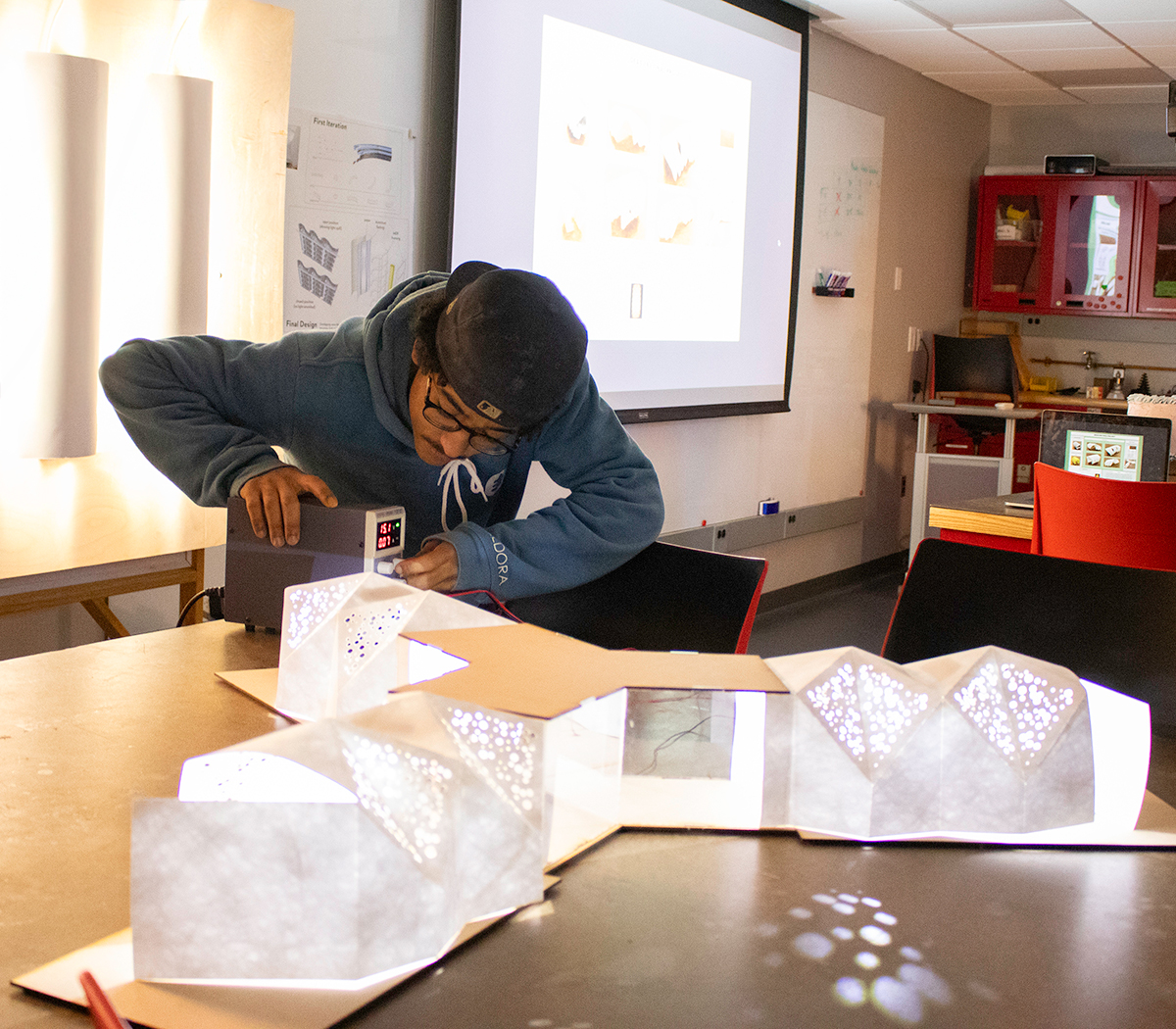
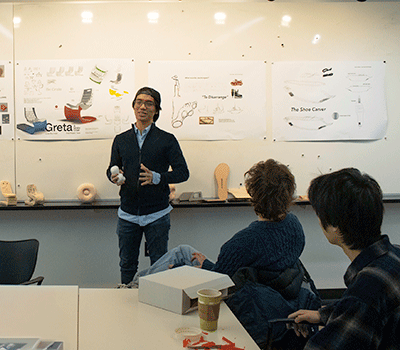
The Integrated Design, Engineering, Arts, and Society minor prepares students to succeed at the intersection of design and engineering within a liberal arts context. Students develop technical and creative projects through hands-on classes that emphasize making and doing as critical forms of knowledge.
IDEAS Minor at a Glance
Degree Type
Minor
Number Credits
7 total (3 Core + 4 Concentration)
Format
On Campus
Portfolio
Required
Why the IDEAS Minor?
The Integrated Design, Engineering, Arts, and Society minor is designed for students who want to merge design thinking, creative inquiry, and technical experimentation. It builds a foundation in design and engineering fundamentals while allowing students to pursue focused study in a specific area of interest.
Working individually and collaboratively, IDEAS minors learn to translate ideas into tangible outcomes, whether through architecture, robotics, interactive media, or performance design. The minor complements a wide range of majors and provides skills that transfer across disciplines.
IDEAS Minor Concentrations
Explore the concentrations that connect design, engineering, and the arts. Each concentration provides focus within a broad interdisciplinary foundation. After completing the three-course minor core, students select a concentration area. With guidance from their IDEAS minor faculty advisor, they select four electives from their concentration area.
Combine mathematical modeling and design to solve real-world engineering and systems problems. Ideal for students interested in computation, mechanics, or quantitative analysis.
Explore how design, materials, and engineering intersect with human history. Work with artifacts, structures, and spatial design from an analytical perspective.
Integrate studio art and design practices. Develop creative fluency through visual experimentation, fabrication, and conceptual thinking.
Study design and engineering through the lens of living systems, biology, and medicine. Projects often focus on biotechnology, sustainability, or environmental systems.
Investigate materials, reactions, and processes central to sustainable and applied design. Combine chemistry principles with real-world applications in product or material design.
Bridge programming, computation, and creativity. Explore topics like human-computer interaction, data visualization, and generative design.
Focus on circuitry, energy systems, and digital interfaces. Learn to apply design principles to electrical engineering challenges.
Address environmental and ecological issues through design and engineering. Projects often explore sustainable materials, systems, and climate resilience.
Examine how earth systems and materials respond to physical forces. Ideal for students interested in environmental design or sustainable infrastructure.
Design interactive experiences that merge technology, storytelling, and art. Explore the creative and ethical dimensions of digital media and games.
Investigate the structure and behavior of materials. Apply chemistry and physics principles to create sustainable or high-performance designs.
Explore motion, energy, and fabrication. Develop skills in mechanical systems design and the creative use of physical technology.
Merge theater, installation, and design. Experiment with how space, light, and materials shape audience experience.
Opportunities and Research
IDEAS minors often collaborate on faculty-led research, creative projects, and exhibitions that bridge disciplines. Many pair the minor with majors in Art Studio, Computer Science, Earth and Environmental Sciences, or Theater, bringing a design-thinking lens to their primary field.
Students are encouraged to study abroad or participate in internships where they can apply design and engineering principles in global or professional contexts.
Ready to Declare?
Students should complete at least one of the required core courses before declaring the IDEAS minor. Declarations are submitted through WesPortal and reviewed twice per year, in October and March, before pre-registration.
Students may change their concentration later in consultation with their advisor, the CoDES Director, or the CoDES Associate Director.