

Skip to Main Content

About

The Center for the Arts is both a series of venues and a team of curators, producers, and technicians who fulfill the University’s longstanding commitment to arts practice as essential to a liberal arts education.
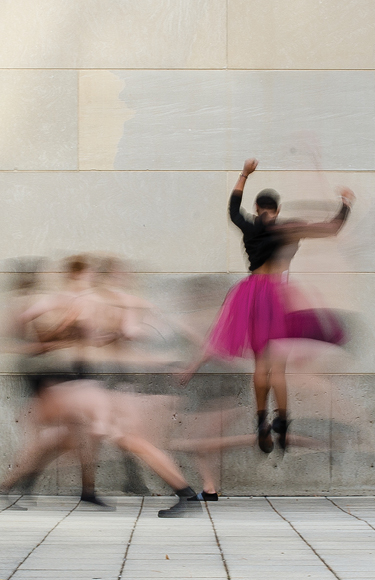
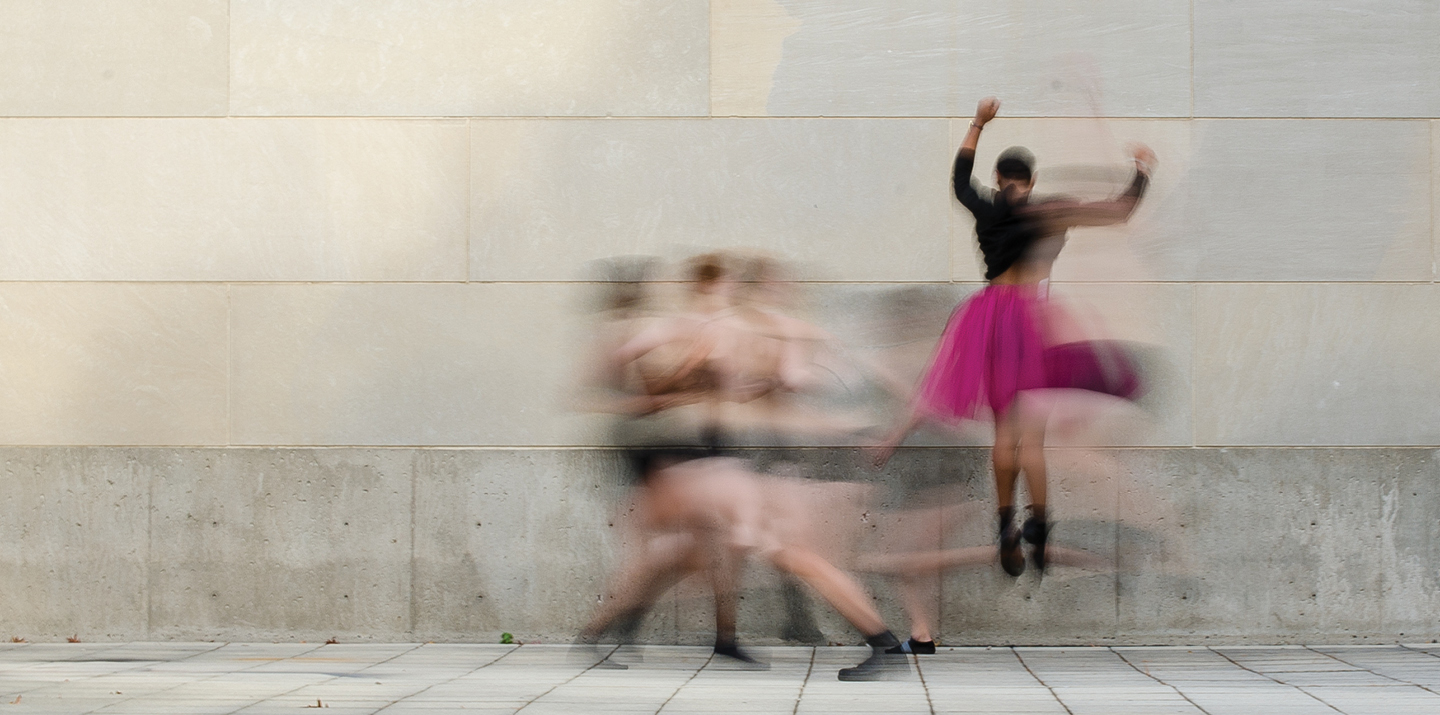
Dancers jumping and moving with motion blur in front of limestone wall - mobile version
Dancers jumping and moving with motion blur in front of limestone wall

Wesleyan and the Center for the Arts

The Center for the Arts is central to Wesleyan’s mission to cultivate bold thinkers and engaged citizens. At Wesleyan, the arts are not extracurricular; they are foundational. Through performance, collaboration, and experimentation, students engage in creative practice as a form of inquiry and connection, shaped by a culture of interdisciplinarity and public engagement. 

Signature programs like the Navaratri Festival and the Wesleyan Jazz Orchestra Weekend bring these values to life, fostering cultural exchange and new opportunities for campus and community connection. Alongside these performance-based traditions, the Ezra and Cecile Zilkha Gallery showcases contemporary art exhibitions that invite conversation, provoke reflection, and enrich the campus’s cultural landscape. Whether through music, movement, or visual art, the Center for the Arts creates a space where ideas take form and creativity is always in dialogue.  

Learn more about the Arts at Wesleyan 

At a Glance

  • 150+ Performances, exhibitions, and programs featured each year

  • 20+ Staff members across the CFA and Arts Production teams

  • 14 Artists in residence since 2019

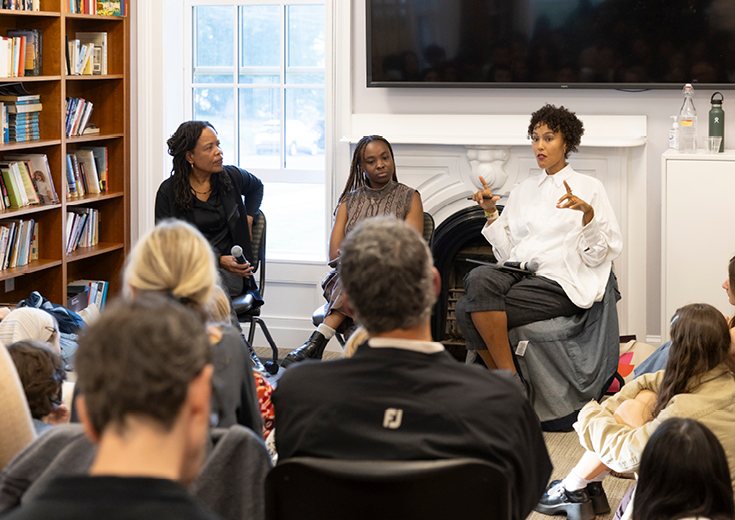
Three seated artists talk to audience in a room with bookshelves and fireplace and window in background

Our Mission

The Center for the Arts brings artists and artwork into relationship with Wesleyan, supporting creative research and advancing the University’s commitment to art as a form of teaching, learning, and knowing. Wesleyan values embodied experience over technical skill, fostering a climate where the arts are explored both critically and through direct engagement. 

Director’s Welcome

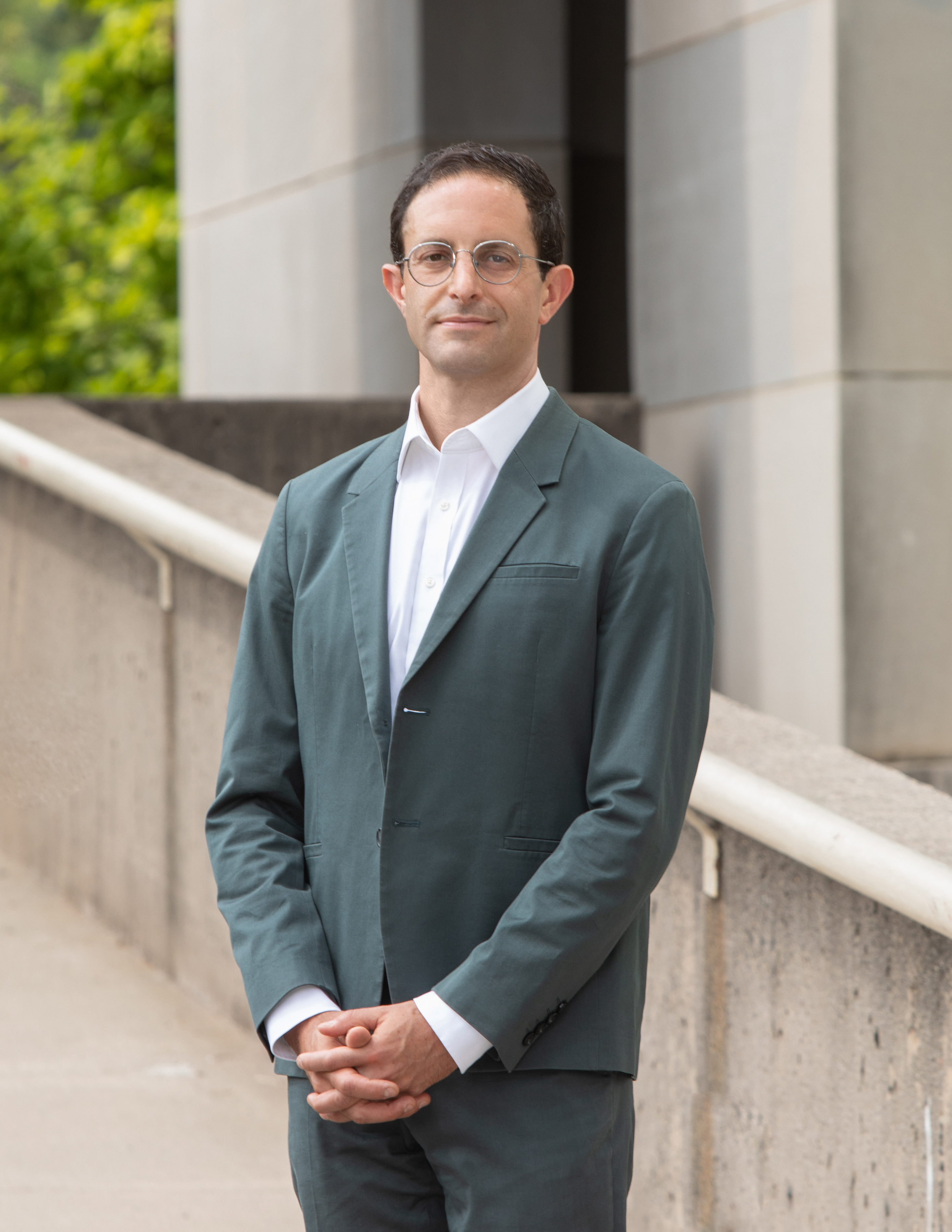
Joshua Lubin-Levy '06, Director of the Center for the Arts
Joshua Lubin-Levy '06, Chief Curator and Director of the Center for the Arts

The Center for the Arts opened in 1973 and, for the first time in Wesleyan University’s history, brought all of the Arts Departments into one central location.  Notable for its architecture of limestone bricks, the CFA’s construction stands for Wesleyan’s deep commitment to the teaching and practice of art as a way of producing knowledge, a mode of embodied research that the CFA and its staff make possible by catalyzing the creation of new work and integrating visiting artists across the campus. In that sense, the CFA is more than the name for a set of buildings—it is part of Wesleyan’s commitment to centering in the arts in all that we do, realizing the potential for the arts to create ways of knowing our world differently and shaping our future together. 

Our History

Opened in 1973, the Center for the Arts was envisioned as more than a set of buildings, it was a pedagogical experiment. Designed by Kevin Roche/John Dinkeloo and Associates, the complex centralized Wesleyan’s arts facilities and symbolized the University’s bold commitment to artistic practice as an essential form of inquiry. Its founding mission was twofold: to house the Arts Departments together and to foster collaboration across disciplines, creating a space where art could shape, and be shaped by, the most pressing questions of the time.

From the start, the Center for the Arts was a space where boundaries blurred. Influenced by the radical curricular shifts of the 1960s, Wesleyan's Arts Departments embraced global forms, experimental practice, and embodied learning. Whether it was the integration of Balinese puppetry and gamelan, or the evolution of experimental composition alongside world music traditions, the Center for the Arts became a proving ground for "putting theory on its feet," the idea that thinking through doing leads to deeper understanding.

The Center for the Arts’ earliest programming was shaped by artist-faculty like Alvin Lucier, Sumarsam, Cheryl Cutler, and Bill Barron, whose pioneering work brought global and experimental perspectives to the heart of the curriculum. The Center for the Arts became a space for them to not only teach but also to create—offering institutional support at a time when the commercial art world often failed to. Their influence laid the foundation for Wesleyan’s current reputation as a hub for bold, interdisciplinary arts education.

Over the last two decades, the Center for the Arts has taken its commitment to practice even further through the Creative Campus Initiative, a partnership with the Mellon Foundation that embeds artists across the Wesleyan curriculum. Programs like Feet to the Fire, the Embodying Antiracism Initiative, and collaborations with departments like Government and Environmental Studies have shown that the arts are not a sidebar to knowledge, they are a way of knowing.

In recent years, the Center for the Arts has undergone a thoughtful reorganization. Rather than operating as a stopover for touring acts, the Center now prioritizes longer-term, artist-led partnerships. Artists are no longer simply in residence, they are collaborators, educators, and co-leaders. This new model recognizes that meaningful support means not just providing time and space, but building relationships, shared governance, and space to fail, evolve, and imagine.  

Meet Our Visiting Artists

Each year, the Center for the Arts invites visiting artists to collaborate with students, faculty, and staff, using Wesleyan as a space to incubate new ideas and develop transformative projects. These residencies often culminate in public performances, exhibitions, and programs that reflect the depth of the collaborative process. 
Dancer standing on sailboat with arms outstretched with rigging lines in front and buildings in background