
Art as Inquiry with Anna Deavere Smith
During her residency, Anna Deavere Smith Hon. ’97 guided students and audiences through performance-based inquiry and radical hospitality.
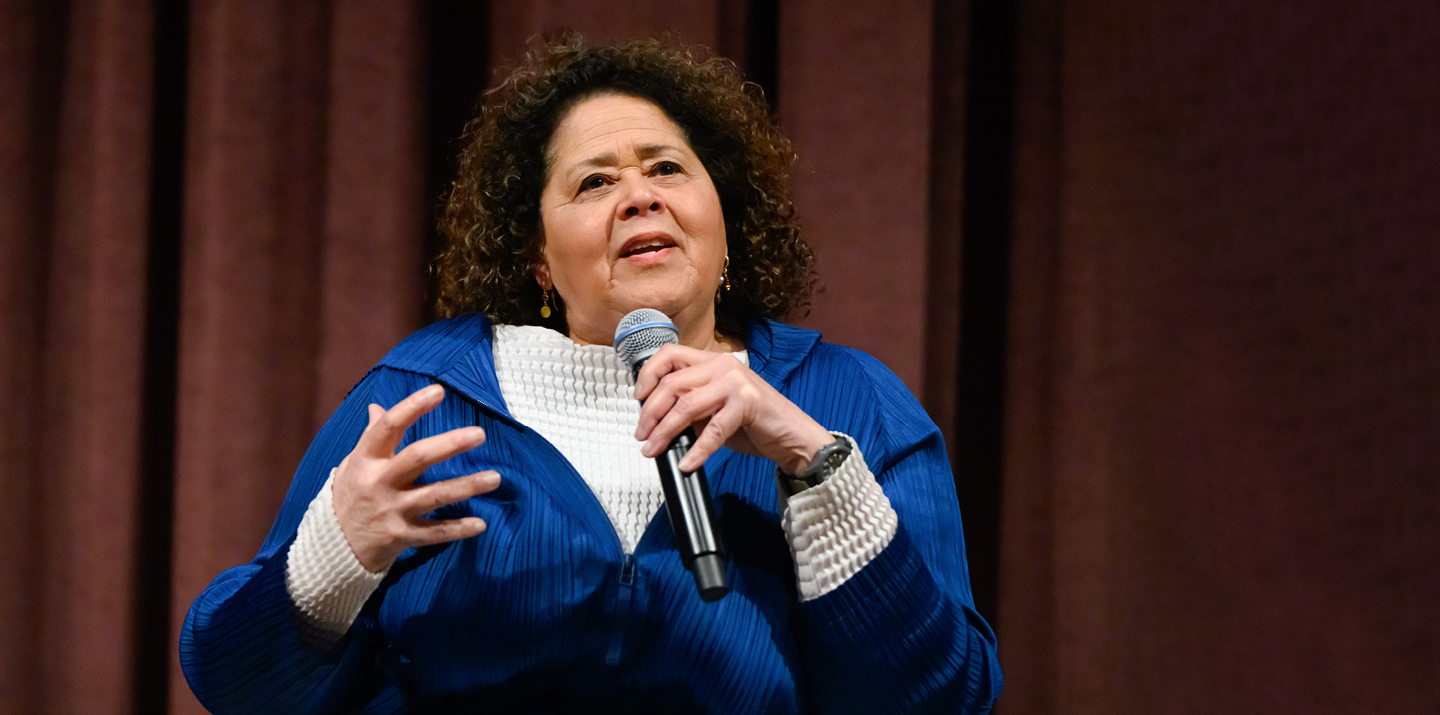
The arts at Wesleyan are defined by a long-standing commitment to practice, inquiry, and action—a philosophy that Joshua Lubin-Levy ’06, Director of the Center for the Arts, frames when describing his programming vision. “Art is a way of knowing that can open other ways of comprehending the world around us,” he says.
These commitments grounded the 2024–2025 artist residency with playwright, actor, and educator Anna Deavere Smith Hon. ’97. Center for the Arts residencies embed artists at critical junctures in their practice, providing space to incubate new work and develop a course of study outside the classroom while engaging deeply with students, faculty, and staff.
For Smith, working within an academic setting offered a rare opportunity to follow her inquiry without commercial pressures. “I still come to my own life and work with more doubt than confidence, and more questions than answers,” she says. “Wesleyan is the kind of place where people understand that education is about questions, not answers.”
That reciprocal value—what the artist gains and what the community learns—is core to the Center’s approach. Lubin-Levy notes that Smith often uses the term “radical hospitality” to describe the responsibilities of both hosting and being a guest. “‘Radical hospitality’ is a concept that Anna uses to talk about the importance of being a good guest and about thinking diligently about what it means to host somebody, to welcome them in,” he says. “For me, it really is a process of us learning from artists.”
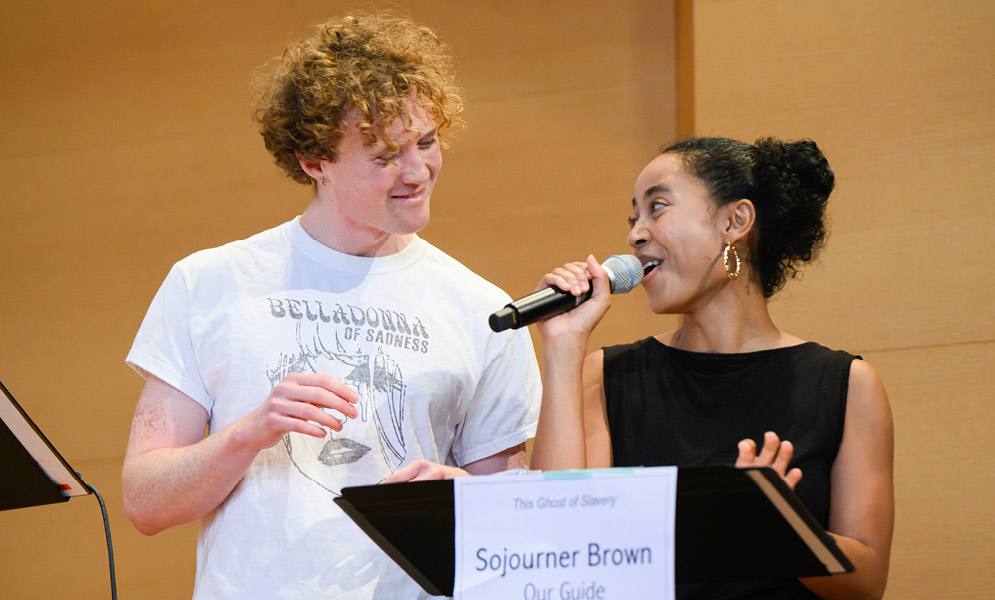
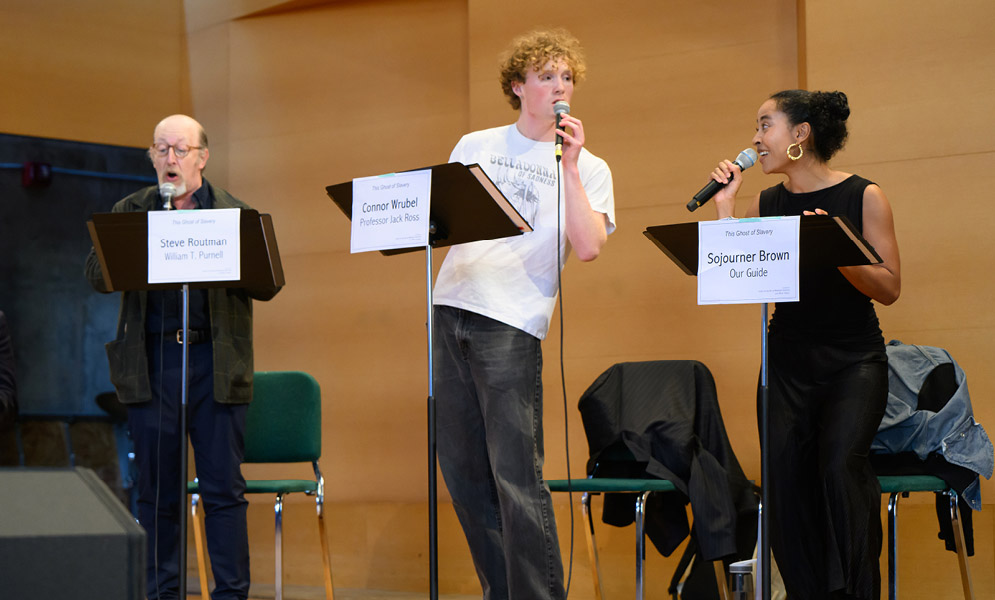
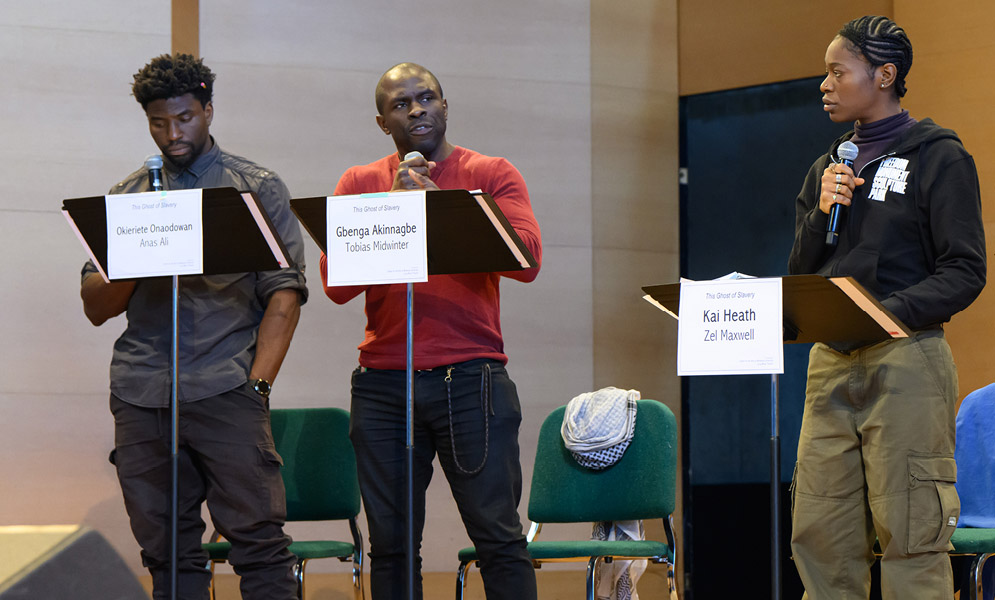
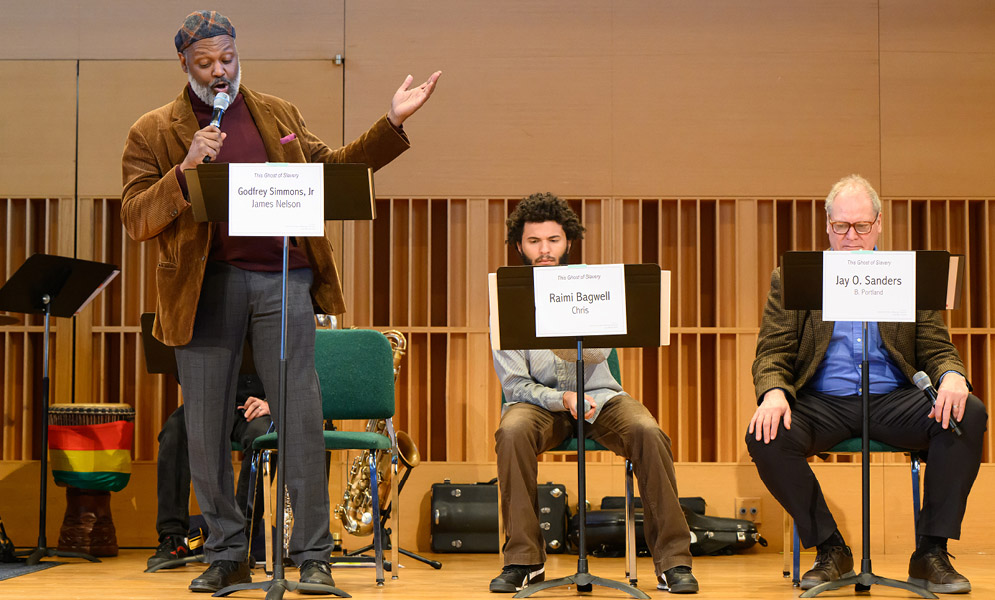
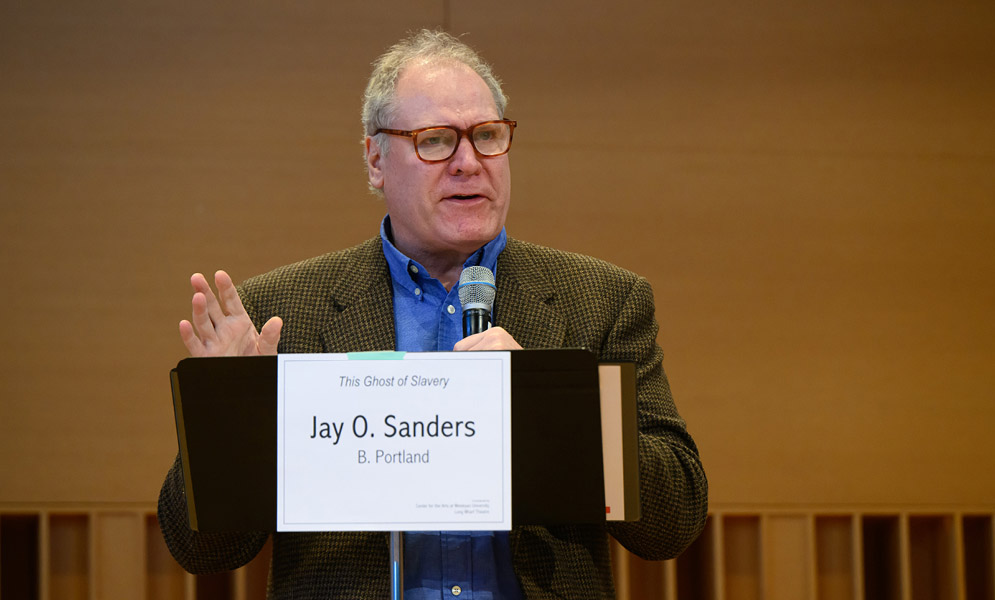
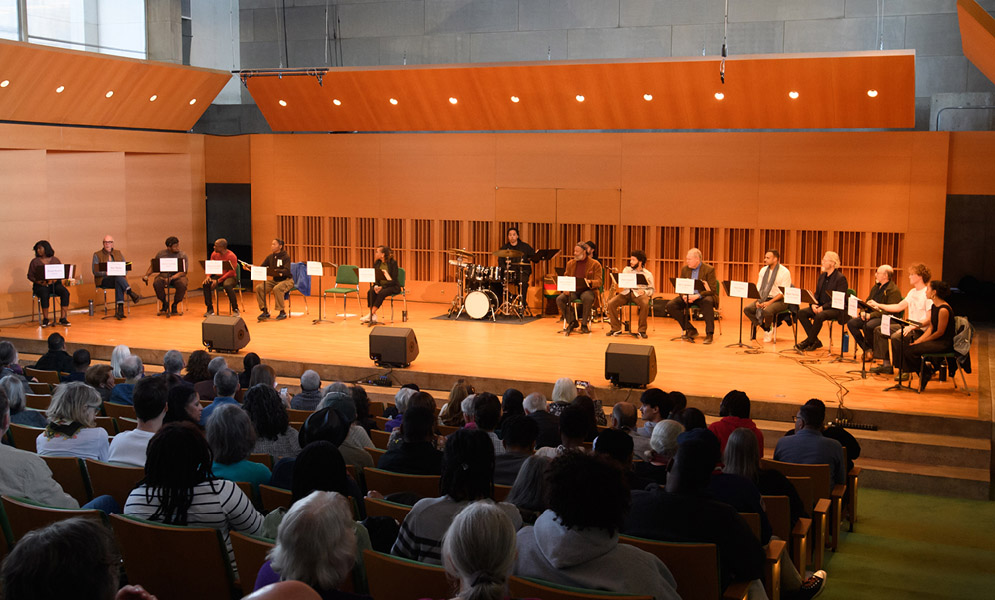
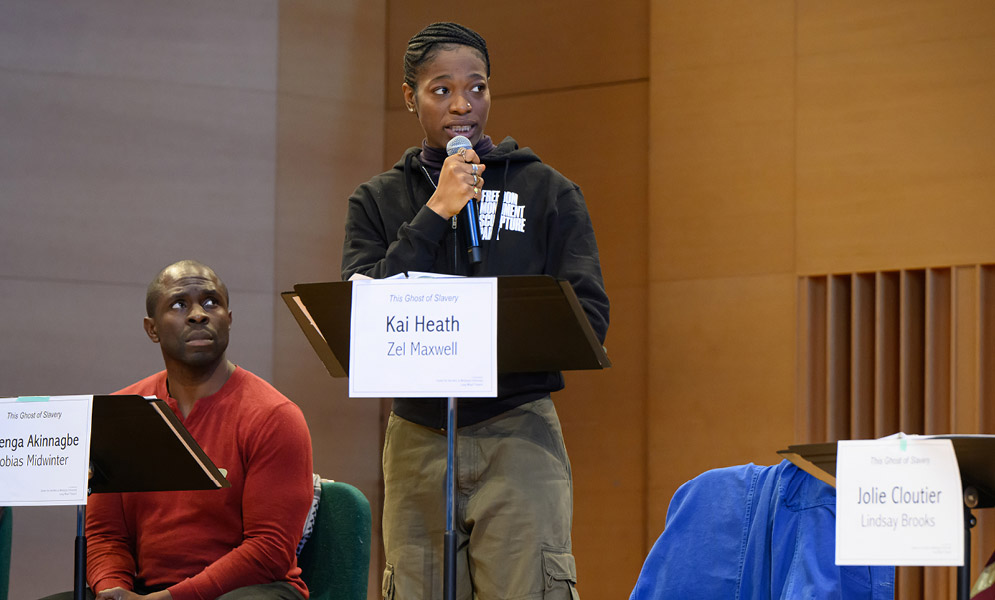
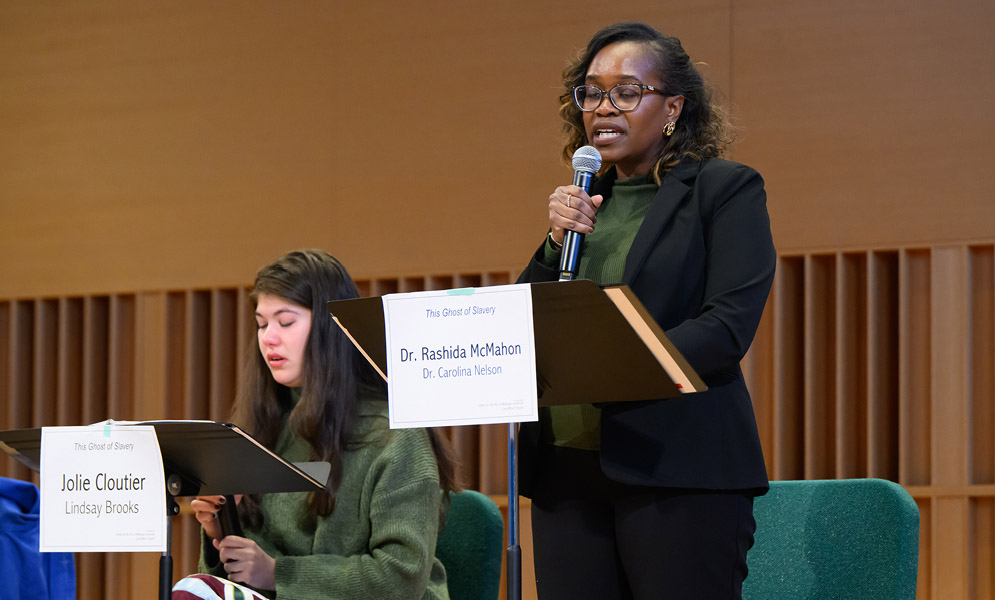
Smith arrived at Wesleyan with her latest play, This Ghost of Slavery: A Play of Past and Present, first published in The Atlantic. The piece blends verbatim performance from contemporary interviews with historical and sociological research. Her residency centered on continuing to develop the play, which connects present-day activists to archival materials—particularly 1864 Maryland “apprenticeship laws” that re-indentured formerly enslaved adolescents.
“I’m interested in this idea of performance as a way of knowing…as a kind of lens to learn about people,” Smith says.
A pivotal moment in the residency was the first publicly staged reading of This Ghost of Slavery, co-produced with Long Wharf Theatre. Lubin-Levy underscores the artistic risk involved. “This is the first play in which Smith’s text draws from an archive where the voices of others cannot be heard but only imagined,” he says. “New play development is often a closed process, but Smith puts material in front of audiences before it’s ready—allowing audiences and artist alike to get closer to the difficult conversations that lie at the heart of the work.”
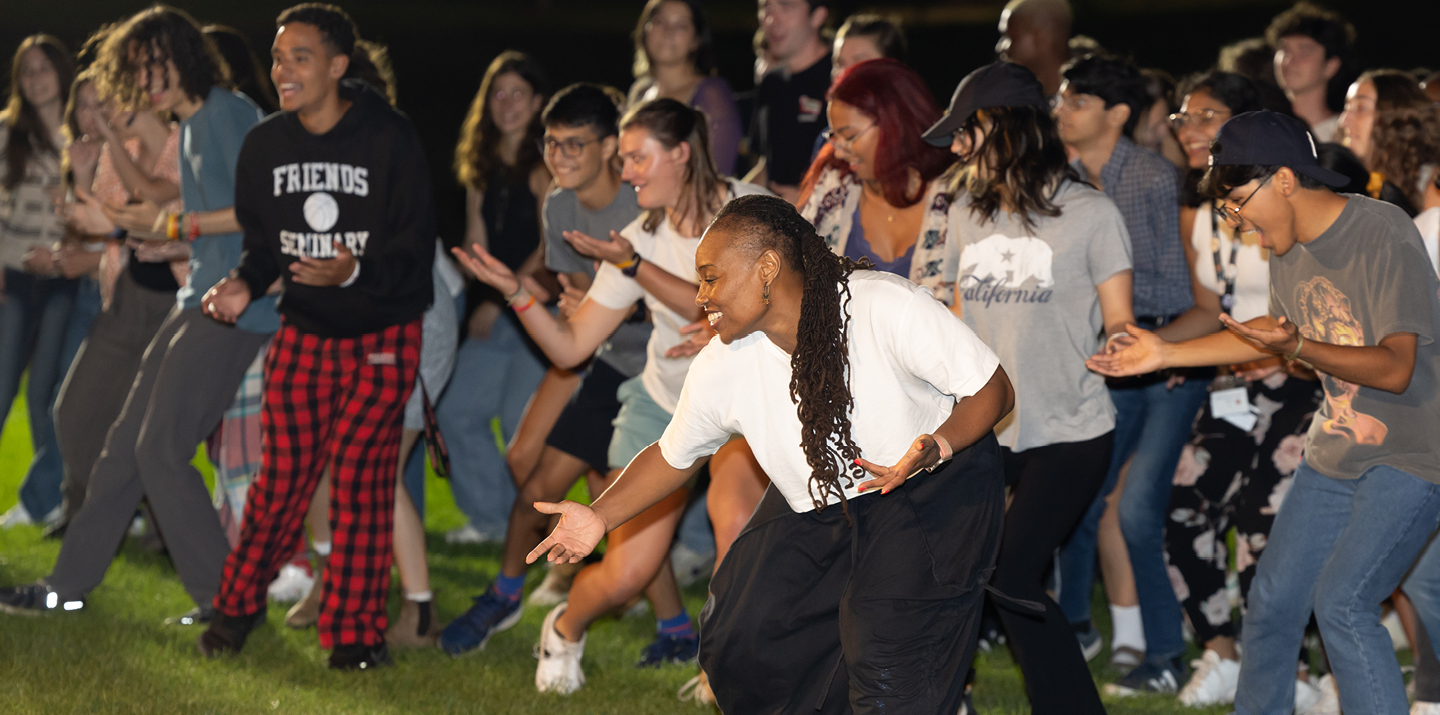
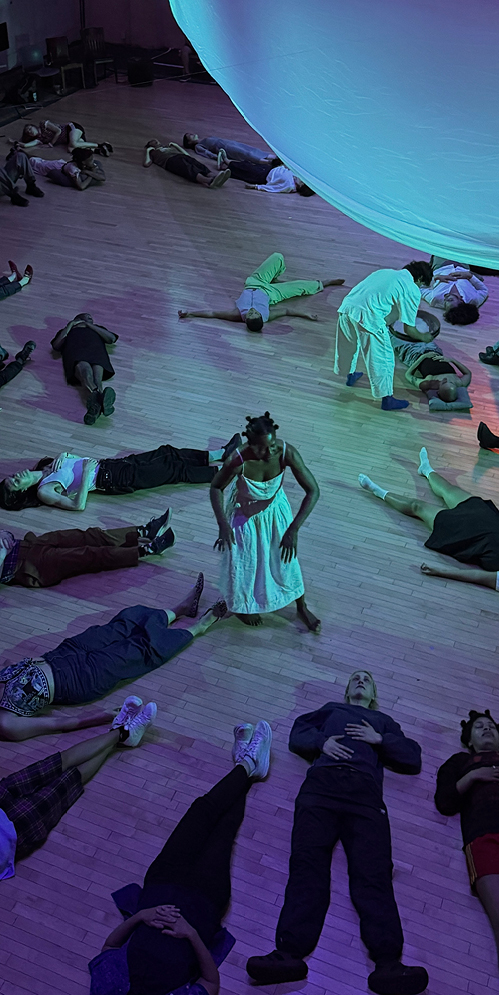
The residency also offered undergraduate students a direct window into Smith’s process through a five-day intensive workshop, “Performance as a Way of Knowing.” The workshop was less about producing artists and more about exploring how the arts shape agency and understanding in the world.
Smith’s method, grounded in vulnerability and the desire to understand the “other,” sparks personal breakthroughs. “The biggest takeaway I take from this workshop is that my story has power,” says Spencer Turner ’25. “And that I shouldn’t be ashamed of it or shy away from it.”
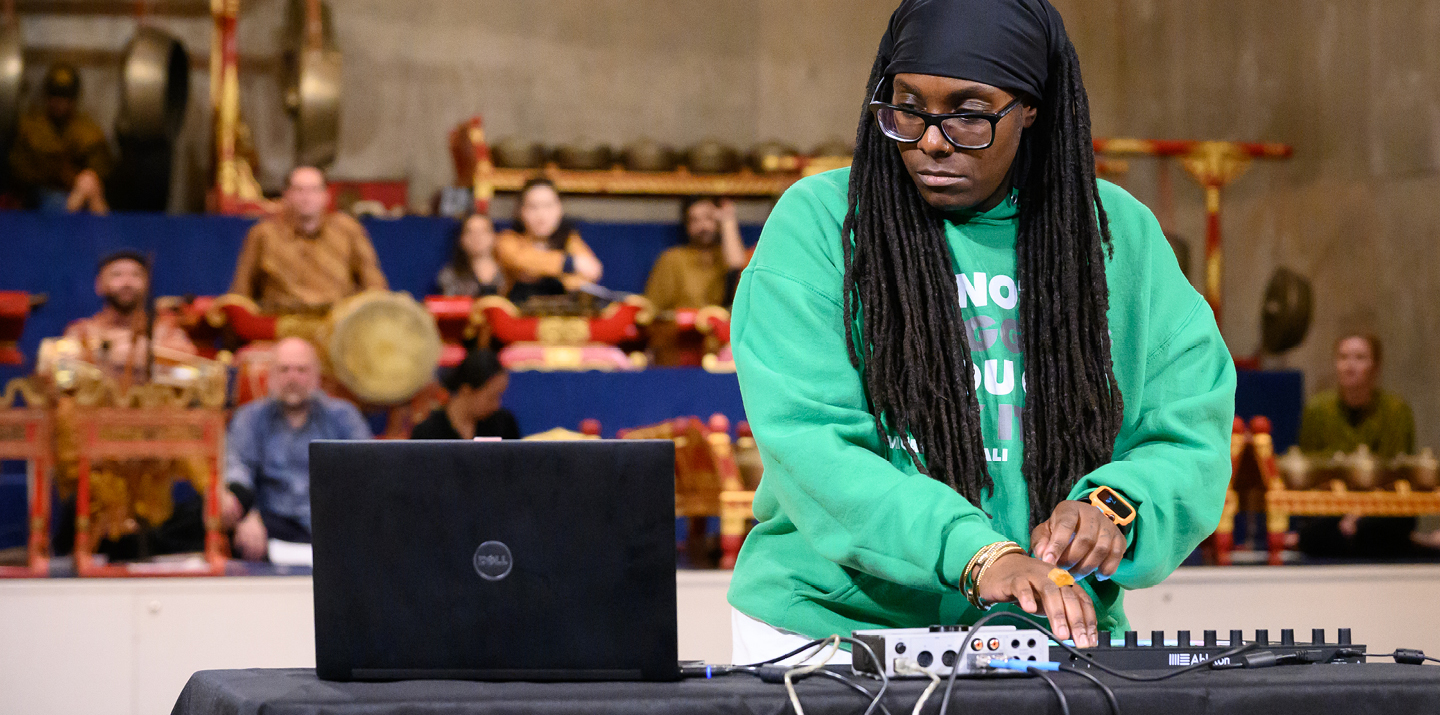
Later, Smith and her mentee, composer and musician Samora Pinderhughes, took part in a public conversation focused on the role of the artist-teacher. This type of exchange echoes the larger ethos of the Center for the Arts. “Our arts faculty, staff, and visiting artists create a learning environment where students can discover their own aesthetic, sense of creativity, improvisation, and potential to assemble the things they’re learning about themselves, each other, and the world around them,” Lubin-Levy says. “Practice, rehearsal, and experimentation—these are the ways we not only prepare for, but also create a world yet to come, making good on the promise of our possibility.”
A similar sense of artistic confrontation shaped the final public event of Smith’s residency: a discussion with filmmaker RaMell Ross and a screening of his film Nickel Boys.
During the conversation, Lubin-Levy asked Smith if there is one question she would pose to today’s undergraduates. She replies, “What’s the meaning in what you’re doing?”
The Center for the Arts’ culture of “radical hospitality”—and its commitment to learning alongside the artists it welcomes—ensures that the lessons of Smith’s residency, including the courage to ask difficult questions, continue to resonate across Wesleyan’s campus.
-
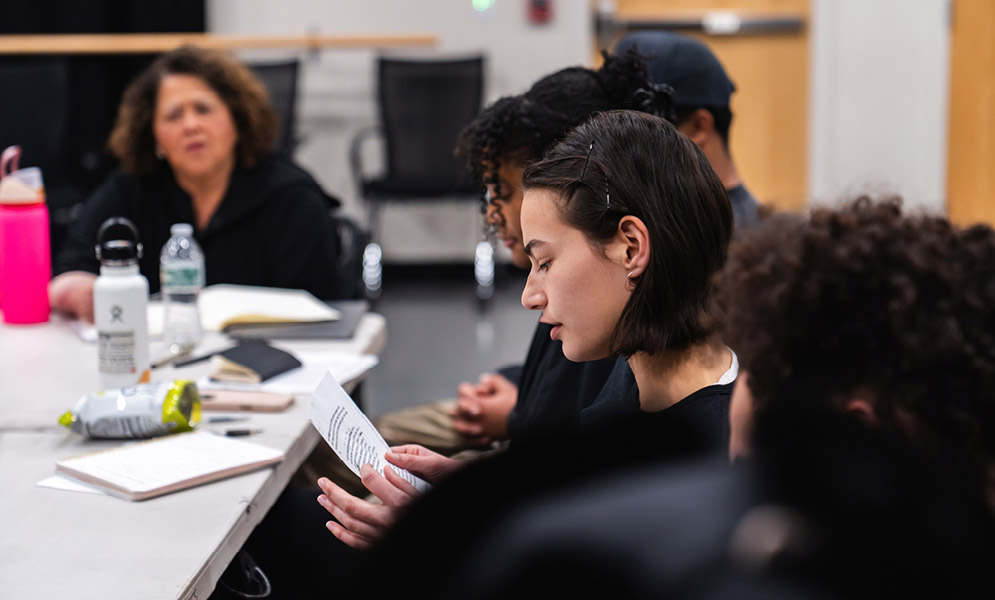
Anna Deavere Smith residency workshop
-
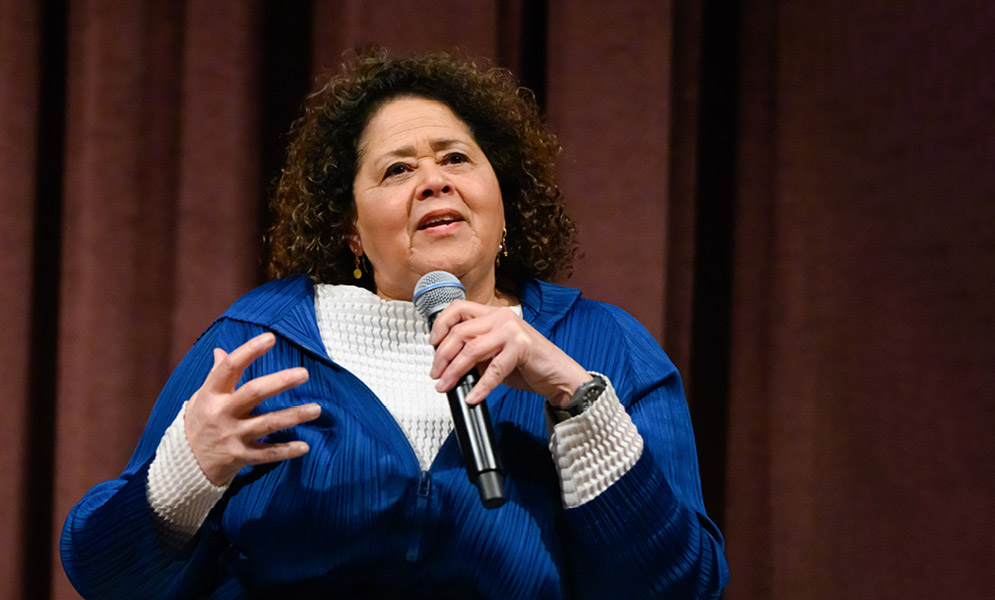
Anna Deavere Smith residency event
-
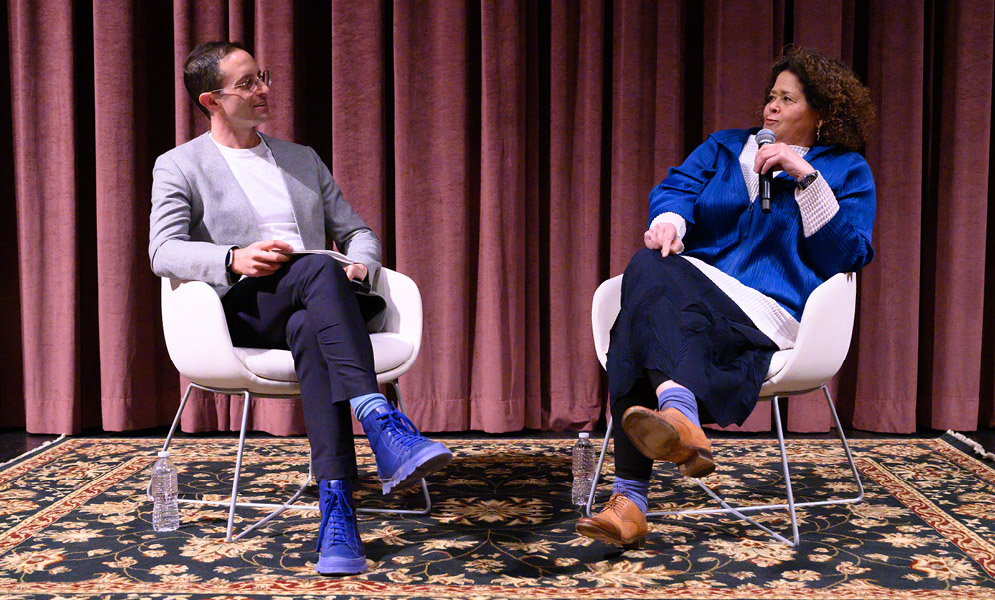
Anna Deavere Smith residency event
-
Anna Deavere Smith residency event
-
Anna Deavere Smith residency event
-
Anna Deavere Smith residency event
-
Anna Deavere Smith residency event
-
Anna Deavere Smith residency event
-
Anna Deavere Smith residency event
-
Anna Deavere Smith residency event
-
Anna Deavere Smith residency event
-
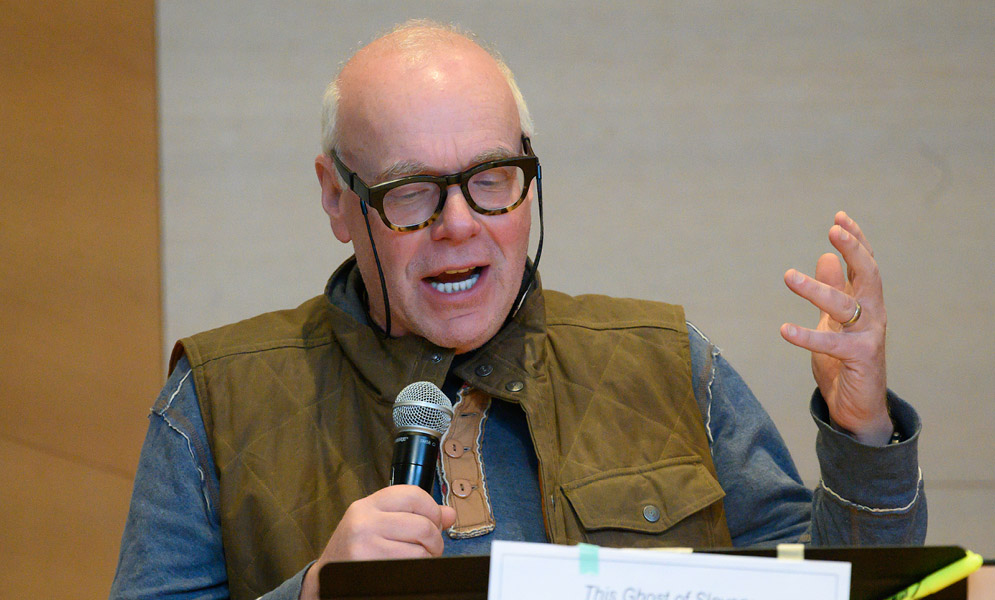
Anna Deavere Smith residency event
-
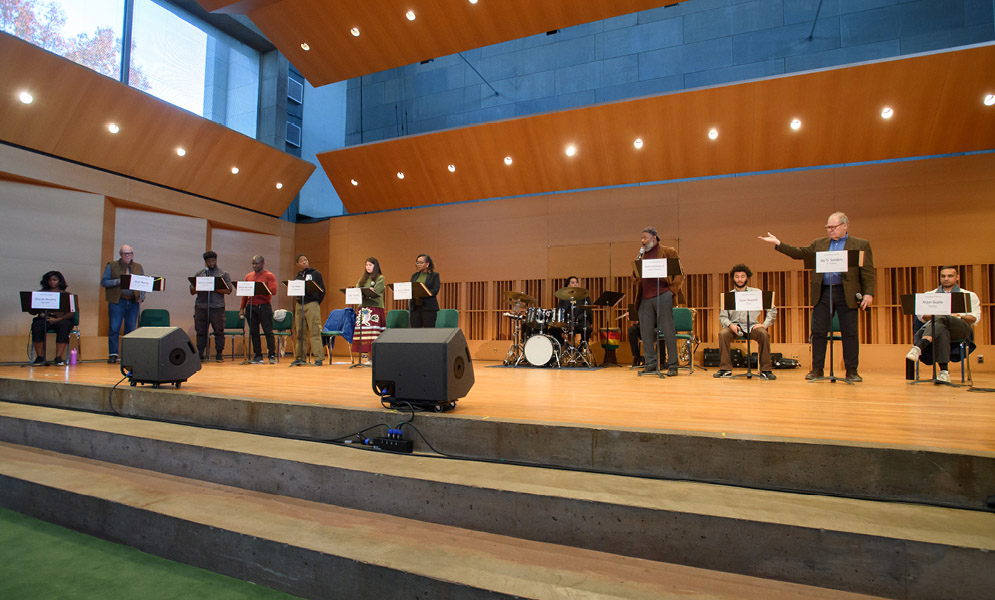
Anna Deavere Smith residency event