



Ethan Philbrick
2023–2024 Visiting Assistant Professor of Music
Music, Performance
ethanphilbrick.com
During his 2023–2024 residency at Wesleyan University’s Center for the Arts, cellist, artist, and scholar Ethan Philbrick curated Instrument—Body, a series of site-specific performances developed alongside his seminar of the same name. Presented across unexpected campus spaces, the project explored the shifting boundary between instrument and body through sound, space, and presence.
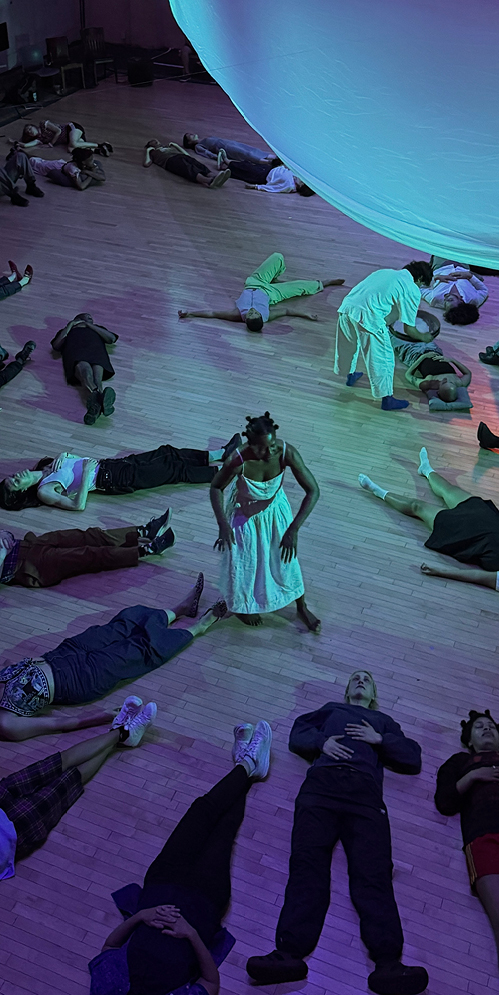
Instrument—Body brought together visiting artists, improvisers, and Wesleyan students in a series of performances that examined instrumentality, embodiment, intimacy, and political history. Through a combination of improvised and scored compositions, the works asked what it means to become an instrument—to be played, to play back, and to listen. Staged within architectural and social environments not typically associated with performance, the series explored how sound and human presence activate space, and how the structures we inhabit shape both artistic practice and lived experience.


About Ethan Philbrick
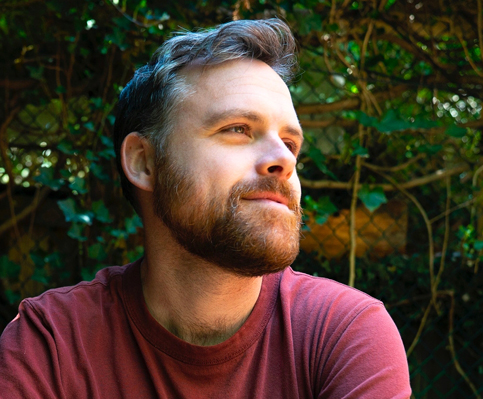
Ethan Philbrick is a cellist, artist, writer, and scholar whose work explores performance, collectivity, and political possibility. His book Group Works: Art, Politics, and Collective Ambivalence was published by Fordham University Press in 2023. His recent projects include Slow Dances at The Kitchen, Mutual Aid Among Animals at the Park Avenue Armory, Song in an Expanding Field at The Poetry Project, and Choral Marx at NYU Skirball. Philbrick holds a PhD in performance studies from NYU and has taught at Pratt Institute, Muhlenberg College, and NYU.
Instrument—Body Essay
What is an instrument? Often defined broadly as a tool or an implement, instruments are thought of as objects of use, supposedly inert things that extend or enhance the capacities of a person, player, or operator. In science and medicine, an instrument is something used to measure or observe. In artistic practice, an instrument is an object or device used for producing sound.
Yet in practice, instruments tend to complicate the distinction between subject and object, person and thing. Instruments blur into bodies and bodies become instruments. Persons are made into things and things are personified. The term instrument becomes the verb “to instrumentalize” in order to mark how persons render other persons objects of use. The branch of musicology devoted to the study of musical instruments is called organology, marking a resonance between musical organs (such as a Hammond B3 organ) and bodily organs (such as a kidney). These complications open onto a series of questions: Are instruments inside or outside the body? If an instrument is outside the body, what kind of object is it—a fetish? A prosthetic? An extension? A tool? A commodity? A technology? If the instrument is part of the body, who plays it? If a body is rendered an instrument by another body, how might the played also play the player? What kinds of forces do instruments enact on their players?
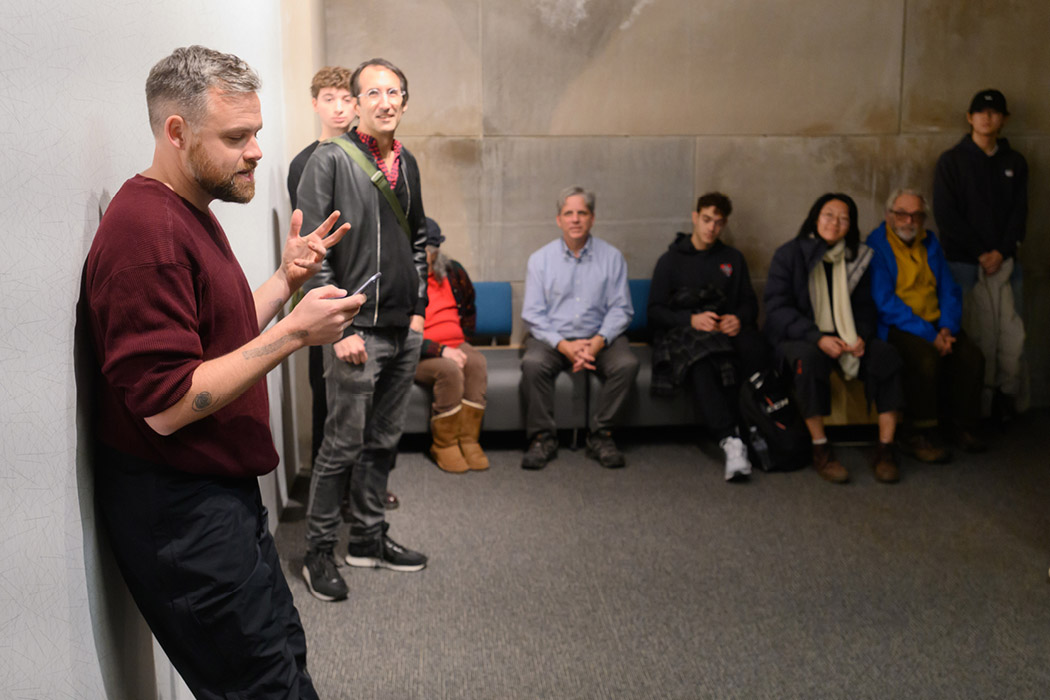
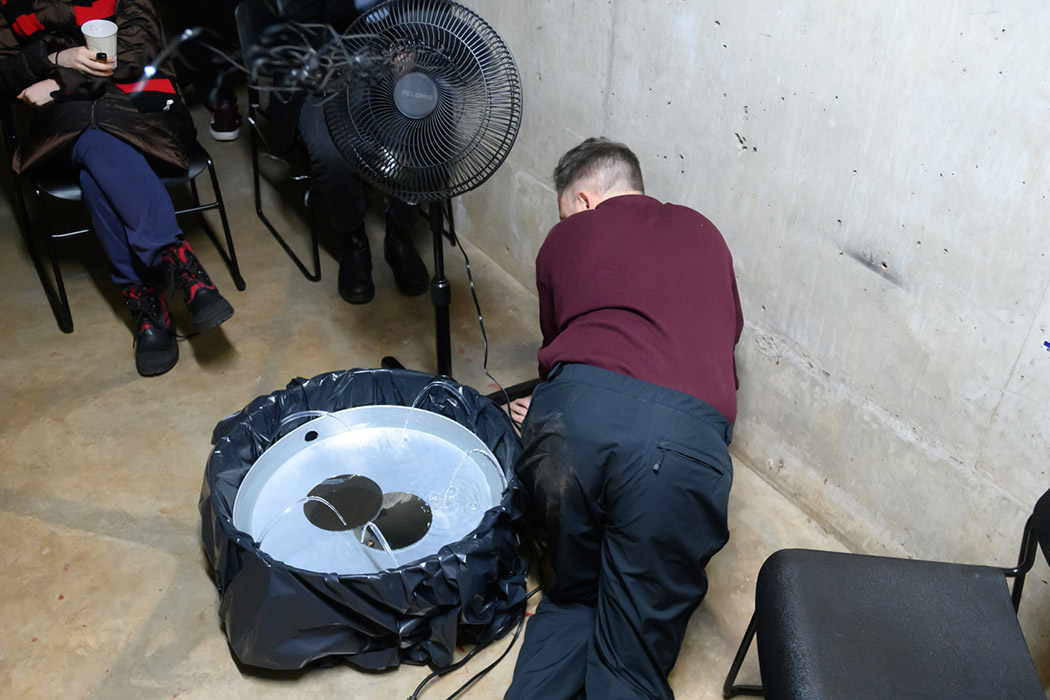
“Instrument—Body” was a course and performance series at Wesleyan University during the fall 2023 semester aimed at co-investigating this historical, political, conceptual, and artistic terrain. Students in the course read widely across the fields of musicology, art history, performance studies, queer studies, and American studies to investigate questions of instrumentality, embodiment, and technology¹ while also creating a series of performances in response to three prompts: 1. “make an instrument,” 2. “break an instrument,” and 3. “make yourself an instrument.” Concurrently, a series of guest artists who re-examine instrumental relations in their practices performed their work in surprising locations on the Wesleyan campus, expanding the investigation of instruments and embodiment to include questions of space, architecture, and institutionality.
¹ See “Organ / Organology / Organization,” a ‘zine of reading excerpts from “Instrument—Body.”
First, Ceclia Lopez MA ’16 (electronics) and Brandon Lopez (bass) performed an improvised duo set among the specimens and remains at The Joe Webb Peoples Museum of Natural History. They processed each other’s signals, both literally and figuratively, finding a tumultuous co-instrumental assemblage to sonically animate the seemingly no-longer-animate holdings of the museum.
Second, Jeremy Toussaint-Baptiste performed a roving work called Y’all Don’t Wanna Hear Me (You Just Wanna Dance) that traversed the Ezra and Cecile Zilkha Gallery and the outdoor spaces of Wesleyan’s Center for the Arts. In the piece, Toussaint-Baptiste appropriates an instrument of sonic brutality deployed by the police to disperse crowds called a Long Range Acoustic Device. Toussaint-Baptiste purchases these aural weapons in order to take them out of circulation and then refuses to reproduce the violence of their intended use, instead misusing them as tools for study, movement, and enjoyment.
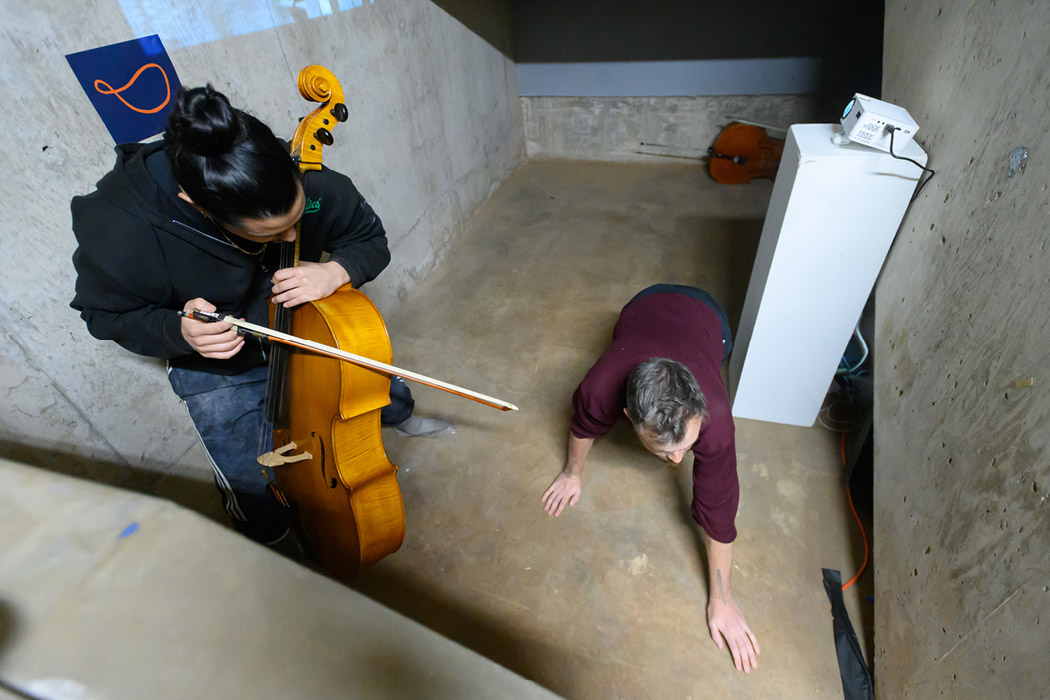
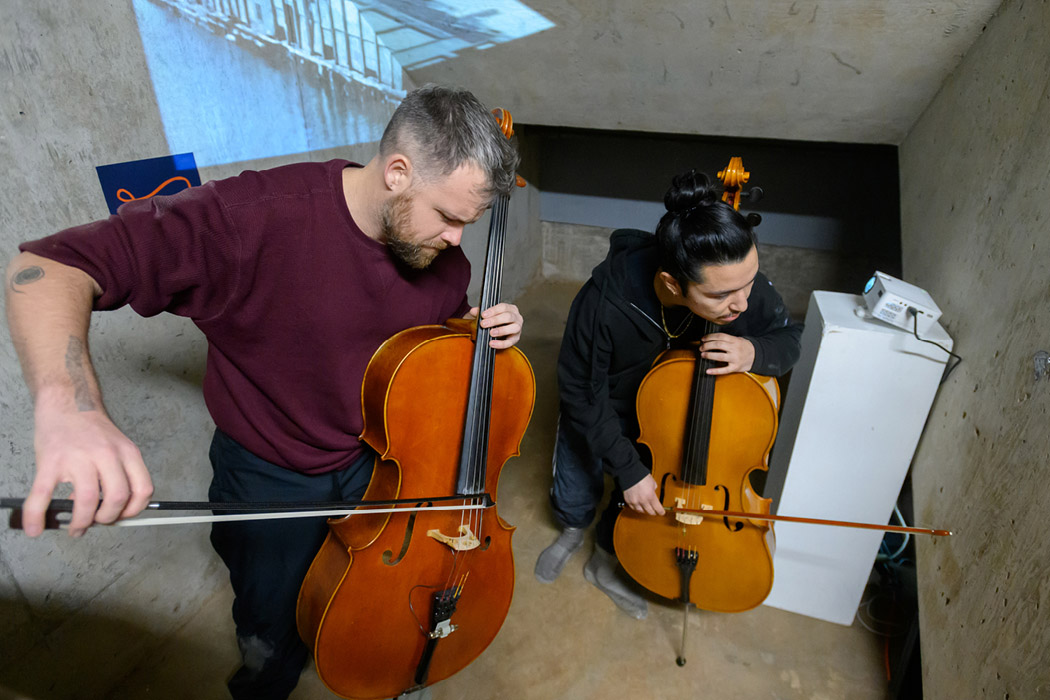
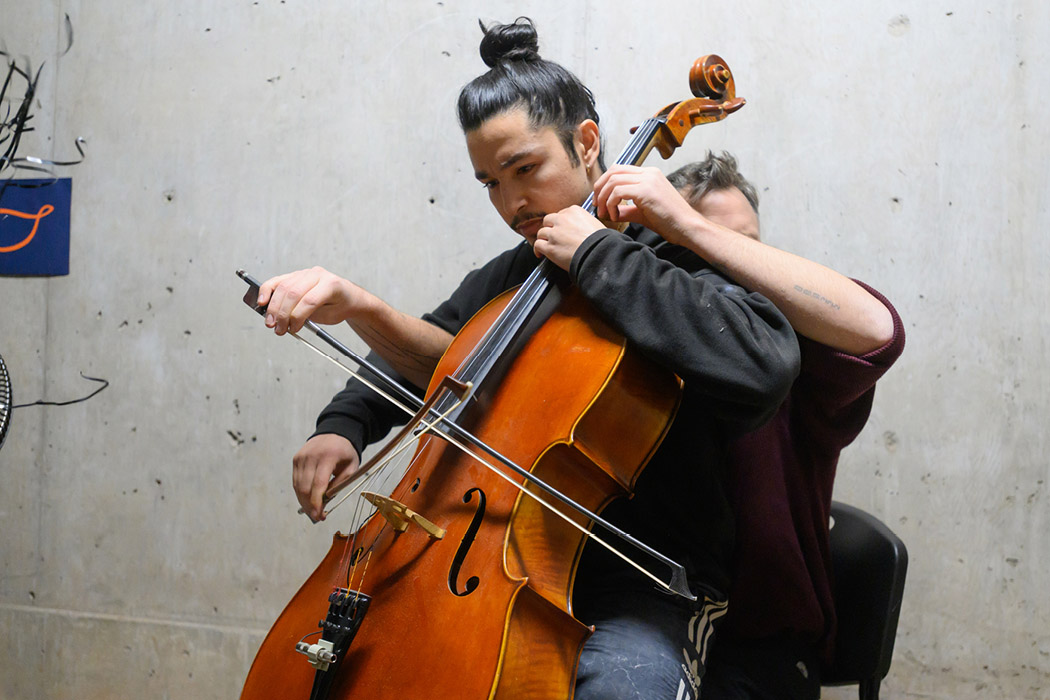
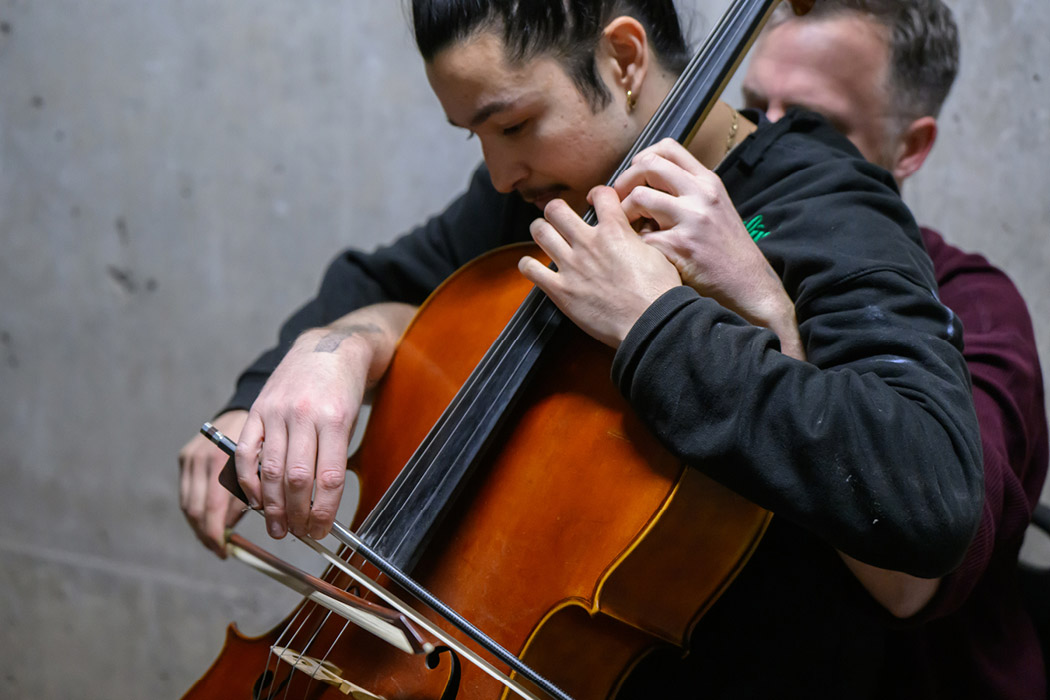
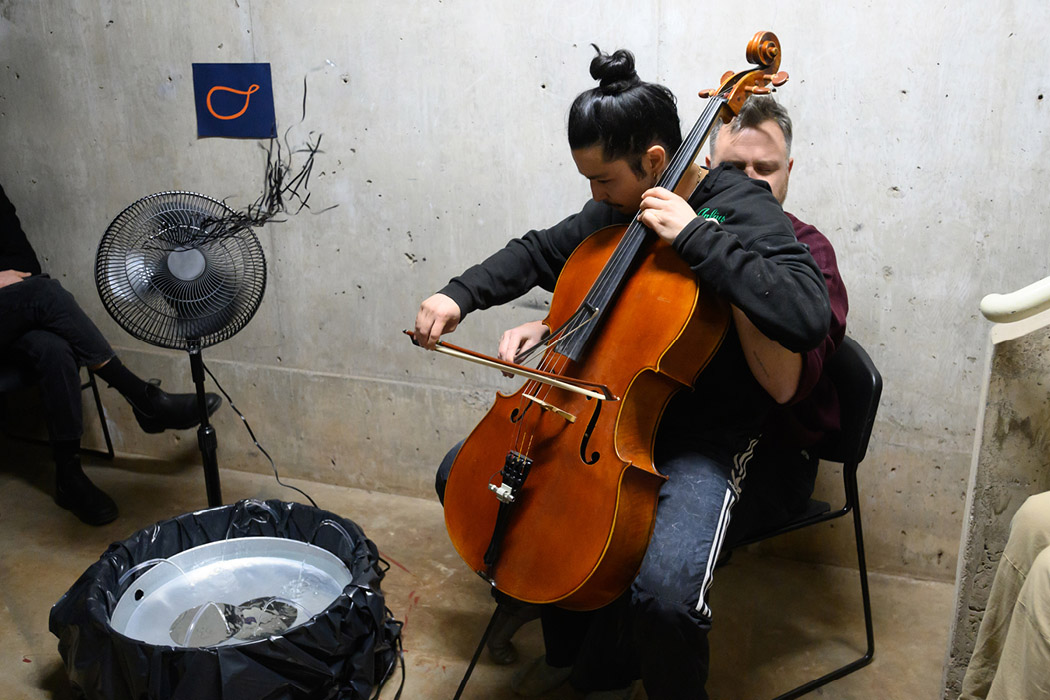
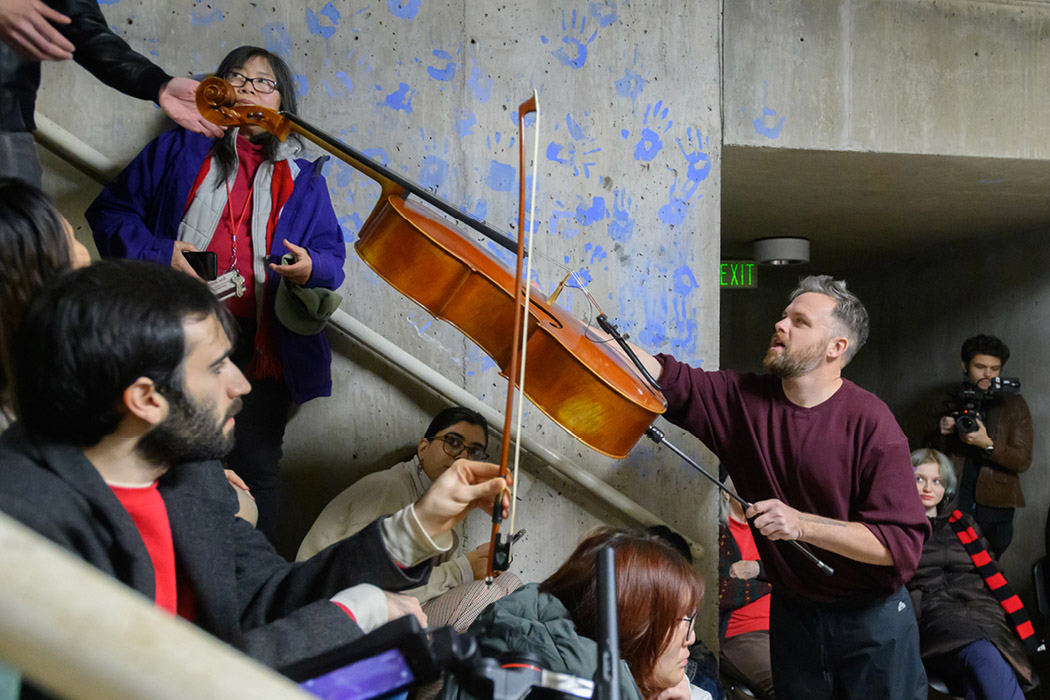
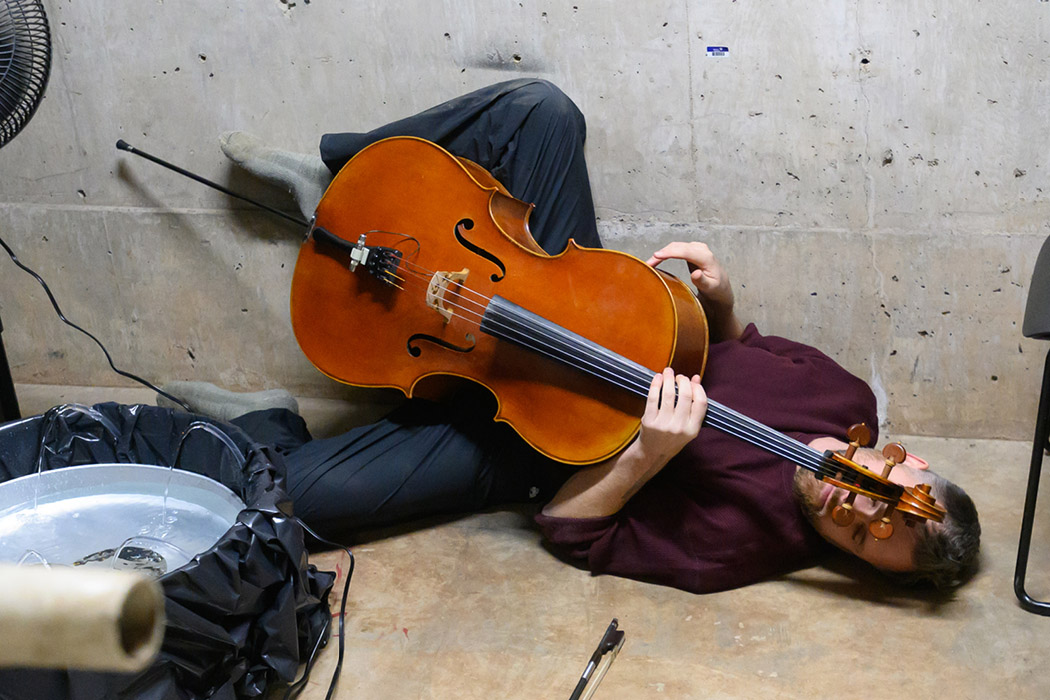
Lastly, I performed a new collaborative work with the cellist and composer Justin Wong called The Waterfront Journals in the tunnels underneath the Center for the Arts. The Waterfront Journals takes its title from a posthumously published book by the visual artist, writer, and HIV/AIDS activist David Wojnarowicz. In the performance, we turn to Wojnarowicz, as well as broader legacies of queer sexual and social experimentation along the New York City waterfront, as sources of inspiration for finding new ways to use our instruments and each other.