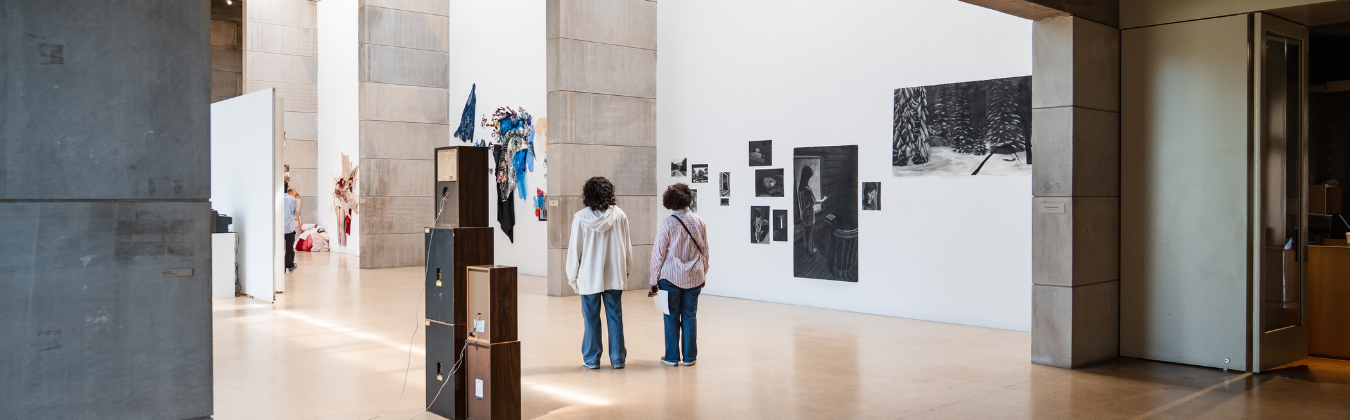
Homecoming + Family Weekend attendees are invited to explore the campus’s rich living art collection and visit key programs, including the Gordon Career Center, academic departments, and more.
View the complete schedule of Homecoming + Family Weekend events here
-
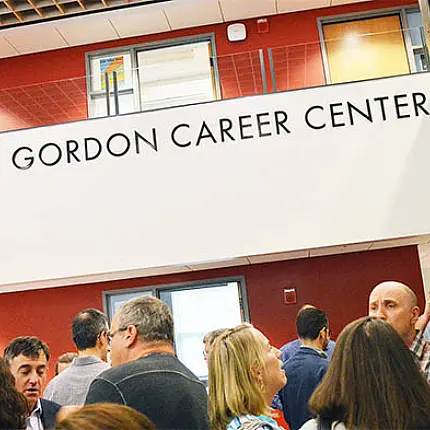
Gordon Career Center Open House
10 a.m. - 12 p.m.
Boger Hall, Gordon Career Center, Olson Commons Room 101
Click for more detailsDrop by the Gordon Career Center to meet the team and explore the wide range of resources available to help students discover career paths and pursue meaningful job, volunteer and grad school opportunities. Just getting started or planning your next steps? All are welcome to attend! -
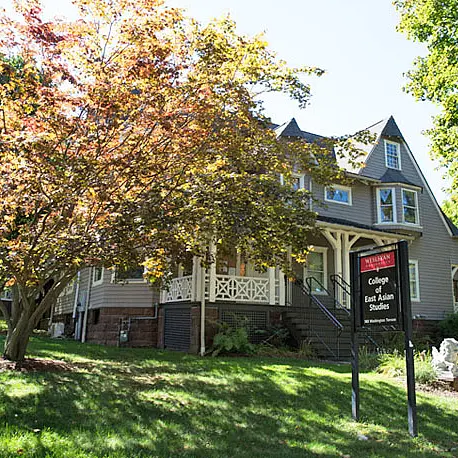
College of East Asian Studies Gallery at Mansfield Freeman Center Exhibit: “Collecting China”
12-4 p.m.
College of East Asian Studies Gallery at Mansfield Freeman Center
Click for more detailsIn 1835, just four years after the founding of Wesleyan University, the Missionary Lyceum student group resolved that, “at some favorable point in China,” a Methodist mission should be established. That “favorable point” came in the 1840s, when opium and gunboats forced China’s doors wide open. Under protections freshly codified by unequal treaties, Wesleyan graduates began arriving along Chinese shores, convinced of a calling to bring forth social and spiritual transformation. As Methodist missionaries, they founded schools, opened medical clinics, and preached the gospel of Christ across cities and provinces. And to generate public interest in their work and raise funds to sustain their mission, they sent thousands of objects home to the United States to give shape to American audiences about the idea of China from afar.
Originally part of the Wesleyan Museum of Natural History (1871–1957), these objects provide the basis for the exhibition Collecting China: Missionary Assemblages of a Distant World, 1844–1911. The exhibition invites viewers to encounter an imagined China as a 19th-century American audience might have, as well as to probe the limits of how such collecting and archival practices create meaning. After Wesleyan’s Museum of Natural History closed, its collections—once filled with cultural and natural curiosities gathered from around the globe—were dispersed across various holdings on- and off-campus. With this exhibition, a fraction of this collection is reassembled, with many of these objects being presented for the first time in over a century. Only a fraction of what missionary alumni shipped back from the East is on view—including chopsticks and ladies’ shoes to herbal specimens and a brick from the Great Wall. With their return to view, Collecting China revisits Wesleyan’s long but little-known history of engagement with East Asia, exploring how these material assemblages, and the missionary alumni of the 19th century, helped produce a knowable “China” that became the basis upon which evangelical Christianity and Western modernity worked to reform, relay, and remake a world across the Pacific.
The exhibition was curated by Sida Chu ’26 and Nancy Li ’28 as part of a tutorial in curatorial practice led by Assistant Director of Exhibitions and Assistant Curator of Education Rosemary Lennox and Associate Director and Curator of Visual Arts Benjamin Chaffee ’00. Exhibition support provided by the College of East Asian Studies. This exhibition was previously displayed earlier this year in Olin Library.
-
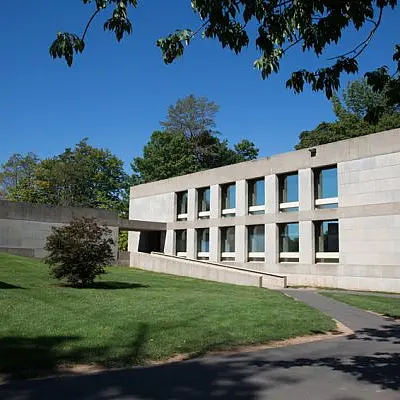
Zilkha Gallery Exhibit: “Mozart’s Chair”
12-5 p.m.
Click for more details
Ezra and Cecile Zilkha GalleryThe exhibition “Mozart’s Chair” considers how furniture establishes the preconditions for action. It does so not by exhibiting furniture (per se), but by assembling works of art that approach the condition of furniture as setting, support structure, and as objects that have an indeterminate relationship to our bodies. Within a gallery, one often assumes that art is always in the foreground, while that which supports the presentation of art is in the background. Artists have long challenged viewers to perceive things otherwise—to admit the influence of what might be dismissed as mere context, atmosphere, ambiance, or decoration. Mozart’s Chair builds on this inquiry. Through sculpture, painting, installation, performance, and sound, the exhibition is like a score, a composition exploring the enabling effect of an object, getting to a fundamental question: what does the art object make possible?
Artists featured in the exhibition include Scott Burton, Guy de Cointet, Céline Condorelli, Naotaka Hiro, Helen Marten, Devin T. Mays, Park McArthur, Stephen Prina, and Erik Satie. The exhibition includes an extensive performance series that animates the gallery space, including the first posthumous production of de Cointet’s play A NEW LIFE (1981) with dramaturgy by scholar and curator Marie de Brugerolle. The exhibition itself will shift arrangement over time, suggesting it is not just the works themselves, but the world they create together, that exists indeterminately.
A curator tour will be offered on Saturday at 2 p.m.Curated by Associate Director and Curator of Visual Arts Benjamin Chaffee ’00.
-
Taking Care: An exhibition of paper works by Krista Narciso, Preservation & Book Arts Librarian
12-5 p.m.
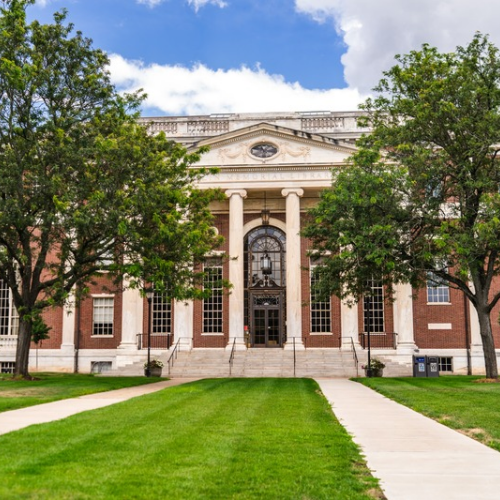
Olin Memorial Library, Ground FloorTaking Care is an exhibition of artistic work by Preservation & Book Arts Librarian, Krista Narciso.
Click for more detailsInspired by the day-to-day work of care and repair – from the preservation of books in the library to the mending of domestic objects in our homes. The work in the exhibition is created entirely from paper and natural dyes from plants. Repetitive, geometric patterns are inspired by kitchen tiles, quilts, and printed borders on book pages. -
Davison Art Collection Exhibits: “Grotesque: Art Beyond Restraint” and “Intaglio in Color”
12:30-4:30 p.m.
Pruzan Art Center, Goldrach Gallery
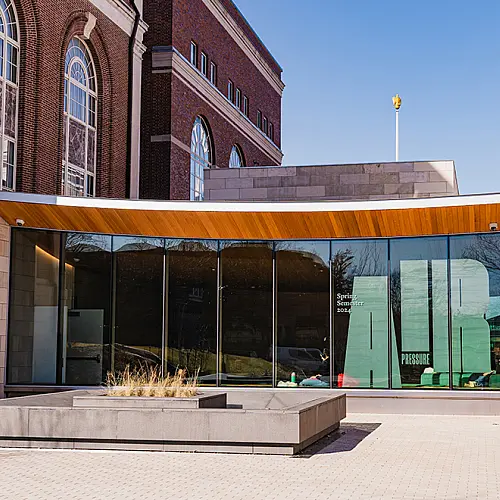
Click for more detailsGrotesque: Art Beyond Restraint explores the ever roving and multiplying meanings of “the grotesque.” Commonly associated with horror and abjection today, the grotesque has historically also been a locus of generation for caprice, wit, ribaldry, and ornament. The grotesque image is one that unsettles by disrupting what we think we know, producing conflicted reactions: disgust together with fascination, fear accompanied by laughter. Over time, numerous artistic movements have found the grotesque useful to their own ends and steered it in new directions. Renaissance, Baroque, Symbolist, Surrealist, and Post-Structuralist artists have all found meaning in the grotesque. The exhibition features artwork by Lucas van Leyden, Nicoletto da Modena, Otto Dix, Odilon Redon, Jacques Callot, Kara Walker, and Giovanni Domenico Tiepolo, among others.
Curated by Miya Tokumitsu, Donald T. Fallati and Ruth E. Pachman Curator of the Davison Art Collection.“Intaglio” refers to the process of incising a design into a material—an intaglio print is any print created with a matrix bearing an incised design, the most well-known examples being copperplate engraving and etching. Creating multicolor intaglio prints entails either applying several colors of ink onto the plate in selected areas, or else separating the design's parts into color layers, and printing each layer separately, one on top of another. Both methods are complex, and over the centuries artists have made novel innovations in both. This exhibition presents a variety of multicolor intaglio prints from the 18th century to the present.
Curated by Miya Tokumitsu, Donald T. Fallati and Ruth E. Pachman Curator of the Davison Art Collection. -

Tapestry of America: Unique Collections Open House
1:00-4:00 p.m.
Olin Memorial Library, Special Collections and ArchivesJoin us for an open house celebrating the breadth of American history held right here in our Unique Collections.
Click for more detailsCome see some of our unique holdings spanning centuries and from a variety of backgrounds. Items on display will include Native American objects, protest anthems, jazz recordings, artist books exploring immigration, and rare items from the Dietrich American Foundation collection including objects by some of the United States’ founding fathers. Whether you're a returning alum, a current student, or a visiting family member, this is a chance to see how our library preserves and invites students and researchers to explore the many voices and stories that make up the American experience. Drop by, browse, and discover something new — and try your hand at printing your own take-home handbill featuring artistic renderings of famous quotes from America's founding.
Featuring items from:
- Special Collections & Archives
- World Music Archives & Music Library
- Archaeology & Anthropology Collections
- East Asian Art & Archival Collections
-
Summer Grants Showcase
1:30 - 2:30 p.m.
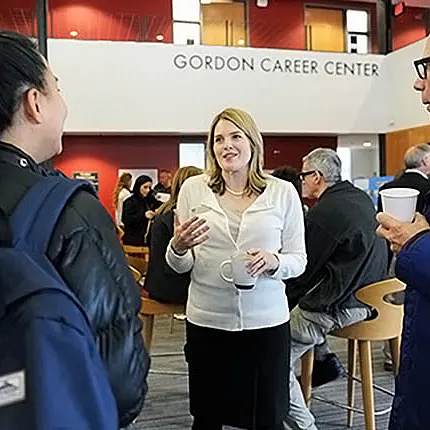
Boger Hall, Gordon Career Center, Olson Commons Room 101Hear firsthand from 2026 Wesleyan Summer Grant recipients as they reflect on their summer experiences.
Click for more detailsThese students pursued career-building opportunities-such as internships, research, and volunteer work-made possible through the Summer Grant Program. Stop by to get inspired!
-

Tapestry of America: Unique Collections Open House
10 a.m.-12 p.m.
Olin Memorial Library, Special Collections and Archives Click for more detailsCome see some of our unique holdings spanning centuries and from a variety of backgrounds. Items on display will include Native American objects, protest anthems, jazz recordings, artist books exploring immigration, and rare items from the Dietrich American Foundation collection including objects by some of the United States’ founding fathers. Whether you’re a returning alum, a current student, or a visiting family member, this is a chance to see how our library preserves and invites students and researchers to explore the many voices and stories that make up the American experience. Drop by, browse, and discover something new — and try your hand at printing your own take-home handbill featuring artistic renderings of famous quotes from America’s founding.
Featuring items from:
- Special Collections & Archives
- World Music Archives & Music Library
- Archaeology & Anthropology Collections
- East Asian Art & Archival Collections
-
"Collecting China" Curator Tour
11 a.m.
College of East Asian Studies Gallery at Mansfield Freeman Center
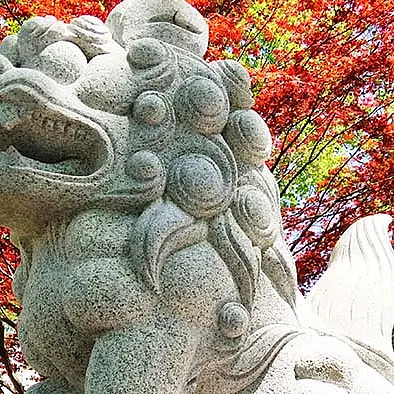
Click for more detailsJoin student curators Sida Chu ’26 and Nancy Li ’28 for a tour of the “Collecting China” exhibit.
In 1835, just four years after the founding of Wesleyan University, the Missionary Lyceum student group resolved that, “at some favorable point in China,” a Methodist mission should be established. That “favorable point” came in the 1840s, when opium and gunboats forced China’s doors wide open. Under protections freshly codified by unequal treaties, Wesleyan graduates began arriving along Chinese shores, convinced of a calling to bring forth social and spiritual transformation. As Methodist missionaries, they founded schools, opened medical clinics, and preached the gospel of Christ across cities and provinces. And to generate public interest in their work and raise funds to sustain their mission, they sent thousands of objects home to the United States to give shape to American audiences about the idea of China from afar.
Originally part of the Wesleyan Museum of Natural History (1871–1957), these objects provide the basis for the exhibition Collecting China: Missionary Assemblages of a Distant World, 1844–1911. The exhibition invites viewers to encounter an imagined China as a 19th-century American audience might have, as well as to probe the limits of how such collecting and archival practices create meaning. After Wesleyan’s Museum of Natural History closed, its collections—once filled with cultural and natural curiosities gathered from around the globe—were dispersed across various holdings on- and off-campus. With this exhibition, a fraction of this collection is reassembled, with many of these objects being presented for the first time in over a century. Only a fraction of what missionary alumni shipped back from the East is on view—including chopsticks and ladies’ shoes to herbal specimens and a brick from the Great Wall. With their return to view, Collecting China revisits Wesleyan’s long but little-known history of engagement with East Asia, exploring how these material assemblages, and the missionary alumni of the 19th century, helped produce a knowable “China” that became the basis upon which evangelical Christianity and Western modernity worked to reform, relay, and remake a world across the Pacific.
The exhibition was curated by Sida Chu ’26 and Nancy Li ’28 as part of a tutorial in curatorial practice led by Assistant Director of Exhibitions and Assistant Curator of Education Rosemary Lennox and Associate Director and Curator of Visual Arts Benjamin Chaffee ’00. Exhibition support provided by the College of East Asian Studies. This exhibition was previously displayed earlier this year in Olin Library.
-
College of East Asian Studies Gallery at Mansfield Freeman Center Exhibit: “Collecting China”
11 a.m.-3 p.m.
College of East Asian Studies Gallery at Mansfield Freeman Center
Click for more detailsIn 1835, just four years after the founding of Wesleyan University, the Missionary Lyceum student group resolved that, “at some favorable point in China,” a Methodist mission should be established. That “favorable point” came in the 1840s, when opium and gunboats forced China’s doors wide open. Under protections freshly codified by unequal treaties, Wesleyan graduates began arriving along Chinese shores, convinced of a calling to bring forth social and spiritual transformation. As Methodist missionaries, they founded schools, opened medical clinics, and preached the gospel of Christ across cities and provinces. And to generate public interest in their work and raise funds to sustain their mission, they sent thousands of objects home to the United States to give shape to American audiences about the idea of China from afar.
Originally part of the Wesleyan Museum of Natural History (1871–1957), these objects provide the basis for the exhibition Collecting China: Missionary Assemblages of a Distant World, 1844–1911. The exhibition invites viewers to encounter an imagined China as a 19th-century American audience might have, as well as to probe the limits of how such collecting and archival practices create meaning. After Wesleyan’s Museum of Natural History closed, its collections—once filled with cultural and natural curiosities gathered from around the globe—were dispersed across various holdings on- and off-campus. With this exhibition, a fraction of this collection is reassembled, with many of these objects being presented for the first time in over a century. Only a fraction of what missionary alumni shipped back from the East is on view—including chopsticks and ladies’ shoes to herbal specimens and a brick from the Great Wall. With their return to view, Collecting China revisits Wesleyan’s long but little-known history of engagement with East Asia, exploring how these material assemblages, and the missionary alumni of the 19th century, helped produce a knowable “China” that became the basis upon which evangelical Christianity and Western modernity worked to reform, relay, and remake a world across the Pacific.
The exhibition was curated by Sida Chu ’26 and Nancy Li ’28 as part of a tutorial in curatorial practice led by Assistant Director of Exhibitions and Assistant Curator of Education Rosemary Lennox and Associate Director and Curator of Visual Arts Benjamin Chaffee ’00. Exhibition support provided by the College of East Asian Studies. This exhibition was previously displayed earlier this year in Olin Library.
-
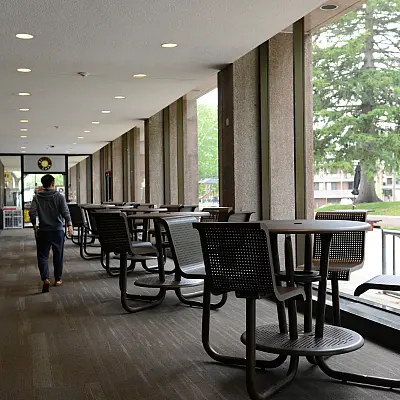
Joe Webb Peoples Museum Open House
11 a.m. - 1 p.m.
Exley Science Center, 4th floor
Click for more detailsOur student curators have developed exhibits, restored specimens, worked on teaching activities with children, made posters and brochures, and digitized our collections (including photography). They will be happy to inform you about our museum and the work they do on our natural history collections. This year, we have new exhibits to show: a mineralogy exhibit of specimens from the recently acquired Grundfest Collection on the third floor of Exley, and a new display case in the Exley Lobby, showing a whale vertebra (donated to Wesleyan in the 1830s, and returned to us by Mystic Seaport, to whom it was loaned in 1957) and sea life in alcohol from the George Brown Goode collections. Look at our new poster with Solnhofen fossils, and see how to recognize the many fossils from that same area in Southern Germany in the walls of the new science building. -
Taking Care: An exhibition of paper works by Krista Narciso, Preservation & Book Arts Librarian
12-5 p.m.
Olin Memorial Library, Ground FloorTaking Care is an exhibition of artistic work by Preservation & Book Arts Librarian, Krista Narciso.
Click for more detailsInspired by the day-to-day work of care and repair – from the preservation of books in the library to the mending of domestic objects in our homes. The work in the exhibition is created entirely from paper and natural dyes from plants. Repetitive, geometric patterns are inspired by kitchen tiles, quilts, and printed borders on book pages. -
"Mozart's Chair" Curator Tour
2 p.m.
Ezra and Cecile Zilkha Gallery
Click for more detailsThe exhibition “Mozart’s Chair” considers how furniture establishes the preconditions for action. It does so not by exhibiting furniture (per se), but by assembling works of art that approach the condition of furniture as setting, support structure, and as objects that have an indeterminate relationship to our bodies. Within a gallery, one often assumes that art is always in the foreground, while that which supports the presentation of art is in the background. Artists have long challenged viewers to perceive things otherwise—to admit the influence of what might be dismissed as mere context, atmosphere, ambiance, or decoration. Mozart’s Chair builds on this inquiry. Through sculpture, painting, installation, performance, and sound, the exhibition is like a score, a composition exploring the enabling effect of an object, getting to a fundamental question: what does the art object make possible?
Artists featured in the exhibition include Scott Burton, Guy de Cointet, Céline Condorelli, Naotaka Hiro, Helen Marten, Devin T. Mays, Park McArthur, Stephen Prina, and Erik Satie. The exhibition includes an extensive performance series that animates the gallery space, including the first posthumous production of de Cointet’s play A NEW LIFE (1981) with dramaturgy by scholar and curator Marie de Brugerolle. The exhibition itself will shift arrangement over time, suggesting it is not just the works themselves, but the world they create together, that exists indeterminately.
-
Zilkha Gallery Exhibit: “Mozart’s Chair”
12-5 p.m.
Ezra and Cecile Zilkha Gallery
Click for more detailsThe exhibition “Mozart’s Chair” considers how furniture establishes the preconditions for action. It does so not by exhibiting furniture (per se), but by assembling works of art that approach the condition of furniture as setting, support structure, and as objects that have an indeterminate relationship to our bodies. Within a gallery, one often assumes that art is always in the foreground, while that which supports the presentation of art is in the background. Artists have long challenged viewers to perceive things otherwise—to admit the influence of what might be dismissed as mere context, atmosphere, ambiance, or decoration. Mozart’s Chair builds on this inquiry. Through sculpture, painting, installation, performance, and sound, the exhibition is like a score, a composition exploring the enabling effect of an object, getting to a fundamental question: what does the art object make possible?
Artists featured in the exhibition include Scott Burton, Guy de Cointet, Céline Condorelli, Naotaka Hiro, Helen Marten, Devin T. Mays, Park McArthur, Stephen Prina, and Erik Satie. The exhibition includes an extensive performance series that animates the gallery space, including the first posthumous production of de Cointet’s play A NEW LIFE (1981) with dramaturgy by scholar and curator Marie de Brugerolle. The exhibition itself will shift arrangement over time, suggesting it is not just the works themselves, but the world they create together, that exists indeterminately.
A curator tour will be offered on Saturday at 2 p.m.
Curated by Associate Director and Curator of Visual Arts Benjamin Chaffee ’00.
-
Davison Art Collection Exhibits: “Grotesque: Art Beyond Restraint” and “Intaglio in Color”
12:30-4:30 p.m.
Pruzan Art Center, Goldrach Gallery
Click for more detailsGrotesque: Art Beyond Restraint explores the ever roving and multiplying meanings of “the grotesque.” Commonly associated with horror and abjection today, the grotesque has historically also been a locus of generation for caprice, wit, ribaldry, and ornament. The grotesque image is one that unsettles by disrupting what we think we know, producing conflicted reactions: disgust together with fascination, fear accompanied by laughter. Over time, numerous artistic movements have found the grotesque useful to their own ends and steered it in new directions. Renaissance, Baroque, Symbolist, Surrealist, and Post-Structuralist artists have all found meaning in the grotesque. The exhibition features artwork by Lucas van Leyden, Nicoletto da Modena, Otto Dix, Odilon Redon, Jacques Callot, Kara Walker, and Giovanni Domenico Tiepolo, among others.
Curated by Miya Tokumitsu, Donald T. Fallati and Ruth E. Pachman Curator of the Davison Art Collection.“Intaglio” refers to the process of incising a design into a material—an intaglio print is any print created with a matrix bearing an incised design, the most well-known examples being copperplate engraving and etching. Creating multicolor intaglio prints entails either applying several colors of ink onto the plate in selected areas, or else separating the design's parts into color layers, and printing each layer separately, one on top of another. Both methods are complex, and over the centuries artists have made novel innovations in both. This exhibition presents a variety of multicolor intaglio prints from the 18th century to the present.
Curated by Miya Tokumitsu, Donald T. Fallati and Ruth E. Pachman Curator of the Davison Art Collection. -
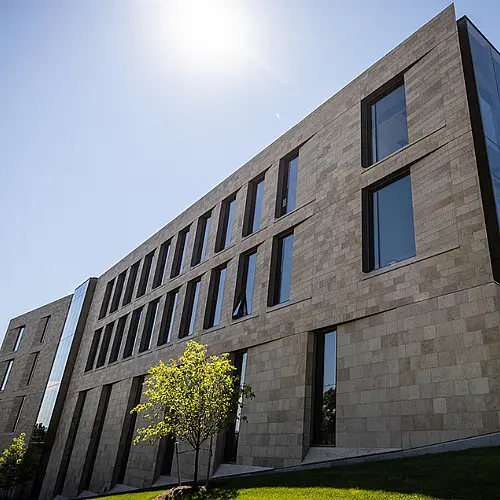
Celebrating the Sciences at Wesleyan: Casper Life Sciences Building Open House
3 - 5 p.m.
Casper Life Sciences Building
-
Zilkha Gallery Exhibit: “Mozart’s Chair”
12-5 p.m.
Ezra and Cecile Zilkha Gallery Click for more detailsThe exhibition “Mozart’s Chair” considers how furniture establishes the preconditions for action. It does so not by exhibiting furniture (per se), but by assembling works of art that approach the condition of furniture as setting, support structure, and as objects that have an indeterminate relationship to our bodies. Within a gallery, one often assumes that art is always in the foreground, while that which supports the presentation of art is in the background. Artists have long challenged viewers to perceive things otherwise—to admit the influence of what might be dismissed as mere context, atmosphere, ambiance, or decoration. Mozart’s Chair builds on this inquiry. Through sculpture, painting, installation, performance, and sound, the exhibition is like a score, a composition exploring the enabling effect of an object, getting to a fundamental question: what does the art object make possible?
Artists featured in the exhibition include Scott Burton, Guy de Cointet, Céline Condorelli, Naotaka Hiro, Helen Marten, Devin T. Mays, Park McArthur, Stephen Prina, and Erik Satie. The exhibition includes an extensive performance series that animates the gallery space, including the first posthumous production of de Cointet’s play A NEW LIFE (1981) with dramaturgy by scholar and curator Marie de Brugerolle. The exhibition itself will shift arrangement over time, suggesting it is not just the works themselves, but the world they create together, that exists indeterminately.
A curator tour will be offered on Saturday at 2 p.m.
Curated by Associate Director and Curator of Visual Arts Benjamin Chaffee ’00.