
New Book Explores Intersection of Race and Technology
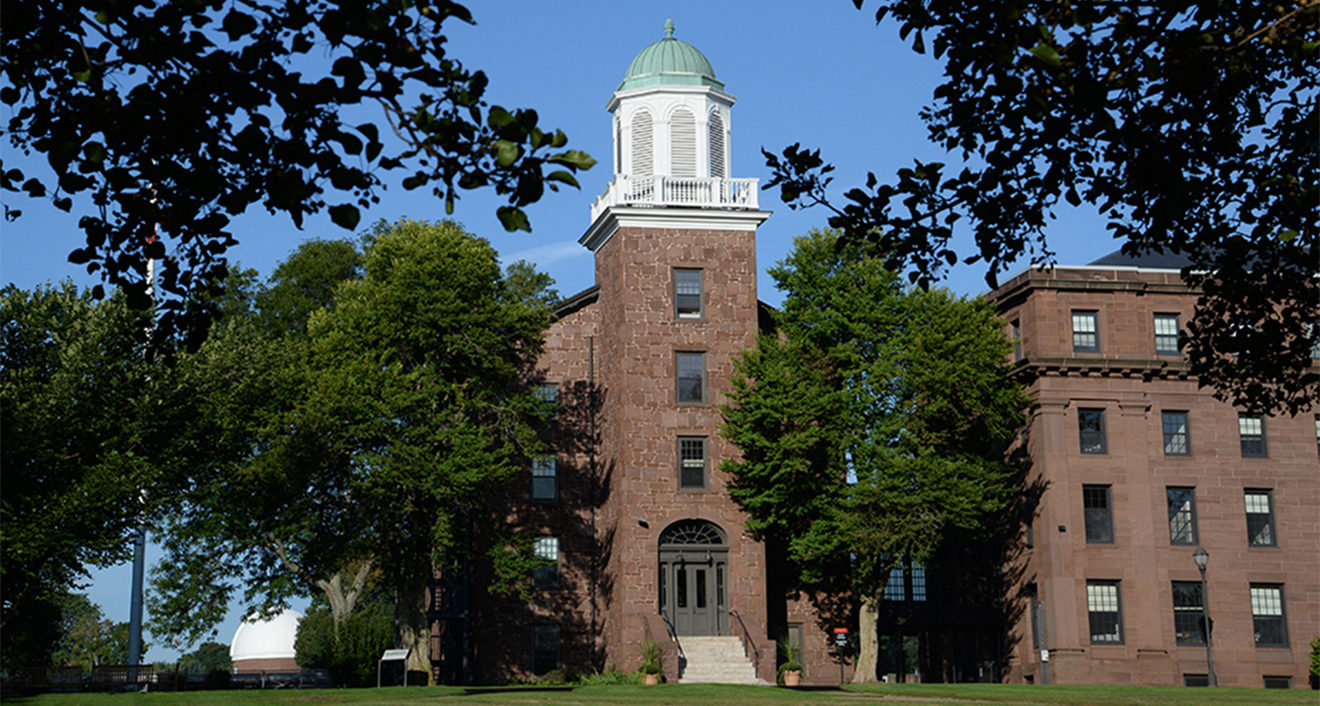
More than 100 years ago, the late Professor of Chemistry Wilbur Olin Atwater ’65 improved upon a revolutionary new technology in the basement of Judd Hall. The respiration calorimeter, a type of metabolism cage, was designed to calculate the energy metabolism of humans in calories—an advance that has since been used in fields ranging from agriculture and nutrition to space exploration and bioweapons research. This technology is also an example of the intersection between race, caging, and science that is the subject of a new book, The Racial Cage, co-authored by Center for the Humanities Director and Professor of Science and Technology Studies Anthony Hatch.
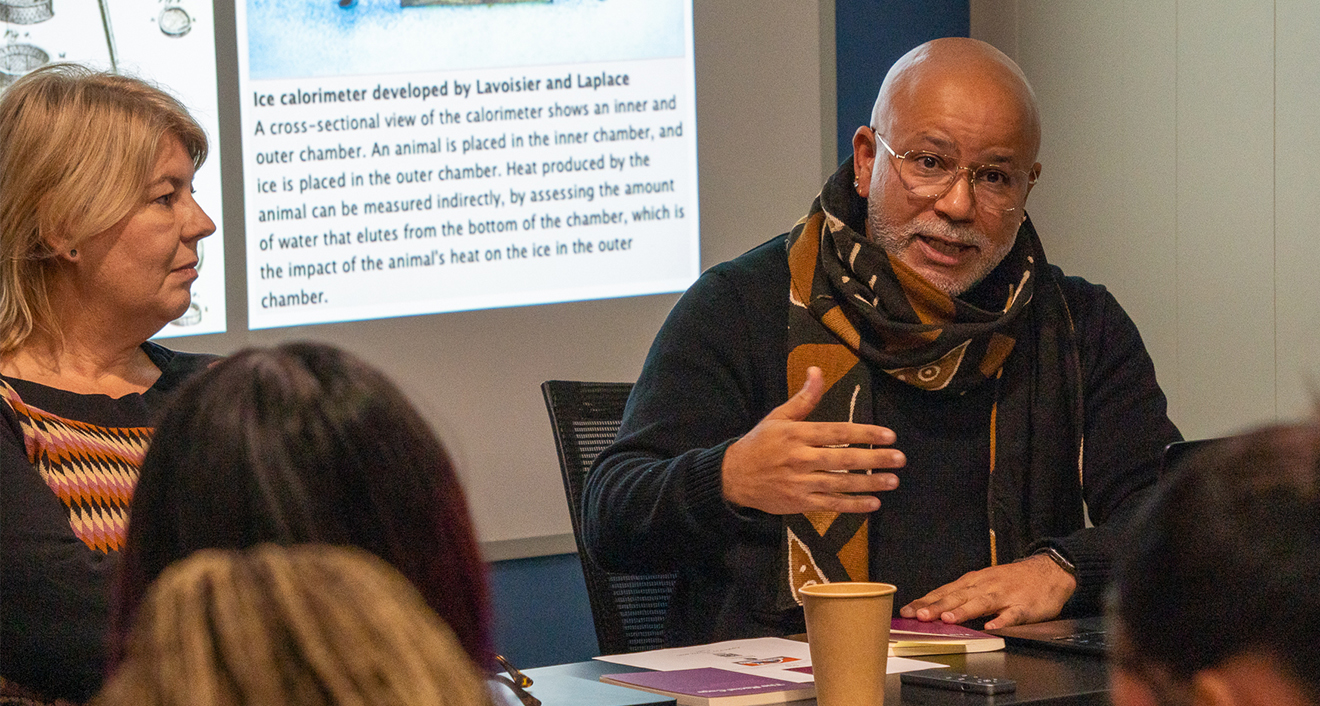
Hatch and his co-authors shared their insights about this intersection during a book release talk sponsored by Black Box Labs and the College of Science and Technology Studies (STS) on Nov. 13. It is a model of the type of conceptual, in-depth scholarship that STS focuses on today, 50 years after its founding, said Chair Paul Erickson. STS researchers are “thinking about race, how science constitutes race, how it creates it as a category, a social category, [and] how scientific and technological change can deepen racial inequalities,” he said.
To that end, Hatch’s chapter, “The Keepers and the Kept: Metabolism Cages in Racial Formation,” explored the relationship between the scientists and their study subjects. Atwater’s first human subject was a Swedish immigrant who worked as a custodian in Judd. Decades later, a different scientist employed a Black man named Jim as a “professional guinea pig,” and more recently, researchers investigated whether there were racial and gender differences in metabolism.
An important question Hatch raises is who benefits from this experimentation. “There are several little vignettes in this chapter that describe the relationship between this kind of thinking about difference and identity and the kept, the [human] animals who were kept in the metabolism cage, and the role of the keeper and the kept in establishing a racial formation through this experimental device,” he said.
Hatch and his co-authors lead a research theme focused on “Race, Ethnicity, and Biohumanities” at the Sydney Center for Healthy Societies (SCHS) at the University of Sydney in Australia. At the Wesleyan talk, co-author Nadine Ehlers, an associate professor at the University of Sydney and deputy director of the SCHS, shared her observations from the COVID-19 lockdown period in her country. For an extended time, certain areas in the Sydney Delta were subject to policing, curfew, testing, and other harsh restrictions. The residents in these areas were largely immigrants and Black and brown people who risked exposure through essential work. “The idea was really to protect society at large, but what played out was that these people were being locked in to protect the rest of society,” said Ehlers.
University of Amsterdam Professor Amade Aouatef M’charek explored the idea of “uncaging” or addressing the concept of race with curiosity and care. Through multiple examples of news events in Europe, she discussed how race is used in practice to underscore “sameness” for in and out groups. When refugees were leaving Syria for Europe in 2015, the story of a young boy found dead on a beach in Turkey triggered concern over the loss of a child who looked like any child in Europe. Yet after a series of terror attacks in Cologne and later Paris, that same image of the child was used in a French magazine to suggest danger. “This is how we then start to visualize and think about the refugee and refugee crisis,” she said.
In the book’s final chapter, King’s College London Professor Anne Pollack discussed the ideas of caging and uncaging in terms of both the COVID-19 pandemic and Black Lives Matter movement. While the pandemic called for hermetically sealing environments to keep people safe, the call for racial justice stirred an argument for opening cages of oppression (“I can’t breathe”). Evoking the famous poem by Maya Angelou, “I Know Why the Caged Bird Sings,” she ended on the idea of hope as a practice:
“Taking advantage of the fact that we can see glimpses of freedom through the wires of racism's cage, we need to hold on to the liberatory imagination,” said Pollack. “Even after taking account of so many interlocking injustices that anti-racism scholarship illuminates, or perhaps especially after doing so, we need to think hard and act as if it is possible to open the cage.”
The book release is a culminating event of a years-long project and part of the celebration of the 50th anniversary of the College of STS, which is hosting a series of events through spring 2026.