
Where Artists Explore: New “In Process” Series
This spring, the Center for the Arts launched “In Process,” a new collaborative development residency program that invites visiting artists to create and test new works in active dialogue with the Wesleyan community.
Director and Chief Curator of the Center for the Arts Joshua Lubin-Levy ‘06 said the program offers artists the time and space to shape their work within Wesleyan’s culture of creative research.
“Across theater, music, dance, performance, and interdisciplinary practices, ‘In Process’ invites artists to experiment outside the pressures of production, testing ideas with students, trying out new forms, and engaging in conversations that will continue long after the residency ends,” Lubin-Levy said, noting that each residency looks different. Some focus on script development or score writing; others explore movement, sound, or visual worlds in process. “All are grounded in the belief that students learn best by working alongside artists as they think, make, revise, and imagine what comes next.”
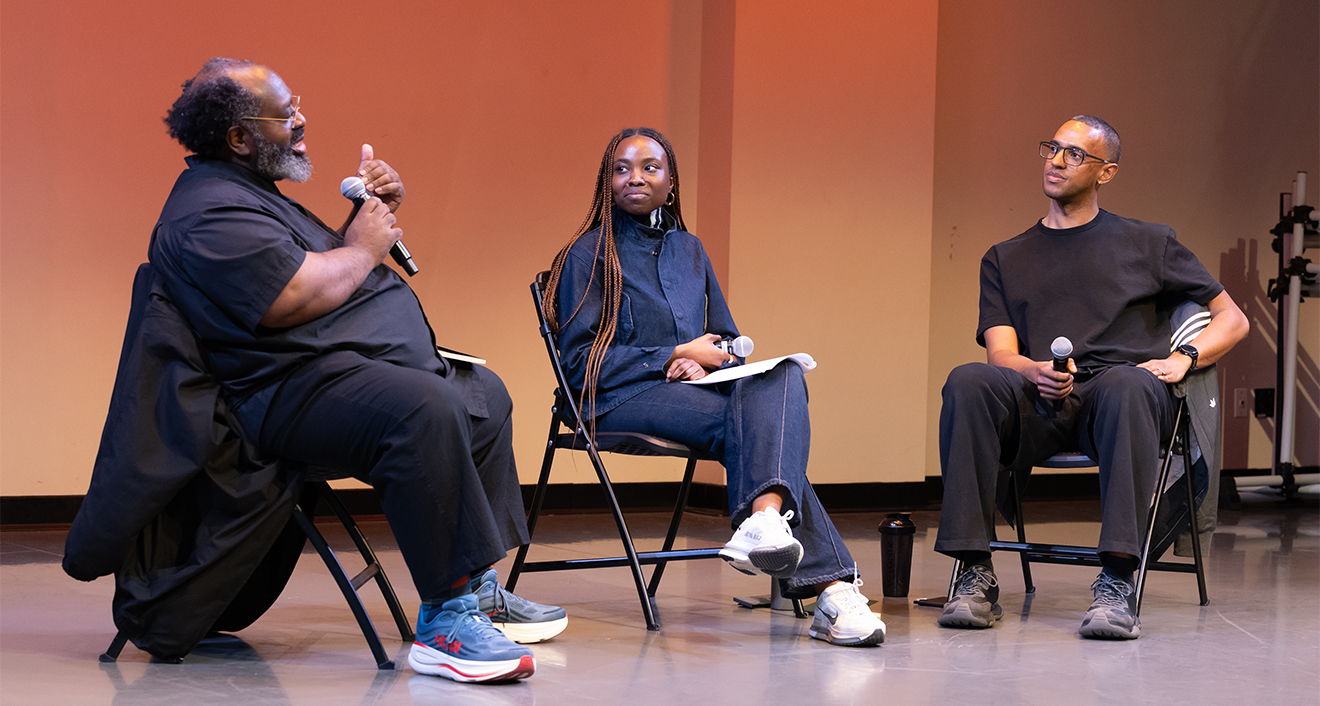
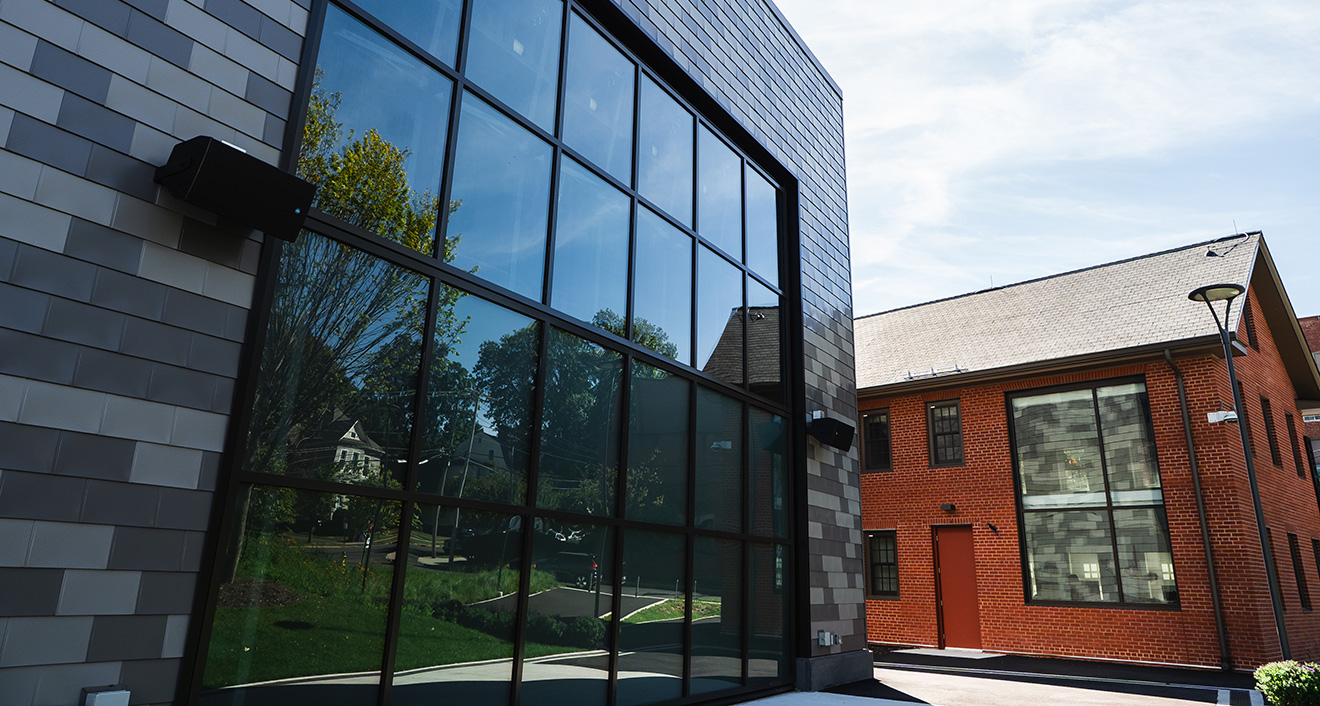
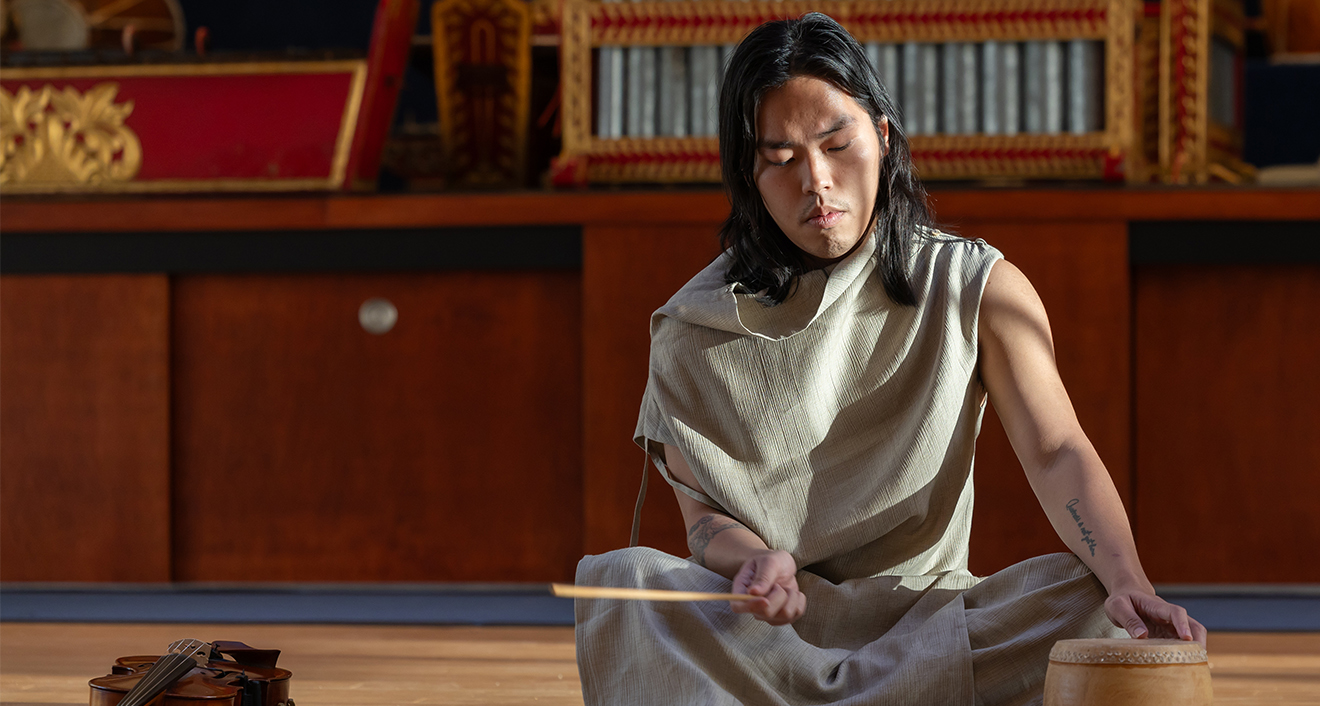
The series launched with the first public work-in-process showing of a 45-minute excerpt from Anh Vo’s new performance Song and Sex: Before the Revolution, followed by a 25-minute talk-back with the audience on Feb. 27 in Belzberg World Music Hall.
For the music and movement work, Vo—a Brooklyn- and Hanoi-based Vietnamese choreographer and writer—collaborated with viola player Jessica Pavone and two Hanoi-based musicians: Thuy Linh Vu (vocals, phách percussion instrument) and Dinh Hoang Pham (đàn đáy three-string plucked lute) of the Ca Trù Phu Thi Ensemble. Together for five days on campus, they explored the controversial legacy of Ca trù, a traditional northern Vietnamese chamber music form that was banned for half a century after the country’s revolution in 1945 for its historical associations with prostitution and opium smoking.
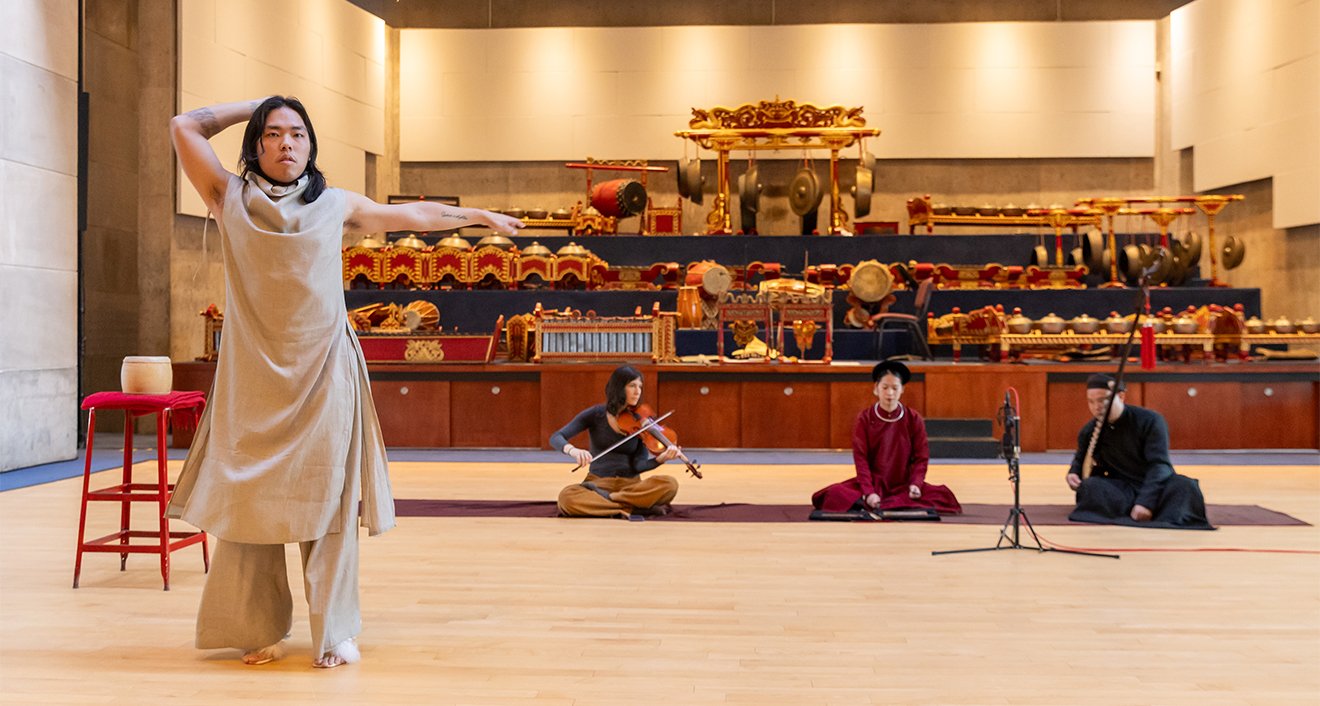
Since 2009, Ca trù vocal music has been inscribed on the United Nations' Educational, Scientific and Cultural Organization’s list of “Intangible Cultural Heritage in Need of Urgent Safeguarding.” The performance at Wesleyan offered a special opportunity to experience an increasingly rare art form that started in the 11th century but had largely been erased, and has only been resurrected in the last two decades.
“I felt like everyone at Wesleyan was really there to learn,” Vo said of the genuine nature of the students, faculty, and community members in attendance. "There was something about sharing the work at Wesleyan where it approximates how I want a performance to be—in a way where it’s oriented around learning and being together. It feels very generous in that way. That is something I want to hold on to from Wesleyan.”
Known for research-driven, boundary-pushing choreography, Vo used their time at Wesleyan to merge experimental contemporary Western string music and abstract dance with traditional Vietnamese folk forms, allowing divergent traditions to resonate, collide, and transform one another. “In some ways, this work is transposing my practice into the world of Ca trù,” Vo said. “I’ve always had strings in my work."
Vo described exploring droning, trance-like repetition in their dances over the past several years to achieve a specific emotional texture, focusing on “pure” movement in the traditions of Merce Cunningham, Anne Teresa De Keersmaeker, and others. Vo has also danced with Moriah Evans, who was mentored by Sarah Michelson.
"Michelson helped me articulate this whole body of work," Vo said of the British choreographer and dancer who is known for repetitive structures. “I'm sick of how people think of bodies as physical matter. She really articulates this sort of dancerly devotion to the dancing activity as the thing that produces choreography, and not so much the choreographer setting movements. It gets to the psychic dimension of the material body that I'm interested in.”
Emphasizing themes of emptiness and Taoist philosophy, Vo noted that the piece's specific form coalesced in the two days prior to the Wesleyan showing. For Vo, formal composition took a backseat to the deeply personal process of apprenticing with the Ca trù musicians over six weeks this winter in Hanoi—a lineage connection made even more poignant by the revelation that their great-grandfather's second wife was a Ca trù singer.
The structured improvisation of the work plays with the traditionally rigid structure of Ca trù and allows Vo’s body to be a site of memory and transmission of the disavowed sexual and social history of the form.
“One of the things I'm trying to get through was how it feels listening to this form being on opium,” Vo said. “That's one of the main emotional landscape references, like 'where am I? Where am I in the structure? Where am I in the world?’ Spinning becomes a huge part of that.”
While dancing in place and playing a drum, Vo recited from Gertrude Stein’s 1922 poem, “Miss Furr and Miss Keene.” Explaining this choice, Vo noted that Ca trù is sung poetry that "marinates in the flesh and the fiber of your being"—a quality Vo finds lacking in most English poetry. "I feel like Gertrude Stein gets there," Vo said, intentionally juxtaposing Stein's 1920s French-era writing with a musical form that simultaneously flourished while Vietnam was a French colony.
An expanded version of Vo’s ensemble, with an additional dancer and two violinists, presented another work-in-process performance of Song and Sex at Roulette in Brooklyn on March 4. A different, more abstracted version of the finished work, minus the Vietnamese musicians, will premiere at New York’s Participant, Inc. along with an exhibition curated by Alhena Katsof from May 10 through June 21, 2026.
“I would love to come back to Wesleyan,” Vo said. “It was such a great time.”
Upcoming “In Process” residencies at Wesleyan will include Ryan Dobrin ’18 and Sophie McIntosh's "what if everyone lives?," and Visiting Instructor of Theater Sacha Yanow and Nemuna Ceesay’s "Song of Sardine."