A camera can be an empathy machine, Eli Durst ’11 says. Time and again, training his lens on the wider world has compelled him to rethink his assumptions—about places, about communities, about the human beings who shape them.
“When you encounter real people who embody a community or an identity, your biases collide [with] the reality that these are individuals who are not completely defined by their associations,” says Durst, a Texas-based fine art photographer and studio art associate professor of practice at the University of Texas at Austin. “It complicates your understanding of the world when you interact with people rather than just imagine them.”
For more than a decade, Durst has brought his Nikon D850 into some of the most mundane corners of American life and returned with images like the ones below. In black-and-white images that bridge the visual languages of documentary and conceptual photography, he seeks to transform ordinary moments into enigmatic works that comment on the nature of community and connection, how we absorb values and ideologies, and other heady themes. And even after being named to the 2025 class of Guggenheim Fellows, Durst remains devoted to photography for the same reason that it hooked him as an undergraduate: The craft practically demands discovery.
“If I try to predetermine or engineer a project, it becomes much less interesting, because I end up exactly where I thought I’d be,” he says. “You have to learn from the pictures. You have to follow them where they lead you.”
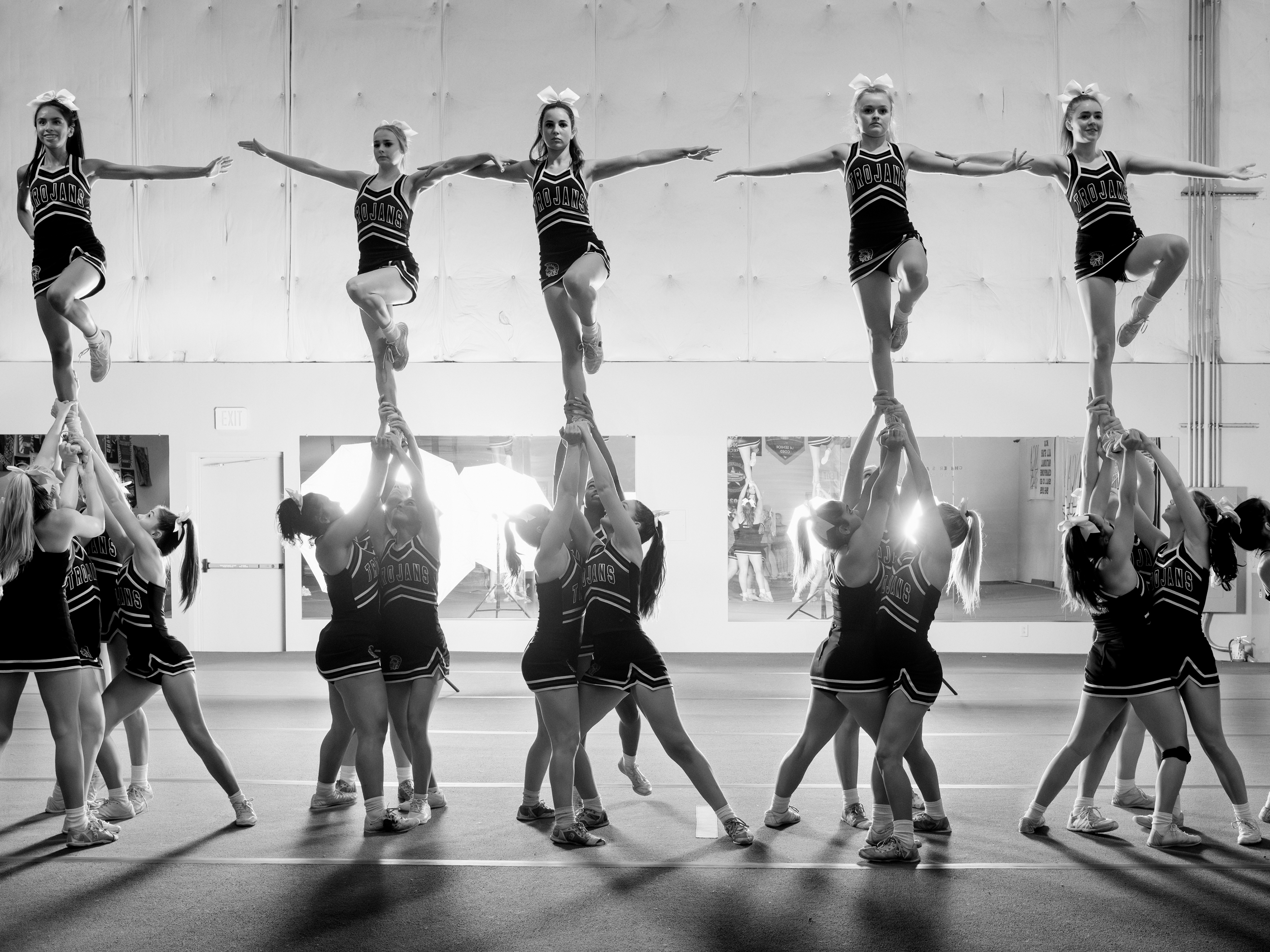
“Cheer Pyramid,” The Children's Melody, 2024. While Durst grew up drawn to people who defied social convention, lately he’s become captivated by those who fashion identities from archetypes. “What does it do to someone to be the cheerleader right at the top of the pyramid,” he says, “or to be the high school quarterback, the pressure of having to live with those expectations?” He contacted an Austin-area cheer team to photograph their rehearsal, a recurring theme in the images comprising The Children’s Melody. Routine practices are full of interesting, imperfect moments that don’t appear in public performances, Durst says. Here, the team’s display of concentration, labor, and precarity during a stunt undercut the idea of the cheerleader as an apotheosis of effortless grace. “A lot of work goes into supporting and proliferating these ideas about who we are—in cheer, but also just as Americans.” He points to the lighting rig visible in the mirror. “[That’s] a major no-no usually, but I thought, why not? Why not show the fact that this [image] is constructed, that I’m trying to tell you what I think about this space, or these people, or this community?”
Upon arriving at Wesleyan, Durst briefly pursued a film major before switching to American studies and enrolling in every photography class on offer at the University. The disciplines complemented one another, Durst says: Still images provided a method for better understanding what constitutes American cultural identity. “[Photographs] represent the world with such clarity and detail that they become excellent tools to talk about the people, ideas, ideologies, spaces, communities—all the things that make up different aspects of the American experience.”
After graduation, Durst moved to New York City, worked under street photographer Joel Meyerowitz, earned an MFA in photography from the Yale School of Art, and, in 2018, returned to his native Austin to teach. And while he follows strict editorial guidelines in his journalistic output for publications like The New York Times and The New Yorker, his fine art photography—presented in collections like The Community and The Four Pillars—is far different. “A lot of what I’m doing,” he says, “is trying to create fictional worlds out of the real world.”
The real places where Durst shoots are often unremarkable: bingo halls, church basements, community theaters, and all order of dusty, fluorescent-lit spaces. The events he captures—Irish step dance rehearsals, office workers during team-building exercises—are usually innocent. But through strobes and backlighting, a monochromatic color palette, and other tools and stylistic choices, Durst’s sensibilities imbue those occasions with new ambiguity. The images that materialize become things existing outside of time and space, alien even to the subjects who fill the frame. “They’re almost always taken aback by how different the pictures are [from] their experience.”
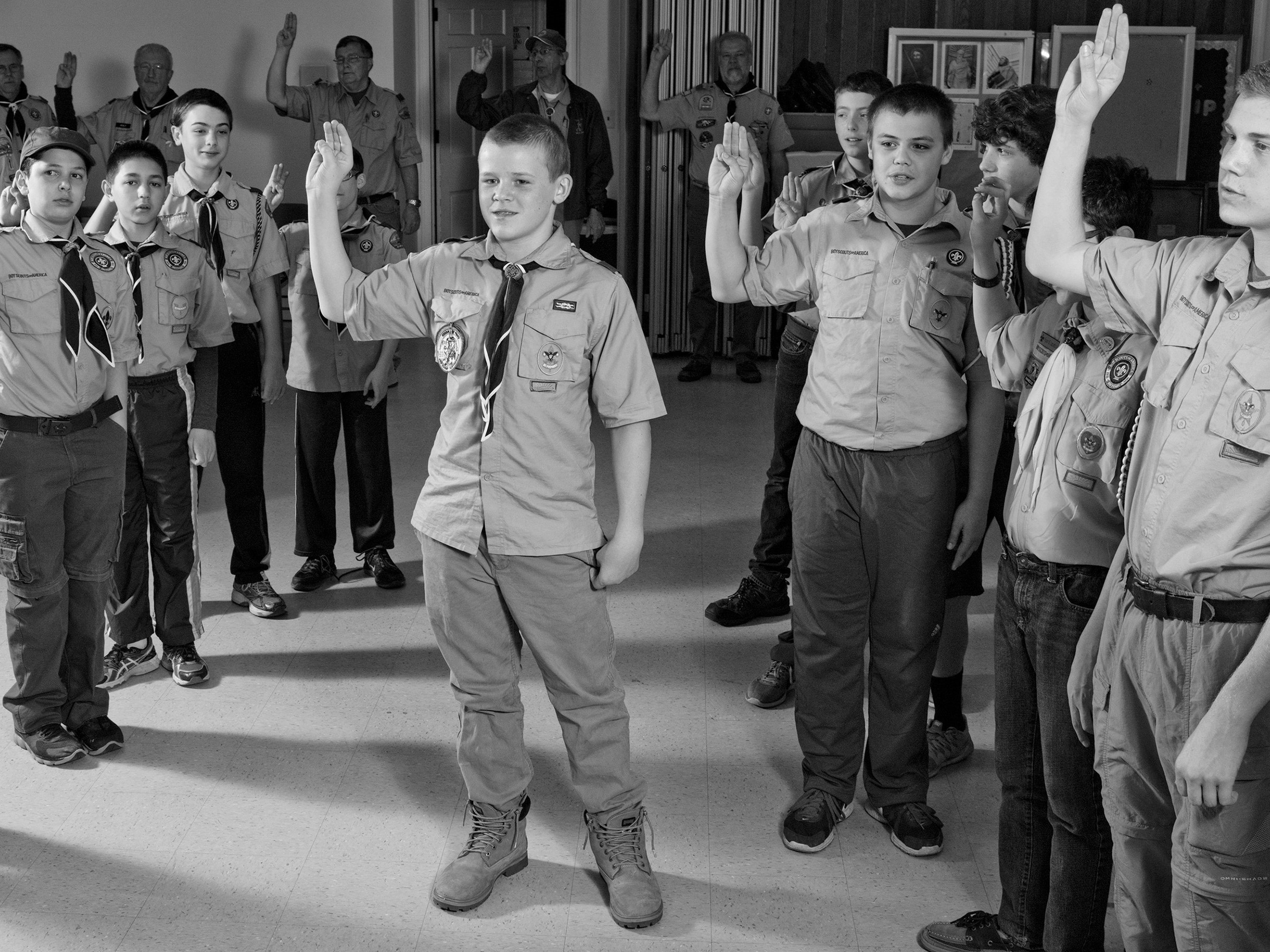
Creating that sort of distance, Durst says, invites viewers to consider new facets of familiar scenes: a Boy Scout raising his hand in pledge, for instance, becomes an investigation of what’s gained and lost when individuals surrender themselves to something larger. “Hopefully, there’s an unmoored quality, a sense of not being able to get your bearings. This looks familiar, but it’s also strange.”
“Boy Scout Salute,” The Community, 2015. Beginning in graduate school, Durst sought out groups that convene in bingo halls, rec centers, and other unglamorous spaces to explore a unifying question: What are people looking for? The Boy Scouts’ iconography and psychosocial bonds to American identity made them an obvious candidate. He emailed troops across Connecticut and, ultimately, found an obliging troop that met in a church basement. After initially guiding scouts through reenactments of scenes from Norman Rockwell paintings, he captured this simple image of a scout making a pledge, using strong shadows and dramatic, directional lighting to layer ambivalence onto an otherwise anodyne event. “It all becomes a lot more ominous based on the technical and stylistic decisions of how I’m photographing it,” Durst says. “In real life, it was much more of a fun, everyday Boy Scout meeting.”
This summer, with funding from the Guggenheim Fellowship, Durst embarks on his next project: photographing large evangelical Christian congregations, or what are frequently called megachurches. For Durst, the subject traces consonant lines of inquiry. “Christianity is one of the major shapers of American life,” he says. “If you want to think about ideas, ideologies, and conceptions of who we are and how we should live, it’s such an important source.”
Part of the project’s appeal, he says, is the novel challenge of working at such a scale—namely, how can he photograph groups that might number more than 2,000 people and do it with artistic resonance? “My work is always a huge compromise, where what I want to do collides with reality: I can’t do that, but I just discovered this other thing,” he says. “You have to have ideas, and you have to have a structure, but you have to be willing to abandon them completely.”
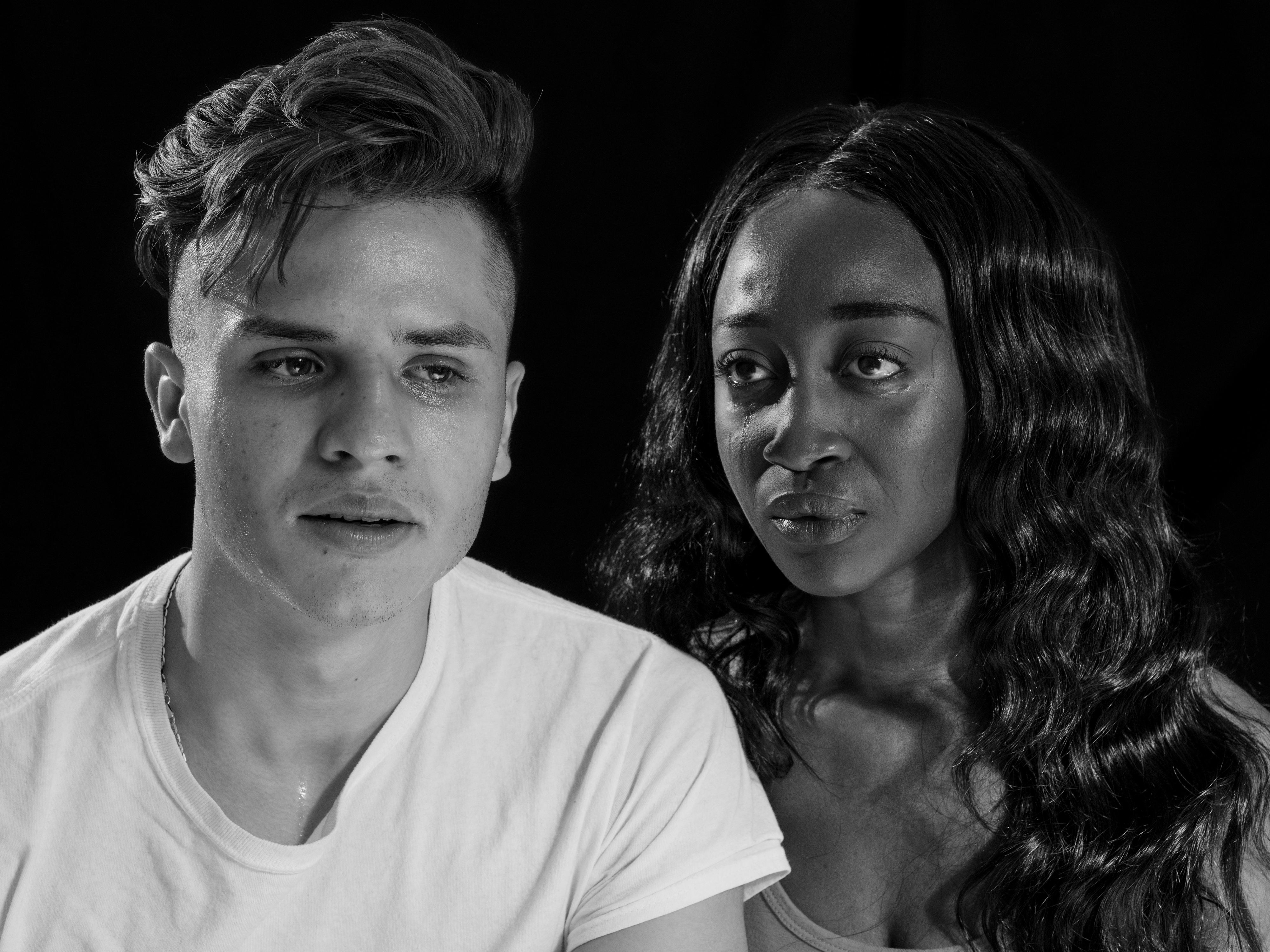
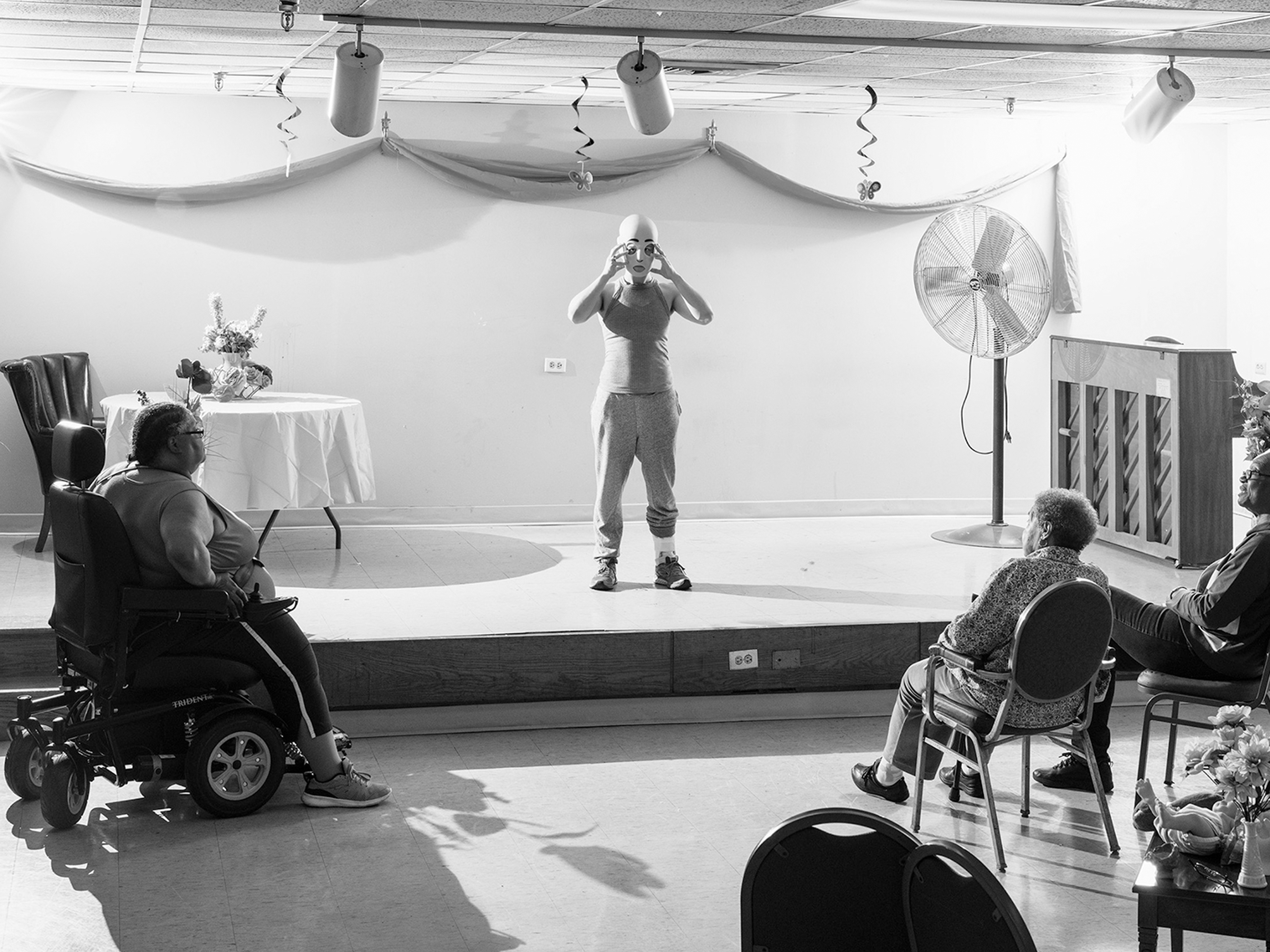
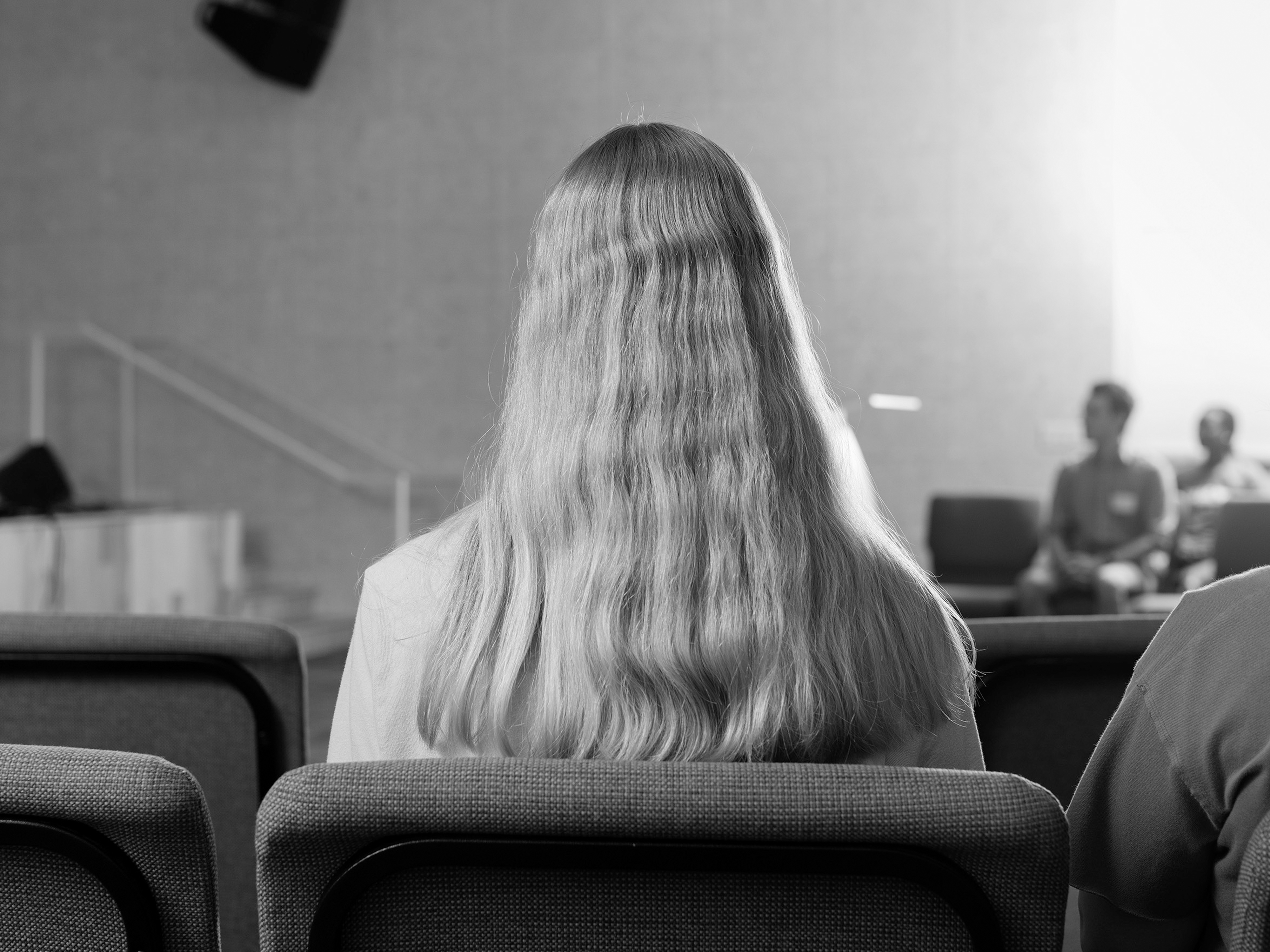
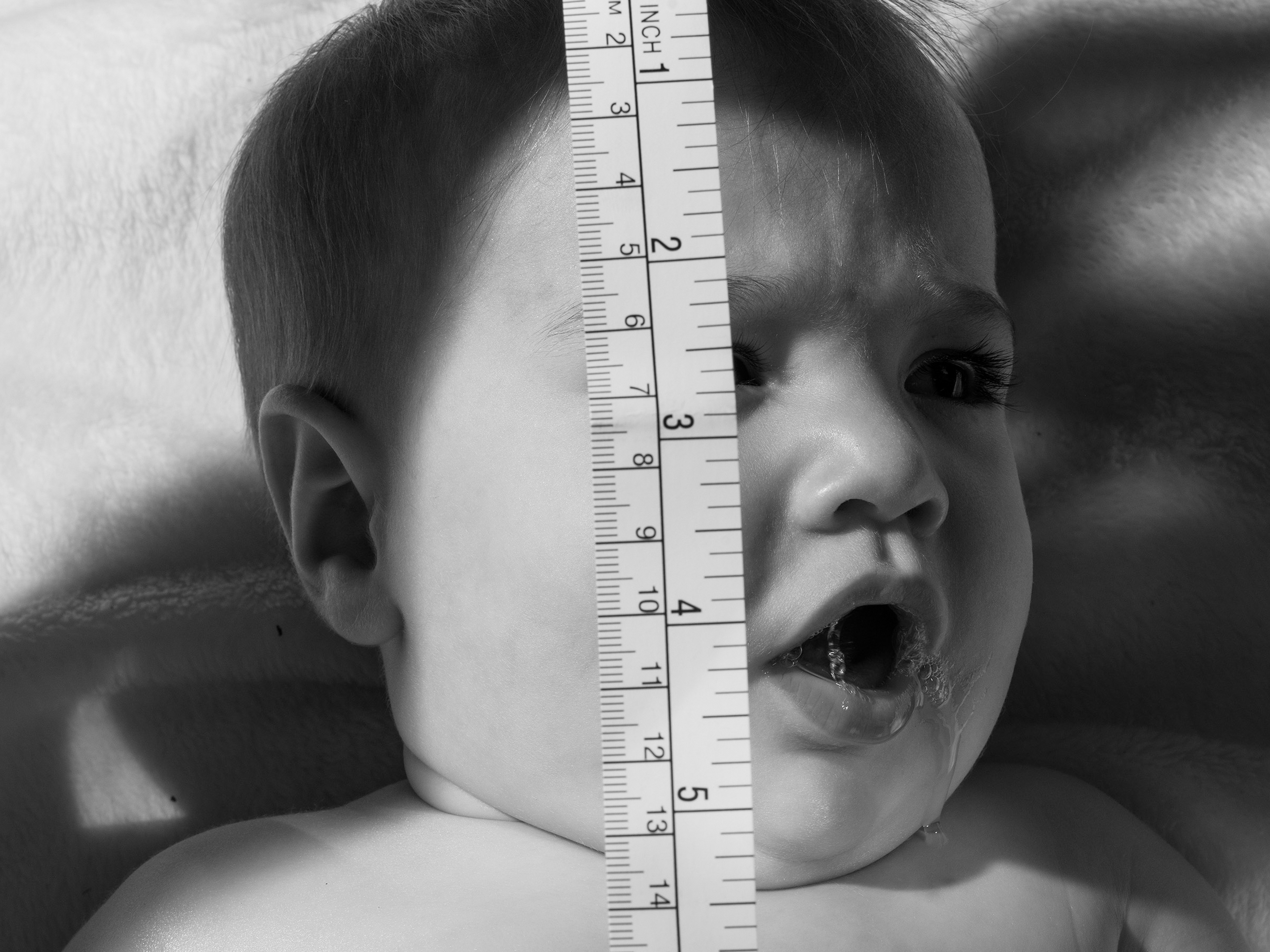
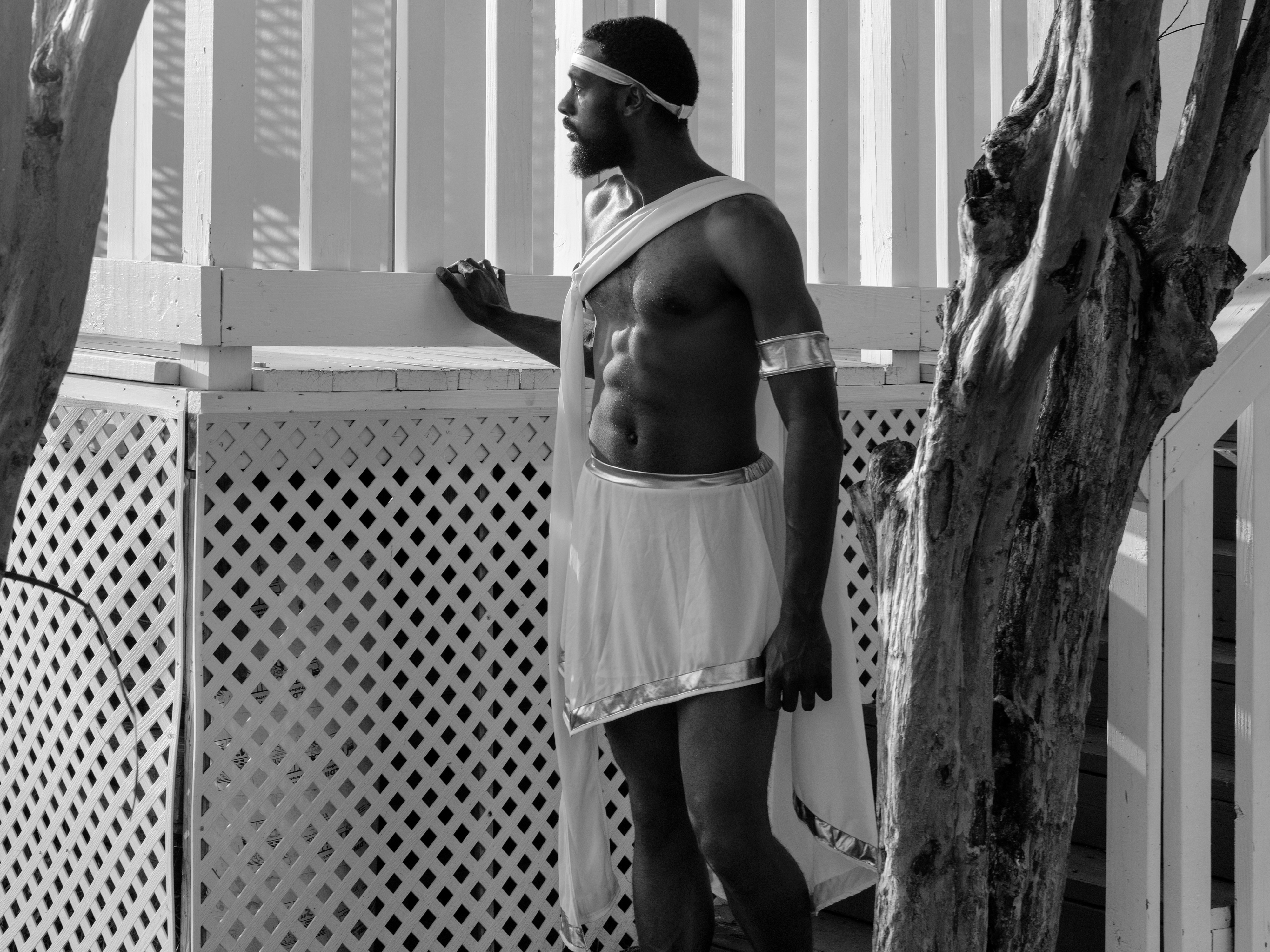
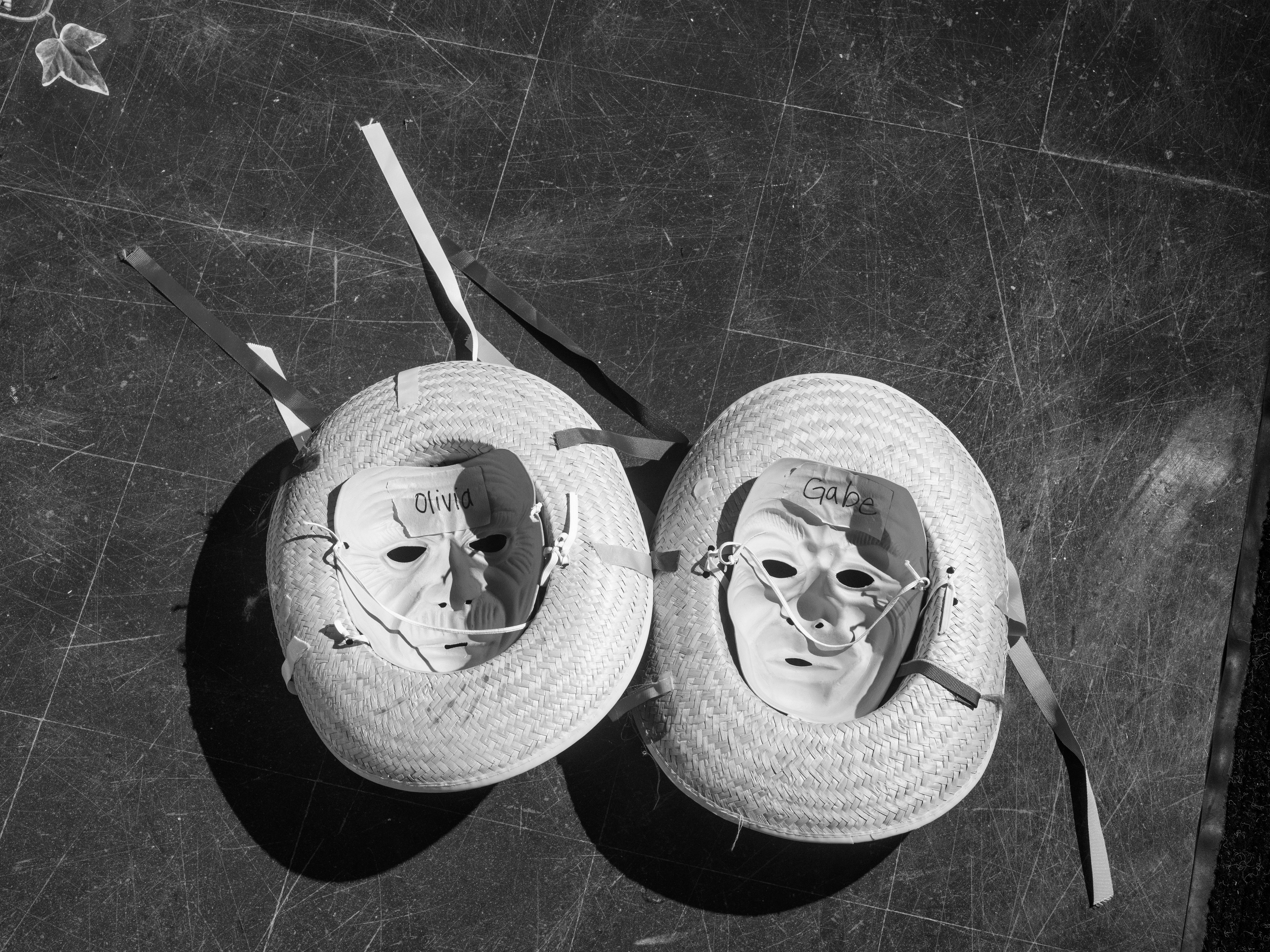
“Crying Couple,” The Four Pillars, 2019. Can documenting something artificial produce true meaning? The question and its implications for art and representation occupy Durst’s mind whenever he finds holiday greeting cards in his mailbox. “No one thinks the photographer just found these people in matching plaid outfits, but it doesn’t mean the image is fake,” he says. “The way it’s constructed is what actually tells you about the people [in it].” To explore that theme further, Durst invited two acting students to his photo studio and issued a simple directive: Make yourselves cry. Pulling from those emotional reserves produced a new, elusive swirl of emotions. “We constantly deceive ourselves,” Durst says, “but even if you understand that what you’re doing is a deception in some way, it can still be meaningful or valuable.”“Mask,” The Community, 2018. “If you look at this picture and you have no idea what’s going on,” Durst says, “that’s a success.” Absent context, it’s something creepy: a bizarre performance, a private audience, a locked-away place. In reality, Durst captured one of his friends teaching an improv class for the residents of a retirement home in Brooklyn, New York. “A photograph describes the surface of the world—that’s all it does. So, if you can describe something in incredible detail and it just becomes stranger, that, to me, is a successful photograph.”“Brushed Hair,” The Children’s Melody, 2022. While on assignment for The New York Times for a series on Gen Z communities, Durst connected with a student Methodist group at the University of Texas at Austin. “You think about colleges specifically as spaces of real experimentation and countercultural momentum, [but] I was really interested in the idea that these are people who go to school, and their faith is such an important part of their collegiate experience.” While attending one of their religious services, Durst found himself positioned behind a student with ramrod posture and waves rippling in perfectly brushed hair: an upright, devoted pupil. “Again, thinking about the different archetypes that people fit into, this person is a student who is not out partying at keggers but is actually at church with their hair brushed,” Durst says. “There was something so sweet and interesting [about her] that challenged ideas and stereotypes of young people, in a way.”“Measurement,” The Four Pillars, 2020. As a photographer focused on capturing strangers in small spaces, Durst navigated down other avenues during the lockdown stages of the COVID-19 pandemic. “I was trying to figure out ways of getting at these [same] themes and ideas in different ways, and I had to work with people I knew,” he says. Photographing his cousin’s infant daughter spurred reflections on how benchmarks and percentiles lead humans to measure themselves against each other. “In a purely medical sense, doctors are just trying to make sure your baby is healthy,” says Durst, who welcomed his second child in 2024. “But I think in a symbolic sense, there’s this idea that there’s an acceptable way to be: ‘You need to be this tall’. . . It’s this idea that we’re constantly measuring people, judging them, and asking them to conform to a certain ideal.”“Zeus,” The Four Pillars, 2020. If the photos in The Community examine the commonalities threading together actual communities, Durst says The Four Pillars represents a heavily fictionalized counterpart. “It’s about the limiting ideas we inherit and how we try to shed those pressures.” After meeting the photo’s subject through a Craigslist casting call, Durst captured him off-stage at an outdoor community theater production, donning a low-budget Halloween costume and subverting ideas of male beauty and perfection rooted in classical lore. “You hear this all the time: ‘He looks like a Greek god,’” Durst says. “We have these unrealistic standards that are all sort of fictional—the body type of a Greek god is obviously a cultural creation—but they become real because they’re real to us. Ideologies become real within our bodies.”"Masks," The Children’s Melody, 2022.While capturing a school play in which children wear masks of wrinkled, aged faces while performing Mexican folklórico dances, Durst emerged with this image, echoing the duality of comedy and tragedy masks and exploring how the masks we wear—uniforms, clothing—often disclose more than they conceal. “Masks are deeply revealing of who we are, what we want for ourselves, and how we wish to be seen,” Durst says.