
The Feud That Shaped American Soccer
This June, billions of people will tune in to the 2026 FIFA World Cup, eager to witness the spectacle and drama playing out on the field. But behind the scenes and outside the eyes of spectators, two of the tournament's cohosts will hit pause on a rivalry that’s been boiling over for almost half a century. Ever since a pivotal 1980 World Cup qualifier, soccer matches between the United States and Mexico have functioned as an athletic arms race, a funnel for identity, and a spectacle that routinely draws more than 80,000 attendees—and as many as 120,000—to stadiums on both sides of the border. In retrospect, the conflict also served as a catalyst for America’s gradual embrace of a different, global version of football.
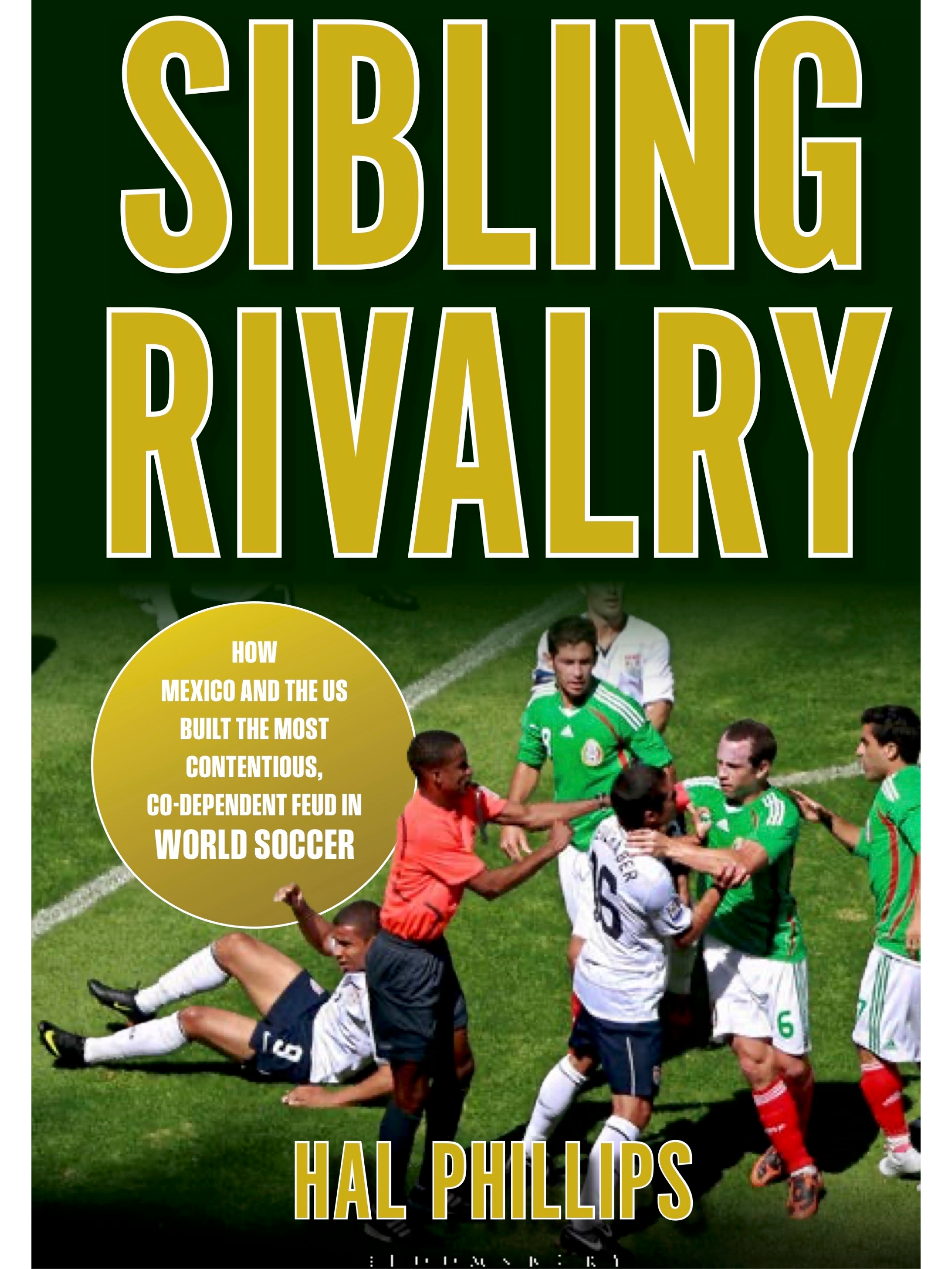
“We needed Mexico and the United States to be rivals in order to make soccer grow and succeed in this country,” says Hal Phillips ’86, author of Sibling Rivalry: How Mexico and the US Built the Most Contentious, Co-Dependent Feud in World Soccer (Bloomsbury Academic). As Phillips chronicles in his book (edited by Stephen McDermott Myers ’87), that cross-border pugnacity continues to be shaped by culture, commerce, and geopolitics as much as by what’s happening on the pitch. Wesleyan University Magazine spoke with Phillips—a Maine-based journalist and media executive who’s contributed to publications including ESPN.com, Sports Illustrated, and Soccer Journal, and who played soccer throughout his years at Wesleyan—about the feud’s origins, how national identity embeds in the beautiful game, and soccer’s place during an uneasy moment in border politics.
Put mildly, the dynamics between the United States and Mexico have been historically, culturally, economically, and politically complex. Between 1934 and 1980, how did winning or drawing all 24 games played against the United States impact Mexico’s national identity?
To a great extent, beating the US was how Mexico built its image of itself as a soccer nation. Mexico has never graduated into the very top tier; they would love to be rivals with Argentina, for example. The two nations are economic and cultural competitors in the Spanish-speaking world, but geography works against their fútbol rivalry. Meanwhile, to the north sat the most powerful economy in the western hemisphere, the most dominant nation on Earth. Beating the US in soccer was where Mexicans were able to assert their dominance, their sovereignty, if you will, and that had a massive effect on their interest in the sport. Televisa, the broadcast giant, played a huge role as well. In 1955, there were equal amounts of bullfighting, baseball, and soccer on TV. By 1970, when Mexico first hosted the World Cup, it was all soccer.
Even though the US finally beat Mexico in a 1980 World Cup qualifier, America at that time was still seen as a soccer backwater. In your last book, Generation Zero: Founding Fathers, Hidden Histories and the Making of Soccer in America, you explored the critical mass of domestic players and fans who came of age in the 1970s and ’80s. You were one of them. How did Mexico factor into soccer’s changing esteem in the US?
Until 1990, pro soccer in the US hadn’t just stalled: Everything had gone to pieces. The North American Soccer League had gone bankrupt in 1984; the second division American Soccer League failed the year before. When I played semi-pro in Greater Boston during the mid-to-late ’80s, I was playing with and against guys who were on our national team. That was a problem. I thought, if I'm playing with them, they're not playing in the right league. There were no pro leagues. Yet by the time I was 24 years old in 1990, we had qualified for our first modern World Cup. Major League Soccer (MLS) was poised to launch. Then the Women's National Team won a World Cup in China in 1991.
But the hinge rivalry moment came in 1991 when Bora Milutinović debuted as our national team coach, and the US beat Mexico in the very first Gold Cup, the North American Championship. All of a sudden we were like, “I guess we're pretty good at this.” Then, [high-level soccer executives] Jack Warner and Chuck Blazer, aside from embezzling millions of dollars, single-handedly brought the US men’s and women’s national teams to prominence by getting them on American television. Warner and Blazer recognized that US versus Mexico was about the best product they could muster outside of a World Cup, in terms of ratings and spectacle. These matches drew more than 90,000 people to the Rose Bowl for an exhibition match in 1994. That was the blueprint. The two sides would contest 20 very close matches all through the ’90s before huge crowds. During the 1980s they played just twice.
The politics of the 1990s made the US-Mexico border a newly contentious issue that, really, hasn’t abated. How did that play into the emerging rivalry?
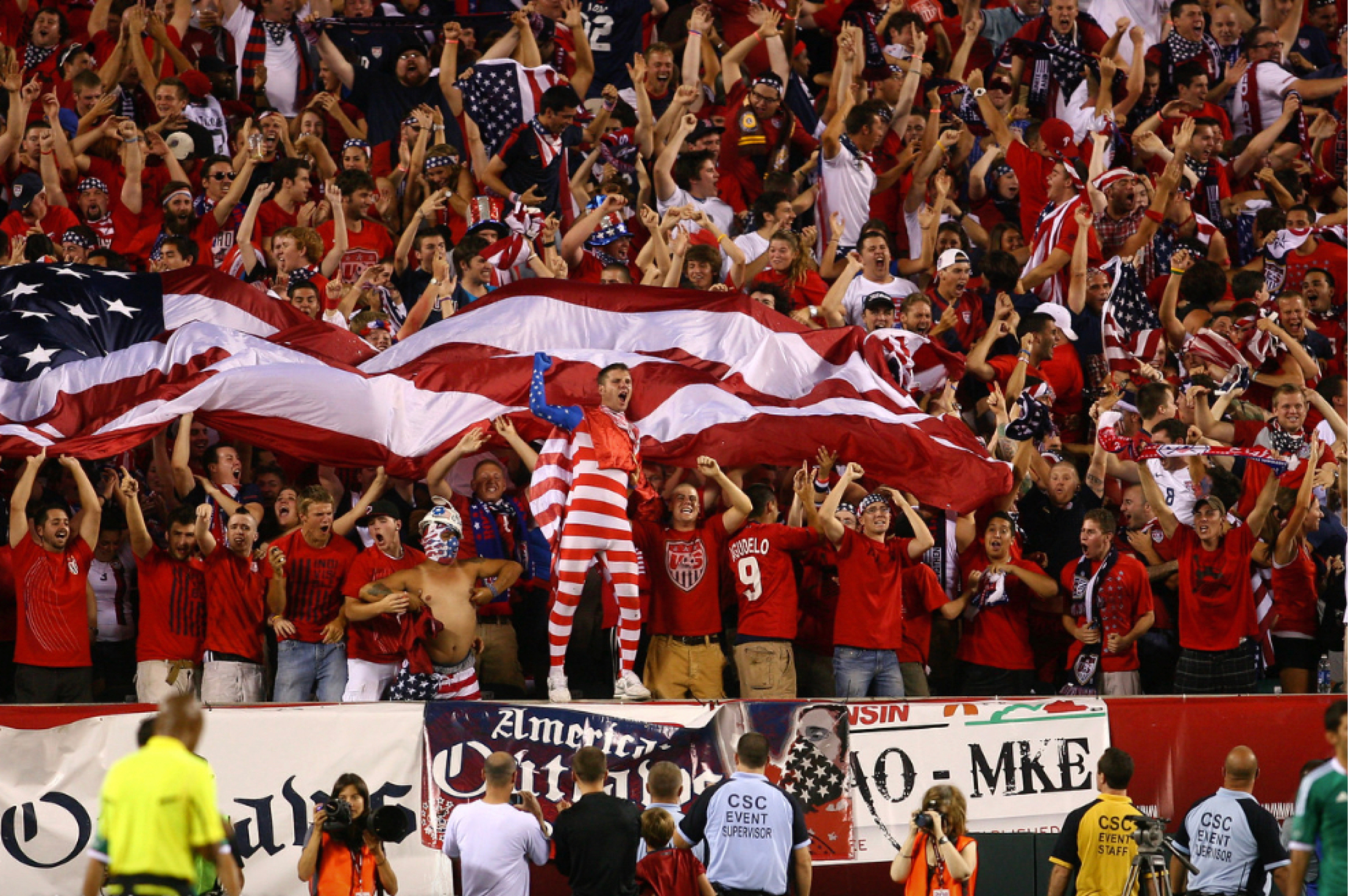
There are lengthy historical interludes [in the book], because I didn’t think one could really understand the rivalry without getting into how much the United States has disregarded and trampled on Mexican sovereignty, something that continues to this day. During Ronald Reagan’s drug war, the US government shut off seaborne avenues, stuff was coming up through Mexico, and the border was politicized in a way it had never been before. In the 1990s, I remember Pete Wilson's nativist campaign for governor of California, before [presidential hopeful] Pat Buchanan exploited the same issue in 1992. Then the US signed NAFTA, the North American Free Trade Agreement, which created even more resentment. All of this coincided with the fact that the US was finally a worthy rival to the Mexican national team. American fans were so happy at what was happening with this new rivalry, we didn't even notice how much [Mexico] resented their loss of dominance. For Mexican American fans, each match became an assertion of Mexican identity. Eventually, US fans reciprocated, and the stakes were raised yet again.
These days, there’s a lot of parity between the two countries’ national teams. When did things meaningfully shift for the US?
For 10 years [after losing the first Gold Cup], Mexican soccer players and fans thought this was just a phase, that the Americans would lose interest and Mexico would reassert itself as the big brother in this sporting relationship. The 2002 World Cup changed all of that: the US humiliated Mexico in the Round of 16, two-nil—or dos a cero, which quickly became a trolling US chant, then an identity-soaked branding strategy. That result landed like a trauma. That was precisely when Mexicans recognized and accepted what was happening: “These are our rivals. We have to treat them as such, or else we won't beat them.” That is how rivalry works: A rival is someone who can beat you and who thinks you might beat them. On some level, it must be symmetric, in order to last, to grow and amplify. And the Mexican national team, El Tri, did rise to the occasion. Through the 2010s, Mexico fielded some of its best teams, and they beat us in all the Gold Cup championships, which are always held in the United States.
About a decade ago, the US, Mexico, and Canada jointly and successfully campaigned to host the 2026 World Cup. Since then, the US-Mexico border has become even more politicized, and it seems the relationship between the two countries has grown even more fraught. With the World Cup on the horizon, how do you characterize soccer's role in our nations' relations with one another today?
Soccer in North America over the last 15 years has been a time of growing together, not apart. When it comes to soccer, we, Mexico, and now Canada—all three siblings—partake of a single North American soccer organism. That’s new and it flies in the face of the Trumpist politics that have prevailed since 2015. MLS is inclusive of Canadian franchises. During the Leagues Cup, both Liga MX [Mexico’s top pro league] and MLS shut down for a month, in the middle of their seasons, to play a tournament. It’s an amazing feat of cooperation—the Portuguese and Spanish leagues ceasing respective operations and playing a tournament amongst themselves just doesn't happen. The soccer-specific cooperation we share with Mexico now, in innumerable ways, far outweighs everything else that's happening politically. It's a sign that while the rivalry has become ever more intense, the larger result has been this shared “family” ecosystem.
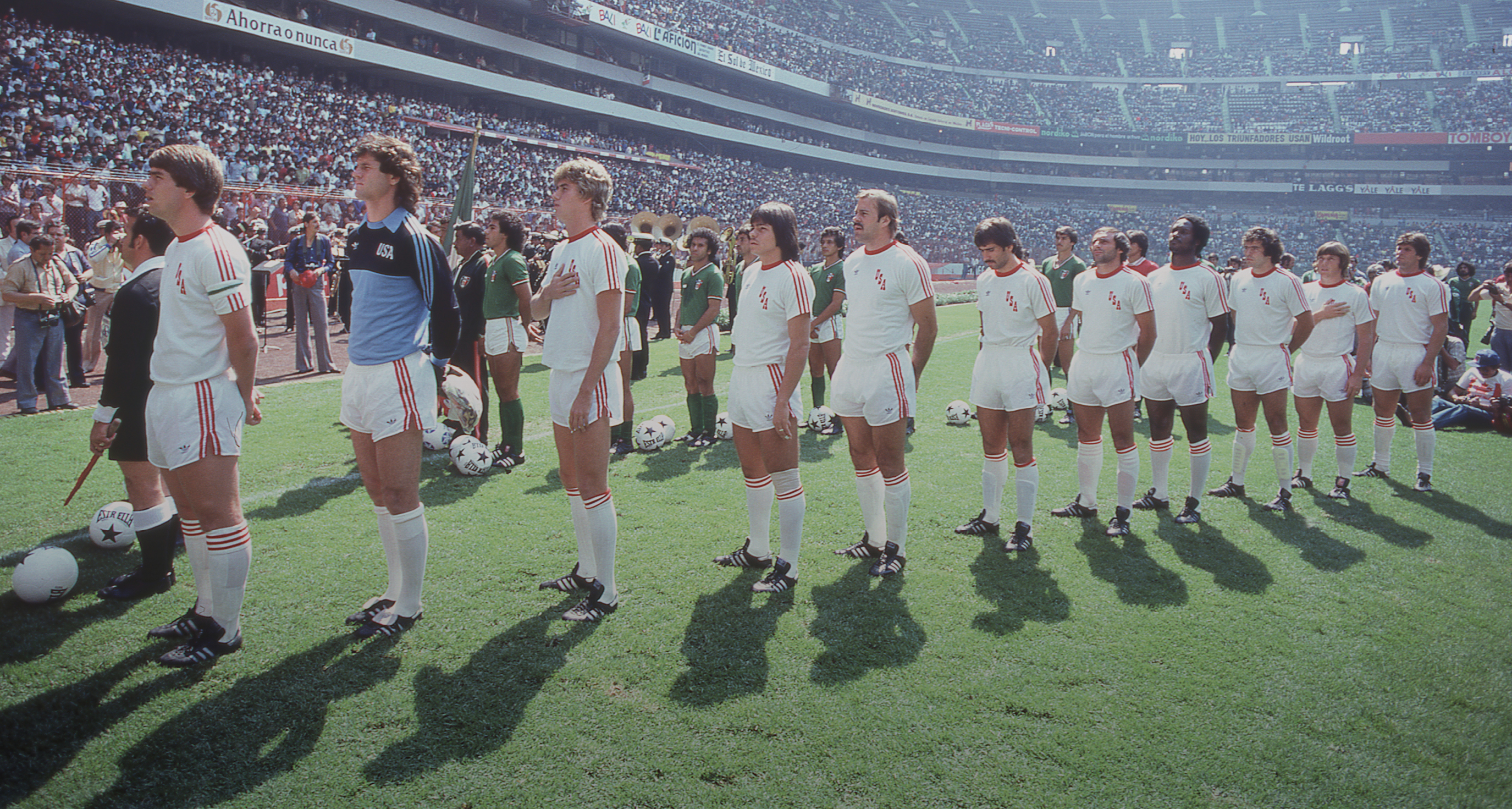
Lead image: The two sides assemble for the 25th North American Derby, held in November 1980 before a capacity crowd of 90,000 in Mexico City's Estadio Azteca. The match occurred just weeks before the United States's first victory over Mexico in more than 40 years. Photo by Jon van Woerden, courtesy of Hal Phillips.