
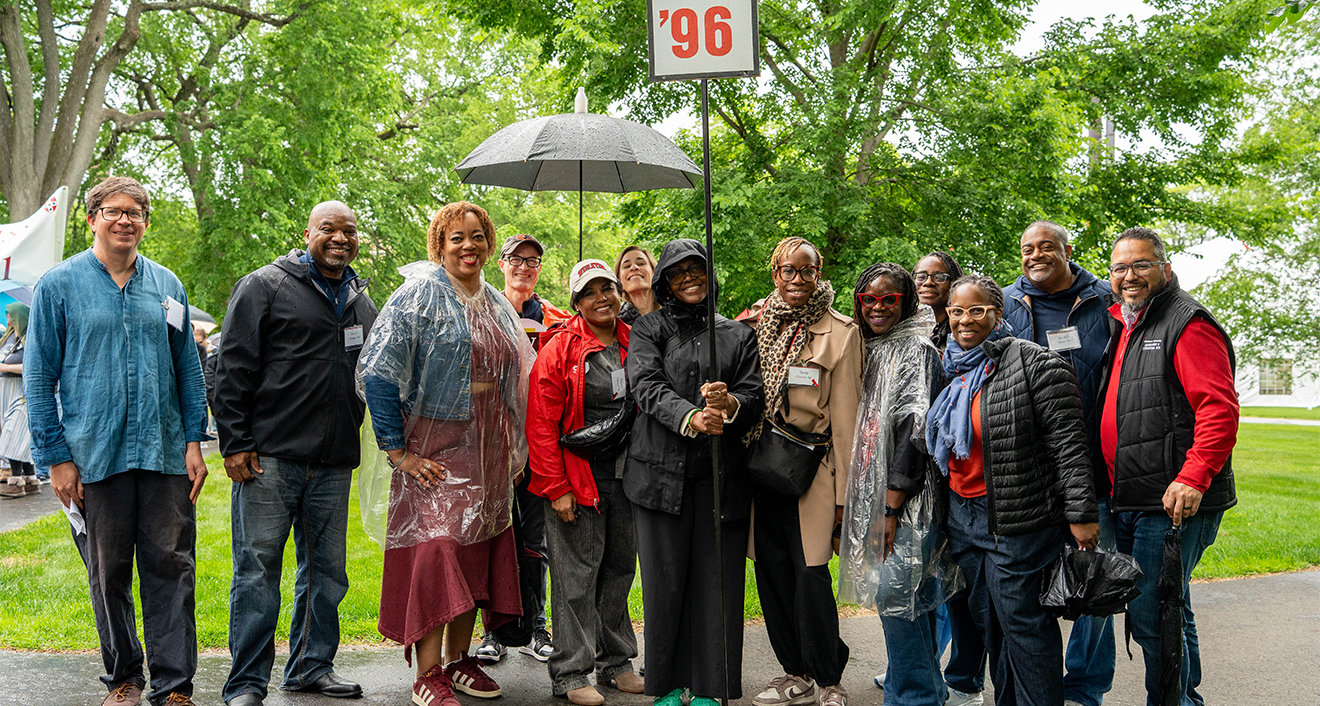
Alumni Reconnect at Reunion 2026
This year’s reunion celebration was a weekend of reconnection between classmates and friends, nostalgic tours of campus buildings, discussion of the most pressing topics of our time, and reflection on ways Wesleyan impacted the lives of alumni. This year, the classes of the ’6s and ’1s returned to campus to spend time in community and partake in a range of programming, including seminars, class gatherings, and dance classes.
The first flock of alumni landed on campus on Thursday for an afternoon with a guided campus tour, exhibits on Japanese art and 19th century missionaries in China, and a class dinner. Festivities continued into Friday as members of the Class of 1976 assembled in the Frank Center to catch up with their fellow classmates and to exchange stories from their time in Middletown.
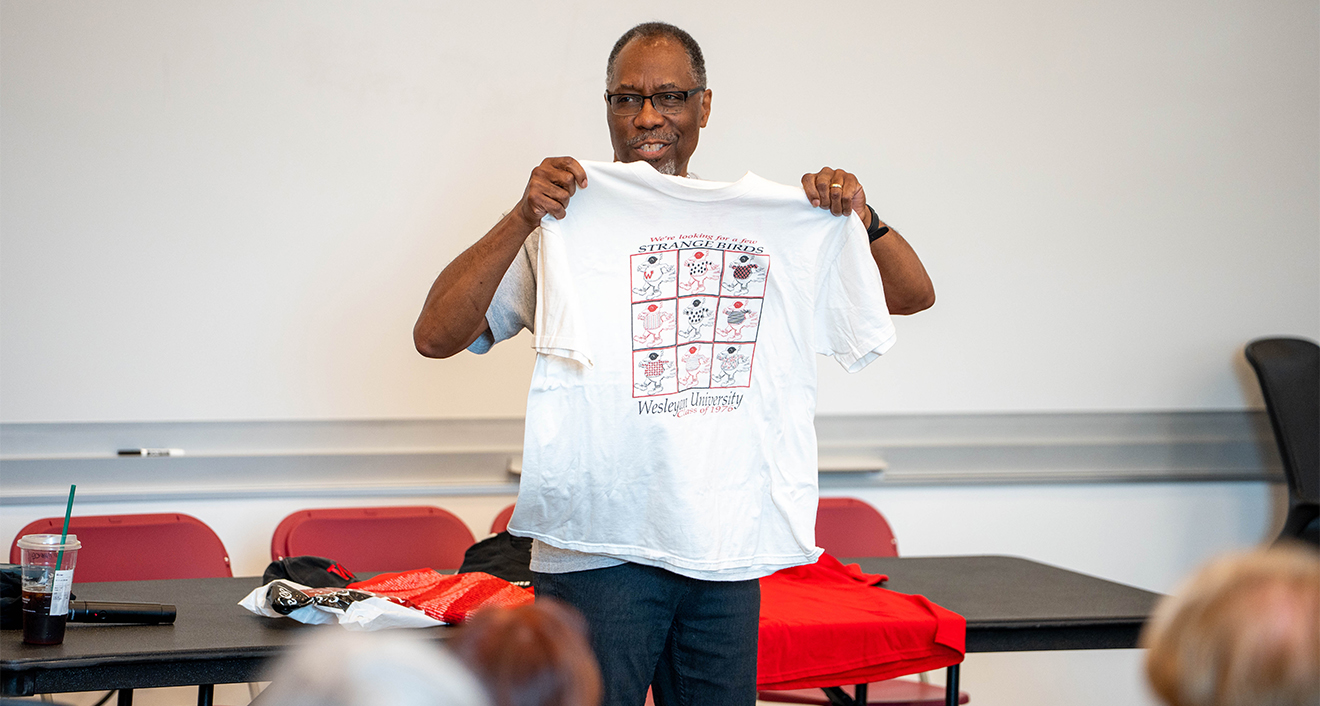
Byron Haskins ’76, who majored in psychology at Wes, started the discussion by sharing a collection of t-shirts he kept from reunions past, but he was wearing a WESU shirt to honor the years he spent running the radio station from its former location in Clark Hall. He has come back for nearly all his class reunions because being around his classmates makes him think. “When I'm with Wesleyan folks, I feel like I'm using all my mind,” said Haskins, who served as his class secretary for over three decades.
After years of listening to other people’s music at WESU, he now makes music in his retirement following a career in social services. He also volunteers at a project management non-profit and is the vice chair of the Michigan Democratic Party’s Senior Caucus. He said he began working in politics to help make sure every person who wants to speak has their voice heard. He emphasized the importance of working through differences with others by having conversations.
“Wesleyan taught me how to do that, to walk into a room and just be able to accept a variety of ideas,” he said.
WESeminars and lectures
Throughout the weekend, alumni sat in on WESeminars and presentations on a variety of subjects like political engagement, artificial intelligence, trustworthiness in journalism, civil rights under the Trump administration, theater as self-discovery, and storytelling.
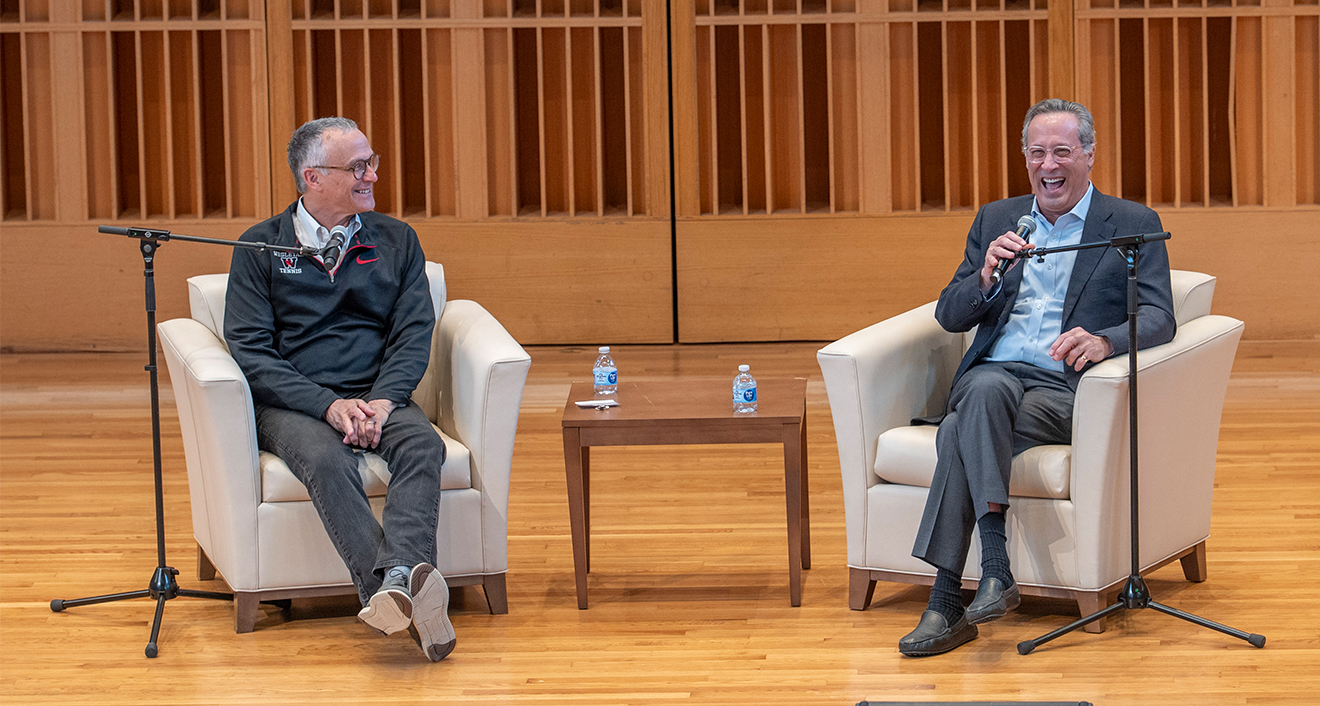
On Saturday morning, alumni ventured to Crowell Concert Hall for “Why the World Needs More Wesleyan: A Conversation with President Michael S. Roth ’78 and Tony Marx ’81.” Within this conversation, Roth and Marx explored Marx’s work to enhance diversity of experience and conversation as the former president of Amherst College, ways the New York Public Library system has improved access to information under Marx's leadership, and the value of open dialogue and participation in public life.
“We believe that participation in the public sphere is educational,” Roth said. “It's not a distraction from what you're learning—how to think, how to reason, and to appreciate other people. Many of those things that you hope to learn while you're on campus, you also can learn by engaging in the public sphere.”
Alumni gatherings
Alumni then joined graduating seniors and their families in formation outside Usdan University Center for the Annual Parade of Classes. Members of classes from 1951 to 2026 lined up and processed from Huss Courtyard to Memorial Chapel via College Row.
“[The parade] epitomizes what Wesleyan is all about,” said Lenore Mason-Diamond ’91. “We kind of grabbed people along the way and pulled them into the parade. There were lots of questions about what we were doing, where we were going, and why—nobody knew the answer, but we were really happy to be together.”
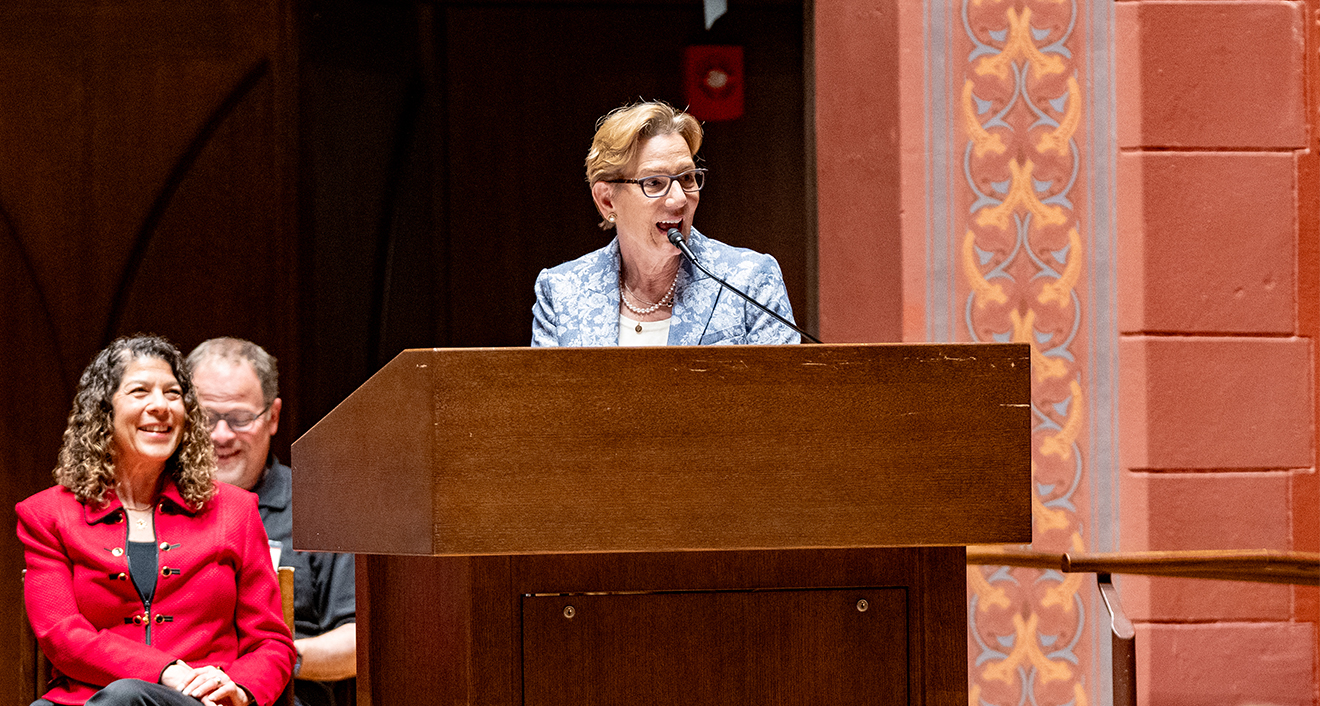
Moments later, alumni of varying years filled the pews of Memorial Chapel to participate in the Assembly and Annual Meeting of the Alumni Association. After the presentation of distinguished alumni awards and outstanding service awards, featured speaker Katherine Forrest ’86 took to the podium to speak about the future of humanity in the age of AI.
During her time at Wesleyan, Forrest said she was known as a runner, athlete, and women’s studies major. “But first and foremost, my years here were spent learning how to ask questions and to listen to the extraordinary sound of all of our different answers,” she said.
The ability to ask questions will help us all navigate the brave new world of AI, said Forrest, which is upon us and advancing daily. Education, and liberal education in particular, will continue to be essential. “We need it more than ever. Because we need to pursue the human mission of teaching humans to use our uniquely human brains to retain humanist values for this beautiful, if flawed, and sometimes deeply painful world. We will need our Wesleyans to continue to teach us how to ask questions, to question the world around us, to respect our differing answers,” she said.
Reflection and reconnection
For the last five years, a few members of the Class of 1971 have had video calls every Wednesday to stay connected and spend time together, according to Don Graham ’71. “A couple of those that are on the Zoom calls, who I haven't seen in 50 years, are going be here,” Graham said. “[This weekend] was a time to get together, come back, share some old stories, and be with friends.”
Chung Ma ’96 came back to spend time with friends, many of whom he has kept in touch with through video calls and an over 250-person group chat for his class. “Every time I come onto the Wesleyan campus, the cortisol levels just drop,” Ma said. “I’m just transformed back to when I was 17, stepping onto this campus, and it's just full of positive memories for me. This is beautiful.”
Ma said that during his upbringing, his focus was often on outperforming his peers academically, but Wesleyan taught him to appreciate the abilities of others. He said not only did he learn about how to think through problems and make decisions while in school here, but the culture also allowed him to ask questions and acknowledge when he didn’t know something.
“Wesleyan gave me that safety, that environment for me to allow to question and be vulnerable, be comfortable about it,” said Ma, an investor who helps manage Virginia’s state pension fund. “In many cultures, when you ask a question, [it means] you don't know, you're weak. It was so standard at Wesleyan that it felt comfortable. I was empowered to do that, and I just continued doing that for the rest of my life.”
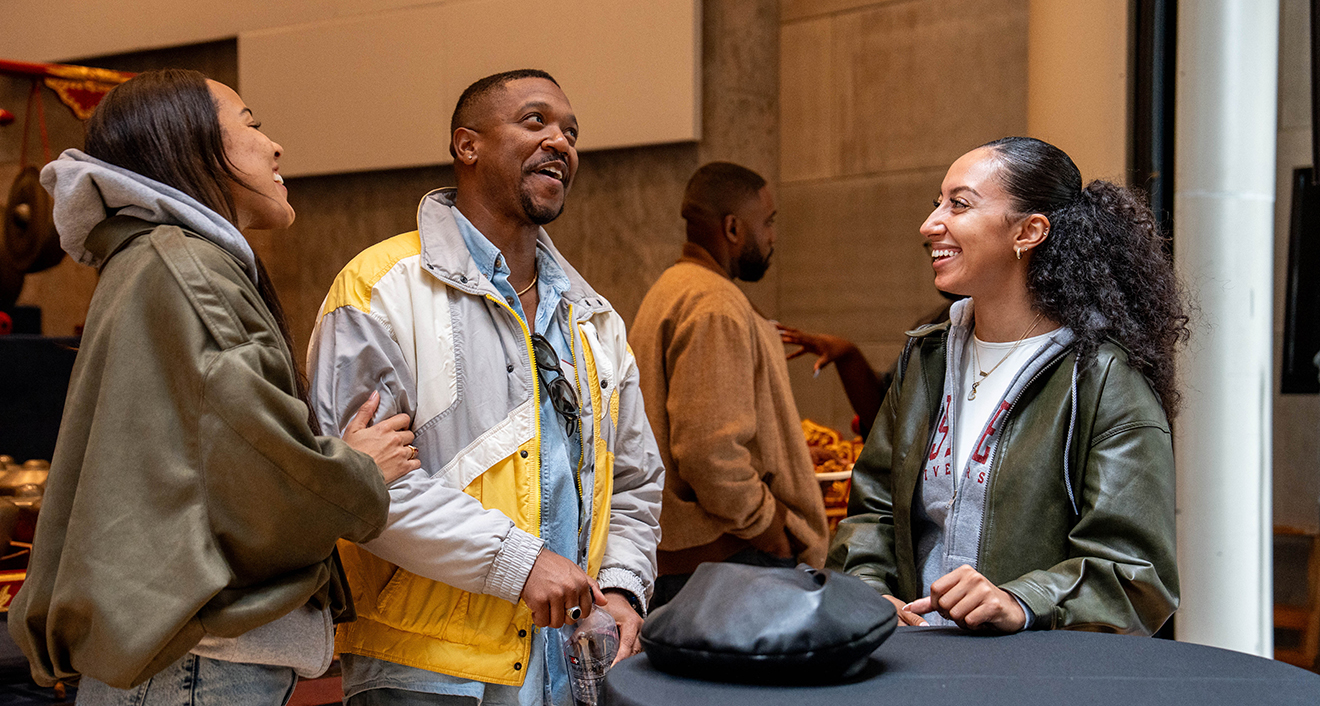
Hayley Setear ’16, who earned a degree in English and history, knew she wanted to go to Wesleyan the moment she stepped on campus. At Wes, she learned to push through academic struggles for the first time in her life—a formative experience, she said. She also realized her passion for education here.
“I think it's so easy to lose a love of learning,” said Setear, now a public defender in Virginia. “I think that here, the lack of core requirements and the variety of interesting classes really made me realize how many different things I love learning about.”
Alongside the seminars and moments for reconnection, alumni also took time to honor the community members lost in the last year. On Saturday morning, the sunrise poked through the clouds for a moment as alumni danced in Schönberg Dance Studio to reflect on time spent with the late Cheryl “Chery” Cutler MA ’71, founder of the dance department. Following the sunrise session, over a hundred people convened at the Memorial Chapel. After a warm welcome from John McHue, Cutler’s husband, current and former students stepped into the altar space to offer stories, movement, and song.
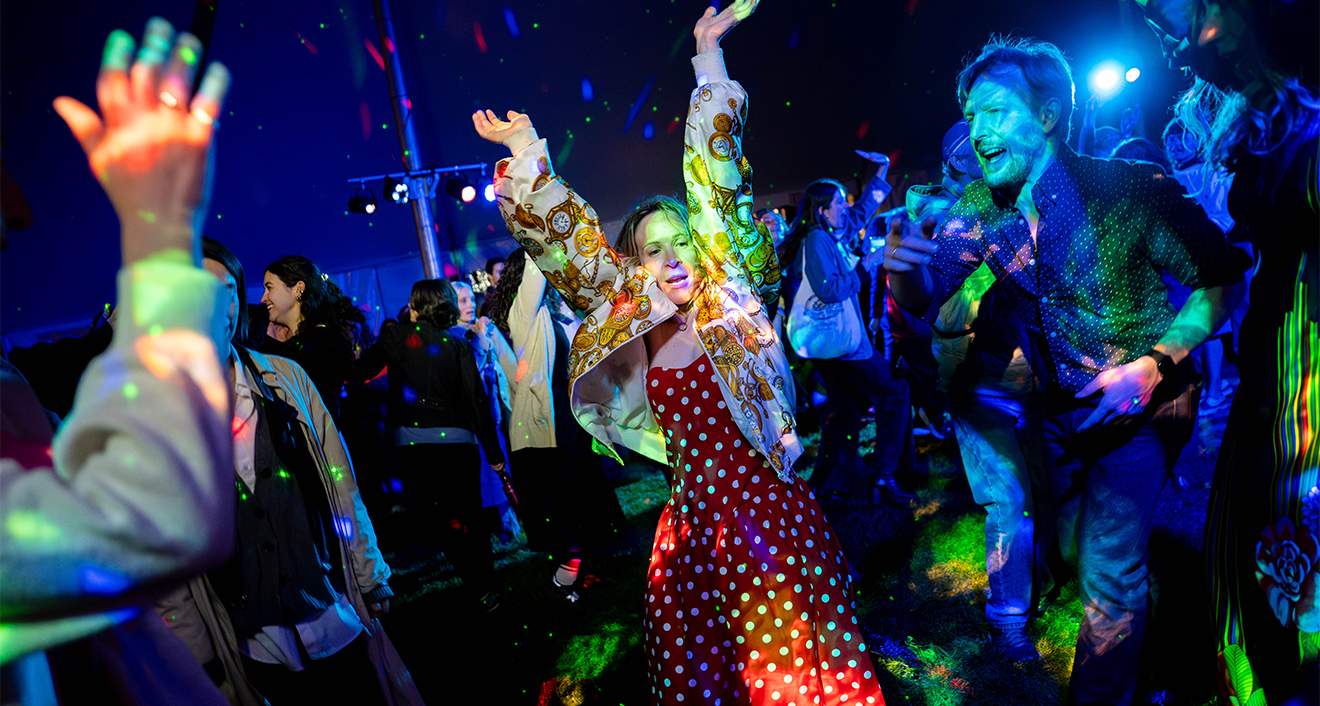
Alumni danced once more at the all-campus tent party late on Saturday to music performed by a 10-person band featuring members of The Future Heavies and The Usual Lebowskis, led by drummer Andrew Chatfield MALS ’19, and a late-night set from Javaid Khan ’96, who performs under the name DJ Van Vader.
Ziba Kashef and Associate Professor of Dance Katja Kolcio contributed to this story.