
Young Alumni Turn Passions Into Career Paths
Each year, seniors who complete their journeys at Wesleyan launch into careers in fields such as arts and entertainment, financial services, education, government, and health and wellness, among others.
Around 87 percent of the Class of 2025 were working full-time or pursuing further education by the end of that year, according to the most recent data collected by the Gordon Career Center. While the Center is still collecting data on the Class of 2026, Executive Director Sharon Belden Castonguay said that class is trending similarly to the year before.
The following are examples of the kind of work a few recent graduates found and how their Wesleyan education informed their choices.
Cancer Research
Sophia Mack ’26, who earned a degree in neuroscience and behavior, first realized she wanted to do research during an internship at Albany Medical College in the summer before her senior year. At Albany, she was mainly working with cell samples in a lab setting and found herself wanting to work more with patients, so she sought out clinical opportunities when looking for full-time work.
In August, Mack joined Dana-Farber Cancer Institute as a clinical research coordinator. Each day, she meets with breast cancer patients and administers tests to gauge whether they need radiation after surgery. She chose the role since it offered an opportunity to work one-on-one with patients and see how research is done in a clinical setting.
“When I was thinking about what I wanted to do before medical school, I was thinking about where I could get experience seeing patients and be in a healthcare facility,” Mack said. “With this job, I'm working with providers, nurses, and physician’s assistants because we're all in the patient care realm and seeing the same kinds of patients. It's also great to see where the research is going and what was being focused on in different sectors.”
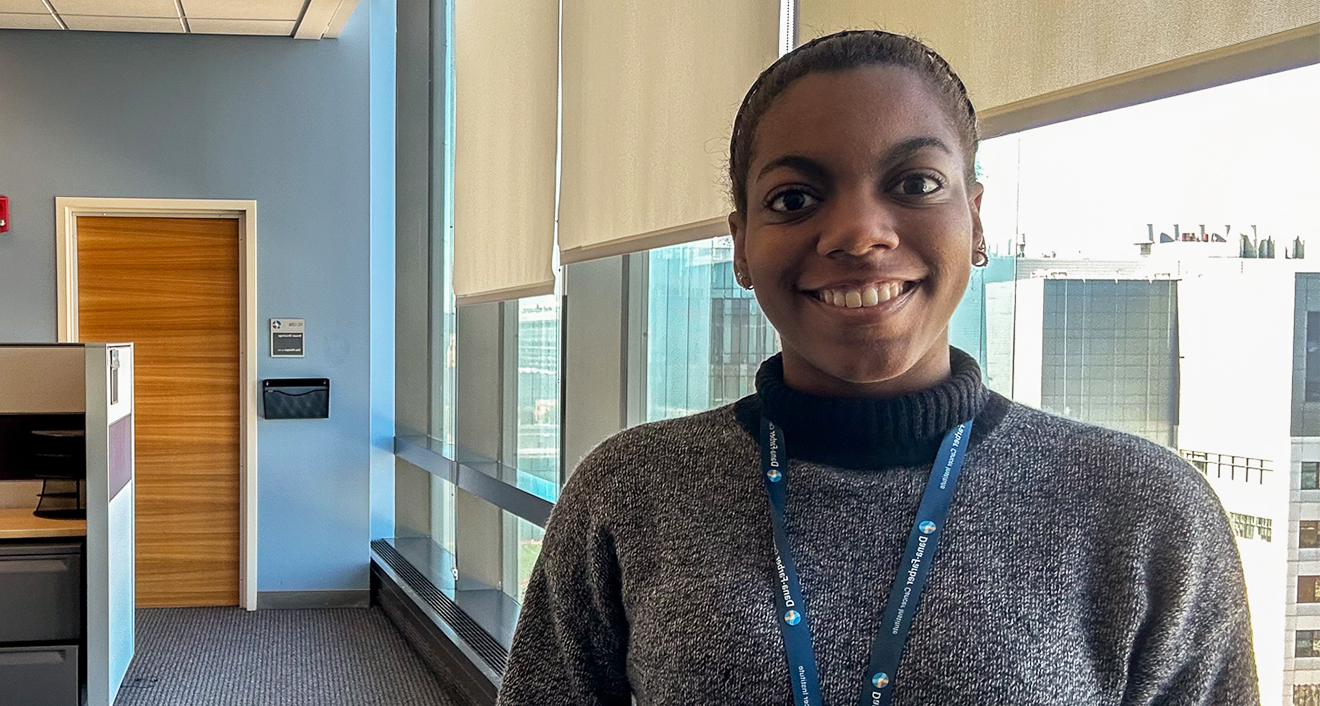
Mack’s internship provided her with a variety of industry educational opportunities as she split time between a personal research project, tours of the hospital, and shadowing other labs. She said she’s also drawing from her experience at Wesleyan where she was president of the Neuroscience Club her senior year and took classes on neuropsychology and hormones, the brain, and behavior. In these classes, she learned about diseases and how hormones can affect a cancer’s progression, which helped her develop an interest in breast cancer, where one treatment option is to use hormone therapies.
“I think it really could be cool to go into oncology and see what that side of things is like, and maybe go into breast cancer because I am really interested in women's health,” Mack said of her long-term future. “Breast cancer as a diagnosis is becoming more and more prevalent, and more and more people are being diagnosed younger. I feel like it could be really interesting to become a breast cancer doctor and go down that realm of things.”
Entertainment Agency
Olivia Berger ’26, who studied film studies and government when she was at Wesleyan, recently started a job as a mailroom trainee in United Talent Agency’s (UTA) Agent Training Program, which is a precursor to working at the agency long-term. She spent the first two weeks in UTA University, where trainees learn everything they may need to know as an assistant, from information about the business and how deals are reached to what agents do for their clients.
For the remainder of the six-month program, Berger and her fellow trainees float between coverage assignments in place of assistants on leave. Currently, Berger is working on the independent film desk, where she will monitor the department’s inbox, track phone calls for the agent she is supporting, and pitch in wherever she is needed.
“They've been telling us your boss is your first client, so however they want to run it is part of the job,” Berger said. “Being an agent is client service, so whatever the client says, at the end of the day that's what you do.”
Berger said the job is often referred to as the graduate school of the film industry, since agency work touches each corner of the industry from the production side to more business-centric operations. Having the opportunity to see the different sides of the entertainment world has been invaluable for her. “It’s like I've gotten this crash course in how everything works and why,” she said.
While at Wesleyan, Berger was actively honing her on-set skills through a filmmaking club on campus, Cardinal Pictures, where she worked on around 10 film productions. She also created a senior thesis film this past spring. She felt her coursework, especially in government and anthropology, helped improve her storytelling capabilities as well. “In an industry where you're communicating messages to people and stories to people, learning about people and learning about things that you care about is just as important as learning what you're doing,” she said.
Law and Criminal Justice
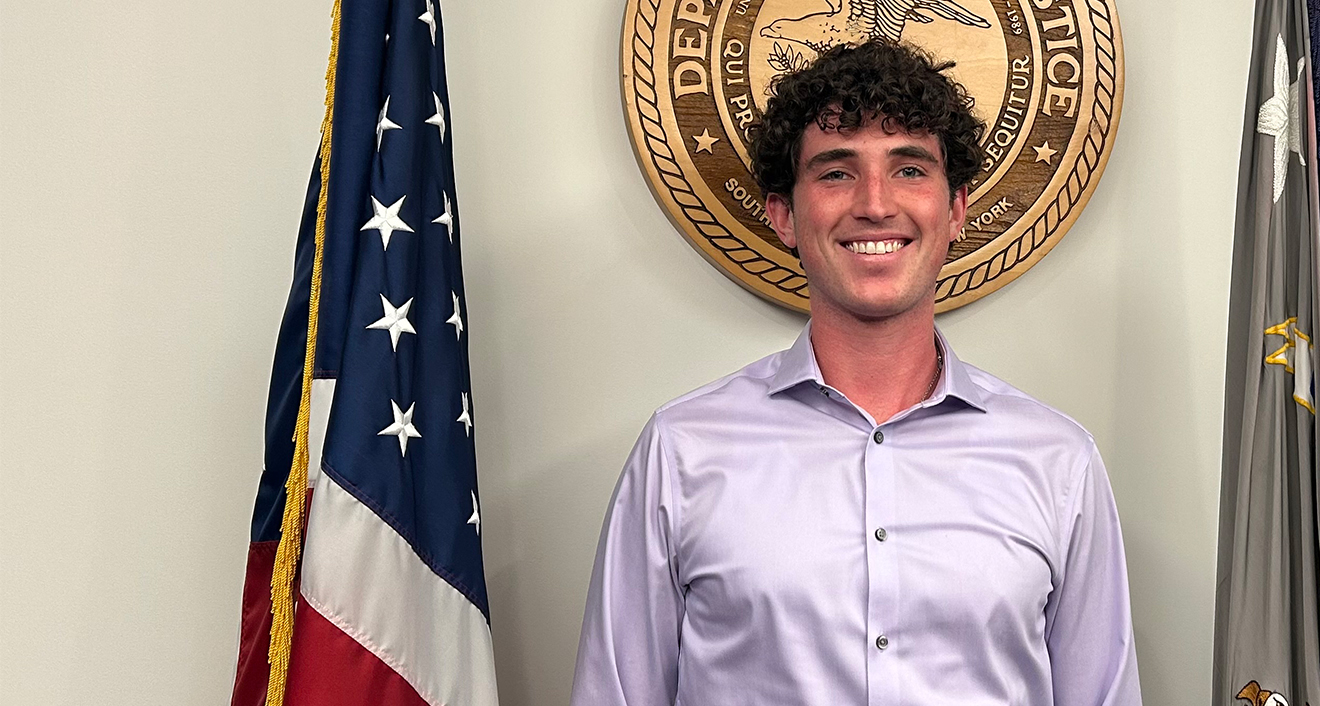
Ted Greenberg’s dream of doing an internship related to law and public policy were almost dashed when he got an email about a federal hiring freeze in fall of 2024. A College of Social Studies (CSS) major, Greenberg ’26 had applied for an internship with the prestigious U.S. Attorney’s Office for the Southern District of New York, one of the nation’s premier legal institutions.
Thankfully, a few months later, Greenberg learned that the internship, which put him in the criminal division, was back on. While he didn’t know much about the court at the time, he was excited to receive an offer. He “fell in love” with the experience, which provided a lot of exposure to hands-on courtroom work, including helping prosecutors prepare for trials with discovery, government exhibits, and communications.
“I got to work on the front lines with the prosecutors and was a part of the trial team in a way that is relatively atypical for a summer intern,” Greenberg said. “Getting that kind of firsthand experience was really special.”
At the end of his internship, he applied for and landed a full-time position as a paralegal specialist. Since he started in early August, Greenberg has engaged in behind-the-scenes work that makes him accountable for his own errors. “The stakes are a lot higher as a paralegal,” he said. In that capacity, he has more responsibility, including sitting at the prosecutor’s table during full trials, helping present exhibits, and assisting investigations. He contributes to the General Crimes unit, which like the entire office, is incredibly collaborative.
Greenberg’s commitment to the job is for two years, after which he plans to go to law school, and hopefully earn a degree in public policy as well. His long-term goal is to run for elected office. His CSS major and time at Wesleyan helped prepare him to adapt and advocate for himself, among other skills.
“I also think the general outlook on the world and the legal system and the nuances of prosecution and having a humanitarian perspective to this kind of work is something that Wesleyan certainly has helped me with,” he said. “I think that it has provided a really holistic worldview that informs how I approach the work of a prosecutor's office because it's very sensitive and real lives are impacted by this kind of work, and so having that kind of perspective is really important.”
Ziba Kashef contributed to this story.