Practicing Democracy Door to Door: Wesleyan Students Canvass
Wesleyan students continued to stay involved in this year’s midterm elections this fall break, as 22 students used their time off to travel to states like Georgia, Florida, Michigan, and Kansas, among others, to organize, canvass voters, and participate in campaigns. Their efforts were supported by Political Engagement Fund grants through the Jewett Center for Community Partnerships.
This fall, the Jewett Center provided students with grants of up to $1,000 to support civic engagement work related to voter registration, issues advocacy, and national and local campaigns. This semester’s grants went to students who canvassed, did communications work for campaigns, and conducted in-state research on civic participation.
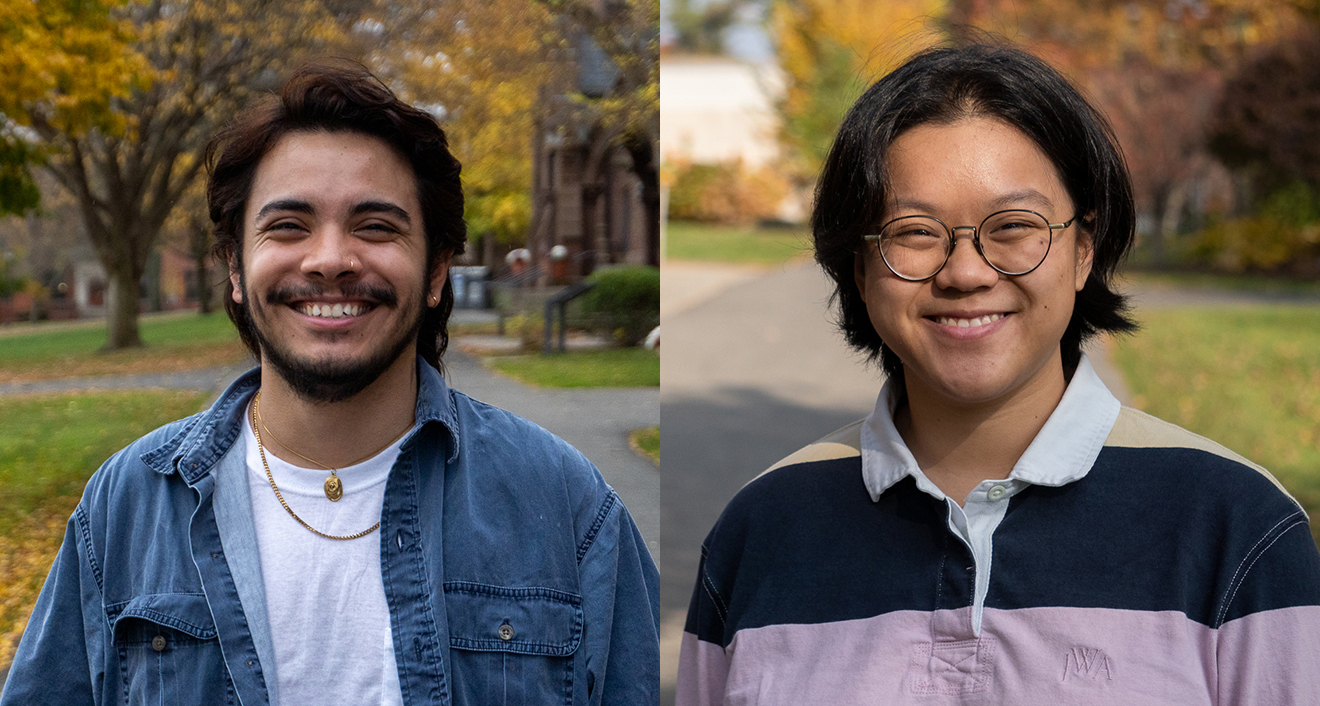
In the week preceding the election, Helen Xie ’27, a College of Social Studies major from Lubbock, Texas, and seven other students went to Atlanta, Georgia for four days to canvass for Georgia Democratic candidates, including incumbent Senator Jon Ossoff, gubernatorial candidate Keisha Lance Bottoms, and state senate candidate Ruwa Romman. All three candidates won their races.
Xie is not new to work in the political sphere, as she works for the Wesleyan Media Project as a research assistant lead and canvassed in Pennsylvania during the last presidential election. She went on this canvassing excursion to have conversations with voters and hear different perspectives.
“It's important to be able to understand other people's perspectives, especially people who disagree with you, if they're willing to speak to you,” Xie said. “I think it's good that you understand where those different perspectives are coming from, even if you disagree, because they exist, they're real, and they have an effect on your life or other people's lives that you care about.”
The group knocked on hundreds of doors, Xie said, and most of their conversations with residents were about where and when to vote and the issues voters were focused on this cycle, often including the increasing cost of living. “[Doorknocking is] about getting people to vote, to think about the candidates that are running, and try to get them involved,” Xie said.
Alex Arrieta ’27, Science and Technology Studies and education studies double major from New York City, went to the suburbs of Detroit, Michigan to canvass for Michigan Democrats with Common Power, a Seattle-based civic engagement organization. He chose Michigan in part because he wanted to visit the state, but he said, “I also wanted to see what it would be like to canvas in a swing state.”
For each of the four days of his trip, the organization started with an educational activity for the canvassers before releasing them into neighborhoods to speak with voters. One of the activities was a presentation on the Detroit race riots in 1943 and 1967. Arrieta said he was given an area of houses he was responsible for, normally around 90 houses per day, to visit and check in with voters. His day wrapped up with a debriefing session with other canvassers, which he said helped to foster a sense of community among the group.
“We'd come back and get together for a debrief where we just talked about our good experiences, our bad experiences, something that we learned, something that we took away,” Arrieta said. “If someone had a particularly bad experience, then we'd talk about it. But it was mostly there so that we could see the impact of what we were doing and to encourage each other to keep going for another day.”
While most door-knocking interactions are short and to the point, he had an in-depth conversation with a resident who was initially hesitant to answer the door but expressed frustration with how increasing levels of misinformation on social media have affected politics. That resident had already voted at the time of their conversation, so Arrieta continued his journey to find two neighbors outside fixing a car. He went up to speak with them, and they said they had no plans to vote because they didn’t know which politicians they could trust.
“It was really jarring to have this conversation that talked about the media, that talked about the effects of misinformation, and how it's dissuading certain people from exercising their right to vote, to be actually to me right after that same conversation,” he said about his interaction with the two neighbors.
Arrieta wants to be an educator after graduation, and he said this experience will influence the way he teaches. In the future, he said he will emphasize to his students the importance of connecting with voters first-hand and experiencing a wide array of political opinions.
Both Xie and Arrieta used their Political Engagement Fund grants to help pay for transportation, lodging, and food costs during their respective trips. Fostering student civic engagement is a goal of the University's Democracy250 program, a non-partisan initiative empowering institutions and students to step forward, lead, and strengthen the democracy that gives all Americans a voice.