Sturm Lecture
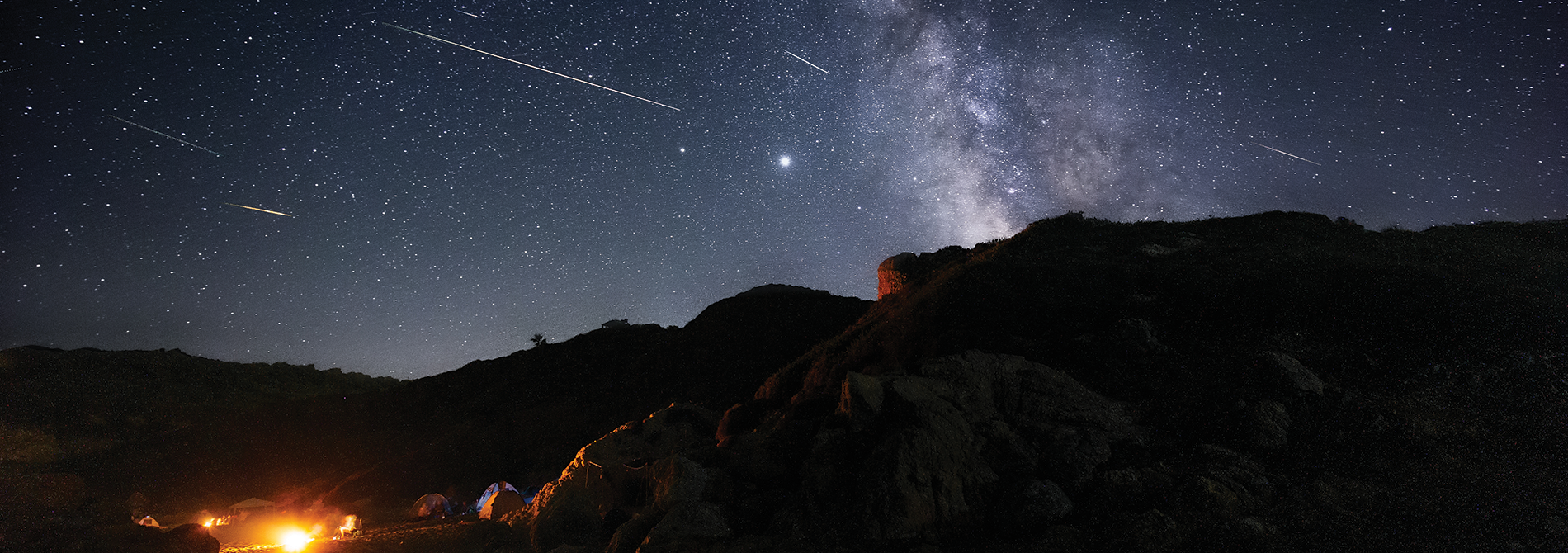
Experience approachable, engaging lectures that bring the wonders of astronomy to all audiences at Wesleyan’s annual Sturm Memorial Lecture. Established to honor alumnus Kenneth E. Sturm’s enthusiasm for astronomy, the series features distinguished astronomers sharing innovative research and topics.
Astronomical Impact
-
1991 year established
-
30+ lectures as of 2025
-
3 Nobel Laureate speakers
2026 Sturm Lecture
At the 2026 Sturm Lecture, "Listening to Cosmic Collisions: Black Holes, Neutron Stars, and the Rise of Gravitational-Wave Astronomy," Vicky Kalogera—distinguished university professor in the Department of Physics and Astronomy at Northwestern University—focused on the development of the scientific community's understanding of gravitational waves. Once only a suggested consequence of Albert Einstein's theory of general relativity, these signals can now be measurably detected on Earth by scientists at observatories such as LIGO and Virgo. By measuring these tiny ripples produced when massive objects accelerate, astronomers gain insights into events, such as collisions between black holes and neutron stars, that would be inaccessible by any other means. Kalogera discussed how, as wave detector networks expand and technological sensitivity improves, gravitational-wave astronomy has the promise to grow into a mature and far-reaching branch of observational science.
Throughout the evening, Professor Kalogera's talk embodied the spirit of all past Sturm Lectures: forward-thinking insight and visionary expertise that inspire the Wesleyan community to strive for further discovery.
A Passionate History
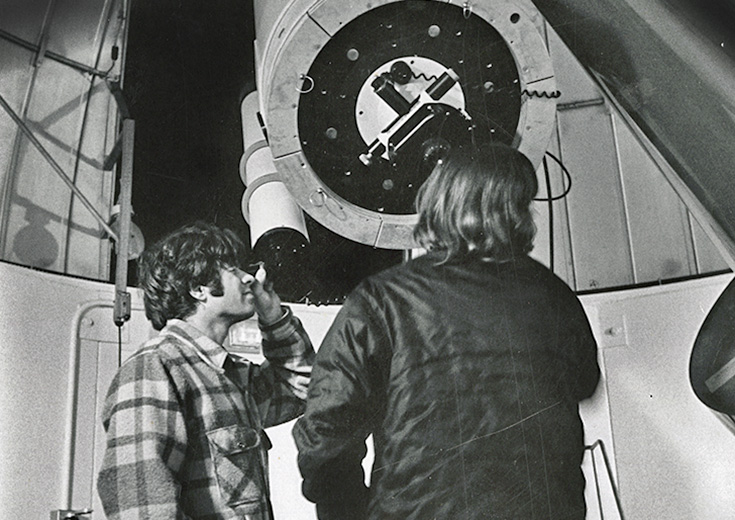
Despite majoring in astronomy at Wesleyan, Kenneth E. Sturm '40 did not pursue it professionally. Instead, he maintained a lifelong interest and personal passion in the subject. Upon his passing, his sister Ruth Sturm generously provided scholarship funds for Wesleyan astronomy students. The Sturm Lecture carries on the Sturm family legacy by empowering attendees to engage with the sciences without being professionals in the field.
Past Lectures
Sturm Lecture speakers share insights and inspire audiences from all backgrounds to engage in the sciences. Notable past speakers have included Nobel laureates Andrea Ghez, John Mather, and Adam Riess, and Wesleyan alumnus Taft Armandroff ’82, director of the world's largest observatory.
2025
"How to Photograph a Black Hole"
Dr. Sheperd Doeleman, The Center for Astrophysics | Harvard & Smithsonian and the founding director of the Event Horizon Telescope (EHT)
2024
"Degenerates of the Universe"
Dr. Rebecca Oppenheimer, American Museum of Natural History
2023
"How the Earth came to be: clues from the Asteroid Belt"
Dr. William Herbst, Wesleyan University
2019
"The Monster at the Heart of Our Galaxy"
Dr. Andrea M. Ghez, UCLA
2018
"Building Stars, Planets, and the Ingredients for Life in Space"
Dr. Ewine F. van Dishoeck, Leiden Observatory
2017
"Mapping the Universe with the Sloan Digital Sky Survey"
Dr. Daniel Eisenstein, Harvard University
2016
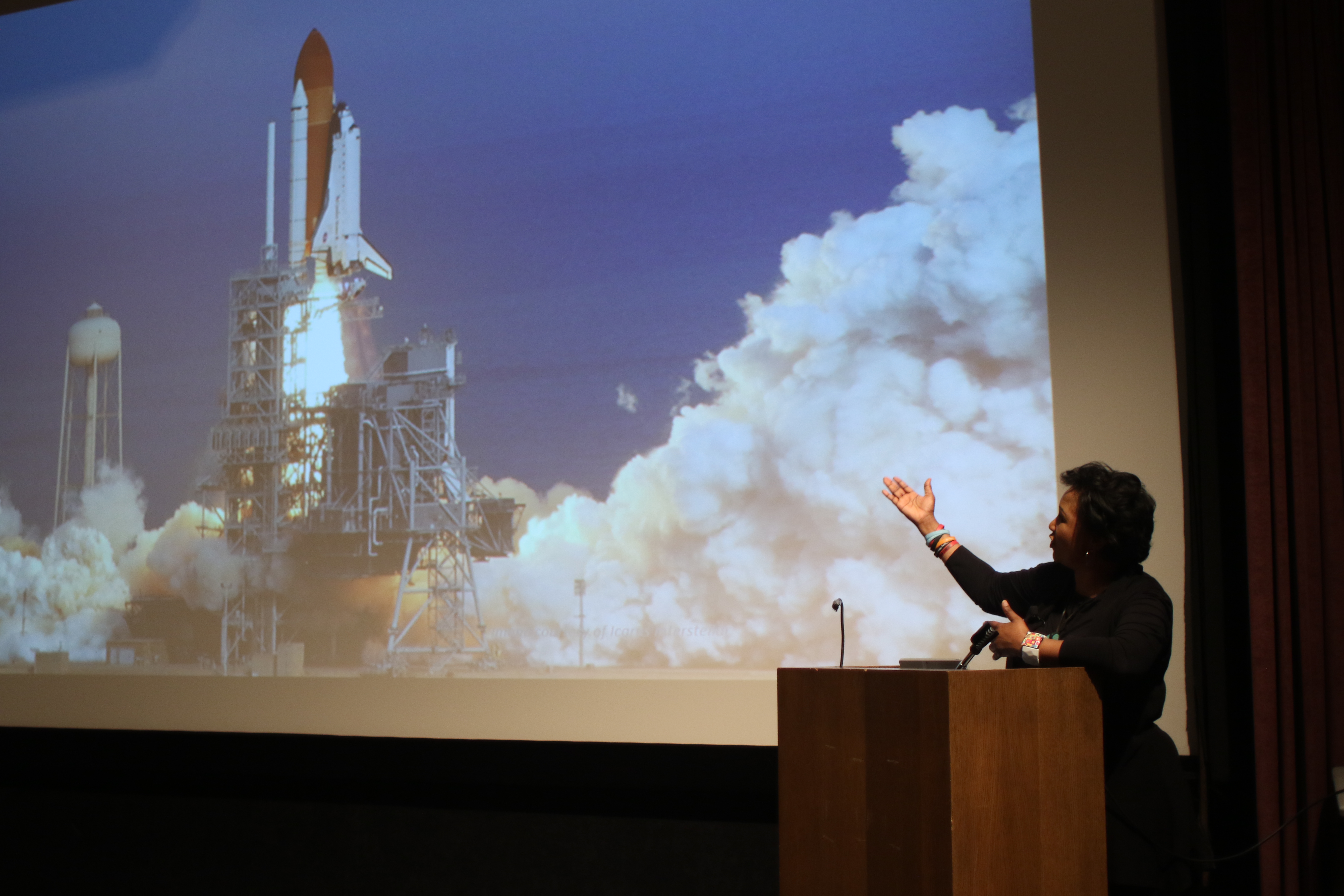
"Exploring the Frontiers of Science and Human Potential"
Dr. Mae Jemison, Principal of the 100 Year Starship Project
2015
"The Search for Earth 2.0"
Dr. Sara Seager, Massachusetts Institute of Technology
2014
"Black Holes, Galaxies, and the Evolution of the Universe"
Dr. Meg Urry, Yale University
2013
"Supernovae and the Discovery of the Accelerating Universe"
Dr. Adam Riess, Johns Hopkins University/Space Telescope Science Institute
2012
"Making the Invisible Sun Visible"
Dr. Alan Title, Lockheed Martin/Stanford University
2011
"History of the Universe in a Nutshell: From the Big Bang to Life and the End of Time"
Dr. John Mather, NASA Goddard Space Flight Center
2010
"Are We Alone?"
Dr. Jill Tarter, SETI Institute
2009
"Frontier Science with the World's Largest Telescope"
Dr. Taft Armandroff, W.M. Keck Observatory
2008
"Roving Mars: Spirit, Opportunity, and the Exploration of the Red Planet"
Dr. Steven Squyres, Cornell University
2007
"Dark Energy and the Runaway Universe"
Dr. Alex Filippenko, University of California, Berkeley
2006
"Taking the Baby Picture of the Universe"
Dr. David Spergel, Princeton University
2005
"How to See a Black Hole"
Dr. Charles Bailyn, Yale Univesity
2004
"Making Stars"
Dr. Alyssa Goodman, Harvard-Smithsonian Center for Astrophysics
2003
"How Superman Saw the Stars"
Dr. David J. Helfand, Columbia University
2002
"The Dark Side of the Universe"
Dr. Neta Bahcall, Princeton University
2001
"Through The Looking Glass: The Universe Seen With Hubble Space Telescope"
Dr. Robert Williams, Distinguished Research Scholar of the Space Telescope Science Institute
2000
"Cosmic Oases: New Worlds and Life in the Universe"
Dr. Geoff Marcy, University of California, Berkeley
1998
"Dark Matter and the Future of the Universe"
Dr. Martha Haynes, Cornell University
1997
"So Many Galaxies... So Little Time..."
Dr. Margaret Geller, Harvard University
1996
"Searching for Planets"
Dr. David Latham, Harvard-Smithsonian Center for Astrophysics
1995
"Taking Measure of the Universe: How Big? How Old? How Do We Know?"
Dr. Robert Kirshner, Chairman of Astronomy Department at Harvard University
1994
"Hypothesis, Proof, and the Censors, or How Galileo Changed the Rules of Science"
Dr. Owen Gingrich, Harvard-Smithsonian Center for Astrophysics
1993
"The Formation of Stars and Solar Systems"
Dr. Stephen Strom, University of Massachusetts
1992
"What Newton Didn't Know About the Universe"
Dr. Vera Rubin, Carnegie Institution of Washington
1991
"The Sun and Solar Eclipses"
Dr. Jay Pasachoff, Williams College