
Wesleyan in the News: May 2026
President Michael S. Roth ’78 appeared on CNN This Morning with Audie Cornish to discuss a new policy at Harvard that limits A grades for undergraduate students. “The real issue is: Are students working hard when they have an opportunity to learn a lot from great teachers?” Roth said. “That’s what you want. You want a student at a college, whether it’s Harvard or a local community college, to be incentivized to work really hard to expand their horizons intellectually, morally, even interpersonally.”
Roth discussed the need for open dialogue to protect academic freedom while delivering the 2026 Yale Rosenberg Lecture at the University of Houston Law Center on April 23. “The great discoveries in science, the revolution in how we understand civil rights, how we think about history … without that freedom, you don’t know what you might have thought,” he said.
Andrew Curran, William Armstrong Professor of the Humanities, wrote about France’s history with the Code Noir, a set of laws that were used to enforce slavery in the French colonies, for The New York Times. He explained that a bill was introduced in French Parliament to annul the laws 341 years after King Louis XIV signed them into existence. “This is undoubtedly the right thing to do,” Curran wrote. “But what the Code Noir, or Black Code, reveals about the architecture of France’s colonial slavery deserves far more attention than a symbolic vote.”
As the November midterm elections loom, candidates have ramped up television advertising, including the use of artificial intelligence in their ad campaigns, according to new data from the Wesleyan Media Project. Bloomberg spoke with Travis Ridout, co-director of the Wesleyan Media Project, for its coverage of the rise of AI use in political ads. “We have seen a rapid increase in the use of AI ads in just the past two months,” said Ridout. Bloomberg also cited WMP data on an influx of ads on streaming platforms in a separate story.
The Los Angeles Times interviewed WMP Co-Director Michael Franz for a story on dark money spending in city-level Los Angeles political races. Franz said dark money groups typically put substantial resources toward types of media that highlight a candidate’s political stances or history. “Even though they look exactly like attack ads, they loosely package them as civic education,” he said.
The Los Angeles Times also cited data from the WMP in its coverage of candidate Tom Steyer’s run for California governor. In 2019, Steyer spent $8.5 million on nearly 19,000 ads calling for President Donald Trump’s impeachment.
Chief Investment Officer Anne Martin was interviewed by Pensions and Investments for a story on her stewardship of Wesleyan’s endowment fund. Martin announced her retirement earlier this semester after 16 years at the helm of the Investments Office. “What’s really important is creating the team and the culture that not only enabled that success, enabled us to go work with the best managers (and) made great managers want to work with us—but creating a team and culture that can carry this on after I’m gone,” Martin said.
Rachel Besharat Mann, associate professor of the practice in education studies, joined WPSU’s “News Over Noise” to discuss her research into how adolescents and young adults consume news on social media and ways they interact with platform algorithms. “I think what they're looking for is exerting some control over what they see, in a way that they couldn't do otherwise without social media,” Besharat Mann said. “Most of my participants have shown that they see news on social media, and they actively will ignore people whose opinions, A. may differ from theirs or, B. they deem harmful in some way, whatever that means for the individual.”
Besharat Mann also wrote about engaging young students in thoughtful civil dialogue for Psychology Today. “From an academic standpoint, civil discourse strengthens the core mission of education: to help students build knowledge, interrogate ideas, and engage with diverse perspectives,” Besharat Mann wrote.
Antonio Machado Allison, university professor in the Bailey College of the Environment, spoke with Inside Climate News for a story on how rising oil production in the Maracaibo region of Venezuela poses a risk to local waterways, considering the government has not strongly enforced its environmental laws. “The government hasn’t shown that they want to follow the law,” Machado Allison said.
Jesse Nasta, assistant professor in African American studies, was interviewed by CT Insider for a story on how slavery built and shaped Connecticut, and how it impacts the state today. Nasta explained that enslaved people in the state often lived in the same house as their enslavers, which made slavery “partially invisible.” “On the other hand, the enslaved were still considered property,” Nasta said. “They still were bought and sold. They still were often subjected to very brutal treatment.”
Peter Rutland, Colin and Nancy Campbell Professor in Global Issues and Democratic Thought, wrote about how the United Kingdom’s local elections last month impact Prime Minister Keir Starmer’s and the Labour Party’s standing for The Conversation. Voting results show that UK citizens are increasingly straying away from the two-party system in favor of a “five-party free-for-all.” “Yet the elections are not merely bad news for the parties who have ruled Britain for so many decades,” Rutland wrote. “They are also a signpost of the increasing political instability of a country that exists as a political union of four separate nations.”
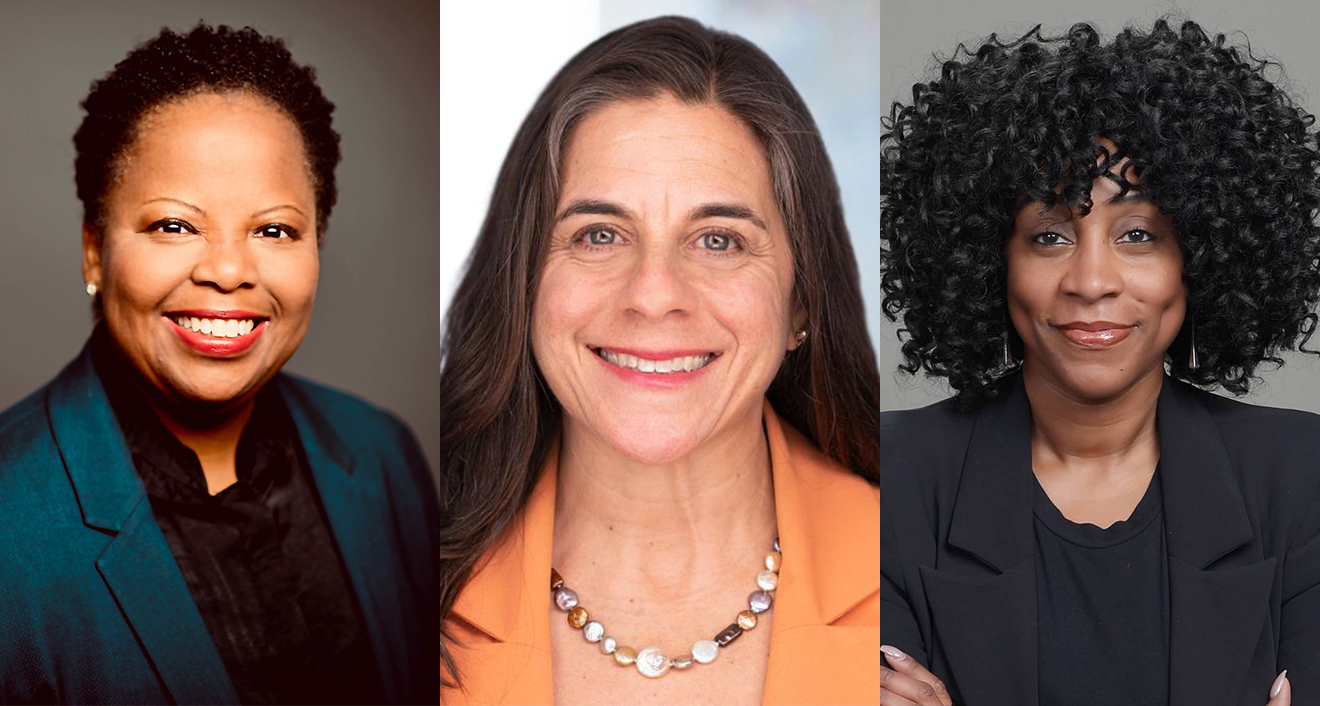
CT Insider wrote about Wesleyan’s 194th Commencement ceremony on May 24, including images from the proceedings. U.S. Senator Chris Murphy Hon.’26 delivered the commencement address and received an honorary degree alongside college executive David Carlisle ’76, Hon.’26, and attorney Karen Freedman ’75, P’05, Hon.’26.
Maggie Brown ’26, ultimate frisbee player for the Vicious Circles, Wesleyan’s women’s ultimate team, was named the 2026 Donovan Award winner, according to Ultiworld. This award is given to one women’s and one men’s player in Division III, selected by their peers.
Pulitzer Prizes
This year, a few members of the Wesleyan community received recognition from the Pulitzer Prizes.
Graduate Liberal Studies student Ginny Monk, The Connecticut Mirror’s children’s issues and housing reporter, was part of a team awarded the Pulitzer Prize in Local Reporting for their series on the state’s unique towing laws, which allowed predatory companies to overcharge residents.
A poetry collection published by Wesleyan University Press was awarded the Pulitzer Prize in Poetry. Juliana Spahr’s collection, Ars Poeticas, focuses on Spahr’s relationship with poetry, politics, and the public around her.
Bench Ansfield ’08 and their Born in Flames: The Business of Arson and The Remaking of the American City, which focuses on the large-scale arson committed by New York City landlords from 1968 through the 1980s, was also recognized as a finalist for the Pulitzer Prize in History.
Other headlines
Wesleyan’s PHIL210: Living a Good Life course was mentioned in a recent story by David Brooks, a staff writer at The Atlantic, on what is going well on college campuses. The course—taught by Mansfield Freeman Professor of East Asian Studies Stephen Angle, Professor of Philosophy Tushar Irani, and Professor of Philosophy Steven Horst—explores ancient and contemporary philosophical strategies for living a good life.
Assistant Professor of Theater Maria-Christina Oliveras was featured by Forbes as she stars in the new Tony-nominated Broadway comedy The Balusters, which follows a neighborhood community association and its hijinks after a controversial proposal by a newcomer. Oliveras plays Luz Baccay, a housekeeper who serves the association during their meetings. “It’s truly been such a joy every time out,” Oliveras said. “The only moments that have felt challenging are five-show weekends—figuring out how to preserve energy between shows and how to fuel—but the electricity of live performance and the sacred space of the theater always get me in the zone.”
Playbill, BroadwayWorld, and The Hartford Courant reported on the University’s naming of the Lin-Manuel Miranda Theater, which honors the contributions and work of award-winning composer, lyricist, and actor Lin-Manuel Miranda ’02, Hon.’15.
Chief Investment Officer, Pensions&Investments, and FundFire wrote about the upcoming retirement of Chief Investment Officer Anne Martin. Jonathan Farrar, deputy chief investment officer, will become the Chief Investment Officer on July 1.
Professor of Government Sonali Chakravarti wrote a piece for The Conversation on the role of artificial intelligence in court cases and how it obscures human decision-making throughout the judicial process. “A room of people deliberating may seem less efficient than AI, but it is a necessary component of the justice system’s moral legitimacy,” Chakravarti wrote. “A jury decision symbolizes willingness to bear accountability for imposing a punishment.”
Former FDA Commissioner Scott Gottlieb ’94, Hon.’21 appeared on NPR to weigh in how the resignation of FDA Commissioner Marty Makary will affect the Trump administration’s agenda. “I think that the biggest challenge that the agency faces is the loss of senior personnel,” Gottlieb said. “Overall, they lost thousands of staff members, thousands of medical reviewers… ultimately, that eroded a lot of institutional rigor and experience of the agency and that’s what’s been hobbling the agency.”
For the second time, LA Business Journal named David Carlisle ’76 to their LA500 list, which celebrates the most influential leaders and impactful executives in Los Angeles. Carlisle serves as president and chief executive of Charles R. Drew University of Medicine and Science. He will receive an honorary degree from Wesleyan at this year’s Commencement ceremony on May 24.
Jazz guitarist and composer Mary Halvorsen ’02 was profiled by the Irish Times as she prepares to debut at the National Concert Hall as the leader of a new quartet, Canis Major. “All of my music involves improvisation, so that’s probably the thing that ties it in most with jazz,” Halvorsen said. “...I like being able to work in the in-between areas. I like making music that doesn’t have to be just one thing.”
Rose Chen ’26 contributed to this story.