Summer Program 2026
Summer Science Symposium
The 2026 Summer Science Symposium was held Friday, July 24, 2026.
- Oral Presentations 8:20am-11:30am, Exley 150
- Hugh Tevis, Noah Garcia, Liam Bloom, Felix Wei Lam, Kate DiTullio, Zoe McDougal, Jay Lee, Nathan Weinstein, Pendra Prawirdilaga, Jianna Shao, Eric Sim, Kitty Edwards, Emma Blakely, Isabella Polyn, Katie Sykes, Paul Quach, Gillian Churchland, Miyuka Kawamura
- Prize Presentations and Keynote Address 12:00pm-1:30pm, Exley 150
- Barry Chernoff, Professor of Biology and Earth & Environmental Sciences, and Director of The College of the Environment
- Dancing with Dace
- Barry Chernoff, Professor of Biology and Earth & Environmental Sciences, and Director of The College of the Environment
- Poster Session 1:30pm-3:15pm, Exley Lobby
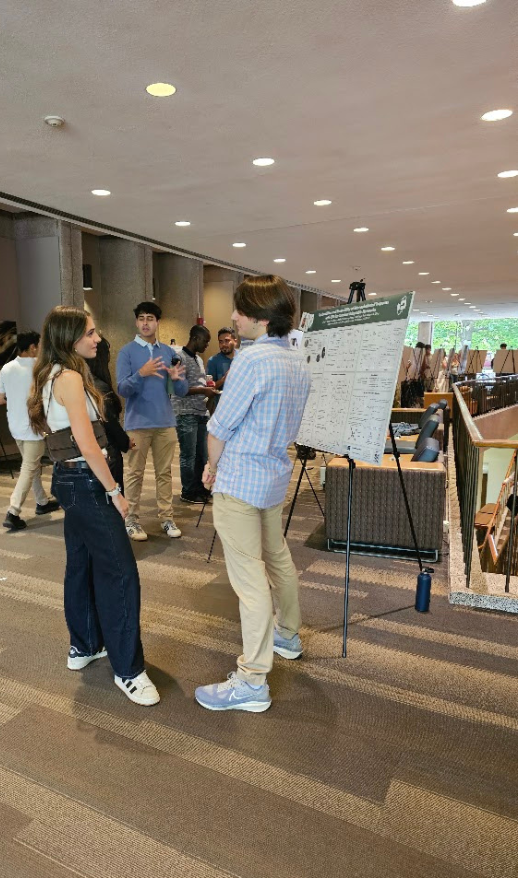
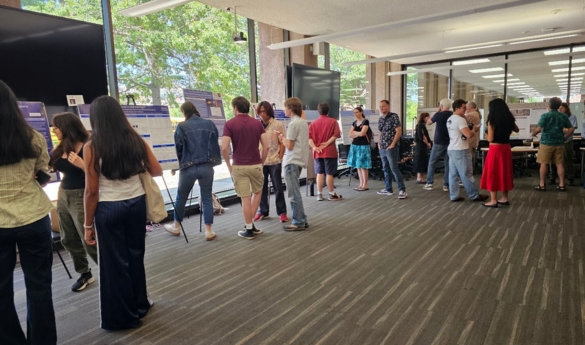
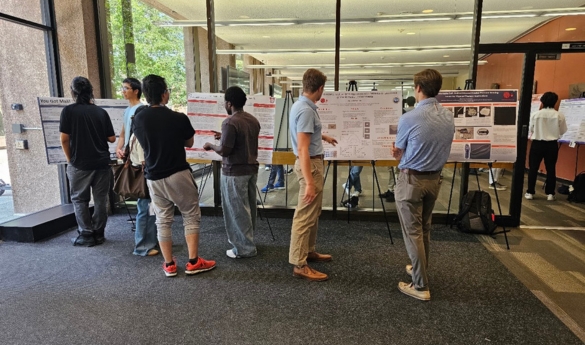
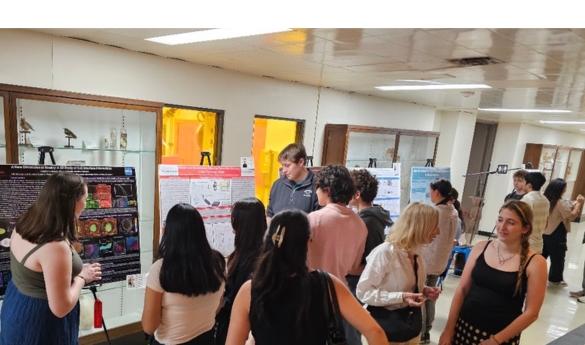
- a record 151 posters were presented as part of our annual poster session
Captivate (Best Title)
The Captivate title prize is awarded to the student who best balances the intellectual weight of their work with the creativity required to hook an audience.
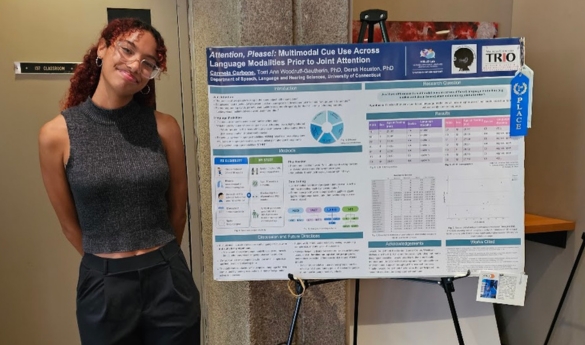
1st Place, Carmela Carbone
Attention, Please!: Multimodal Cue Use Across Language Modalities Prior to Joint Attention Instances
2nd Place, Will George
Heated Rivaldebris: A comparison of flux fitting methods in circumstellar protoplanetary disks
3rd Place, Felix Lam
Old Habits Dye Hard: Solvothermal Synthesis of Nickel Oxide-Titanium Dioxide Nanoparticle Clusters with Dual Polymer Addition
3rd Place, Jacob Poore
Can a Robot Color Inside the Lines? Continuous Toolpath Planning and Geometric Validation for CMT-WAAM
Honorable Mentions
- Morgan Conn and Zephyr Lepyansky
- I
 Rocks: Fossils of the Connecticut River Valley
- I
- Yordanos Gebru
- Return of The Knit: Mass-producible Capacitive Sensor Sleeve for Simple Robotic Limb Integration
- Grace Lee
- Beyond the Snapshot: How Photography Shaped Legal Practice and Evidence Uses in American Courtrooms (1839-2025)
- Isabella Migliore
- Freaky Fish-day: Measuring Allometry of Rhinicthys atratulus Populations Using Truss Elements
- Bianca Morales
- Looking Towards Solar Energy: A Temporal Analysis of Perovskite Halide Segregation
- Kyle Quintana
- How the Cookie Crumbles: Trends in Privacy Law Compliance Across US States
- Ines Rolan
- Going Through a Phase: Probing X-ray Variability of Supernova Remnants in Nearby Galaxies
- April Rowe
- Mirror, Mirror on the Wall, Who is the Purest of Them All: The synthesis and Purification of C74 a Precursor to Rocaglamide Analog OBM
- Dorcas Tawiah
- The Scoop on Caterpillar Poop: How Previous Phloem Feeding Influences Host Plant Quality and Caterpillar Growth
- Ethan Valentino
- Computing with Chaos: a Compact Wave-Chaotic Neural Network
Insight (Image Prizes)
The Insight image prizes are awarded for the best visualization of summer student research work. There are two categories: Picture and Data Visualization.
Judges Amy MacQueen, Yuxuan Mei, Jennifer Mitchel
Picture 1st Place, Eric Sim
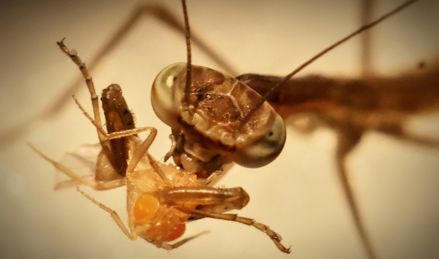
This is a photo of a juvenile chinese mantis (Tenodera Sinensis) chowing down on a fruit fly (Drosophila Melanogaster). It was taken with a Cannon EOS R6 MkIII using a RF 100mm F2.8L Macro IS USM lens. This photo was taken by myself using my own camera that I had less than a week to learn to use after its purchase. How we obtained the photo was difficult as we had to first find a mantis during its meal then extract it and place it under the fiber optic spotlight to get the clearest image possible without it dropping its food. The Coolon Lab is a Genomics Lab that studies the ecological/evolutionary influences that change a organism’s genetics which can make or break its chances of survival. The lab’s model organisms are fruit flies and praying mantis nymphs that have risen in attention due to the invasive nature of the praying mantis in the area while serving as a beneficial pest control system. The study of predator and prey allows the Coolon Lab to gain a full scope of genetics of the subject.
Picture 2nd Place, Elias Warner
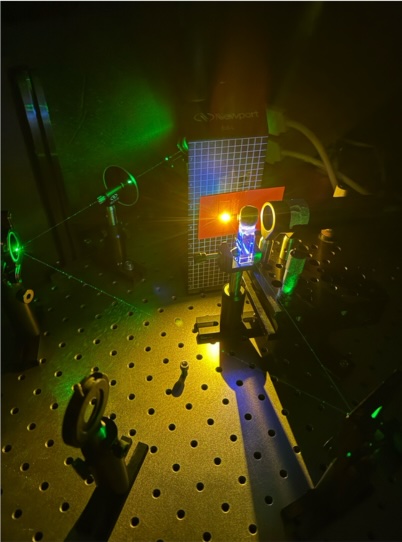
In this image, a 532nm laser diode is exciting a sample of Palladium (II) octaethylporphyrin and 9,10-diphenylanthracene; two molecules that, when in the presence of each other, can eCectively upconvert light. This shows the TTA-UC process in the visible wavelength region, as the green light that enters the sample is at a higher wavelength (lower energy) than the blue light that is emitted (lower wavelength, higher energy). My project this summer has been to synthesize organic molecules to eCiciently upconvert photons, and to build a laser system capable of exciting these organic molecules. This image was captured on an iPhone 16 in the laser area of our lab.
Picture 3rd Place, Gillian Churchland
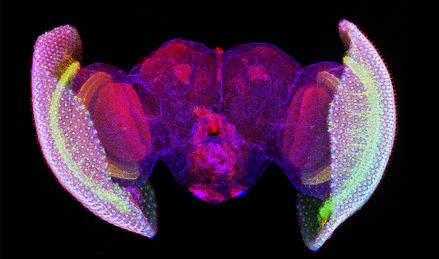
This image shows the eye-brain complex of a fly pupae at 40 hours after puparium formation (APF), the time point of interest for the vast majority of our experiments. The brain is shown in red and blue in the center, with the eyes on either side also marked in green. In order to capture this image, I collected a newly formed pupa and returned 40 hours later to dissect out the eye-brain complex. Then, I performed immunostaining in order to visualize specific structures, and mounted the eye in a special mold so as not to crush the tissue with a coverslip.
In blue I detected E-cadherin, an adhesion protein found at essentially all junctions between epithelial cells. In the lab, we stain for E-cad in order to easily visualize the outlines of each cell, which was crucial for my project. In my project, I measured each cell to determine its perimeter, area, aspect ratio, and roundness, which relied on a clean and strong E-cad signal.
In red I detected Rhodamine Phalloidin, which labels all F-actin - part of the cell’s cytoskeleton - in the eye and brain. F-actin is also detected via genetic altering of the fly to express a green fluorescent protein (GFP) tagged peptide. This peptide binds to F-actin, causing GFP to be expressed simultaneously with actin. However, the green color is localized to only the eye, as GFP expression is driven by the transcription factor Gal4, and the fly has been modified to express Gal4 only in the eye.
The pupal eye displays amazing cell coordination to form patterned tissues. In my project this summer, I explored how disrupting the position of the nucleus impacts eye tissue. This image shows one of my control eyes which, at higher magnification, would allow me to measure the shape of specific cells within the eye.
Picture 3rd Place, Abigail Lopez
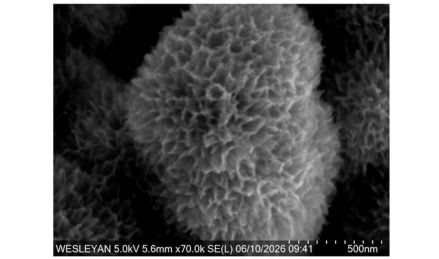
This is a Scanning Electron Microscope (SEM) image of a titanium dioxide cluster. I have spent the past year of my project focusing on synthesizing various conditions of titanium dioxide clusters, searching for the condition that provides me with the most surface area and definition as these are important focuses in order for the solid to be used for water remediation. Thankfully, I have settled on at least one condition which provides me with that option, and it looks like a dandelion!
Data Visualization 1st Place, Yuki Yu
Yuki's image and data will be displayed after publication.
Data Visualization 2nd Place, Annabelle Hegarty
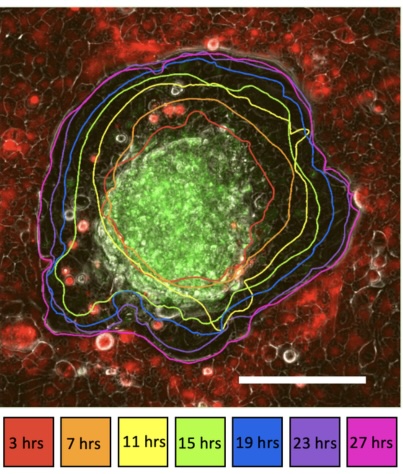
This image depicts an overlay of the spread of a DU-145 spheroid (green) on a monolayer or HeLa cells (red). Every color represents an interval of four hours. The image below the overlay is at the final time point, 27 hours post seeding the spheroid onto the monolayer. This is a unique way to represent the data and shows how much the spheroid pushes the monolayer in order to spread out. Since we are researching the interface dynamics between 2D and 3D cells, this graphic, along with others like it, will help us understand how different cell types behave in a spheroid-monolayer interface interaction assay. This image was created using time-lapse microscopy and by tracing the interface boundary between cell types every four hours and overlaying them on top of each other. The scale bar depicts 100 μm. This image not only gives us an amazing look into interface dynamics between these cell types, it also provides us with a way to show the magnitude of the spheroid’s invasion on a poster where we cannot attach time lapse movies.
Data Visualization 3rd Place, Keanu Feik Reinhart
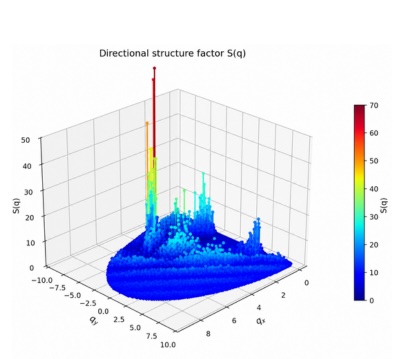
This 3D plot shows the directional structure factor S(q) as a function of wavevectors qₓ and qᵧ. The sharp, dominant peak (reaching ~70, shown in red) signals the emergence of long-range periodic order, a crystalline phase. If the system were disordered, S(q) would remain flat and featureless. The height and sharpness of this peak therefore serves as a direct indicator of whether the system has crystallized.
Data Visualization 3rd Place, Liam Forsythe
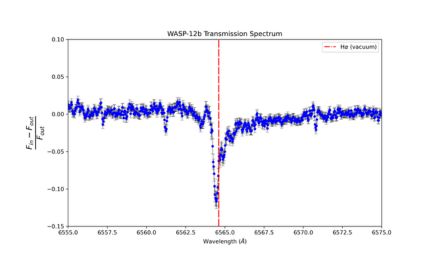
This plot confirms the existence of hydrogen in the atmosphere of a distant planet about 1400 light years away from us, known as WASP-12b. The original data I used was a series of spectra, or light as a function of wavelength, taken over a period of time when this planet passed over its host star (or transited). I combined the amount of light from these spectra into two groups, one where the planet is not transiting (Fout) and one where it is (Fin). The fi nal plot, otherwise known as the Transmission Spectrum, was then created with the equation shown on the y-axis. Some starlight is fi ltered through the planet’s atmosphere when it transits, and this spectrum essentially isolates that fi ltered light present in the atmosphere, where we can see a clear hydrogen absorption feature, thus confi rming the presence of hydrogen in this exoplanetary atmosphere.
Maureen Snow Poster Prize
for excellence in Science Communication
Judges Stef Dineen, Serena Plage, Mary Readinger, Shana Sperry
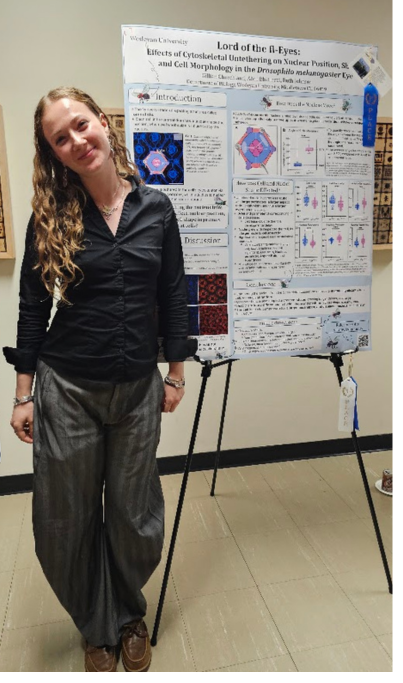
1st Place, Gillian Churchland
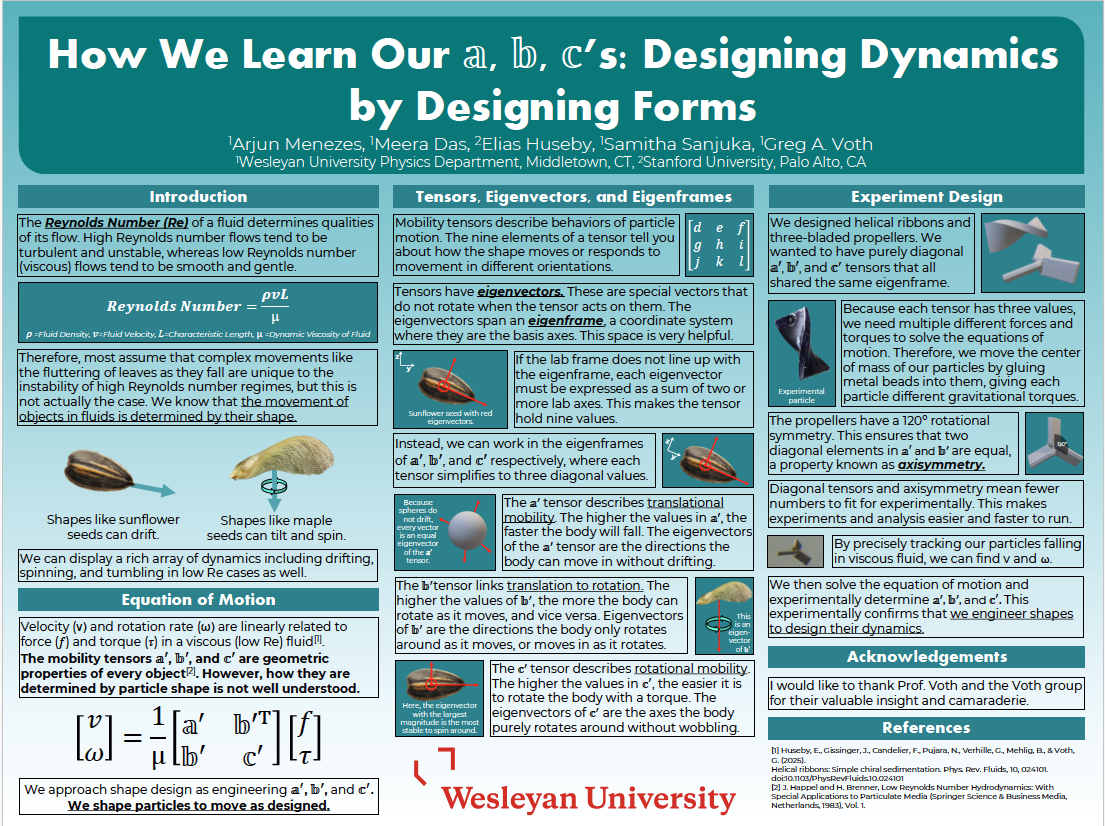
2nd Place, Arjun Menezes
3rd Place, Solomon Grossman and Hannah Wang
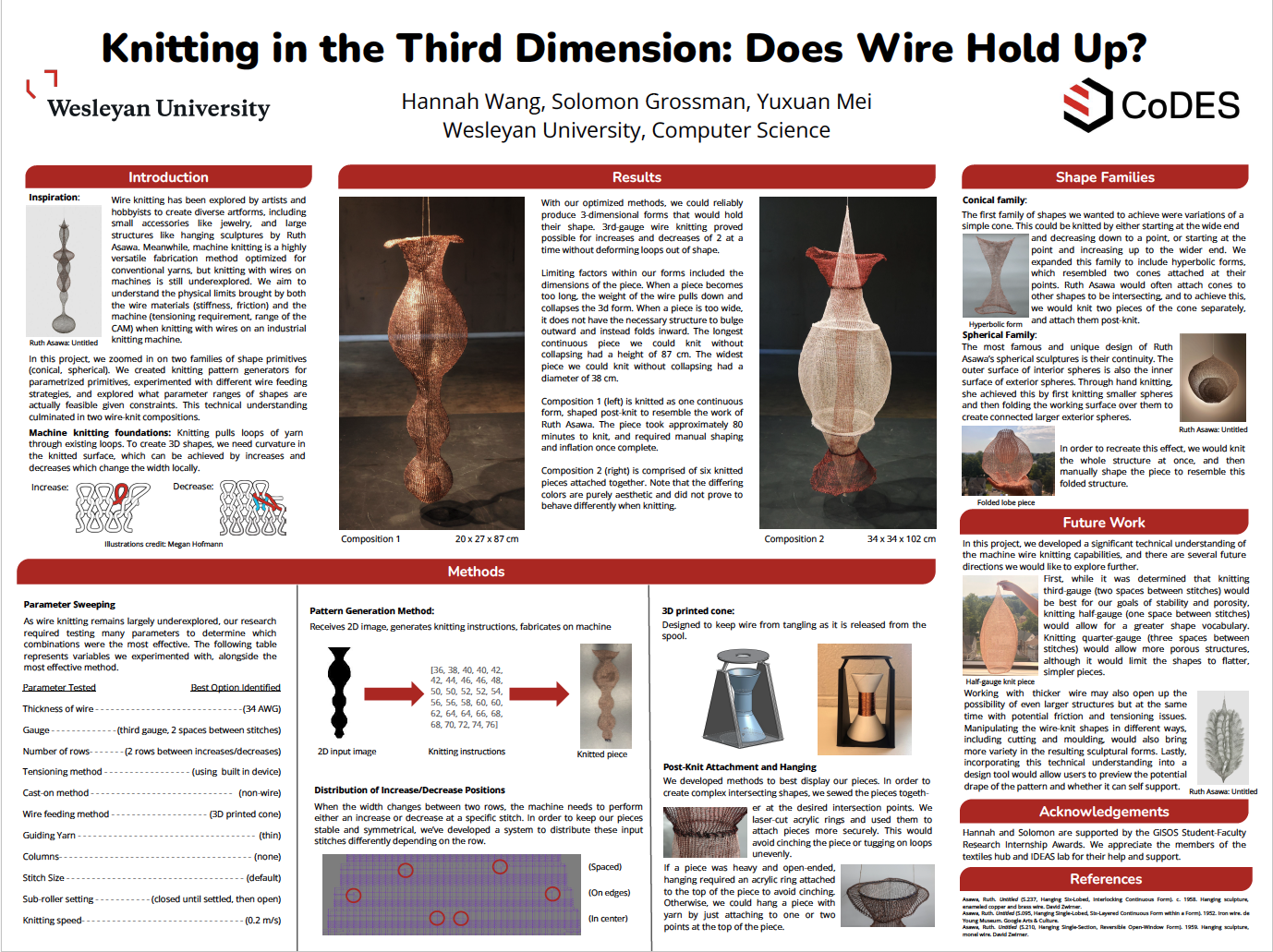
| Carmela Carbone | Annabelle Hegarty |
| Noah Huckman | Yeji Kim |
| Jake Klasky | Grace Lee |
| Paul Quach | Ramiro Quiñones |
| Dorcas Taiwah | Yuki Yu |
Summer Spark Prize (Oral Presentation)
Our summer researchers operate at an incredible pace, often packing a year's worth of discovery into just eight weeks. The Spark prize was established to honor the student who best captures that momentum in a flash talk presented to their peers and mentors.
Winners
- 1st Gillian Churchland
- 2nd Catherine Sykes
- 3rd Zoe McDougal
- 3rd Jianna Shao
Honorable Mentions
- Liam Bloom
- Kate DiTullio
- Kitty Edwards
- Miyuka Kawamura
Named Fellowships
- 2026 Siegel Fellows: Jacklyn Brozkha, Toshiki Kobayashi
- 2026 Sonnenblick Fellows: Arjun Menezes, Zoe McDougal, Nathan Weinstein
- 2026 Hume Fellows:Kitty Edwards, Noah Huckman
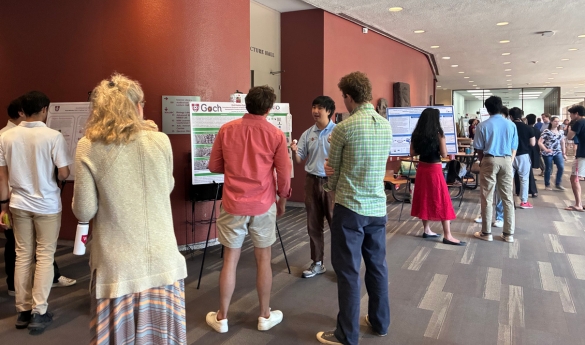
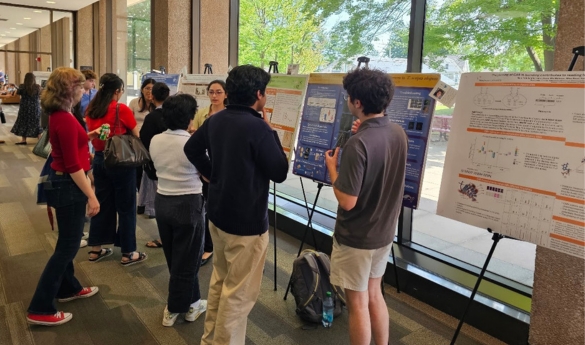
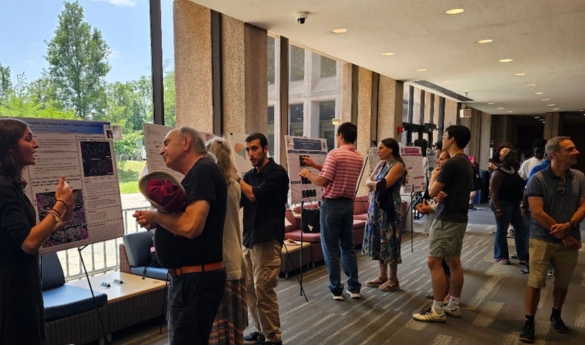
Scenes from the Poster Session
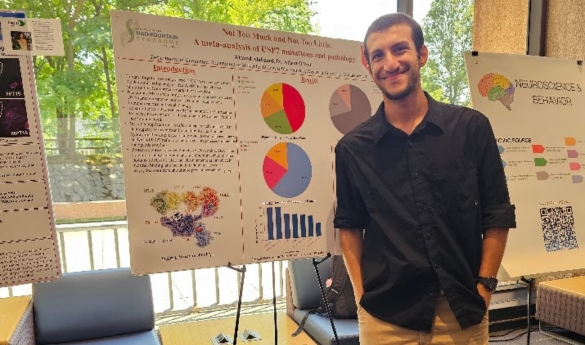
Ahmad Alahmad '28, O'Neil lab, Neuroscience & Behavior
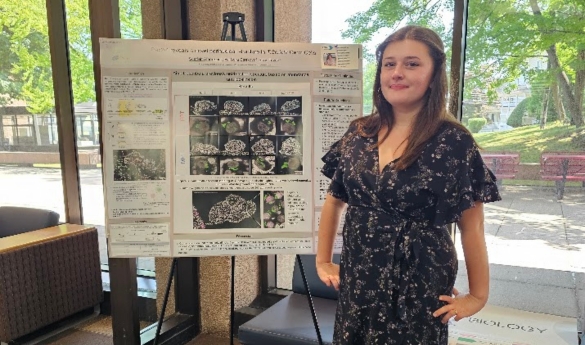
Scarlett Albertson '28, Tezak lab, Biology
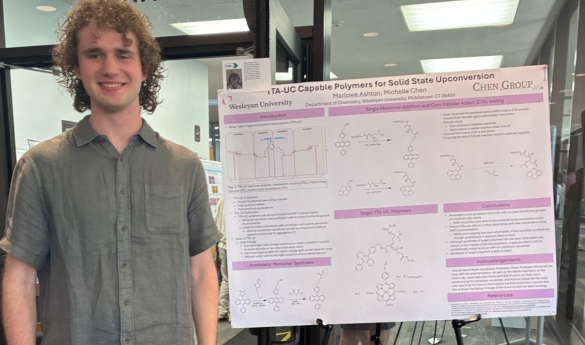
Marlowe Ashton '27, Chen lab, Chemistry
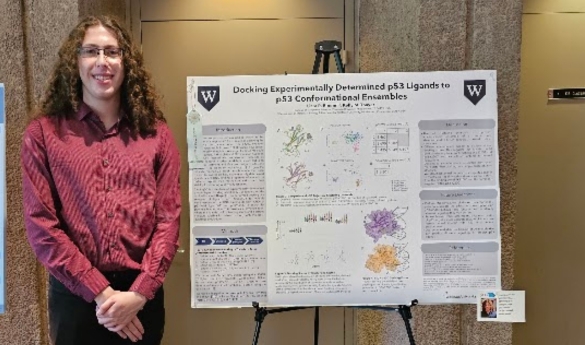
Liam Bloom '28, Thayer lab, College of Integrative Sciences
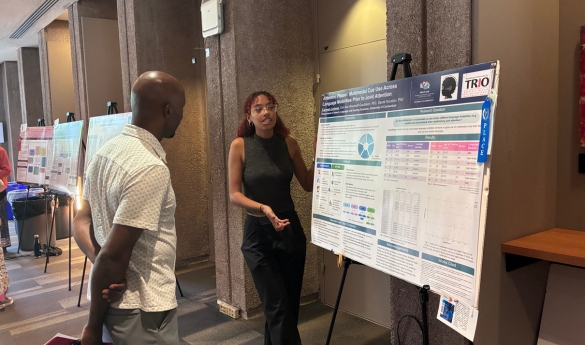
McNair Fellow Carmela Carbone '27, with Ronnie Hendrix, director of the McNair program
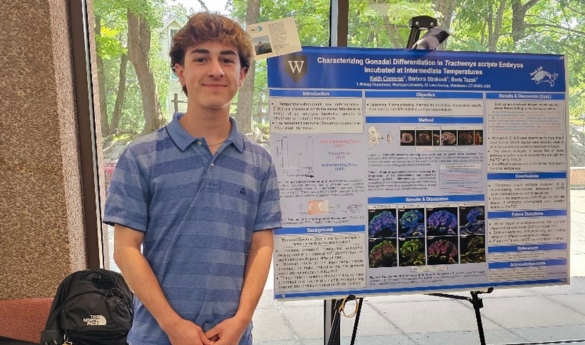
Junior Fellow Keith Carreras, Tezak lab, Biology
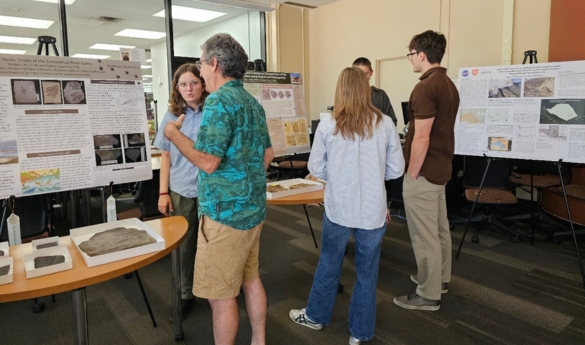
Morgan Conn '28, Joe Webb Peoples Museum
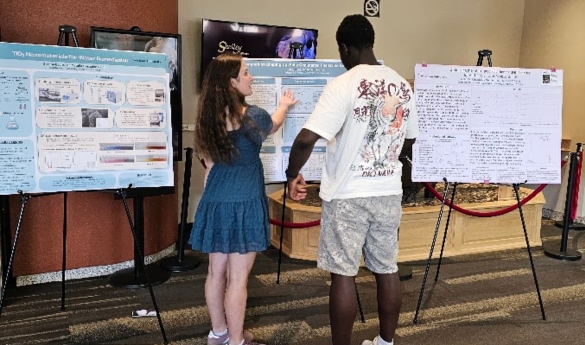
Kate DiTullio '28, Northrop lab, Chemistry
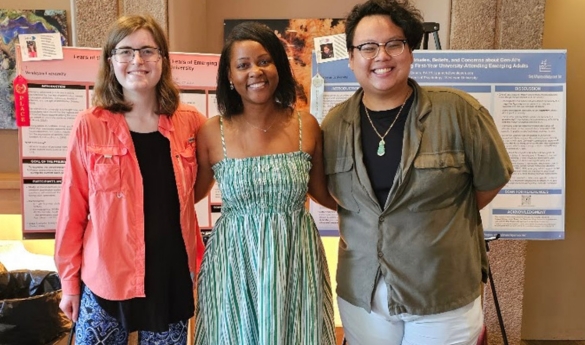
Professor Royette Dubar with her students, Catherine Sykes '27 and Paul Quach '26, Psychology
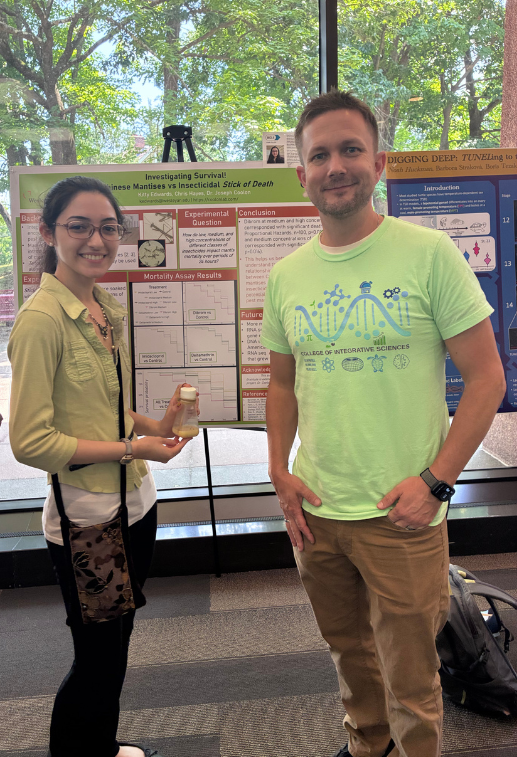
Kitty Edwards '28 with, Joe Coolon, her mentor and director of the College of Integrative Sciences, Biology
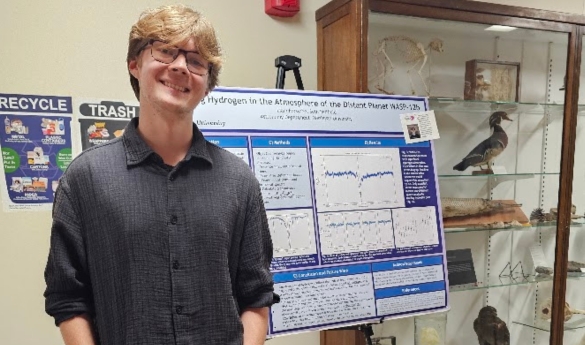
Liam Forsythe '28, Redfield lab, Astronomy
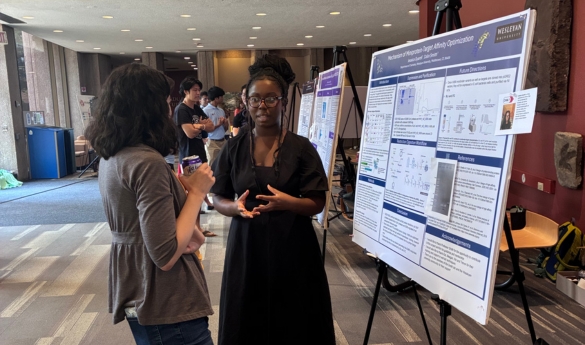
Jessica Gyamifi '29, Smith lab, Chemostry, with Oriana Fisher
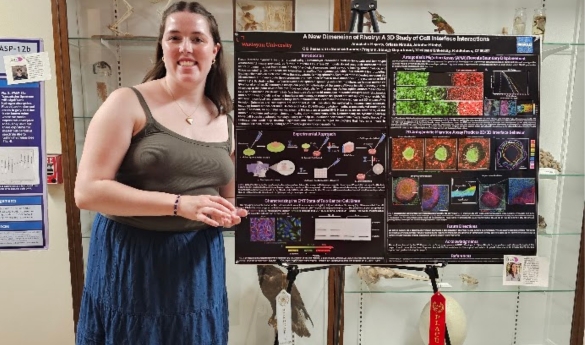
Annabelle Hergarty '28, Mitchel lab, Biology
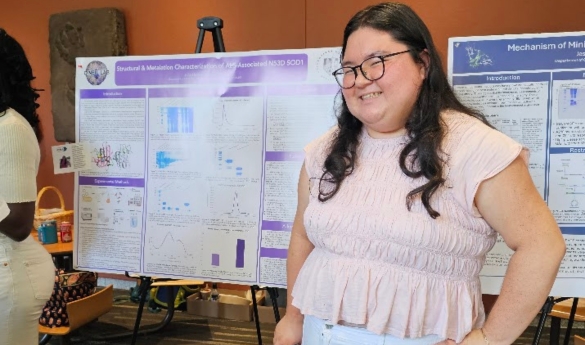
Julia Herlyn '27, O'Neil lab, Chemistry
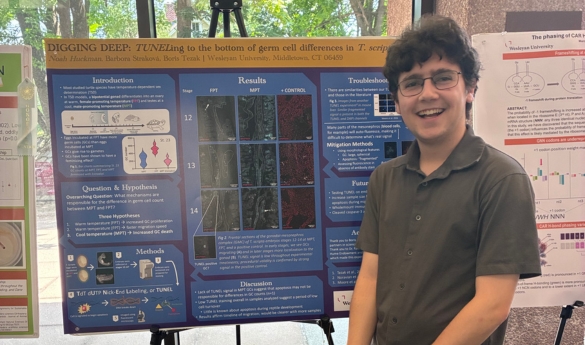
Noah Huckman '29, Tezak lab, Biology
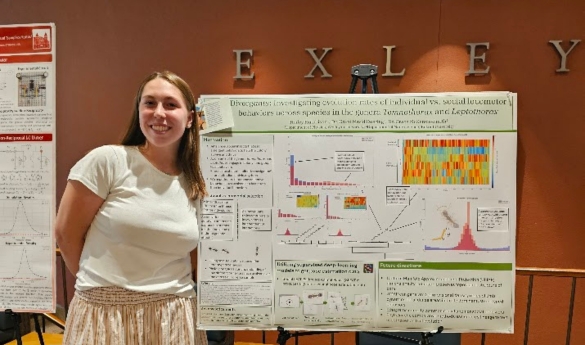
Hailey Hutchinson '27, McKenzie-Smith lab, Physics
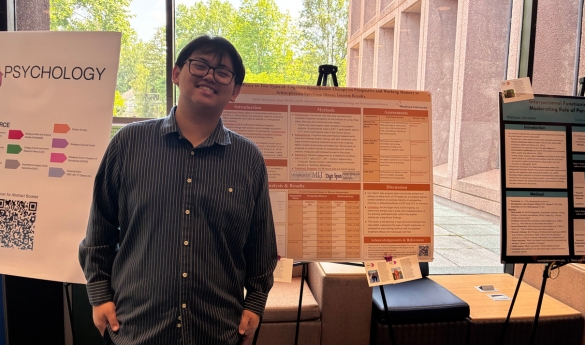
Alexander Ji '28, Kurtz lab, Psychology
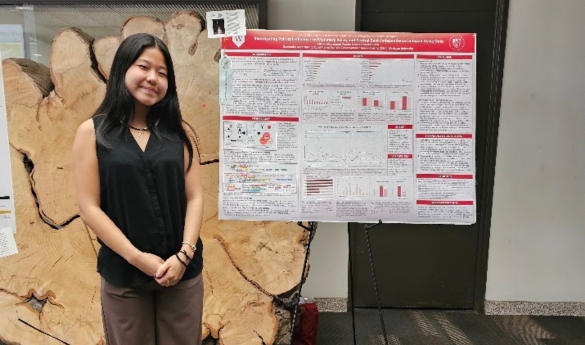
Miyuka Kawamura '29, Economics, Quantitative Analysis Center
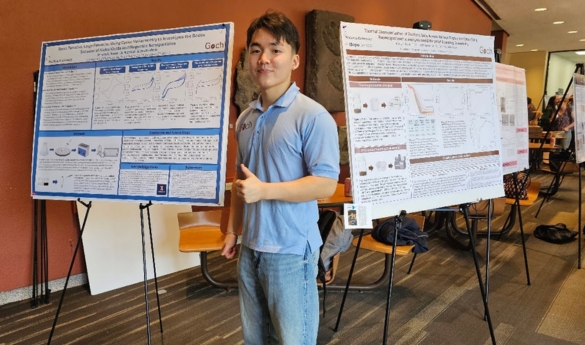
Jeremy Kwon '29, Goch lab, Chemistry, Jeremy presented two posters
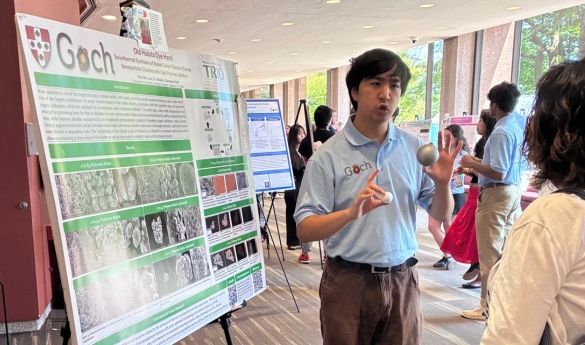
Felix Lam '28, Goch lab, Chemistry
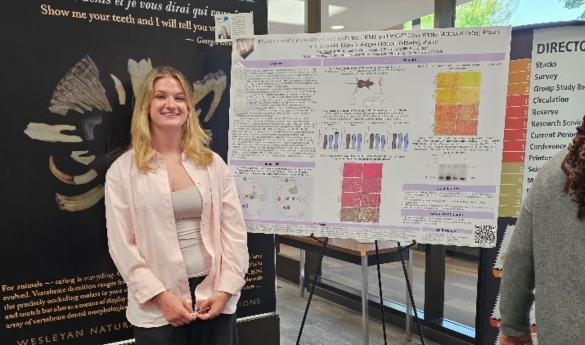
Zoe McDougal '29, Padilla-Benavides lab, Molecular Biology & Biochemistry
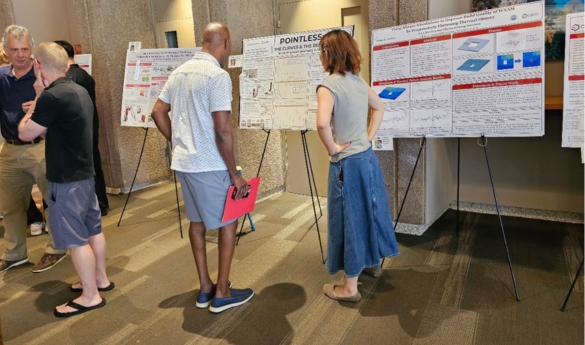
Jianna Shao '29, Chang-Davidson lab,College of Design and Engineering Studies, with Ronnie Hendrix
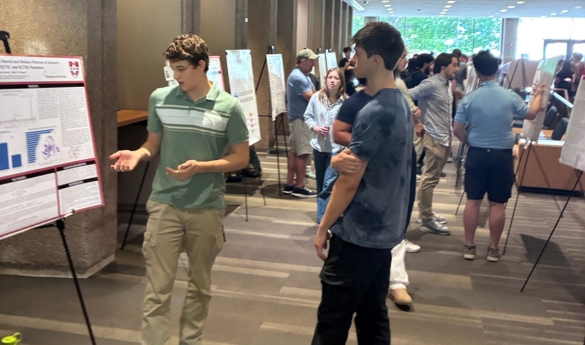
Junior Fellow Alon Shemer, Thayer lab, College of Integrative Sciences
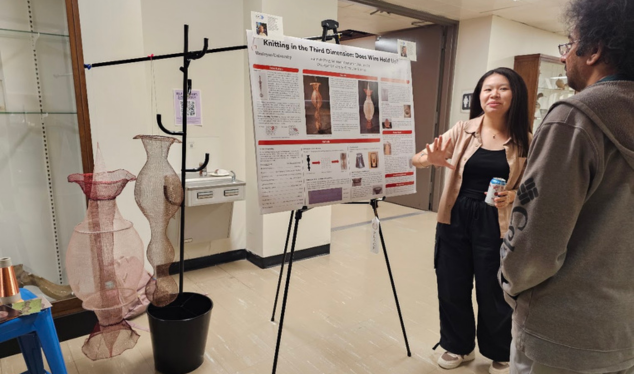
Hannah Wang '29, Mei lab, College of Design and Engineering Studies
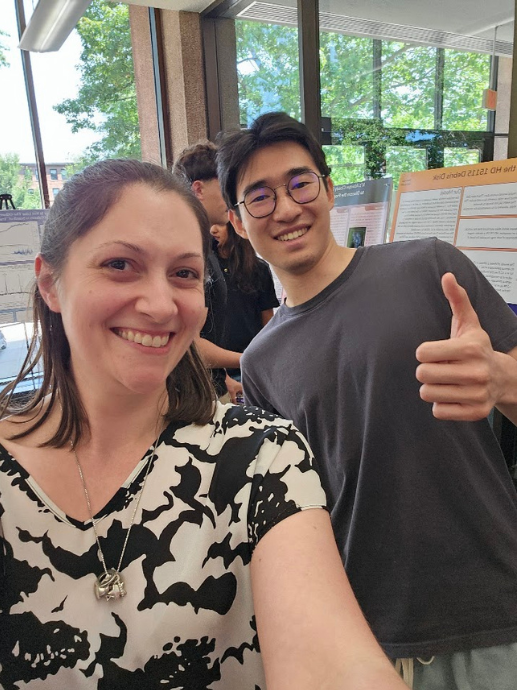
See you next year!
The 2026 Research in Science summer program was funded by:
- The College of Integrative Sciences
- The Bailey College of the Environment
- The Hazel Quantitative Analysis Center
- Wesleyan Math and Science Scholars
- Ronald E. McNair Post-Baccalaureate Achievement Program
- Wesleyan Summer Grant Program
- Wesleyan Grants in Support of Scholarship Internship Program
- Wesleyan Junior Fellow Program
- RockEDU Lulu Wang Scholars
- National Institutes of Health (NIH)
- National Science Foundation (NSF)
- NASA Connecticut Space Grant Consortium
- Keck Northeast Astronomy Consortium
- Norman Berry Endowment Fund
- Gomez Endowment Fund
- Hume Endowment Fund
- Silverberg Scholars
- Spencer Endowment Fund
- Tishler Endowment Fund
- Van Vleck Endowment Fund
- Wesleyan University